If you’re looking to boost your energy efficiency, smart solar generation monitors can make a significant difference. These devices not only track your solar production but also help you manage your energy consumption in real time. With various options available, from the Sense Energy Monitor to more specialized models, you’ll find features that suit your needs. Let’s explore the top choices and see how they can transform your energy management strategy.
Sense Energy Monitor with Solar

If you’re looking to optimize your solar energy usage, the Sense Energy Monitor with Solar is an excellent choice for homeowners. This device tracks your electricity consumption and solar production in real time, helping you save energy and money. With its support for time-of-use rate plans, you can compare solar output and usage side-by-side. You’ll gain insights into your family’s energy habits, receive custom notifications for critical devices, and enhance overall efficiency. Plus, its components meet stringent safety standards, ensuring secure installation within your electrical panel. Currently, it’s available only in the United States and Canada, making it a localized solution.
Best For: Homeowners looking to optimize their solar energy usage and track electricity consumption in real time.
Pros:
- Offers real-time tracking of electricity usage and solar production.
- Supports time-of-use rate plans for maximizing solar energy use.
- Provides custom notifications for critical devices to prevent failures.
Cons:
- Currently available only in the United States and Canada.
- Installation may require access to the electrical panel, which could be a barrier for some users.
- Limited information on compatibility with all solar systems or devices.
Emporia Vue 3 Home Energy Monitor
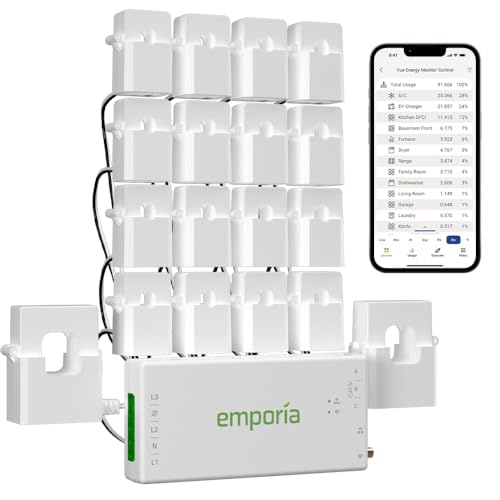
The Emporia Vue 3 Home Energy Monitor stands out as an essential tool for homeowners looking to take control of their energy consumption. With UL Listing for safety, it installs easily in your circuit panel using clamp-on sensors. You’ll gain real-time monitoring via the Emporia Energy App, allowing you to track energy usage and identify savings opportunities. Featuring 16 branch sensors, it accurately monitors vital appliances, while the new design reduces panel clutter. Plus, you can customize settings for peak demand and excess solar, ensuring you maximize efficiency and minimize costs—all from your smartphone or web app.
Best For: Homeowners seeking to monitor and manage their energy consumption effectively while identifying potential savings.
Pros:
- Real-time monitoring through the Emporia Energy App for immediate insights on energy usage.
- Customizable settings for peak demand and excess solar, helping to optimize energy efficiency and reduce costs.
- Easy installation with clamp-on sensors that fit most circuit panels, along with sixteen branch sensors for detailed monitoring.
Cons:
- Requires a 2.4 GHz WiFi connection for full functionality, which may limit use in some households.
- Data retention limits for short-term monitoring may not suit users looking for extensive historical data.
- Additional 200A sensor sold separately, which could increase the overall cost of the setup.
Eyedro Home Energy Monitor – Real-Time Electricity Usage Monitor

For homeowners keen on maximizing their solar energy potential, the Eyedro Home Energy Monitor stands out as an exceptional choice. This real-time electricity usage monitor tracks power consumption and production, providing instant insights. With two 200A sensors, it connects via WiFi or Ethernet, allowing you to monitor your whole house. You’ll see usage in dollars, watts, amps, and volts, helping you identify energy waste and lower your utility bills. Compatible with solar and grid energy, it’s perfect for energy-conscious households. Plus, with no subscription fees and reliable support, Eyedro simplifies energy management for everyone.
Best For: Homeowners looking to maximize solar energy usage and track real-time electricity consumption.
Pros:
- Provides instant insights into energy consumption and production, helping to identify waste.
- No subscription fees for cloud access, making it cost-effective.
- Compatible with both solar and grid energy systems for versatile usage.
Cons:
- Requires two Eyedro units for separating energy usage from solar generation, which may increase initial costs.
- Limited to WiFi (2.4 GHz) or wired Ethernet connectivity, excluding newer network standards.
- May require technical knowledge for setup, potentially challenging for some users.
Smart Home Energy Monitor with App Compatibility

Smart home energy monitors with app compatibility are ideal for tech-savvy homeowners who want to keep a close eye on their energy consumption. With real-time power usage tracking and historical data accessible via an app, you can easily monitor your energy habits. Installation is simple with clamp-on sensors fitting most circuit panels, and you can expand your monitoring with additional sensors. The system’s 1% accuracy guarantees you get reliable data, while features like solar metering help you save on electric bills. Plus, the Super Privacy Mode lets you keep your data secure without relying on cloud access.
Best For: Tech-savvy homeowners looking to monitor their energy consumption in real-time and save on electric bills.
Pros:
- Real-time monitoring allows users to track energy usage instantly, preventing costly repairs and promoting energy conservation.
- Easy installation with clamp-on sensors makes it accessible for most homeowners without the need for professional help.
- Super Privacy Mode offers enhanced data security by allowing users to operate without cloud access.
Cons:
- Initial cost may be a barrier for some homeowners who are hesitant to invest in smart technology.
- Compatibility limitations with certain circuit panels might require additional sensors for comprehensive monitoring.
- Reliance on WiFi connectivity could be a drawback in areas with poor internet service.
Smart Home Energy Monitor with Circuit Sensor

Refoss Smart Home Energy Monitor stands out as an excellent choice for homeowners keen on maximizing their solar energy investment. It features two main circuit sensors and sixteen branch sensors, all designed for easy installation. With 24/7 monitoring through the Refoss app, you can track energy consumption and save 10%-20% on bills. The device integrates seamlessly with solar systems, automating energy use and detecting surplus. You’ll receive alerts for unusual spikes, allowing quick adjustments to optimize usage. Plus, its local data storage guarantees privacy, making it a reliable and efficient tool for enhancing your energy efficiency.
Best For: Homeowners looking to optimize energy consumption and maximize their solar energy investment.
Pros:
- Easy installation with clamp-on design for various wiring systems.
- Real-time energy monitoring and tracking via the Refoss app.
- Automated energy usage management for solar surplus, enhancing savings.
Cons:
- Lacks API support for third-party integrations.
- Requires firmware updates for seamless operation with Home Assistant.
- Limited to local data storage, which may not suit all users’ preferences for cloud access.
Sense Energy Monitor – Track Electricity Usage in Real Time
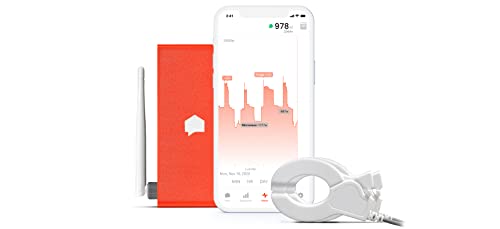
The Sense Energy Monitor is an ideal choice for homeowners looking to gain real-time insights into their electricity usage. This innovative device tracks your energy consumption, helping you save money and reduce waste. With its ETL/Intertek safety certification, you can trust it for safe installation in your electrical panel. You can monitor your energy use remotely via iOS, Android, or web apps, allowing you to stay informed about energy habits anytime. Plus, custom notifications keep you alert about critical devices, enhancing safety and efficiency in your home. Engage with your energy data to make smarter, more informed decisions.
Best For: Homeowners seeking to monitor and optimize their energy consumption in real time.
Pros:
- Real-time monitoring allows users to track electricity usage from anywhere, promoting awareness and efficiency.
- Custom notifications help prevent potential disasters by alerting users about critical devices.
- ETL/Intertek safety certification ensures safe installation and operation within electrical panels.
Cons:
- Currently only available in the United States and Canada, limiting accessibility for other regions.
- May require a learning curve for some users to fully utilize all features and insights.
- Initial cost of the device may be a consideration for budget-conscious homeowners.
Victron Energy Smart Battery Shunt (Bluetooth)

For those looking to optimize their solar energy systems, the Victron Energy Smart Battery Shunt (Bluetooth) stands out with its extensive monitoring capabilities. Operating within 6.5V-70V and supporting up to 500 amps, this all-in-one battery monitor is easy to install. You’ll gain insights into your battery’s state of charge, time remaining, and more. Plus, the VictronConnect app offers real-time data without delays, and alarm notifications keep you informed of any urgent issues. With smart integrations and auxiliary connections, you can enhance your system’s performance, ensuring you maximize energy efficiency effortlessly.
Best For: The Victron Energy Smart Battery Shunt (Bluetooth) is best for solar energy system enthusiasts and professionals seeking to optimize battery performance and monitor energy usage effectively.
Pros:
- Comprehensive monitoring of battery metrics including state of charge, time remaining, and historical data.
- Real-time insights available through the VictronConnect app, allowing for immediate access to data without delay.
- Versatile integration options with other Victron devices and auxiliary connections for enhanced system performance.
Cons:
- Installation may require technical knowledge for optimal setup, which could be a barrier for some users.
- Bluetooth connectivity can be limited in range, potentially affecting accessibility in larger setups.
- Price point may be higher compared to basic battery monitors, which might deter budget-conscious consumers.
Renogy ONE Core Off-Grid Energy Monitoring Panel
Designed specifically for off-grid enthusiasts, the Renogy ONE Core Off-Grid Energy Monitoring Panel stands out with its all-in-one functionality, making it the ideal choice for RVs, cabins, and tiny homes. This device offers 24/7 energy monitoring through Bluetooth and RS485 connectivity, so you can track your energy usage and spot savings opportunities. With the DC Home App, you can remotely manage your systems from anywhere in the world. Plus, its smart automation compatibility lets you create automated scenes, enhancing your off-grid living experience. Whether connected to Renogy batteries or powered via Type-C, it’s truly versatile.
Best For: Off-grid enthusiasts looking for an all-in-one energy monitoring solution for RVs, cabins, boats, and tiny homes.
Pros:
- Comprehensive Monitoring: Offers 24/7 energy tracking and insights to reduce consumption.
- Remote Access: Allows users to manage systems globally via the DC Home App and Renogy ONE Portal.
- Smart Automation: Compatible with various accessories for creating automated living scenes.
Cons:
- Limited to 12V and 24V Devices: Only monitors power devices rated at these specific voltages.
- Dependency on Bluetooth: Requires Bluetooth connectivity for full functionality, which may be limited in remote areas.
- Battery Life: While it has a 10,000mAh Lithium-ion Polymer battery, frequent use of smart features may drain it faster.
Eyedro Business 3-Phase Solar & Energy Monitor (E5B-EW-E3-SUB)

Eyedro Business 3-Phase Solar & Energy Monitor (E5B-EW-E3-SUB) stands out as an ideal choice for business owners and energy managers seeking precise, real-time insights into their energy usage and solar generation. With high-resolution data on kWh, Watts, Amps, and more, you’ll effectively track your consumption. MyEyedro software simplifies data analysis, presenting usage history and cost projections in an engaging format. The monitor’s mobile optimization allows convenient access anytime. Plus, installation is straightforward, and it connects via WiFi or Ethernet. Enjoy full data access without subscription fees, ensuring you maximize your energy efficiency with ease.
Best For: Business owners and energy managers looking for real-time insights into energy usage and solar generation.
Pros:
- Provides high-resolution data on kWh, Watts, Amps, and other key metrics for effective energy tracking.
- Offers real-time graphs and mobile optimization for convenient data viewing and monitoring.
- No subscription fees for cloud software, granting full access to data, alerts, and reports.
Cons:
- Installation may require some technical knowledge, especially for those unfamiliar with electrical panels.
- Limited to specific voltage options, which may not suit all business electrical systems.
- Requires a free MyEyedro account and setup, which may be an additional step for some users.
SIEMENS Inhab Smart Home Energy Monitor

The SIEMENS Inhab Smart Home Energy Monitor stands out for homeowners seeking precise control over their energy consumption. With 16-50Amp circuit level sensors and 2-200Amp main sensors, you can monitor electricity usage in real-time. Track your current and historical energy data 24/7, measuring usage directly at the panel and across 16 branch circuits. Personalized notifications alert you to energy savings opportunities or unusual activity, like an oven left on. Advanced features enable time-of-use management and load shedding for smart devices. Plus, it’s designed to rigorous safety standards, ensuring you can trust its performance.
Best For: Homeowners looking for detailed insights and control over their energy consumption.
Pros:
- Real-time monitoring of energy usage at both the main panel and individual circuit levels.
- Custom alerts for energy savings and abnormal activity, promoting proactive energy management.
- Advanced features for efficient energy management, including time-of-use and peak demand management.
Cons:
- Installation may require professional assistance, depending on the user’s electrical experience.
- Higher initial cost compared to basic energy monitors.
- Compatibility may be limited with certain older electrical systems or devices.
Factors to Consider When Choosing a Smart Solar Generation Monitor
When choosing a smart solar generation monitor, you’ll want to focus on key factors that impact performance. Real-time data accuracy, installation ease, and connectivity options are essential for a seamless experience. Plus, consider energy management features and solar integration capability to maximize your solar system’s efficiency.
Real-Time Data Accuracy
Choosing a smart solar generation monitor involves considering several factors, but real-time data accuracy stands out as one of the most critical. Accurate data allows you to track your electricity production and consumption precisely, which is essential for effective energy management. High-quality monitors usually provide an accuracy rate within ±2%, giving you reliable insights into your solar output and grid usage. With precise real-time data, you can optimize your energy consumption and align better with time-of-use rate plans, maximizing your savings. Monitors that offer detailed metrics like watts, volts, and power factor enhance your understanding of your system’s performance. Continuous monitoring can also alert you to any anomalies, helping you intervene promptly to prevent energy loss.
Installation Ease
Considering installation ease can greatly enhance your experience with a smart solar generation monitor. Look for monitors with clamp-on sensors; they install easily without any electrical rewiring, simply clamping onto your existing electrical panels. Make sure the monitor’s compatibility matches your electrical system, whether it’s single-phase or multi-phase. It’s also wise to check if it offers both Wi-Fi and wired Ethernet options, providing flexibility based on your home network. Review the installation requirements carefully to avoid any unexpected complications, like needing extra accessories or sensors. Finally, opt for devices that come with clear installation instructions and offer customer support or online resources for troubleshooting, ensuring a smoother setup process.
Connectivity Options
In today’s tech-savvy world, having reliable connectivity options for your smart solar generation monitor is essential. Most monitors offer WiFi (often limited to 2.4 GHz), Ethernet, or Bluetooth. WiFi and Ethernet provide stable internet connections for real-time monitoring, while Bluetooth enables local access from your smartphone without an internet connection. If you’re keen on integrating with smart home ecosystems, look for devices that can connect seamlessly with other smart gadgets. This not only enhances your monitoring experience but also supports automated energy management. Additionally, consider data export capabilities; some monitors let you download usage data for analysis, while others provide cloud-based access to historical data, helping you maximize your energy efficiency effectively.
Energy Management Features
A smart solar generation monitor should offer robust energy management features to help you optimize your solar energy usage. Look for real-time monitoring capabilities that track both solar generation and consumption, allowing you to adjust your habits for maximum savings. Consider systems supporting time-of-use management, so you can shift energy use to off-peak hours when rates drop. Alerts for excess solar production are also essential, enabling you to use surplus energy efficiently and reduce grid reliance. Confirm the monitor can track energy data in various formats, like kWh and watts, to spot trends and identify savings opportunities. Finally, opt for devices that integrate with smart home systems for automated energy management and enhanced control over your solar generation and consumption.
Solar Integration Capability
When choosing a smart solar generation monitor, ensuring it has strong solar integration capabilities can greatly enhance your energy management. Look for monitors that support net metering, allowing you to track both solar production and grid consumption simultaneously. It’s essential that the monitor can connect with solar inverters and battery storage systems, optimizing your energy usage and managing excess generation effectively. Real-time data on solar output, including kWh, voltage, and current, helps you evaluate your solar installation’s performance. Additionally, compatibility with home automation systems lets you automate energy use for high-demand appliances during peak solar production. Finally, consider devices offering cloud-based data storage for thorough analysis of solar generation trends and financial savings over time.
Custom Notifications
Custom notifications can greatly enhance your experience with a smart solar generation monitor, enabling you to stay informed about critical energy usage patterns. By setting personalized alerts for specific devices, you can avoid potential disasters and equipment failures. For instance, you’ll receive notifications when energy consumption exceeds your thresholds or when devices are left on too long. Many monitors also alert you to abnormal behavior, like unexpected drops in solar production or spikes in energy use. This effective notification system keeps you engaged, providing real-time insights into your energy performance. Additionally, you can tailor notifications to support time-of-use strategies, helping you consume energy during ideal times based on solar production and energy rates.
Historical Data Access
Having access to historical data is essential for maximizing the benefits of your smart solar generation monitor. This feature lets you track and analyze energy usage trends over time, helping you identify patterns to optimize your solar energy consumption. Many monitors offer data retention capabilities, storing hourly usage for up to 90 days or longer, which is vital for detailed performance analysis. You can compare energy production and consumption across different periods, making it easier to evaluate your system’s efficiency. Additionally, exporting historical data in various formats allows for deeper analysis or integration with other energy management systems. By understanding seasonal variations in energy use and solar generation, you can better plan for peak demand and achieve significant energy savings.
Safety Certifications
Choosing a smart solar generation monitor with proper safety certifications is vital for guaranteeing both your safety and the reliability of your solar energy system. Safety certifications like ETL/Intertek, UL Listing, and CE marking indicate that the device meets rigorous safety standards, reducing hazards such as overheating or short-circuiting. Monitors with these certifications undergo performance testing to verify they operate reliably within electrical panels and under normal conditions. By opting for a certified product, you gain peace of mind, knowing it has passed stringent evaluations before hitting the market. Always check for recognized safety certifications when selecting your monitor, as they are essential for the overall safety and efficiency of your solar energy setup.