Spot-free rinsing can make a big difference in car detailing, especially when you want fewer water spots and less wiping after the wash.
Below, we break down 10 practical options to help you choose the right reverse osmosis system for car detailing, whether you want a simple hose-ready setup or a higher-capacity DI solution.
Best 10 Reverse Osmosis System for Car Detailing Picks for 2026
Spot-Free Cart System
iSpring WGB22BD-BP Spotless Water System

- Built-in bypass for tap-water wash and DI final rinse
- Up to 1,200 gallons of rated filtration capacity
- Rolling cart with quick garden hose connection
Best For: Mobile detailers who want a higher-capacity spot-free rinse setup
All-in-One Hose Kit
Clearly MaD Spot Free Car Rinse

- Complete kit with dual DI housing and accessories
- Rated to remove 1,800-2,000 TDS before replacement
- Hose-ready setup for cars, RVs, bikes, and windows
Best For: Shoppers who want a ready-to-use spot-free rinse kit
Compact Final-Rinse Filter
H&G lifestyles Spotless Water System
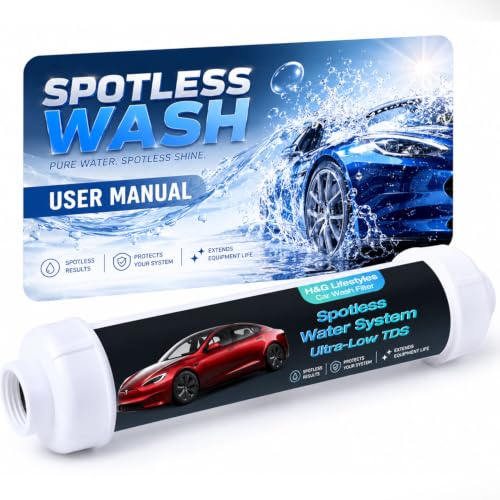
- Universal 3/4" GHT garden hose connection
- Designed for spot-free final rinse use
- Compact and lightweight hose filter format
Best For: Budget buyers who need a small spot-free rinse filter
Bypass Resin System
Waterdrop CWE Spotless Water System
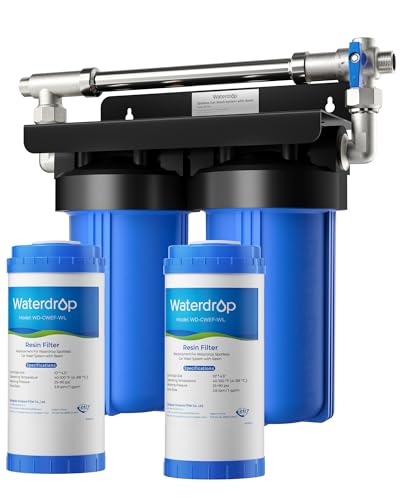
- Bypass switch for tap-water and purified-water modes
- Pre-mixed resin helps reduce spotting on paint and glass
- Can be mounted or used freestanding
Best For: Detailers wanting a flexible final-rinse spot-reduction system
Spot-Free Resin Tank
Filterelated Spotless Water System for Car Wash

- 10L mixed bed resin for mineral removal
- Works on cars, RVs, boats, and solar panels
- Best used for final-rinse spot-free results
Best For: Users who want a simple deionized final-rinse system for detailing and other outdoor cleaning tasks
Rolling Bypass System
Waterdrop CWE2 Spotless Water System

- Bypass switch for tap or filtered water
- Mobile frame with quiet wheels
- Reduces spots but does not reach zero TDS
Best For: Frequent washers who want a mobile, easy-switching spotless water system
Bypass with TDS Meter
Filterelated Spotless Water System with TDS Meter
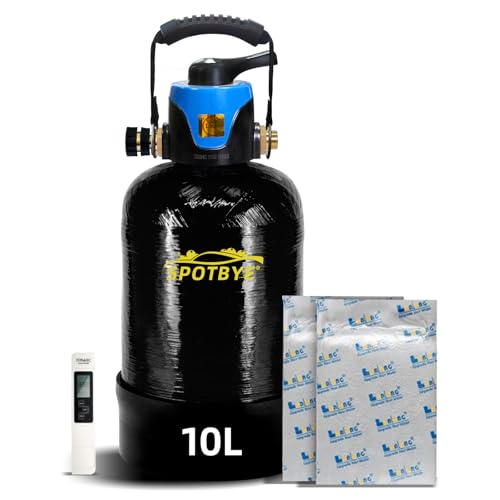
- Includes bypass valve and TDS meter
- 10L resin tank for spot-free rinsing
- Made for cars, RVs, windows, and solar panels
Best For: Detailers who want a monitored bypass system with real-time water checks
Reusable Tank System
AKM Spotless Water System for Car Wash
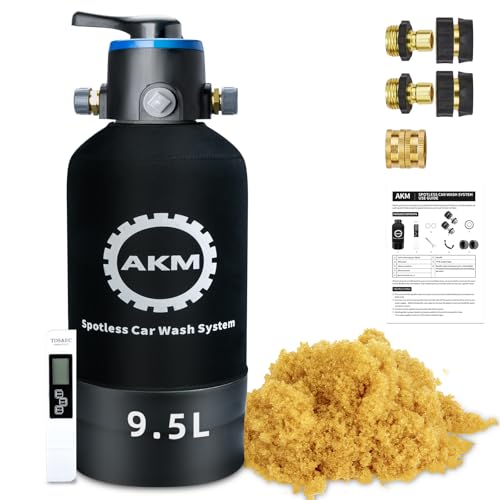
- Pre-filled with mixed bed resin
- Bypass mode saves purified water
- Reusable tank with TDS meter included
Best For: detailers wanting a reusable DI rinse system
Visible Resin Status
Deionized Spot Free Car Rinse Unit
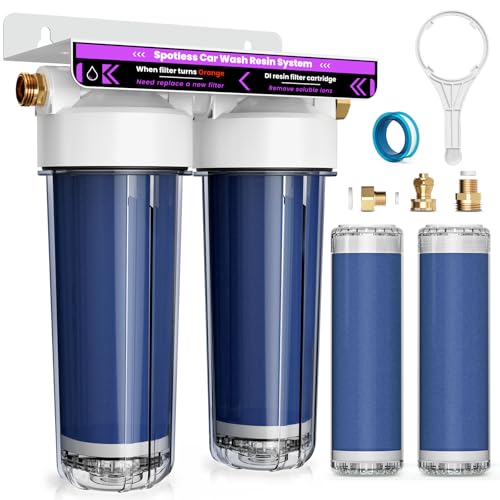
- Transparent housing shows resin condition
- Removes roughly 1800-2000 TDS
- Compatible with vehicles and windows
Best For: buyers who want an easy-to-monitor spot-free rinse unit
Compact Final Rinse
VEVOR Deionized Water System for Car Wash

- 2 x 0.5L color-changing resin
- Up to 50 gallons at 200 ppm water
- Wall-mount bracket with accessories
Best For: detailers wanting a compact spot-free final rinse system
Spot-Free Cart System – iSpring WGB22BD-BP Spotless Water System
If you want a reverse osmosis system for car detailing-style spot-free rinsing without overcomplicating your wash setup, this iSpring deionized system is built for convenience and finish quality. It uses a built-in bypass valve so you can wash with tap water first and switch to deionized water for the final rinse, helping reduce spots and towel wiping.
Best For: Detailers and owners who want a wheeled, higher-capacity spot-free rinse setup with quick hose connection and easy bypass switching.
Pros:
- Built-in bypass valve lets you use tap water first, then switch to DI water for the final rinse.
- Up to 1,200 gallons of filtration capacity, with stated longevity for roughly 240 car washes or 60 RV rinses at 50 ppm source water.
- Rolling metal cart and 3/4″ GHT quick connector make it easy to move and hook up.
- Designed to deliver zero to minimal TDS water for air-dry, spot-free rinses.
Cons:
- Not a true RO unit; it is a deionized spot-free water system.
- Bulky compared with compact hose-mounted filters.
- Performance and cartridge life depend on source water quality.
Overall, this is a practical choice if you want a mobile, higher-capacity system that focuses on the final rinse and minimizes the hassle of repeated hose changes.
All-in-One Hose Kit – Clearly MaD Spot Free Car Rinse
For buyers shopping a reverse osmosis system for car detailing alternatives, this hose-ready deionized rinse kit is aimed at fast spot-free finishing rather than full wash water treatment. It arrives as a complete package with dual DI housing, cartridges, adapters, a flow regulator, and mounting hardware, so it is straightforward to set up and start using.
Best For: Users who want an all-in-one, ready-to-use spot-free rinse kit with included hardware and cartridges.
Pros:
- Includes dual DI housing, cartridges, mounting bracket, adapters, wrench, flow regulator, and instructions.
- Designed to eliminate towel drying for cars, trucks, motorcycles, RVs, bicycles, and windows.
- Cartridges are rated to remove 1,800-2,000 TDS before replacement.
- Hose-ready format makes it easy to add to a wash routine.
Cons:
- This is a deionized rinse system, not a reverse osmosis system.
- Weights and footprint are not especially compact once installed.
- Cartridge replacement will depend on your incoming water quality and usage.
This is a strong pick if you want a complete, hose-ready spot-free rinse solution and prefer a kit that includes the key parts needed to get started.
Compact Final-Rinse Filter – H&G lifestyles Spotless Water System
If you need a simple reverse osmosis system for car detailing workflows, this compact deionization filter is really about the final rinse. It connects with a standard 3/4″ GHT garden hose, reduces minerals and dissolved solids that cause spotting, and is meant to help you rinse, then let the vehicle air dry.
Best For: Budget-minded users who want a small hose filter for spot-free final rinses.
Pros:
- Universal 3/4″ GHT connection works with most standard garden hoses.
- Helps reduce spotting, streaking, and mineral deposits on paint, glass, and chrome.
- Can be used with regular tap water for washing and switched to purified water for the final rinse.
- Compact and lightweight compared with larger cart-style systems.
Cons:
- Each cartridge is rated for only about 50 gallons of purified water.
- Best used at a moderate flow rate for optimal performance.
- Not a full wash system; it is intended for final-rinse use.
This is a straightforward option if you want a small, hose-based spot-free rinse filter and do not need the output or capacity of a larger setup.
Bypass Resin System – Waterdrop CWE Spotless Water System
When comparing a reverse osmosis system for car detailing with deionized rinse systems, this Waterdrop unit stands out for its bypass switch and resin-based spot reduction. It is designed for a final rinse, helps lower mineral content that can mark paint, and can be hung on a board or set on the ground for flexible installation.
Best For: Detailers who want a bypass-style resin system with flexible placement and accessories included.
Pros:
- Bypass switch makes it easy to move between tap water and purified water.
- Pre-mixed resin helps reduce mineral and calcium-magnesium particles that cause spotting.
- Includes accessories and can be installed freestanding or mounted on a board.
- Rated for up to 300 psi and built for durable use.
Cons:
- It reduces spots but does not lower TDS to zero.
- Best results are recommended only for the final rinse window of about 8-10 minutes.
- Replacement filter cost and lifespan depend on water quality and usage.
This is a good fit if you want a flexible, bypass-equipped system for spot-free final rinses and prefer a setup that can be mounted or placed on the floor.
Spot-Free Resin Tank – Filterelated Spotless Water System for Car Wash
If you’re shopping for a reverse osmosis system for car detailing, this Filterelated unit is really a deionized water system built for spot-free final rinses. It uses mixed bed resin to remove minerals like calcium and magnesium, helping reduce water marks on paint, glass, PPF, and ceramic-coated surfaces. The setup is aimed at detailers who want cleaner rinses without complicating the wash process.
Best For: Detailers and car owners who want a simple spot-free final rinse for cars, RVs, boats, solar panels, and windows.
Pros:
- Uses 10L of mixed bed resin for spot-free rinsing.
- Suitable for sensitive surfaces like PPF and ceramic coatings.
- Can be used on cars, RVs, boats, solar panels, and windows.
- Recommended flow rate stays below 1.2 GPM for best performance.
Cons:
- Performance depends on feed-water quality and actual TDS.
- Works as a deionized water system, not a full RO setup.
- Best results depend on using it mainly for the final rinse stage.
This is a practical pick if you want a straightforward spot-free rinse system with certified resin and a clear focus on detailing use. It offers solid capacity for average water conditions, but it is best viewed as a resin-based finishing tool rather than a full reverse osmosis solution.
Rolling Bypass System – Waterdrop CWE2 Spotless Water System
For buyers comparing a reverse osmosis system for car detailing, the Waterdrop CWE2 is a movable deionized water system designed to reduce spots during rinsing. It uses ion exchange resin to reduce minerals and calcium-magnesium ions, and its bypass switch lets you toggle between tap and filtered water as needed. That makes it a strong fit for frequent wash use where convenience matters.
Best For: Frequent washers who want a mobile, bypass-equipped spot-free rinse setup for vehicles and other outdoor surfaces.
Pros:
- Bypass switch makes it easy to alternate between tap and filtered water.
- Rust-resistant metal frame with quiet wheels for easy movement.
- Supports cars, large vehicles, boats, bicycles, and yard windows.
- Rated for up to 132 lbs and tested for 400 PSI pressure.
Cons:
- Does not bring TDS to zero.
- Designed for residential cold-water use only.
- Larger and heavier than a basic tank-only setup.
The Waterdrop CWE2 stands out if you want a more user-friendly, mobile spot-free system with a bypass feature and sturdy frame. It is less about achieving pure zero-TDS water and more about making regular detailing faster and easier.
Bypass with TDS Meter – Filterelated Spotless Water System with TDS Meter
If you want a reverse osmosis system for car detailing that focuses on control and monitoring, this Filterelated deionized water setup is built around a bypass valve and included TDS meter. The 10L mixed bed resin removes ionic impurities to help produce spot-free, streak-free rinses, while the meter lets you check water quality in real time. It is a practical option for users who want a more hands-on system.
Best For: Detailers who want a bypass valve, included TDS meter, and a resin tank they can monitor and refill as needed.
Pros:
- Includes an upgraded bypass valve for switching between filtered and tap water.
- Comes with a TDS meter for real-time water quality checks.
- Uses 10L of mixed bed resin for spot-free rinsing.
- Works on cars, motorcycles, RVs, windows, and solar panels.
Cons:
- TDS may not reach zero unless water flow and tank fill are managed correctly.
- Performance depends on feed-water quality and pressure.
- Like other resin systems, media will eventually need replacement.
This model is the most monitoring-friendly of the three, which can be helpful if you want to track resin performance instead of guessing. It is a solid choice for detailers who value flexibility, but it still depends on proper setup and water conditions to deliver the best results.
Reusable Tank System – AKM Spotless Water System for Car Wash
If you want a reverse osmosis system for car detailing alternative that focuses on a spotless final rinse, this AKM deionized water system is built to remove mineral ions from wash water so you can reduce spotting without hand drying. It comes pre-filled with mixed bed resin and includes a bypass valve, making it practical for detailers who want to save resin for the final rinse.
Best For: Detailers who want a reusable deionized rinse system with a bypass mode and included TDS testing.
Pros:
- Pre-filled with 9.5 liters of mixed bed resin for immediate use.
- Built-in bypass function makes it easy to switch between wash and rinse modes.
- Reusable tank design means you can replace resin instead of the whole unit.
- Includes a TDS meter pen for checking water ppm.
Cons:
- Resin replacement is required once exhausted.
- Heavier than smaller portable units at 24.3 pounds.
This is a solid choice if you want a long-term deionized water setup for car washing rather than a disposable filter housing. The bypass feature and refillable tank make it especially useful for conserving purified water during detailing.
Visible Resin Status – Deionized Spot Free Car Rinse Unit
For a reverse osmosis system for car detailing style setup focused on spot-free rinsing, this deionized rinse unit uses mixed bed resin to remove dissolved solids and help eliminate hard water stains. Its transparent housing is handy if you want to monitor resin condition at a glance, especially when you are trying to track replacement timing.
Best For: Buyers who want a simple spot-free rinse unit with visible resin status and broad vehicle compatibility.
Pros:
- Mixed bed deionization resin is designed for thorough ion removal.
- Transparent tank makes resin status easy to monitor.
- Rated to remove about 1800-2000 TDS before replacement.
- Works with cars, trucks, motorcycles, RVs, bicycles, and windows.
Cons:
- Filter elements will need replacement after capacity is used up.
- It is a rinse-focused system, not a full wash solution.
This unit is a practical pick if you care most about a visible, straightforward deionized final rinse. The combination of color-change monitoring and broad compatibility makes it easy to fit into a basic detailing setup.
Compact Final Rinse – VEVOR Deionized Water System for Car Wash
If you are comparing a reverse osmosis system for car detailing with a simpler final-rinse option, this VEVOR deionized water system is built for the last step of the wash. It uses color-changing mixed-bed resin to strip dissolved ions from water so the vehicle can air dry naturally with a spot-free finish.
Best For: Detailers who want a compact wall-mountable final rinse system for spot-free drying.
Pros:
- Includes 2 x 0.5L color-changing mixed-bed resin cartridges.
- Rated up to 50 gallons under average 200 ppm water conditions.
- Transparent housing and color change make resin status easy to track.
- Wall-mount bracket and assembly accessories simplify setup.
Cons:
- Best used as a final rinse, not for the whole wash process.
- Capacity is more limited than larger resin systems.
This is a good fit if you want a compact deionized rinse stage that is easy to install and monitor. The wall-mount design and color-changing resin make it a practical choice for smaller detailing spaces or occasional use.
How We Picked the Best Reverse Osmosis System for Car Detailing
We focused on systems built for automotive rinse water, prioritizing spot-free performance, setup simplicity, resin capacity, bypass options, and compatibility with standard garden hoses. Because many shoppers use the term Reverse Osmosis System for Car Detailing, we also considered how well each unit serves that use case in real-world washing and rinsing.
Quick Comparison
Start by comparing refill style, resin volume, and whether the unit includes a bypass. Pre-filled systems are convenient, while larger resin beds can last longer between replacements. If you wash often, a model with a bypass can help extend media life when ultra-pure water is not needed.
Key Buying Factors for Reverse Osmosis System for Car Detailing
Water Purity and Spot Prevention
For detailing, the goal is low-total-dissolved-solids rinse water. Most products in this roundup are deionization-based rather than true home reverse osmosis units, but they serve the same practical purpose for minimizing spotting after the final rinse.
Resin Capacity and Replacement Cost
More resin generally means longer service life and better value for frequent users. Check whether the unit includes color-changing resin or refillable media, since that affects maintenance timing and operating cost.
Bypass and Flow Management
A bypass is useful when you want to switch between treated and untreated water without disconnecting equipment. It can also reduce resin usage during pre-rinse or foam stages.
Connection Type and Ease of Use
Look for hose-ready fittings, quick connectors, and a compact form factor if you want fast setup in a driveway or mobile detailing workflow. The easier the hookup, the more likely you are to use it consistently.
Who Should Buy Which Reverse Osmosis System for Car Detailing?
Choose a smaller, hose-ready unit if you detail occasionally or want the simplest path to spot-free drying. Pick a higher-capacity model if you wash multiple vehicles, detail for clients, or want longer intervals between resin changes. If flexibility matters most, favor a system with a bypass and refillable media so you can balance convenience, water quality, and operating cost.