Window cleaning robots can make routine glass care easier by handling the repetitive movement while you supervise from a safer position. The best options under $200 focus on dependable suction, even coverage, useful spray control, and safeguards that help keep the robot attached.
Our roundup compares 10 affordable models, including compact units, AI-guided cleaners, ultrasonic spray designs, and robots suited to windows, mirrors, tiles, and other smooth surfaces.
Best 10 Window Cleaning Robots Under 200 Picks for 2026
Compact Safety Pick
Tosima W5 Window Cleaning Robot
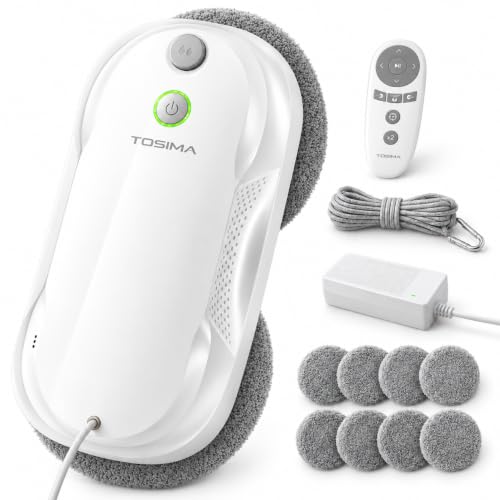
- Compact design suits smaller homes
- Adaptive suction up to 6400Pa
- Backup battery and safety rope included
Best For: Apartments and smaller homes
Large-Tank Convenience Pick
Tosima X1 Window Cleaning Robot

- Visible 85 ml water tank
- Dual-nozzle ultrasonic atomization
- Automatic S-path cleaning with remote control
Best For: Indoor household and overhead glass
Large-Window Coverage Pick
WISEBOT AI Window Cleaning Robot
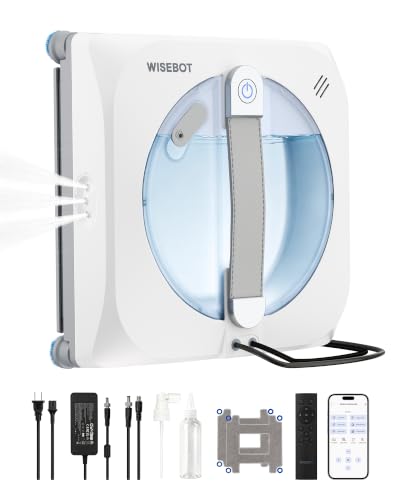
- AI navigation with spot cleaning
- Triple spray and 200 ml tank
- Square design targets edges and corners
Best For: Large and tall glass surfaces
Adaptive-Suction Value Pick
Double Helix Window Cleaning Robot

- 4800–6400Pa variable suction
- Side-spraying ultrasonic atomization
- Visible 85 ml water tank
Best For: Shoppers prioritizing adjustable suction
Compact Everyday Pick

- Compact, lightweight design for easy handling
- Ultrasonic spray and three cleaning modes
- App control with suction-based safety protection
Best For: Apartments, small windows, and light daily cleaning
High-Reach Feature Pick

- 6400Pa suction with triple safety protection
- Auto dual-spray and edge detection
- 178-inch safety rope and 10 replacement pads
Best For: High windows and users wanting remote, feature-rich cleaning
Remote-Control Value Pick
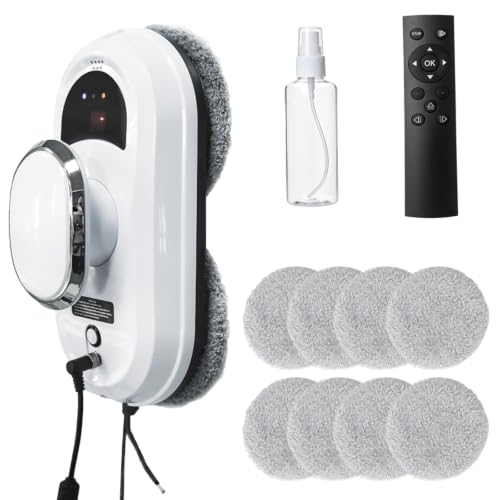
- 5600Pa suction with dual safety protection
- Remote control and three cleaning modes
- Includes eight replacement cloths
Best For: Flat glass, mirrors, and smooth tiles with manual spray preparation
Best Glass-Only Pick
Dual-Spray Window Cleaning Robot

- Dual spray with a 50ml tank and 10 microfiber cloths
- Edge detection and three cleaning paths
- 3000Pa suction, safety rope, and UPS backup
Best For: Routine cleaning of smooth glass windows, doors, and skylights
Best Smart-Path Design

- AI 5.0 path planning with edge detection
- Dual nozzles and double helix cleaning heads
- Three automatic modes plus manual remote control
Best For: Routine cleaning of windows, mirrors, and glass doors
Compact Safety Pick – Tosima W5 Window Cleaning Robot
For shoppers comparing window cleaning robots under 200, the Tosima W5 stands out with a compact design, adaptive suction, automatic spraying, and several safety features. It is designed for smooth glass surfaces and can be controlled automatically or with the included remote.
Best For: Apartments, condos, and smaller homes that need a compact cleaner for smooth glass windows.
Pros:
- Compact, lightweight design is easy to handle and store.
- Adaptive suction reaches up to 6400Pa and adjusts to the surface.
- Triple safety system includes a safety rope, suction, and up to 25 minutes of backup battery power.
- Dual-spray cleaning and intelligent navigation support more convenient cleaning.
Cons:
- Designed for smooth surfaces rather than general household surfaces.
- Its 6-inch cleaning path may require more passes on larger windows.
The W5 is a practical choice when easy storage and safety are priorities. Replaceable spray components and recyclable packaging are useful extras for routine maintenance.
Large-Tank Convenience Pick – Tosima X1 Window Cleaning Robot
Among window cleaning robots under 200, the Tosima X1 is a convenient option for users who want visible water-level monitoring and automatic S-pattern cleaning. Its dual nozzles, ultrasonic water atomization, and remote control support both large and small glass surfaces.
Best For: Household windows and overhead glass where a visible water tank and flexible remote control are helpful.
Pros:
- 85 ml water tank has a viewing window for quick level checks.
- Dual nozzles spray in the direction of travel to help limit smearing.
- Automatic S-shaped cleaning works on surfaces from 30×30 cm.
- Backup battery keeps the unit attached for about 25 minutes during an outage.
Cons:
- At 65 dB, it may not be the quietest option.
- The unit is intended for indoor household use and a stated temperature range of 0°C to 40°C.
The X1 makes a strong case for hassle-free routine cleaning, especially if you value an easy-to-monitor tank and remote directional control. Its included safety tether is important when cleaning elevated or overhead glass.
Large-Window Coverage Pick – WISEBOT AI Window Cleaning Robot
For buyers seeking window cleaning robots under 200 for larger glass areas, WISEBOT emphasizes route planning, wet cleaning, and edge coverage. Its square design, triple-spray system, and multiple cleaning modes are intended for windows, mirrors, balcony glass, and other smooth surfaces.
Best For: Large or tall windows where edge cleaning, spot cleaning, and longer wet-cleaning sessions are useful.
Pros:
- AI navigation includes edge detection, frameless-glass detection, and obstacle recognition.
- Triple-spray system and a 200 ml tank support wider wet-cleaning coverage.
- Square body and dedicated edge-cleaning mode help reach corners and frame areas.
- Reusable microfiber cloths can be washed and reused.
Cons:
- The supplied notes do not specify the robot’s exact weight, dimensions, or suction rating.
- Its feature-rich navigation may be more than needed for small, simple windows.
WISEBOT is appealing when coverage and cleaning flexibility matter more than a minimalist setup. Fast, intensive, and spot-cleaning modes let you adjust the approach for everyday dirt or stubborn areas.
Adaptive-Suction Value Pick – Double Helix Window Cleaning Robot
This Double Helix model is a straightforward contender among window cleaning robots under 200, combining variable-frequency suction with side-spraying and edge detection. Its visible 85 ml tank helps you monitor water levels while the robot works across compatible glass surfaces.
Best For: Users who want strong variable suction and automatic side spraying in a compact window-cleaning robot.
Pros:
- Double-helix suction varies from 4800Pa to 6400Pa based on cleaning needs.
- Bidirectional ultrasonic atomization sprays water from the side for broader coverage.
- Visible 85 ml tank reduces guesswork about remaining water.
- Air-pressure and AI edge sensors support anti-drop protection and edge awareness.
Cons:
- The supplied details do not state a backup battery duration or warranty.
- Product specifications list unusual dimensions, so shoppers should verify the size before ordering.
- The listed surface recommendation is bamboo, which may not clearly reflect typical glass-window use.
The Double Helix model offers useful suction and spraying features, but its inconsistent specification details make verification especially important. Confirm compatibility, dimensions, and safety instructions before using it on elevated glass.
Compact Everyday Pick – ECOVACS WINBOT Mini
If you want window cleaning robots under 200 for routine indoor maintenance, the ECOVACS WINBOT Mini is a compact option designed for quick touch-ups. Its lightweight body, app control, ultrasonic spray, and automatic path planning make setup straightforward for everyday glass cleaning.
Best For: Apartments, smaller windows, narrow or hard-to-reach indoor glass, and light dust or fingerprints.
Pros:
- Lightweight, compact design is easy to handle and store.
- Dual nozzles with ultrasonic spray support routine cleaning.
- Three cleaning modes and intelligent path planning simplify operation.
- Strong suction and a 9-stage protection system help it stay attached.
Cons:
- Best suited to light dirt; heavily soiled glass may need multiple cycles.
- Designed for indoor use and requires corded power.
The WINBOT Mini stands out when convenience and compact handling matter more than heavy-duty stain removal. It is a practical fit for frequent maintenance rather than neglected, heavily dirty windows.
High-Reach Feature Pick – Curalk 6400Pa Window Robot
Among window cleaning robots under 200, this model emphasizes reach, suction, and automated spraying. It combines 6400Pa variable-frequency suction with edge and corner detection, remote control, multiple cleaning modes, and a long safety rope for indoor or outdoor high windows.
Best For: High or hard-to-reach glass where remote operation, added safety measures, and more intensive cleaning features are priorities.
Pros:
- 6400Pa suction adapts to different dirt levels and glass surfaces.
- Triple safety system includes backup battery and air-pressure anti-drop protection.
- Dual-direction auto-spray, edge detection, and three cleaning modes support thorough coverage.
- Includes a 178-inch safety rope and 10 replacement microfiber mop pads.
Cons:
- Requires careful pad preparation and pre-applying cleaning solution to the glass.
- The supplied notes list the tank as 85ml in the details, while the title references 90ml.
This is the more feature-heavy choice for users tackling elevated or particularly dirty windows. Its safety equipment and spray system add convenience, but the preparation instructions require attention before each cleaning session.
Remote-Control Value Pick – Sailesi 5600Pa Window Robot
For shoppers comparing window cleaning robots under 200, the Sailesi model offers straightforward remote-controlled operation and strong 5600Pa suction. It plans cleaning paths automatically, supports three modes, and includes microfiber mops for wet or dry wiping of flat glass surfaces.
Best For: Flat glass windows, mirrors, and smooth tiles when you prefer remote control and a simple, spray-bottle-based setup.
Pros:
- 5600Pa suction helps keep the robot firmly attached during cleaning.
- AI path planning navigates around frames and edges.
- Remote control provides three automatic modes plus manual control.
- Includes two pre-installed cloths and eight replacement cloths.
Cons:
- No built-in spray mechanism; water must be applied separately using the included bottle.
- Its 20-minute UPS protection period limits backup operation time.
- Designed for flat glass and other smooth surfaces rather than irregular ones.
The Sailesi is a sensible option for buyers who want core robotic window cleaning without an integrated sprayer. Its remote control and generous cloth supply make it convenient, provided you are comfortable preparing the surface manually.
Best Glass-Only Pick – Dual-Spray Window Cleaning Robot
If you are comparing window cleaning robots under 200, this model stands out for its dual water spray, edge detection, and 3000Pa suction. It is designed for smooth glass and works best when you first remove loose dust and stubborn debris manually.
Best For: Glass windows, glass doors, skylights angled at least 30 degrees, mirrors, and other smooth glass surfaces.
Pros:
- Dual-spray system with a 50ml water tank and 10 microfiber cloths.
- Three cleaning paths, pressure sensing, and edge detection for frameless windows.
- Includes 3000Pa suction, a safety rope, and a 20-minute UPS backup.
Cons:
- It must remain plugged in; the UPS is for emergency holding rather than cordless cleaning.
- Not recommended for curved glass, thick trim, raised decorations, or horizontal surfaces.
- Heavy stains should be pre-cleaned, and cloths may need replacement after one or two windows.
This is a practical choice for shoppers who want automated glass cleaning with clear operating guidelines. Its strongest fit is routine maintenance on suitable glass rather than neglected, heavily soiled windows.
Best High-Suction Option – 5600Pa Automatic Window Cleaner
Among window cleaning robots under 200, this model is worth considering if suction strength is a priority. Its 5600Pa suction, automatic or manual water spraying, and three path-planning modes are aimed at making regular window cleaning less hands-on.
Best For: Smooth windows, class doors, tiles, and other compatible surfaces where strong suction and flexible cleaning controls are useful.
Pros:
- 5600Pa suction and an internal drive system support steady movement.
- Offers automatic or manual water spraying and three automatic cleaning modes.
- Uses double spiral cleaning heads, microfiber pads, and frame and obstacle detection.
- Includes a safety rope rated for a 300-pound load, plus 10 cleaning pads.
Cons:
- The 30ml water container is smaller than some competing models.
- It is corded, so the power adapter must remain connected during operation.
- Its 5.7-inch cleaning path may require multiple passes on larger panes.
This model makes the most sense for buyers who value the highest stated suction rating in this group and want both automatic and manual control. Confirm that the surface is smooth and compatible before use.
Best Smart-Path Design – AI Dual-Spray Glass Cleaner
For shoppers browsing window cleaning robots under 200, this 2026 model combines AI 5.0 path planning with dual spray and remote control. It is built for routine cleaning of glass surfaces, with edge detection intended to help the robot navigate frames and obstacles.
Best For: Windows, mirrors, and glass doors where automated path planning, adjustable spraying, and remote operation are priorities.
Pros:
- AI 5.0 path planning and edge detection help it adjust around frames and obstacles.
- Dual water nozzles and double helix cleaning heads work with microfiber pads.
- Remote control provides three automatic modes plus manual control.
- Includes 3000Pa suction, a UPS system, and a high-strength safety rope.
Cons:
- The supplied information does not specify a water-tank capacity or cleaning-path width.
- It is intended for glass surfaces, so broader surface compatibility should not be assumed.
- As with other suction-based models, it should be used with its safety system in place.
This is a good fit if navigation features and remote flexibility matter more than maximum suction. Its dual-spray cleaning setup adds convenience for fingerprints, dust, and everyday smudges on suitable glass.
How We Picked the Best Window Cleaning Robots Under 200
We evaluated these models by focusing on the features that matter most in real-world use: suction strength, safety redundancy, navigation, spray performance, cloth design, controls, and surface compatibility. A high pressure rating can be helpful, but it does not guarantee better cleaning if the robot struggles with frames, uneven glass, dirty pads, or low battery performance.
We also considered practical differences between compact and full-size designs. Smaller robots may be easier to store and better suited to narrow panes, while larger units can cover broad windows more efficiently. Because product specifications and included accessories can vary by seller, check the current listing before ordering.
Quick Comparison
| Feature | What to look for | Why it matters |
|---|---|---|
| Suction | About 3,000Pa to 6,400Pa | Helps maintain contact with smooth vertical glass |
| Spray system | Single, dual, triple, or ultrasonic spray | Controls moisture and supports more even cleaning |
| Navigation | Edge detection and intelligent path planning | Improves coverage and reduces missed areas |
| Safety | Tether, backup power, alarms, or layered protection | Reduces the risk of drops during operation |
| Included supplies | Extra cloths, remote, cable, and safety rope | Reduces replacement costs and setup hassle |
Key Buying Factors for Window Cleaning Robots Under 200
Safety Comes First
Use the supplied safety rope and follow the manufacturer’s mounting and charging instructions. Look for models with more than one protective measure, such as strong suction, a backup battery, an alarm, and a secure tether. No robot should be left unattended, especially on exterior windows or above people and property.
Match the Robot to Your Glass
Most affordable cleaners are designed for smooth, relatively flat surfaces. Confirm the minimum pane size, maximum frame height, frameless-glass compatibility, and whether the unit can handle mirrors, tiles, or doors. Textured, wet, cracked, or heavily uneven surfaces may not be suitable.
Consider Spray and Cloth Management
Dual or ultrasonic spray systems can distribute cleaning fluid more consistently, but too much moisture may cause slipping or streaks. Reusable microfiber pads must be washed regularly, and heavily soiled windows may need a manual pre-clean to prevent dirt from spreading.
Check Controls and Runtime
Remote controls are useful for starting, stopping, and selecting cleaning modes. Intelligent path planning can improve coverage, but robots still require supervision and occasional repositioning. Verify cable length, battery backup duration, charging time, and replacement-pad availability.
Who Should Buy Which Window Cleaning Robots Under 200?
Choose a compact model if you have smaller panes, limited storage, or want a lighter unit for mirrors and interior glass. Pick a higher-suction option if you prioritize firm contact on large, smooth windows. A robot with dual or ultrasonic spray is a practical choice for frequent maintenance, while AI navigation and edge detection are especially useful on broad panes with fewer interruptions.
If your windows are heavily stained, framed with deep ledges, textured, or difficult to access, a robot may not replace traditional cleaning. For many buyers, the best window cleaning robots under $200 are time-saving maintenance tools rather than fully autonomous substitutes for manual washing.