Making jerky is easier when every strip has a consistent thickness. The right meat slicer can improve drying uniformity, reduce prep time, and help you handle chilled or partially frozen cuts more safely.
These 10 picks include manual jerky slicers, attachment-style tools, and electric food slicers with adjustable thickness controls. Use the guide below to match cutting capacity, precision, cleanup, and budget to your usual jerky-making routine.
Best 10 Meat Slicer for Jerky Picks for 2026
Best Dedicated Jerky Board

- Three adjustable thickness options
- Includes a 10-inch stainless steel knife
- Designed for whole-muscle jerky
Best For: Manual home jerky preparation
Best Grinder Attachment

- Combines slicing and tenderizing
- Designed as a grinder attachment
- Uses aluminum and stainless steel components
Best For: LEM grinder owners making jerky
Best Electric Versatility

- Adjusts from 0 to 15 mm
- Includes two 7.5-inch blades
- Adds safety lock and non-slip feet
Best For: Multi-purpose home slicing and jerky
Best Thin Fresh-Meat Cuts

- Offers 2 mm and 4 mm cuts
- Can make up to 18 slices per pass
- Removable parts and suction-cup base
Best For: Thin fresh-meat slicing for jerky and meals
Best Manual Jerky Slicer
Weston Support Beef Jerky Slicer

- Cuts up to 15 consistent 1/4-inch strips at once
- Handles meat up to 5 inches wide and 1.25 inches thick
- Built-in C-clamp, combs, and tongs included
Best For: Large-batch homemade jerky preparation
Best for Everyday Use
VEVOR 7.5-Inch Electric Meat Slicer

- 200W motor with 70–100 RPM slicing speed
- Includes serrated and non-serrated stainless steel blades
- Thickness adjusts from 0 to 0.6 inches
Best For: Multi-purpose home slicing, including jerky and deli foods
Best Safety Features
OSTBA 200W Electric Meat Slicer
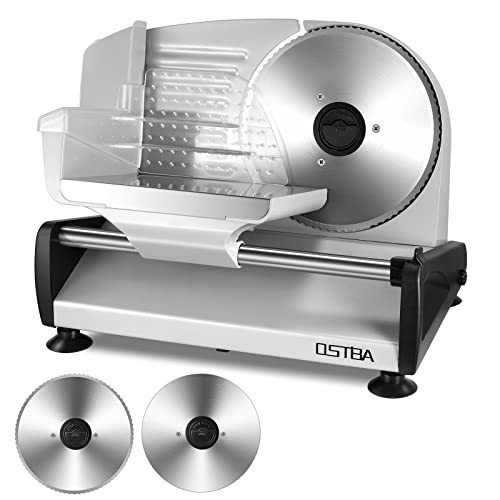
- 200W motor with two 7.5-inch stainless steel blades
- Adjusts from very thin to approximately 3/4-inch slices
- Safety lock, suction feet, and removable parts included
Best For: Versatile home slicing with added safety controls
Heavy-Duty Pick
VEVOR 10-Inch Commercial Meat Slicer
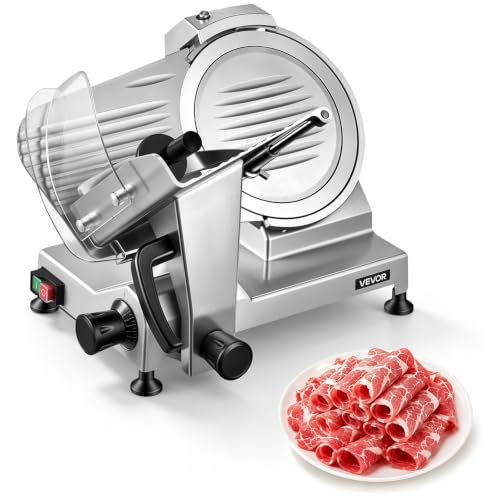
- 10-inch carbon steel blade
- 0–12 mm adjustable thickness
- Handles raw, cooked, and frozen meats
Best For: Dedicated home or small commercial prep areas
Compact Home Pick
Nutrichef 7.5-Inch Electric Meat Slicer

- 0–15 mm adjustable thickness
- Compact countertop-friendly design
- Removable blade and food carriage
Best For: Home users with limited storage space
High-Output Pick
VEVOR 850W Commercial Meat Cutter

- 850W motor with stated 551 lb/h capacity
- Consistent 5 mm slicing
- Detachable stainless steel blade set
Best For: High-volume boneless meat preparation
Best Dedicated Jerky Board – Stainless Steel Jerky Slicer
If you want a straightforward meat slicer for jerky, this stainless steel board pairs adjustable spacers with a 10-inch carving knife. It is designed for uniform cuts of beef, venison, wild game, and other meats, with thickness options of 1/8, 1/4, and 3/8 inch.
Best For: Home jerky makers who prefer a manual cutting board and knife setup for whole-muscle meats.
Pros:
- Adjustable spacers support three slicing thicknesses.
- Includes a food-grade stainless steel 10-inch knife.
- Useful for jerky, fruit, and other thin-slicing tasks.
- Slip-resistant design and easy storage.
Cons:
- Not intended for frozen meat.
- Manual cutting requires more effort than an electric slicer.
This is a focused option for buyers who want control over jerky thickness without adding an electric appliance. The main limitation is that meat must be thawed before slicing.
Best Grinder Attachment – LEM BigBite Jerky Slicer
For shoppers already using a compatible meat grinder, this LEM attachment combines slicing and tenderizing in one manual accessory. It is built for jerky as well as foods such as cheesesteaks, fajitas, and meal-prep portions.
Best For: LEM grinder owners who want to add jerky slicing and tenderizing functionality.
Pros:
- Combines a jerky slicer and tenderizer.
- Works as a meat grinder attachment.
- Aluminum construction with stainless steel blades.
- Suitable for multiple meat-preparation tasks.
Cons:
- Requires a compatible grinder for operation.
- Hand-wash-only care may require extra cleanup time.
This attachment makes the most sense if you already have the right LEM grinder setup. It is less suitable as a standalone meat slicer for jerky because it depends on grinder compatibility.
Best Electric Versatility – 200W Home Meat Slicer
This 200W electric meat slicer is a versatile choice if you want a meat slicer for jerky alongside broader kitchen use. Its adjustable 0–15 mm thickness range supports custom cuts, while the included serrated and non-serrated blades handle meat, cheese, bread, and vegetables.
Best For: Home cooks who want an electric slicer for jerky and everyday food preparation.
Pros:
- Adjustable thickness from 0 to 15 mm.
- Includes two removable 7.5-inch stainless steel blades.
- 200W motor is designed for stable, lower-noise operation.
- Safety lock, blade cover, and non-slip feet add protection.
Cons:
- Hand-wash-only care is specified.
- Its general-purpose design may be less specialized than a dedicated jerky board.
The broad thickness adjustment makes this the most flexible option in the group for different foods and jerky styles. Removable parts also help with cleanup, though the manufacturer specifies hand washing.
Best Thin Fresh-Meat Cuts – ONCE FOR ALL 17-in-1 Slicer
This manual slicer is designed for fresh meat and can produce multiple thin slices in one pass. With blade configurations for 2 or 4 mm cuts, it can be useful for thin jerky preparation, hot pot, barbecue, and stir-fry, provided the selected thickness suits your recipe.
Best For: Users who want very thin, repeatable fresh-meat slices and a compact manual design.
Pros:
- Offers 2 mm or 4 mm slicing configurations.
- Can cut up to 18 thin slices in one stroke.
- Removable blades, container, and base simplify cleaning.
- Suction-cup base helps hold the slicer on smooth surfaces.
Cons:
- Designed for fresh meat rather than frozen meat.
- Only offers two stated thickness settings.
- Manual operation requires positioning and repeated handling.
This model stands out for thin, uniform fresh-meat cuts and compact storage. Its 2 mm setting may suit many jerky recipes, while the 4 mm option provides a thicker alternative.
Best Manual Jerky Slicer – Weston Support Beef Jerky Slicer
If you want a meat slicer for jerky that produces multiple uniform strips quickly, the Weston manual model is built for the job. Its 32 stainless steel blades cut consistent 1/4-inch strips and accommodate larger pieces of meat.
Best For: Homemade jerky makers working with beef, game meat, turkey, or duck breast who prefer a manual slicer.
Pros:
- Creates consistent 1/4-inch strips and can cut up to 15 strips at once.
- Large chute handles meat up to 5 inches wide and 1.25 inches thick.
- Built-in C-clamp mounts to flat surfaces up to 2 inches thick.
- Includes stainless steel combs and tongs for smoother, cleaner handling.
Cons:
- Requires manual operation rather than an electric motor.
- Needs a suitable table or other flat surface for clamping.
For dedicated jerky preparation, this slicer offers a focused design and high throughput without relying on electricity. The manual setup is most appealing if consistent strips matter more than push-button convenience.
Best for Everyday Use – VEVOR 7.5-Inch Electric Meat Slicer
The VEVOR is a practical meat slicer for jerky when you also want one machine for deli meats, frozen meat, and other foods. Its 200W motor, two blade options, and adjustable thickness control provide flexible home-kitchen slicing.
Best For: Home cooks who want an electric slicer for jerky plus deli meats, steak, ham, bread, and vegetables.
Pros:
- 200W motor operates at 70–100 RPM for efficient slicing.
- Includes serrated and non-serrated 7.5-inch stainless steel blades.
- Adjusts from paper-thin to 0.6-inch slices.
- Removable components and a reversible tray simplify cleaning.
Cons:
- Hand-wash care is specified.
- Its 0.6-inch maximum setting may be more range than needed for thin jerky strips.
This semi-automatic slicer is a versatile choice for households that want more than a dedicated jerky cutter. The adjustable control can support thinner preparation, while the interchangeable blades expand its usefulness beyond meat.
Best Safety Features – OSTBA 200W Electric Meat Slicer
The OSTBA is a meat slicer for jerky and everyday food prep, with adjustable thickness and two interchangeable blades. Its safety-lock design, suction-cup feet, and removable parts make it a convenient option for home use.
Best For: Home users seeking an electric slicer for meat, cheese, bread, fruits, and vegetables with added operating safeguards.
Pros:
- 200W motor and 7.5-inch serrated blade handle frozen meat and other firm foods.
- Thickness adjusts from very thin to approximately 3/4 inch.
- Includes serrated and non-serrated blades for different foods.
- Safety lock and power button must be pressed together; suction feet improve stability.
Cons:
- Designed for semi-automatic operation rather than fully automatic slicing.
- Its broad food-prep design is less specialized for producing uniform jerky strips than a dedicated jerky slicer.
Choose the OSTBA if versatility and safety are priorities. It can support thin meat preparation while also serving as a general-purpose slicer, and its removable components make cleanup more manageable.
Heavy-Duty Pick – VEVOR 10-Inch Commercial Meat Slicer
If you want a meat slicer for jerky that can handle larger cuts and flexible thickness settings, this VEVOR model is a strong option. Its 10-inch carbon steel blade, 240W motor, and 0–12 mm adjustment range suit raw, cooked, and frozen meats, though its 34-pound size is better for a dedicated work area than quick storage.
Best For: Home users and small commercial kitchens that need a sturdy slicer with adjustable thickness for meat preparation.
Pros:
- Wide 10-inch blade handles various meat textures, including frozen meat.
- Adjustable thickness from 0 to 12 mm supports different jerky preferences.
- Built-in sharpening stone helps maintain blade sharpness.
- Removable food-contact parts simplify cleaning.
Cons:
- At 34 pounds, it is relatively heavy and not especially portable.
- Hand-wash care is required.
- Semi-automatic operation requires hands-on feeding.
The broad adjustment range is the main advantage for jerky makers who want to test different slice thicknesses. Choose it if capacity and versatility matter more than a compact footprint.
Compact Home Pick – Nutrichef 7.5-Inch Electric Meat Slicer
For shoppers seeking a compact meat slicer for jerky, the Nutrichef offers a practical balance of size, control, and easy handling. Its 200W motor and adjustable 0–15 mm dial let you experiment with slice thickness, while the removable blade and carriage make cleanup more manageable.
Best For: Home kitchens that need a compact slicer for meat, deli foods, and bread.
Pros:
- Adjustable 0–15 mm cutting range accommodates thin or thicker slices.
- Compact 13.9-by-9.9-by-10.9-inch design is easier to store.
- Removable stainless steel blade and food carriage simplify cleaning.
- Safety guard and safety lock support controlled operation.
Cons:
- Its 7.5-inch blade is smaller than the blade on heavy-duty models.
- At 200W, it has less motor power than the larger VEVOR slicers in this roundup.
- Hand-wash care is required.
This is the most convenient choice when storage space and everyday usability are priorities. Its broad thickness dial is useful for jerky experimentation, but the smaller blade is better suited to home-scale batches.
High-Output Pick – VEVOR 850W Commercial Meat Cutter
This VEVOR is designed for high-volume cutting rather than fine thickness experimentation. Its 850W motor and stated 551 lb/h capacity make it a meat slicer for jerky preparation when speed is important, but the included blades produce only 5 mm slices and the machine is not suitable for frozen or bone-in meat.
Best For: Small businesses, restaurants, markets, and home users who want fast, consistent 5 mm cuts from boneless meat.
Pros:
- 850W motor is rated for fast, high-volume cutting.
- Included blade set produces consistent 5 mm slices.
- Stainless steel construction and anti-slip rubber base support durability and stability.
- Detachable blades make cleaning and replacement easier.
Cons:
- Only 5 mm blades are included, limiting thickness control.
- Not suitable for frozen foods, bone-in meats, or hard vegetables.
- At 50.7 pounds, it is the heaviest option here.
Choose this model when throughput and repeatable 5 mm slices are more important than adjustability. It can suit batch jerky preparation, provided the meat is boneless and fully within the machine’s stated limitations.
How We Picked the Best Meat Slicer for Jerky
We focused on the features that matter most when preparing meat for dehydration: thickness control, cutting consistency, handling capacity, blade quality, stability, and cleanup. The selection includes compact home slicers, manual models for occasional batches, attachment-based tools, and larger electric machines for frequent or high-volume use.
We also considered whether each design is suited to raw, chilled, or partially frozen meat, since firmer cuts are generally easier to slice evenly. Adjustable settings and removable components received particular attention because they help with both recipe flexibility and sanitation.
Quick Comparison
| Type | Best For | Main Advantage | Potential Trade-Off |
|---|---|---|---|
| Manual slicer | Occasional jerky batches | Simple operation and no motor | Requires more effort and steady technique |
| Attachment-style slicer | Existing grinder owners | Combines slicing or tenderizing with a familiar appliance | Depends on compatible equipment |
| Compact electric slicer | Home kitchens | Faster, repeatable cuts | Usually has a smaller cutting area |
| Commercial-style slicer | Large or frequent batches | Greater power and capacity | More storage, cleaning, and safety considerations |
Key Buying Factors for a Meat Slicer for Jerky
Thickness Adjustment
Look for a clearly marked adjustment dial or fixed guide that supports thin, repeatable strips. A broad range is useful if you also slice deli meat, vegetables, or bread, but jerky preparation benefits most from precise low-thickness settings.
Blade and Cutting Capacity
Stainless steel or hardened blades are common choices for meat slicing. A larger blade and wider carriage can handle bigger roasts, while compact blades are easier to store. Confirm the maximum cut width and thickness before buying.
Power, Stability, and Control
Electric models save time during large batches, but wattage alone does not determine performance. A stable base, secure food carriage, smooth controls, and overload protection can matter just as much. Manual models can be practical when you want quiet operation and maximum simplicity.
Cleaning and Safety
Choose a slicer with removable blades or food-contact parts that can be cleaned thoroughly. A blade guard, non-slip feet, hand protection, and a design that keeps fingers away from the cutting edge are important. Always follow the manufacturer’s instructions and slice firm, properly prepared meat.
Who Should Buy Which Meat Slicer for Jerky?
Choose a manual jerky slicer if you make small batches, prefer straightforward equipment, or do not want another motorized appliance. An attachment model makes sense if you already own a compatible grinder and want added preparation functions.
For most home cooks, a compact electric slicer offers the best balance of speed, consistency, and countertop practicality. Select a commercial-style model if you routinely process large cuts or make jerky in substantial quantities. Before ordering, verify the available thickness range, blade size, replacement-part support, and how easily the unit can be disassembled for cleaning.