The best energy-efficient beverage refrigerators keep drinks cold without taking up the space or using the power of a full-size refrigerator. This roundup compares compact coolers, large display merchandisers, and under-counter models for home bars, offices, kitchens, and entertaining spaces.
Capacity, temperature range, door design, and installation requirements vary widely across these models. Use the guide below to match your available space and beverage habits with a refrigerator that delivers convenient cooling without unnecessary energy use.
Best 10 Energy Efficient Beverage Refrigerators Picks for 2026
Best Quiet Design

- Stores up to 128 cans or 26 wine bottles.
- Operates below 36 dB.
- Low-E glass and sealed door help retain cold air.
Best For: Bedrooms, offices, living areas, and RVs
Best Commercial Capacity
BODEGACOOLER 10.2-Cu.-Ft. Merchandiser
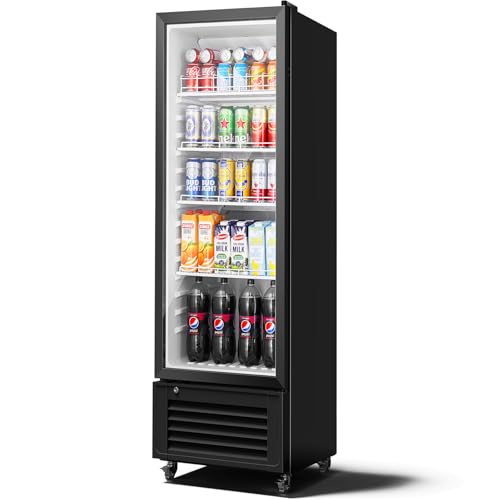
- Holds up to 264 cans and 120 bottles.
- High-efficiency compressor and fan motor.
- Low-E glass, automatic defrost, and self-closing door.
Best For: Businesses, gyms, shops, and large home bars
Best Large Compact Option
EUHOMY 145-Can Beverage Refrigerator

- Holds up to 145 cans or 37 bottles.
- Listed at 240 kWh annual energy use.
- 32–61°F digital control and below-40-dB operation.
Best For: Homes, offices, bars, and beverage-heavy events
Best Built-In Pick
15-Inch Under-Counter Beverage Refrigerator

- Front ventilation enables flush installation
- 3.0 cu. ft. capacity for up to 127 cans
- 37°F–65°F digital temperature range
Best For: Cabinet-friendly kitchen, bar, and entertainment installations
Best Commercial-Capacity Pick
12.5-Cu.-Ft. Glass-Door Merchandiser

- Stores up to 371 cans
- R600a refrigerant and efficient compressor
- Automatic defrost with five adjustable shelves
Best For: High-volume beverage display in commercial or office settings
Best Compact Value
4.5-Cu.-Ft. 145-Can Beverage Refrigerator

- Stores up to 145 cans or 33 wine bottles
- High-efficiency compressor uses 240 kWh annually
- Quiet operation below 42 dB
Best For: Home, office, RV, and flexible under-counter beverage storage
Reliable Office Cooling
Honeywell 116-Can Beverage Refrigerator

- 115-can capacity in a compact 3.2-cu.-ft. design
- Frost-free thermoelectric cooling with digital thermostat
- Four removable shelves, LED light, and electronic lock
Best For: Offices, home bars, and undercounter beverage storage
Quiet Compressor Efficiency
Icyglee 126-Can Beverage Refrigerator

- 126-can capacity with four repositionable shelves
- 34–64°F compressor cooling and smart touch controls
- 36 dB operation with low-E glass and reversible hinges
Best For: Quiet bedrooms, offices, and flexible home-bar setups
Lowest Listed Energy Use
Electactic 130-Can Beverage Refrigerator

- 130-can capacity with five adjustable wire shelves
- Lowest listed annual use at 180 kWh
- 37–61°F compressor cooling with operation below 38 dB
Best For: Energy-conscious buyers needing high-capacity beverage storage
Best Overall Value – hOmeLabs 120-Can Beverage Refrigerator
For shoppers comparing energy efficient beverage refrigerators, the hOmeLabs offers a practical balance of capacity, compact dimensions, and straightforward temperature control. Its 3.2-cubic-foot interior holds up to 120 cans, while the compressor-based cooling system reaches 34°F.
Best For: Home bars, offices, dorm rooms, RVs, and smaller spaces needing organized canned-drink storage.
Pros:
- Stores up to 120 cans on three removable chrome wire shelves.
- Digital controls cool beverages down to 34°F.
- Glass door and white LED light make drinks easy to view.
- Whisper-quiet compressor supports less distracting operation.
Cons:
- Annual energy consumption is listed at 288 kWh.
- It has no inverter compressor.
- The shelves are designed primarily for beverage organization rather than flexible food storage.
Choose this model if you want dependable canned-beverage capacity in a relatively compact freestanding refrigerator and value low-noise operation and easy visibility.
Best Quiet Design – 128-Can Beverage Fridge
This 3.2-cubic-foot beverage fridge is a strong option among energy efficient beverage refrigerators for buyers who want substantial storage without a loud appliance. It holds up to 128 cans, uses recirculated air cooling, and includes a low-E glass door with a high-density seal to help limit cold-air loss.
Best For: Bedrooms, living rooms, offices, RVs, and other spaces where quiet operation and flexible beverage storage matter.
Pros:
- Capacity for up to 128 cans or approximately 26 standard wine bottles.
- Three removable shelves and five optional shelf slots allow flexible arrangement.
- Temperature range spans 35–65°F with Fahrenheit/Celsius selection.
- Rated for operation below 36 dB and equipped with low-E glass.
Cons:
- The supplied notes do not list annual energy consumption.
- Its minimum stated temperature is 35°F, slightly warmer than some beverage coolers.
- The manufacturer recommends leaving it unplugged for 6–12 hours after delivery before use.
Its quiet profile, reversible door, and sealed low-E glass design make it appealing for living spaces, while the adjustable interior accommodates both cans and bottles.
Best Commercial Capacity – BODEGACOOLER 10.2-Cu.-Ft. Merchandiser
For businesses or serious home entertaining, this BODEGACOOLER provides far more room than typical compact energy efficient beverage refrigerators. The 10.2-cubic-foot display fridge combines four removable shelves, high-efficiency compressor cooling, an energy-saving fan motor, and Low-E glass insulation.
Best For: Restaurants, cafes, shops, gyms, offices, garages, and large home bars that need high-volume drink display and storage.
Pros:
- Large 10.2-cubic-foot capacity stores up to 264 cans and 120 bottles.
- High-efficiency compressor and energy-saving fan motor circulate cool air.
- Low-E glass reportedly isolates more than 95% of UV rays.
- Automatic defrost, magnetic self-closing door, and adjustable shelves support commercial use.
Cons:
- Its commercial size requires substantially more floor space than compact models.
- Temperature control uses a mechanical seven-position knob rather than a digital display.
- The supplied notes do not provide annual energy consumption.
This is the better fit when storage volume, product visibility, and commercial-style features outweigh the space-saving advantages of a smaller beverage refrigerator.
Best Large Compact Option – EUHOMY 145-Can Beverage Refrigerator
The EUHOMY stands out among energy efficient beverage refrigerators by pairing a 4.5-cubic-foot interior with listed annual energy consumption of 240 kWh. Its digital controls cover 32–61°F, while the double-pane tempered glass door and airtight seal help insulate the beverage compartment.
Best For: Homes, offices, bars, and events requiring high beverage capacity in a relatively compact refrigerator.
Pros:
- Stores up to 145 cans or 37 bottles.
- Listed annual energy consumption is 240 kWh.
- Digital temperature control adjusts from 32–61°F.
- Compressor operates below 40 dB and includes adjustable shelving.
Cons:
- Its 21.7-inch depth may require more room than smaller beverage fridges.
- The supplied notes identify it as a built-in installation, so placement requirements should be checked.
- The listed 12-month technical support period is limited compared with longer warranties.
With the largest stated capacity among the compact models here and a lower listed energy-use figure than the hOmeLabs model, the EUHOMY is a compelling choice for frequent beverage storage.
Best Built-In Pick – 15-Inch Under-Counter Beverage Refrigerator
For shoppers seeking energy efficient beverage refrigerators for a kitchen, bar, or entertainment area, this 3.0-cubic-foot model combines front ventilation with compact under-counter dimensions. It holds up to 127 cans and offers adjustable temperature control from 37°F to 65°F.
Best For: Built-in installations where a flush, cabinet-friendly fit matters.
Pros:
- Front-venting design supports flush under-counter or cabinet installation.
- Three adjustable shelves hold up to 127 standard 12-ounce cans.
- Frost-free compressor cooling, double-pane glass, and a blue LED interior light.
- Digital controls cover a flexible 37°F to 65°F range.
Cons:
- Its 15-inch width limits capacity compared with larger freestanding models.
- The door is listed with a left orientation rather than a reversible design.
This is a practical choice when installation flexibility and a seamless built-in appearance are more important than maximum storage. Its front ventilation and energy-efficient design are particularly useful in compact kitchen or bar layouts.
Best Commercial-Capacity Pick – 12.5-Cu.-Ft. Glass-Door Merchandiser
Among energy efficient beverage refrigerators, this large BODEGACOOLER model is designed for high-volume storage and display. Its 12.5-cubic-foot interior holds up to 371 cans, while R600a refrigerant, an efficient compressor, and automatic defrost support lower-maintenance operation.
Best For: Offices, shops, restaurants, and other spaces that need substantial drink storage and visibility.
Pros:
- Large capacity accommodates up to 371 standard cans across five adjustable shelves.
- R600a refrigerant and a high-efficiency compressor support energy-conscious cooling.
- Double-pane tempered glass, dual-color LED lighting, and digital temperature control improve display visibility.
- Self-closing door, automatic defrost, self-evaporating condensation, and four casters simplify operation.
Cons:
- The large commercial format requires considerably more space than compact beverage fridges.
- Its temperature range of 32°F to 50°F is less flexible for warmer beverage storage.
This model makes the most sense when capacity and merchandising are priorities. It offers commercial-oriented features and mobility, but its footprint and 100-pound weight are better suited to dedicated business or office areas.
Best Compact Value – 4.5-Cu.-Ft. 145-Can Beverage Refrigerator
This Feelfunn beverage cooler is a versatile option for shoppers comparing energy efficient beverage refrigerators for home, office, or RV use. Its 4.5-cubic-foot interior stores up to 145 cans, and the high-efficiency compressor is rated at 240 kWh per year.
Best For: Rooms that need more capacity than a countertop cooler without moving up to a commercial-size unit.
Pros:
- Holds up to 145 cans or 33 wine bottles in a compact freestanding or under-counter format.
- Four adjustable shelves accommodate different beverage sizes.
- Touch controls provide a 32°F to 61°F temperature range.
- Double-layer glass, circulating duct cooling, and operation below 42 dB support convenient everyday use.
Cons:
- Its annual energy consumption is listed at 240 kWh, so it is not the lowest-consumption option in this group.
- The unit should remain upright for more than 24 hours before first use.
With a reversible glass door, quiet operation, and flexible shelving, this is a well-rounded choice for multipurpose spaces. It balances capacity and convenience, though buyers focused strictly on the lowest energy use may prefer a smaller model.
Reliable Office Cooling – Honeywell 116-Can Beverage Refrigerator
For shoppers comparing energy efficient beverage refrigerators, the Honeywell H115BCS offers a compact 3.2-cubic-foot design with room for up to 115 cans. Its thermoelectric cooling system, frost-free operation, digital thermostat, and adjustable shelving make it a practical choice for organized beverage storage.
Best For: Offices, home bars, or undercounter spaces needing organized, frost-free beverage storage.
Pros:
- Holds up to 115 cans in a compact footprint.
- Four removable, slide-out plastic-coated shelves accommodate different drink sizes.
- Digital thermostat, interior LED light, adjustable legs, and electronic lock add convenience.
- Frost-free operation and tempered three-pane glass door support low-maintenance use.
Cons:
- Its listed annual energy consumption is 288 kWh per year.
- Thermoelectric cooling may be less versatile than compressor cooling for some environments.
- The door is right-oriented rather than reversible.
The Honeywell is a well-equipped option when shelf organization and frost-free convenience matter. It is especially suited to office or bar installations where its 33.1-inch height and undercounter form factor fit the space.
Quiet Compressor Efficiency – Icyglee 126-Can Beverage Refrigerator
The Icyglee 126-Can Mini Fridge is a strong contender among energy efficient beverage refrigerators, combining compressor cooling with a 3.2-cubic-foot interior. Its 34–64°F temperature range, low-E tempered glass door, and circulating air design help support consistent beverage storage while its listed operating noise is 36 dB.
Best For: Bedrooms, offices, and home bars where quiet operation and flexible temperature control are priorities.
Pros:
- Stores up to 126 cans with four shelves adjustable across eight slots.
- Compressor cooling provides a 34–64°F adjustable range.
- Low-E glass, a tight door seal, and 360-degree air circulation help retain cool air.
- Height-adjustable feet and reversible door hinges improve installation flexibility.
Cons:
- Manual defrost requires periodic maintenance.
- Its listed annual energy consumption is 289.21 kWh.
- It should stand for one day before use, according to the supplied instructions.
Choose the Icyglee if you want compressor performance and precise controls in a relatively quiet package. The removable shelves and reversible hinges make it adaptable, while the manual-defrost design is the main maintenance trade-off.
Lowest Listed Energy Use – Electactic 130-Can Beverage Refrigerator
Among these energy efficient beverage refrigerators, the Electactic stands out for its listed 180 kWh annual energy consumption. It combines a 3.1-cubic-foot, 130-can capacity with compressor cooling, five adjustable wire shelves, digital temperature control, and a slim design suited to freestanding or undercounter-style placement.
Best For: Buyers prioritizing the lowest listed annual energy use, high capacity, and quiet compressor cooling.
Pros:
- 130-can capacity in a compact 3.1-cubic-foot cabinet.
- Lists 180 kWh of annual energy consumption, lower than the other supplied models.
- Compressor cooling maintains a 37–61°F adjustable range with air circulation.
- Five adjustable shelves, reversible door, LED lighting, and operation below 38 dB add flexibility.
Cons:
- Manual defrost requires occasional upkeep.
- The supplied specifications list freestanding installation rather than a dedicated undercounter installation type.
- The black glass door and blue LED lighting may not suit every décor.
The Electactic is the clearest efficiency-focused pick based on the supplied energy figures. It also offers the highest stated capacity, making it a practical match for frequent entertaining, provided its styling and manual-defrost requirement fit your preferences.
How We Picked the Best Energy Efficient Beverage Refrigerators
We focused on beverage refrigerators with practical capacity ratings, adjustable temperature controls, glass-door visibility, and formats suited to common use cases. The selection includes compact 3.1- to 3.2-cubic-foot models, larger 4.5-cubic-foot coolers, under-counter designs, and commercial-size display refrigerators.
Because real-world energy consumption depends on room temperature, loading, ventilation, and temperature settings, an efficiency claim should not be considered in isolation. We prioritized features that can support efficient operation, including adequate insulation, adjustable controls, LED lighting, automatic or low-maintenance cooling systems, and Energy Star certification where specified by the manufacturer.
Quick Comparison
| Best For | Recommended Type | Typical Capacity | What to Prioritize |
|---|---|---|---|
| Small apartments and offices | Compact beverage fridge | 116–130 cans | Small footprint, quiet operation, adjustable shelves |
| Home bars and frequent entertaining | Large mini fridge | 145 cans | Flexible storage, wide temperature range, glass door |
| Built-in kitchen installations | Under-counter model | About 127 cans | Front ventilation, suitable dimensions, finished appearance |
| Retail or commercial service | Upright merchandiser | 264 cans or more | Commercial durability, display lighting, Energy Star rating |
Key Buying Factors for Energy-Efficient Beverage Refrigerators
Capacity and Footprint
Choose capacity based on how many drinks you regularly chill, not just the maximum can count. Shelves, bottles, tall containers, and mixed packaging can reduce usable space. Measure the installation area and leave the manufacturer-recommended clearance around the appliance.
Temperature Control
Adjustable controls are useful when storing soda, beer, wine, or mixed beverages. Check the stated temperature range and remember that a beverage refrigerator may not be designed for food storage or long-term wine aging.
Installation and Ventilation
Freestanding units generally need open space around their sides and back. Built-in models must be designed for under-counter installation, usually with front ventilation. Installing a freestanding cooler in a tight cabinet can restrict airflow and increase energy use.
Door, Lighting, and Shelves
Glass doors make it easier to check inventory without opening the refrigerator, while LED lighting improves visibility with comparatively low power demand. Adjustable or removable shelves help accommodate bottles and larger cans.
Noise and Operating Cost
For bedrooms, offices, and living areas, review noise feedback and cooling-system design. Compare published energy information when available, and use a moderate temperature setting rather than making the unit work harder than necessary.
Who Should Buy Which Energy Efficient Beverage Refrigerators?
Choose a compact 3.1- to 3.2-cubic-foot model for an office, apartment, dorm, or small home bar where floor space matters most. Choose a 4.5-cubic-foot refrigerator if you entertain often or need room for mixed beverages. Choose an under-counter refrigerator for a kitchen, basement bar, or remodel where a clean built-in appearance is important. Choose a commercial upright merchandiser for retail, hospitality, events, or high-volume storage where maximum capacity and display access outweigh a compact footprint.