Consistent fermentation is easier when your bakery can control temperature, timing, space, and humidity. The best bread proofing boxes for small bakeries help turn variable room conditions into more predictable dough development.
This roundup covers compact heated proofers, foldable designs, and stackable containers suited to sourdough, pizza, and everyday bread production. Use the buying guide below to match capacity and controls to your workflow.
Best 10 Bread Proofing Boxes for Small Bakeries Picks for 2026
Best All-Around Control
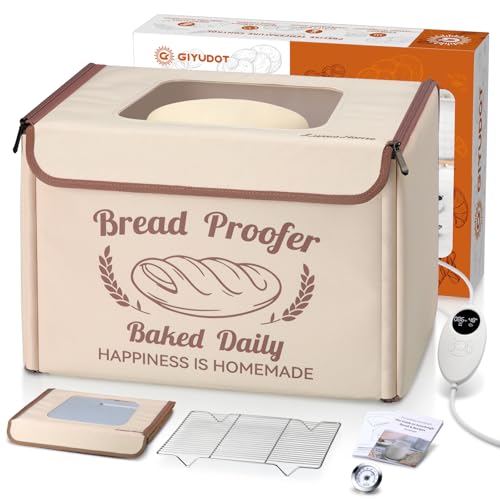
- 50–113°F control with three-zone heating
- 36-liter foldable interior with viewing window
- Includes rack, humidor, recipes, and 48-hour timer
Best For: Small bakeries wanting versatile, space-saving fermentation control
Best Extra-Large Capacity
3-Sided Heat Dough Proofing Box
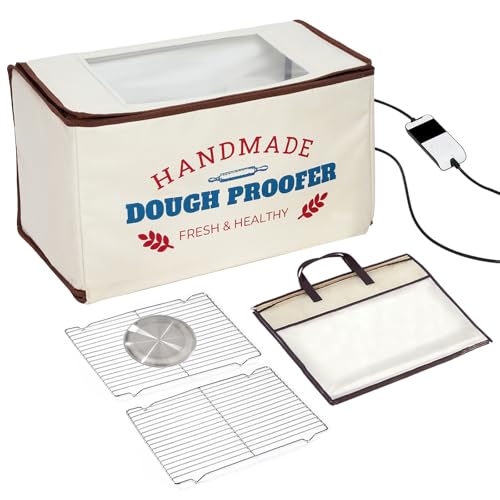
- Extra-large 21.6-inch-wide interior
- 50–130°F control with three-sided heating
- 24-hour timer with audible alert
Best For: Batch proofing with multiple bowls, bannetons, or jars
Best Container Set

- Two 6-liter containers for up to 3,000g of dough
- Volume markings and translucent walls track rise
- Dishwasher-safe, freezer-safe BPA-free polypropylene
Best For: Bulk fermentation and organized dough storage
Best Vintage-Style Option
Classic Bakery Folding Proofer
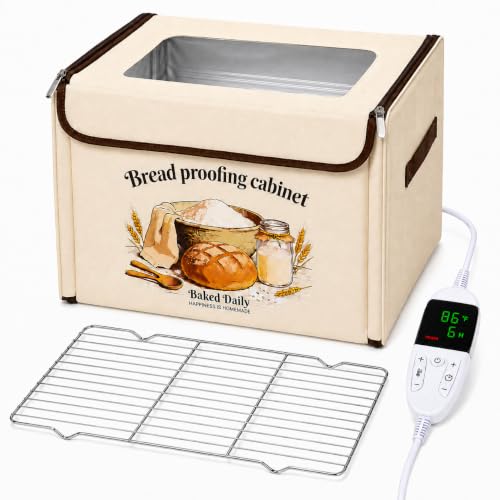
- 12 settings from 86–141°F
- 36-liter foldable design with viewing window
- Includes removable rack and 1–12-hour timer
Best For: Compact, supervised proofing with classic bakery styling
Best Value Dough Storage
16L Pizza Dough Proofing Boxes

- Two 16-liter boxes hold about four to six dough balls each.
- Clear BPA-free plastic supports quick visual checks.
- Leak-resistant clip-on lids help contain moisture.
Best For: Small bakeries needing simple refrigerated dough storage
Best Heated Option
Folding Temperature-Controlled Dough Proofer

- Temperature adjusts from 50–113°F.
- Timer can be set for up to 48 hours.
- Folds flat and includes a metal rack.
Best For: Controlled proofing of dough, sourdough, and starters
Best for Batch Organization
Stackable Commercial Dough Boxes

- Each box fits up to six dough balls.
- Containers stack with or without lids.
- Labels and erasable markers aid FIFO tracking.
Best For: Commercial-style batch storage and dough rotation
Best Foldable PID Proofer
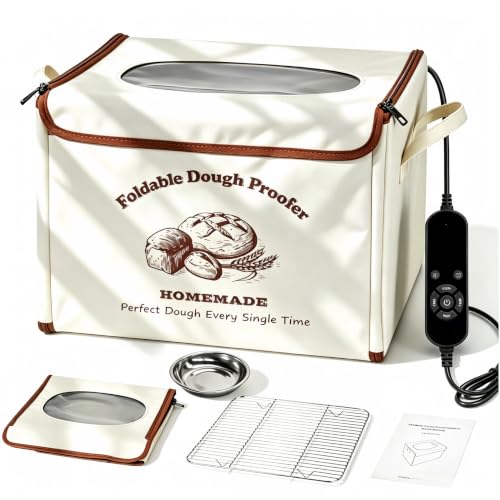
- 70–122°F PID temperature control
- 1–24-hour timer for flexible proofing
- Folds to 45mm for compact storage
Best For: Small-batch bakers needing precise control in a compact footprint
Best Stackable Set
Commercial-Size Dough Proofing Containers

- Three lidded proofing containers
- 13-liter capacity per container
- Stackable BPA-free food-grade plastic
Best For: Bakeries managing multiple dough portions without active heating
Best Extra-Large Folding Option
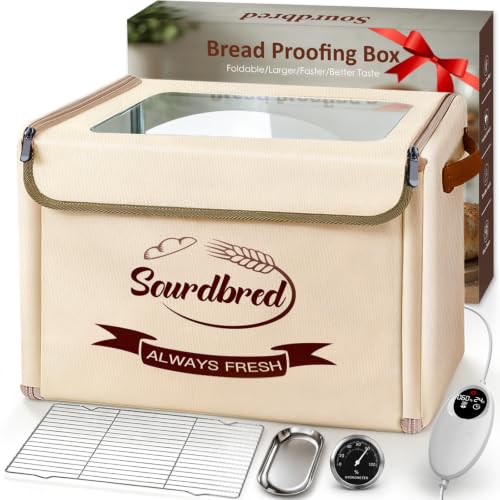
- 16.5 × 12 × 12-inch interior
- 66–108°F control with 1–48-hour timer
- Folds to 2 inches for storage
Best For: Small bakeries needing larger capacity and long fermentation cycles
Best All-Around Control – Folding Bread Proofing Box
For small bakeries needing flexible bread proofing boxes for small bakeries, this foldable GIYUDOT model combines a 50–113°F range, three-zone heating, and a 48-hour timer. Its 36-liter interior and included rack make it practical for managing multiple dough batches while saving storage space.
Best For: Small bakeries and serious home bakers that want controlled proofing for bread, sourdough, pizza dough, yogurt, or kombucha.
Pros:
- Three heating zones and an NTC sensor support even, consistent warming.
- Generous 16 × 12 × 12-inch interior accommodates multiple batches.
- Foldable design, viewing window, stainless steel rack, and humidor add convenience.
- 48-hour timer and automatic shutoff at 131°F offer useful control features.
Cons:
- The temperature range tops out at 113°F, which may not suit recipes requiring higher heat.
- Its soft-sided, 3.8-pound construction may be less rugged than a commercial cabinet.
This is a well-equipped option when consistent fermentation and compact storage matter. The rack, humidor, and recipe guide make it especially approachable for bakeries building a versatile proofing setup.
Best Extra-Large Capacity – 3-Sided Heat Dough Proofing Box
This extra-large model stands out among bread proofing boxes for small bakeries with its 21.6-inch width, 50–130°F temperature range, and capacity for two large mixing bowls, multiple bannetons, or quart jars. It folds flat when the proofing cycle is complete.
Best For: Small bakery workspaces that need to proof larger quantities or several containers at once.
Pros:
- Extra-large interior provides room for two large bowls or multiple bannetons.
- Front, back, and bottom heating is designed to reduce cold spots.
- 24-hour timer includes an audible end-of-cycle alert.
- Switchable Celsius/Fahrenheit display and five-layer insulation improve usability.
Cons:
- The wider footprint requires more counter space while in use.
- The timer is limited to 24 hours, shorter than some long-fermentation models.
Choose this unit when batch capacity is more important than the smallest footprint. Its broad temperature range and audible timer are useful for varied recipes and busy production schedules, while the folding construction simplifies storage.
Best Container Set – 6L Dough Proofing Containers
Unlike heated bread proofing boxes for small bakeries, this two-pack focuses on organized dough fermentation inside a refrigerator or compatible proofer. Each 6-liter, low-profile container holds up to 3,000 grams of dough and includes volume markings for easy rise tracking.
Best For: Bakeries that already have temperature control and want reusable containers for bulk fermentation, folding, chilling, and stacking.
Pros:
- Two 6-liter containers hold up to 3,000 grams of dough each.
- Translucent walls and volume markings make rise monitoring simple.
- Sealed lids help retain humidity and prevent a dry dough skin.
- BPA-free polypropylene is dishwasher safe, freezer safe, and designed for repeated use.
Cons:
- These containers do not provide active heating or temperature control.
- Their 4-inch height may not suit doughs requiring substantial vertical expansion.
This set is a practical complement to a heated proofer rather than a standalone proofing appliance. Its stackable shape, durable plastic, and clear markings make it particularly useful for repeatable bulk fermentation workflows.
Best Vintage-Style Option – Classic Bakery Folding Proofer
For bakeries that value presentation as well as function, this cream-colored folding model offers a classic bakery appearance with 12 temperature settings from 86–141°F. The viewing window, metal rack, and compact 36-liter format support everyday bread and sourdough work.
Best For: Small baking operations seeking a compact proofer with a distinctive vintage look and straightforward timed control.
Pros:
- Offers 12 temperature settings from 86°F to 141°F.
- Folds for cabinet or drawer storage when not in use.
- Viewing window lets you monitor dough without opening the unit.
- Includes a removable metal rack for bowls and food-safe containers.
Cons:
- The timer runs for 1–12 hours, limiting longer scheduled fermentations.
- The 0-hour continuous mode requires active supervision and should not be used while away.
- Its listed starting temperature of 86°F may be too warm for some cooler fermentation routines.
This model suits buyers who want a compact, visually appealing proofing station with a higher maximum temperature than many comparable foldable units. Its shorter timer makes it better for supervised daily batches than unattended long ferments.
Best Value Dough Storage – 16L Pizza Dough Proofing Boxes
For small bakeries seeking bread proofing boxes for small bakeries without adding powered equipment, this two-pack offers straightforward dough storage and proofing. Each clear, 16-liter box can hold approximately four to six dough balls and fits most household refrigerator shelves.
Best For: Small bakeries and home-based businesses that need simple, stack-ready dough storage for refrigerated proofing.
Pros:
- Two 16-liter boxes provide useful batch capacity.
- Each box accommodates approximately four to six dough balls.
- Clear BPA-free plastic makes contents easy to see.
- Clip-on, leak-resistant lids help contain moisture and odors.
Cons:
- No temperature control or timer.
- The rectangular 16.45-inch length may not suit every refrigerator shelf.
This is a practical, low-complexity option for bakeries that already have suitable refrigerator space and want reusable containers for bread or pizza dough, rather than a heated proofing chamber.
Best Heated Option – Folding Temperature-Controlled Dough Proofer
For small bakeries looking for bread proofing boxes for small bakeries with more control over fermentation conditions, this folding heated proofer adds adjustable warmth and timed operation. It offers a 50–113°F range, a timer of up to 48 hours, and three heating zones for even warming.
Best For: Bakeries that need controlled proofing for sourdough, bread, pizza dough, or starter while saving counter space between uses.
Pros:
- Adjustable 50–113°F temperature range.
- Timer supports settings up to 48 hours.
- Three heating zones are designed for even warming.
- Folds for more compact storage and includes a metal rack.
Cons:
- Its interior is described as fitting one standard proofing bowl, so batch capacity is more limited than multi-box setups.
- It is a powered warmer rather than a set of stackable dough containers.
The adjustable temperature, viewing window, insulation, and foldable construction make this the most feature-rich choice here for bakeries prioritizing repeatable proofing conditions over maximum dough-ball capacity.
Best for Batch Organization – Stackable Commercial Dough Boxes
For small bakeries comparing bread proofing boxes for small bakeries, this two-pack emphasizes batch handling and kitchen organization. Each commercial food-grade container holds up to six dough balls, stacks with or without its lid, and includes labels and erasable markers for tracking dough types or dates.
Best For: Small bakeries and pizzerias managing multiple dough batches in refrigerators or prep areas.
Pros:
- Each 15.67-inch box accommodates up to six dough balls.
- Stackable design helps maximize refrigerator and prep-space capacity.
- Food-grade, BPA-free polypropylene is intended for repeated commercial use.
- Labels and two erasable markers support batch and FIFO tracking.
Cons:
- The non-airtight lids may not be suitable when a sealed container is preferred.
- They provide no active temperature control.
- The boxes are listed as not water resistant.
This set is a strong organizational choice for production workflows: its capacity, stackability, and labeling accessories suit bakeries rotating several dough batches, provided ambient or refrigerated proofing is sufficient.
Best Foldable PID Proofer – Precision Bread Proofing Box
For small bakeries that need repeatable results without dedicating permanent counter space, this bread proofing box for small bakeries combines adjustable PID temperature control with a compact foldable design. Its 70–122°F range, 1–24-hour timer, and 28-liter capacity suit sourdough, yeast dough, and pizza dough.
Best For: Small bakeries and compact kitchens that prioritize precise temperature and timer control.
Pros:
- PID control targets temperature precision of up to ±1°F.
- Adjustable 70–122°F temperature range and 1–24-hour timer.
- Folds to approximately 45mm thick for easier storage.
- Includes a stainless steel bowl, hygrometer, and iron stand.
Cons:
- Its 28-liter capacity may be limiting for higher-volume bakery production.
- The interior should be wiped clean rather than rinsed.
This is a strong choice when consistency and storage efficiency matter most. The food-grade waterproof interior, overheat protection, and included humidity accessories add useful functionality, while the relatively modest capacity keeps it better suited to smaller batches.
Best Stackable Set – Commercial-Size Dough Proofing Containers
These lidded containers offer a straightforward solution for bread proofing boxes for small bakeries that need to proof several dough portions at once. The three food-grade plastic boxes measure 17.32 by 12.63 by 4.56 inches, stack securely, and provide room for dough to rise without touching the lid.
Best For: Small bakeries portioning multiple pizza or bread dough balls and needing stackable storage.
Pros:
- Three containers support simultaneous dough preparation.
- Generous 13-liter capacity per container.
- Stackable design helps organize proofing space.
- BPA-free, food-grade plastic with included lids.
Cons:
- These containers provide no active temperature control or timer.
- Their large rectangular footprint requires suitable shelf or counter space.
Choose this set when your workspace already has a suitable proofing environment and your main need is organized dough handling. It is less of a temperature-controlled proofer and more of a practical, reusable container system for proofing, storage, and other food-preparation tasks.
Best Extra-Large Folding Option – Multi-Use Dough Proofer
For small bakeries seeking more interior room without a bulky permanent appliance, this extra-large bread proofing box provides a 16.5-by-12-by-12-inch workspace, three heating areas, and a 66–108°F temperature range. Its 1–48-hour timer and foldable 2-inch profile make it practical for longer fermentation schedules and limited storage areas.
Best For: Small bakeries that need extra capacity, extended timer settings, and flexible storage.
Pros:
- Extra-large interior can accommodate one large bowl and four large bottles.
- Three heating areas and five-layer insulation support stable warming.
- Temperature adjusts from 66–108°F with a 1–48-hour timer.
- Includes a metal rack, water tray, viewing window, and handles.
Cons:
- Hand-wash care may require more maintenance than wipe-clean equipment.
- Its 2.34 kg weight is heavier than more compact proofing options.
This model stands out for capacity and versatility, especially when proofing, sourdough starter warming, and other fermentation tasks share the same equipment. The water tray can increase humidity, while the large viewing window lets you monitor dough without opening the zipper enclosure.
How We Picked These Bread Proofing Boxes for Small Bakeries
We focused on the factors that matter most in a small commercial or serious production kitchen: usable capacity, temperature range, timer flexibility, humidity management, portability, cleaning convenience, and storage efficiency. The selection includes both powered proofing cabinets and passive dough containers because they solve different bakery needs.
We also considered whether a product can support multiple dough portions, accommodate larger batches, fold away between uses, or stack efficiently. Since product specifications and included accessories can vary, verify dimensions, wattage, rack configuration, and container volume before ordering.
Quick Comparison
| Type | Best For | Main Advantage | Potential Limitation |
|---|---|---|---|
| Temperature-controlled folding proofer | Consistent fermentation | Adjustable warmth and timer controls | Needs counter or storage space and power |
| Extra-large heated proofer | Higher-volume batches | More room for trays or multiple dough containers | Larger footprint |
| Stackable proofing containers | Pizza and portioned dough | Simple organization and efficient storage | Usually offers no active temperature control |
| Proofing container packs | Sourdough and artisan dough | Easy batch separation and handling | Capacity may be limited for large mixes |
Key Buying Factors for Bread Proofing Boxes for Small Bakeries
Capacity and Footprint
Choose capacity based on your largest routine batch, not only your average one. Check interior dimensions against loaf pans, baking trays, bannetons, or dough tubs. A foldable cabinet can be valuable when production space doubles as prep or retail space.
Temperature and Timer Controls
Adjustable temperature is useful for slow fermentation, sourdough, enriched dough, and warm final proofing. Look for a range suited to your recipes and a timer long enough for overnight or extended fermentation. PID-style control may provide steadier heat, while simpler controls can be easier to operate.
Humidity and Cleaning
Dry air can form a skin on exposed dough, so a humidity tray, sealed container, or compatible cover is helpful. Favor smooth, removable surfaces and food-contact materials that are easy to wipe down between batches.
Workflow and Durability
For daily bakery use, assess rack strength, zipper or door quality, hinges, lids, handles, and controller readability. Stackable containers should seal securely without becoming difficult to open. Confirm replacement-part availability when possible.
Who Should Buy Which Bread Proofing Boxes for Small Bakeries?
Choose a folding temperature-controlled proofer if you need repeatable results across changing seasons and want one versatile unit for bread, sourdough, or pizza dough. Choose an extra-large model if your bakery regularly proofs several trays or large dough batches at once.
Stackable two- or three-container sets are better for portioned pizza dough, refrigerated fermentation, and organized batch handling. Smaller proofing containers suit bakeries that value precise portion separation and easy cleanup. If storage is tight, prioritize a foldable cabinet; if simplicity and low operating cost matter most, passive containers may be the better fit.