Rolling large quantities of dough by hand can slow production, create inconsistent thickness, and add unnecessary strain. The right dough sheeter can standardize portions while helping bakeries, pizzerias, restaurants, and serious home kitchens work more efficiently.
This roundup compares 10 commercial-style dough sheeters, from compact electric units to foldable manual rollers, with attention to capacity, adjustment range, footprint, operation, and cleanup.
Best 10 Dough Sheeters for Large Batches Picks for 2026
High-Volume Electric Press

- Handles crusts up to 18 inches
- Adjustable thickness, temperature, and timer
- Heavy-duty 112.4-pound commercial build
Best For: Pizza shops and tortilla restaurants with continuous production
Flexible Manual Workhorse
40.6-Inch Foldable Dough Sheeter

- Fine 0.5mm thickness increments
- Folds for compact storage
- Handles many pastry and dough types
Best For: Versatile manual production in space-limited kitchens
Powered Pastry Roller
51-Inch Electric Dough Sheeter

- Electric motor reduces rolling effort
- 2–30mm range with 10 settings
- Foldable frame for easier storage
Best For: Small commercial or home bakeries making laminated pastries
Compact Manual Value
40.5-Inch Stainless Dough Sheeter

- 304 stainless steel construction
- 2–30mm multi-gear adjustment
- Foldable and electricity-free operation
Best For: Home bakers and small kitchens with moderate batch needs
Commercial Electric Workhorse
22.7" Adjustable Dough Sheeter

- Electric rolling reduces manual effort
- 2–30mm thickness adjustment
- Foldable 304 stainless steel design
Best For: Bakeries, pizza shops, and pastry production
Large-Batch Manual Pick
40.6" Foldable Manual Dough Sheeter

- Wide 40.6 × 22.8-inch work platform
- 56 described thickness settings from 0–25mm
- Folds for storage and needs no electricity
Best For: Small commercial kitchens and food trucks
Compact Electric Baker
22.7" Adjustable Electric Dough Sheeter
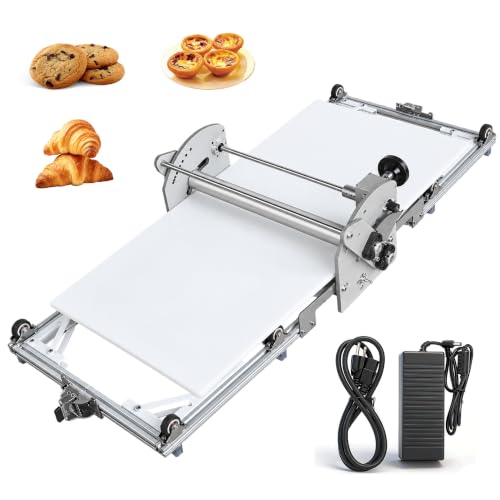
- Fast, even electric rolling
- 2–30mm adjustable thickness
- Detachable design saves storage space
Best For: Cafés, bakeries, and small food businesses
Professional Manual Pick
Japan Kneader 15.5-Inch Sheeter

- Handles up to 1 kg of dough
- 55 settings from 0 to 27 mm
- Folds for storage; five-year warranty
Best For: Home bakers and micro-bakeries making laminated pastries
Electric Workhorse
Automatic Commercial Dough Sheeter

- Automatic 110V operation
- Stainless steel commercial-style build
- Adjustable thickness for varied doughs
Best For: Bakeries and cafés seeking lower-effort dough preparation
Space-Saving Manual
Folding Stainless Steel Sheeter

- 55 settings from 0 to 25 mm
- Folds flat for compact storage
- Manual, electric-free operation
Best For: Small kitchens and food businesses with limited space
High-Volume Electric Press – 18-Inch Pizza Dough Press
For operations comparing dough sheeters for large batches, this electric press is built to speed up repetitive crust production. It forms dough up to 18 inches wide and offers adjustable thickness, temperature, and timing controls for repeatable results across pizza and other flatbreads.
Best For: Pizza shops, tortilla restaurants, and commercial kitchens handling continuous, high-volume production.
Pros:
- Presses dough into uniform crusts to help reduce prep time during peak orders.
- Handles dough up to 18 inches for pizzas, tortillas, burritos, pita, and more.
- Offers 0–0.43-inch thickness adjustment plus temperature and timer controls.
- Steel, powder-coated construction with a stainless steel handle and cast aluminum press plate.
Cons:
- At 112.4 pounds, it is substantially heavier than manual countertop sheeters.
- The press format is more specialized for flattened rounds than for long pastry sheets.
This is the strongest fit when speed, repeatability, and large round crusts matter more than portability. Its substantial footprint and weight make it better suited to a dedicated production station.
Flexible Manual Workhorse – 40.6-Inch Foldable Dough Sheeter
This manual model is a practical option among dough sheeters for large batches when you want a long working surface without relying on electricity. Its fine thickness adjustments and foldable frame support consistent pastry preparation while keeping storage demands manageable.
Best For: Bakeries, restaurants, food trucks, and kitchens that need versatile manual sheeting with compact storage.
Pros:
- Adjusts from 0–25mm in increments as fine as 0.5mm for controlled thickness.
- Works with pizza dough, croissants, puff pastry, pasta sheets, dumpling wrappers, and cookies.
- Foldable design expands to 40.6 inches for use and folds to 18.5 × 11.8 × 4.7 inches for storage.
- Requires no electricity and uses a 360-degree rotating handle for smooth rolling.
Cons:
- Manual operation still requires physical effort for extended large-batch sessions.
- Its 24.5-pound weight and expanded footprint require a stable workspace.
Choose this sheeter if versatility and storage convenience are priorities. It can support varied pastry work, though an electric machine may be less tiring for very long production runs.
Powered Pastry Roller – 51-Inch Electric Dough Sheeter
For bakers seeking dough sheeters for large batches with less manual labor, this electric roller combines a 51-inch working format with a high-torque copper motor. Its 10-step adjustment covers thin laminated dough through thicker pastry preparations.
Best For: Home bakeries and commercial kitchens producing croissants, egg tarts, danishes, puff pastry, and similar doughs.
Pros:
- Electric operation flattens dough evenly while reducing hand-rolling effort.
- Provides 10 gear settings across a 2–30mm thickness range.
- Foldable frame helps with storage in small kitchens or mobile catering setups.
- Stable desktop structure is described as smooth and low-noise during operation.
Cons:
- The 51 × 22-inch format needs considerable counter or table space when open.
- Its 42.4-pound weight makes frequent repositioning less convenient.
This is a balanced choice for users who want powered throughput without the heavier construction of a full commercial press. The foldable design adds flexibility, but you will still need a suitably large, stable work surface.
Compact Manual Value – 40.5-Inch Stainless Dough Sheeter
This hand-crank sheeter offers a lower-complexity approach to dough sheeters for large batches, with a broad 40.5-inch format and adjustable gears from 2 to 30mm. Its foldable construction and stainless steel surfaces make it suited to organized home or small-kitchen pastry work.
Best For: Home bakers and small kitchens that want adjustable manual sheeting with easy storage and cleanup.
Pros:
- Food-grade 304 stainless steel is described as hygienic and easy to clean.
- Adjusts between 2 and 30mm for different pastries and dough applications.
- Foldable design stores compactly when the machine is not in use.
- Hand-crank operation rolls dough evenly without electricity.
Cons:
- Manual cranking may be less efficient or tiring for sustained high-volume work.
- The 40.5 × 22.8-inch operating size requires adequate workspace.
This model makes sense when you need broad thickness flexibility and straightforward cleanup without adding a motor. It is best for moderate production where manual operation remains practical.
Commercial Electric Workhorse – 22.7" Adjustable Dough Sheeter
For bakeries, pizza shops, and other operations needing dough sheeters for large batches, this electric model prioritizes fast, consistent rolling with minimal manual effort. Its 2–30mm adjustment range supports everything from pizza dough and pasta to croissants and puff pastry.
Best For: Bakeries, restaurants, pizza shops, and pastry production where powered, repeatable rolling is useful.
Pros:
- Electric operation reduces manual effort and helps speed dough preparation.
- Adjustable 2–30mm thickness accommodates pizza, pastry, pasta, and empanada dough.
- Foldable countertop design helps with storage and workspace management.
- 304 stainless steel construction is food-safe, rust-resistant, and easy to clean.
Cons:
- At 52 pounds, it is relatively heavy to move or reposition.
- Its larger commercial format may be more machine than occasional home bakers need.
This is the strongest fit of the three for users who want powered production and broad thickness control. The foldable design helps offset its substantial size and weight.
Large-Batch Manual Pick – 40.6" Foldable Manual Dough Sheeter
This manual option is designed for dough sheeters for large batches, offering a broad 40.6-by-22.8-inch working platform without requiring electricity. Its 56 thickness settings and rotating handle give small commercial kitchens flexibility when preparing pizza, pastry, pasta, and other doughs.
Best For: Small bakeries, food trucks, pizza shops, and kitchens that need a wide work surface without powered equipment.
Pros:
- Large working platform accommodates substantial dough portions.
- Fifty-six thickness settings support precise adjustment from 0–25mm.
- Foldable construction makes storage easier in space-limited kitchens.
- Manual operation works without electricity and uses an ergonomic rotating handle.
Cons:
- Manual rolling requires more physical effort than an electric sheeter.
- The 40.6-inch footprint may need considerable counter or table space when open.
- Its notes list five settings in the product details despite describing 56 adjustable thickness settings.
Choose this model when workspace width and electricity-free operation matter more than automated throughput. It offers a practical large-format setup, though repeated heavy production will require more hands-on effort.
Compact Electric Baker – 22.7" Adjustable Electric Dough Sheeter
For users comparing dough sheeters for large batches but working with limited counter space, this electric model combines powered rolling with a detachable, space-saving design. The 2–30mm range covers common pizza, pastry, cookie, croissant, and pasta applications.
Best For: Home kitchens, cafés, bakeries, and small food businesses seeking consistent electric rolling in a compact format.
Pros:
- Electric operation delivers fast, even sheets with stable thickness.
- 2–30mm adjustment supports a variety of dough types and recipes.
- Detachable construction assists with assembly and storage.
- Stainless steel body and food-grade rollers are designed for durability and rust resistance.
Cons:
- The supplied notes do not specify the unit’s weight or detailed warranty coverage.
- Its 22.7-inch format offers less working width than the 40.6-inch manual model.
- Electric operation requires access to a suitable power source.
This model is a balanced choice for smaller operations that want powered consistency without committing to the widest machine. Its detachable structure is especially useful when storage space is limited.
Professional Manual Pick – Japan Kneader 15.5-Inch Sheeter
For bakers comparing dough sheeters for large batches, the Japan Kneader offers a generous 1-kilogram capacity and precise manual control. Its 55 thickness settings make it especially useful for laminated pastries and other doughs requiring consistent shaping.
Best For: Home bakers and micro-bakeries making croissants, Danish pastry, puff pastry, pizza, or pasta dough.
Pros:
- Handles up to 1 kg of dough at once.
- Offers 55 adjustable settings from 0 to 27 mm.
- Includes a 39 x 15.5-inch double-sided board.
- Folds for storage and includes a five-year home or commercial warranty.
Cons:
- Manual operation requires hands-on effort.
- At 28 pounds, it is substantial to move and store.
This is a strong choice when batch capacity, fine thickness adjustments, and long-term support matter more than electric convenience.
Electric Workhorse – Automatic Commercial Dough Sheeter
Among dough sheeters for large batches, this 110V electric model is designed to reduce the physical work of rolling and flattening dough. Its stainless steel construction, automatic operation, and adjustable thickness range suit frequent pastry preparation.
Best For: Bakeries, cafés, and home users who want automatic sheeting for pastries, pizza, pasta, fondant, and related doughs.
Pros:
- Automatic electric operation reduces manual rolling effort.
- Stainless steel body is rust-resistant and built for regular use.
- Adjustable thickness range is listed as 2 to 30 mm.
- Washable, detachable components and non-stick plates simplify cleanup.
Cons:
- Requires a 110V electrical connection.
- The supplied specifications list both a 0–25 mm maximum and a 2–30 mm range, so exact adjustment limits should be verified.
This model is the practical option for users prioritizing speed and reduced hand fatigue, provided the available electrical setup and thickness specifications match their workflow.
Space-Saving Manual – Folding Stainless Steel Sheeter
For shoppers seeking dough sheeters for large batches without adding a permanent appliance, this folding manual machine combines a wide 15.5-inch format with compact storage. Its approximately 55 settings provide useful control across pastry, pizza, pasta, and fondant applications.
Best For: Home kitchens and small food businesses that need versatile manual sheeting with limited counter or storage space.
Pros:
- Offers thickness adjustment from 0 to 25 mm with approximately 55 settings.
- Folds flat to help conserve kitchen space.
- Food-contact components use stainless steel.
- Manual operation needs no electricity and supports straightforward cleaning.
Cons:
- Manual operation can be more labor-intensive for repeated large batches.
- The supplied notes do not specify a dough-capacity limit.
This sheeter makes the most sense where storage flexibility and energy-free operation are priorities, though higher-volume users may prefer an electric machine.
How We Picked the Best Dough Sheeters for Large Batches
We focused on the features that matter when a machine must process repeated batches rather than occasional portions. Our comparison considers roller width, thickness adjustment, electric or manual operation, reversible or laminating capability, construction materials, portability, counter space, and the type of dough each design is suited to handle.
Because listed specifications can vary by seller and configuration, confirm voltage, dimensions, maximum dough weight, included accessories, and warranty terms before ordering. Stainless steel contact surfaces and accessible controls are especially useful in busy food-preparation environments.
Quick Comparison
- Electric models: Best for higher throughput and reduced manual effort.
- Manual models: Useful where portability, lower cost, or occasional batch production matters most.
- Wide rollers: Better for larger sheets, pizza bases, pastry, and fewer passes.
- Adjustable thickness: Important for switching between pizza dough, cookies, pasta-style sheets, puff pastry, and fondant.
- Foldable designs: Helpful when storage space is limited or the machine must be moved between work areas.
Key Buying Factors for Dough Sheeters for Large Batches
Capacity and Roller Width
Choose a working width that matches your normal batch size and product dimensions. A wider roller can reduce the number of passes, but it also needs more counter space and may be harder to move. Check the maximum dough thickness and whether the feed opening accommodates your prepared portions.
Power, Speed, and Control
Electric machines are generally the better choice for continuous production because they reduce operator fatigue and maintain a steadier pace. Look for adjustable thickness, intuitive controls, and reversible rollers when working with laminated dough or when preventing dough from being pulled back manually is important. Verify that the machine’s voltage matches your kitchen supply.
Construction and Cleaning
Stainless steel frames and food-contact components are practical for commercial use, but smooth surfaces, removable scrapers, and accessible roller areas matter just as much. Avoid designs with difficult-to-clean seams or exposed mechanisms near the dough path. Follow the manufacturer’s cleaning instructions rather than immersing powered components.
Footprint and Safety
Measure both the machine and the clearance needed to load dough and operate handles or controls. Non-slip feet, guards, emergency stops, and stable positioning are valuable during repetitive work. Foldable units can save storage space, while heavier fixed machines may provide better stability.
Who Should Buy Which Dough Sheeters for Large Batches?
Choose an electric sheeter if you run a bakery, pizzeria, catering operation, or restaurant with frequent batches and want to minimize repetitive labor. Choose a manual model for lower-volume production, mobile setups, or buyers who prioritize simplicity and a smaller upfront investment. Choose a wide commercial unit when you regularly produce large pastry sheets or multiple pizza bases and have dedicated counter space. Choose a compact or foldable design when storage and portability are more important than maximum throughput.
Before purchasing, compare the product’s usable roller width—not just its overall dimensions—with your recipes, available workspace, and expected daily volume. That match will usually matter more than a long list of extra specifications.