Starting seeds indoors does not require a greenhouse or a dedicated grow room. The right tray can turn a sunny windowsill, narrow shelf, or small countertop into a productive propagation station.
These 10 options range from reusable silicone-cell designs and compact windowsill greenhouses to high-count kits for gardeners who want to start many varieties in limited space. Use the buying guide below to match cell size, drainage, humidity control, and cleanup needs to your growing setup.
Best 10 Seed Starting Trays for Small Spaces Picks for 2026
Best Reusable Pick

- 36 flexible silicone cells
- Organized rows with Plant-o-Gram
- Reusable and dishwasher safe
Best For: Indoor gardeners prioritizing easy transplanting and reuse
Best Windowsill Starter
Jiffy 42mm Windowsill Greenhouse 10

- Compact 10.75-inch design
- Includes 10 starter pellets
- Lightweight greenhouse setup
Best For: Small windowsill batches and beginner seed starting
Best Covered Capacity
48-Cell Silicone Seed Starter Kit

- 48 cells with humidity dome
- Flexible silicone bottoms
- Labels and planting tools included
Best For: Compact indoor growing with covered, higher-capacity propagation
Best Multipack Value

- Ten 12-cell trays
- 120 total cells with dome lids
- Tools included for planting
Best For: Staggered sowing and multiple small indoor batches
Compact Greenhouse Control

- Five trays with 12 cells each
- Humidity dome and base included
- Adjustable vents for growing control
Best For: Small indoor growing spaces and modest seed batches
Complete Multi-Season Setup
MIXC 120-Cell Seed Starter Kit

- Ten 12-cell trays with 120 cells
- Bases, domes, and plant labels included
- Reusable with adjustable vents and drainage
Best For: Organized, higher-volume seed starting in compact trays
Maximum Cell Count
216-Cell Seedling Starter Trays
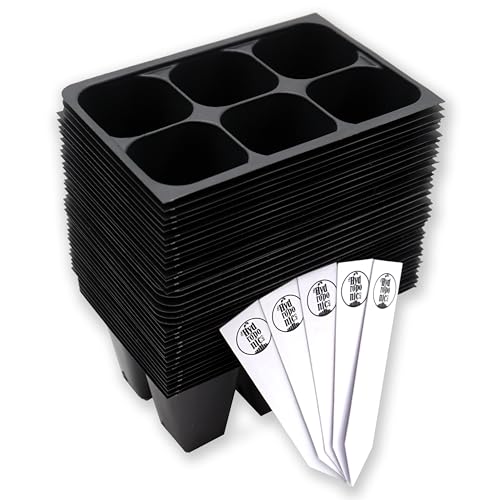
- 36 six-cell trays provide 216 cells
- Deep cells with drainage slits
- Five plant stakes included
Best For: High-volume, organized tabletop propagation
Best Adjustable-Dome Kit
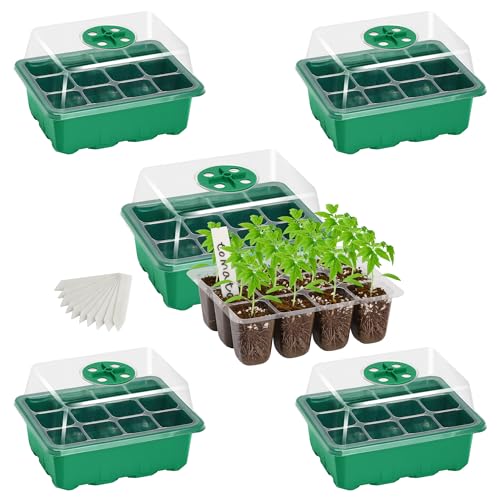
- Five trays with bases, domes, vents, and labels
- Adjustable vents support humidity control
- 1.5-inch cells suit larger vegetable seeds
Best For: Indoor gardeners starting larger seeds in a controlled setup
Best for Gentle Transplanting
Hanaoyo Flexible Pop-Out Trays

- Five trays provide 60 flexible cells
- Silicone cells pop out for easier transplanting
- Reusable design includes drainage holes
Best For: Growers prioritizing low-stress seedling removal
Best Bulk Value
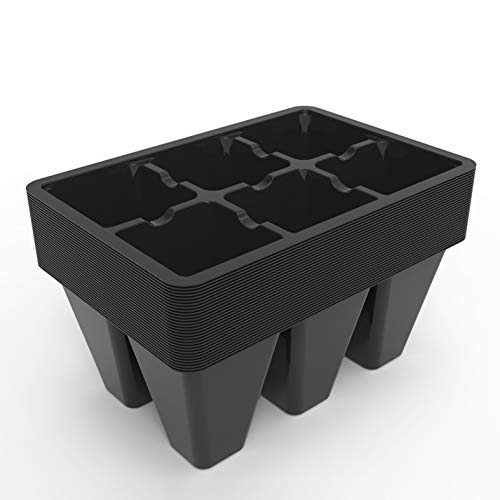
- Thirty compact trays provide 180 total cells
- Deep 1.5-inch-square cells support root growth
- Reusable trays include drainage holes
Best For: Starting many varieties in modular small-space batches
Best Reusable Pick – Burpee SuperSeed 36-Cell Tray
For seed starting trays for small spaces, the Burpee SuperSeed offers a compact 36-cell format with reusable silicone cells. Its organized layout, drainage features, and easy-release design make it practical for indoor herbs, flowers, and vegetables.
Best For: Indoor gardeners who want a durable, reusable tray with straightforward transplanting.
Pros:
- Flexible silicone cells pop seedlings out with less root disturbance.
- Alphanumeric rows and included Plant-o-Gram help identify seedlings.
- Corner drainage slots, water channels, and a raised rim support cleaner watering.
- Top-shelf dishwasher safe for easier cleanup.
Cons:
- Holds 36 cells, so it may be limiting for larger planting batches.
- It does not include a humidity dome or growing light.
With its compact footprint and reusable construction, this is a strong choice when long-term convenience matters more than maximum capacity.
Best Windowsill Starter – Jiffy 42mm Windowsill Greenhouse 10
Among seed starting trays for small spaces, the Jiffy Windowsill Greenhouse 10 is designed for a narrow windowsill setup. It includes a plastic greenhouse and 10 Jiffy 42mm starter pellets for a simple, compact start.
Best For: Beginners growing a small number of seedlings on a windowsill.
Pros:
- Compact dimensions measure 10.75 by 4.5 by 2.5 inches.
- Includes 10 starter pellets and a plastic greenhouse.
- Lightweight at 4.6 ounces.
Cons:
- Only includes 10 starter pellets, limiting planting capacity.
- The supplied notes do not indicate reusable cells or included planting tools.
This is a focused, low-capacity option for a sunny windowsill rather than a full indoor propagation setup.
Best Covered Capacity – 48-Cell Silicone Seed Starter Kit
This 48-cell kit is a useful choice for seed starting trays for small spaces when you want more planting capacity without a large setup. It combines flexible silicone bottoms with a 4.33-inch humidity dome, labels, and basic planting tools.
Best For: Indoor growers who need many cells plus humidity control in a compact kit.
Pros:
- Provides 48 cells with a tall lid and humidity dome.
- Flexible silicone bottoms help release seedlings intact.
- Drainage grooves and deep channels help manage excess water.
- Includes 10 labels and two planting gadgets.
Cons:
- The supplied dimensions include the lid and may require more vertical clearance.
- Only one tray kit is included.
The combination of high cell count, cover, and flexible bottoms makes this a versatile option for starting varied crops indoors.
Best Multipack Value – Mr. Pen 120-Cell Tray Set
For gardeners who need several seed starting trays for small spaces, the Mr. Pen set supplies 10 compact trays with 12 cells each. Transparent dome lids, adjustable vents, drainage holes, and included tools support repeated small-batch planting indoors.
Best For: Hobbyists who want multiple small trays for staggered sowing or different plant varieties.
Pros:
- Ten trays provide 120 total cells.
- Transparent dome lids retain moisture and include adjustable ventilation.
- Drain holes help reduce overwatering and root rot risk.
- Includes a shovel and scoop for planting and transplanting.
Cons:
- Each tray has only 12 cells, so filling a full batch requires handling multiple trays.
- Made of plastic rather than flexible silicone.
This multipack is a practical fit when flexibility and total cell count matter more than having one consolidated tray.
Compact Greenhouse Control – 12-Cell Seed Starter Tray Kit
For gardeners comparing seed starting trays for small spaces, this 5-pack offers a compact 12-cell format with a humidity dome and base. Adjustable ventilation helps you manage the growing environment indoors, in a greenhouse, or in a hydroponic setup.
Best For: Small-space gardeners who want covered trays for starting a modest number of seedlings.
Pros:
- Compact 12-cell design suits limited growing areas.
- Humidity dome helps create a mini greenhouse environment.
- Adjustable vents provide control over ventilation.
- Includes bases for a contained seed-starting setup.
Cons:
- Five trays provide less total capacity than larger multi-pack kits.
- The supplied information does not specify cell dimensions or material details.
This kit is a practical choice when footprint matters more than maximum volume. Its covered, adjustable design gives indoor growers useful control without requiring a large propagation area.
Complete Multi-Season Setup – MIXC 120-Cell Seed Starter Kit
The MIXC kit is a strong option for seed starting trays for small spaces when you need organized capacity. It includes 10 12-cell trays, watertight bases, humidity domes, and labels, while adjustable vents and drainage holes support more controlled seedling care.
Best For: Gardeners who want a reusable, labeled mini-greenhouse setup for starting many seedlings in a compact format.
Pros:
- Includes 10 trays with 120 cells total.
- Each tray has a humidity dome and watertight base.
- Adjustable vents help regulate temperature and humidity.
- Drainage holes, labels, and reusable plastic construction add practicality.
Cons:
- The 120-cell capacity may exceed the needs of gardeners starting only a few plants.
- Each individual tray measures about 7.28 by 5.67 inches, so storage space is still needed for the full set.
With its complete components and portable design, this MIXC set works well for systematic indoor or outdoor propagation. It offers more organization and capacity than a small single-tray kit while keeping each tray relatively compact.
Maximum Cell Count – 216-Cell Seedling Starter Trays
These seed starting trays for small spaces divide 216 cells across 36 individual six-cell trays. The tabletop format, 1.5-inch-square by 2.25-inch-deep cells, drainage slits, and included plant stakes make the set useful for organizing varied seedlings without relying on one large tray.
Best For: Gardeners starting many flowers, herbs, succulents, or vegetables in individually manageable tabletop trays.
Pros:
- Provides 216 cells across 36 separate trays.
- Deep cells are designed to support root development.
- Drainage slits help manage excess water.
- Includes five plant stakes for labeling and organization.
Cons:
- Plant stakes are limited to five for 36 trays.
- No humidity domes or bases are listed among the included components.
- The full 216-cell set may require substantial storage and handling space.
This set prioritizes cell count and flexible tray arrangement rather than a covered greenhouse environment. Its small six-cell units can be convenient when you want to separate plant varieties or move batches individually.
Best Adjustable-Dome Kit – 5-Pack 12-Cell Seed Trays
For gardeners comparing seed starting trays for small spaces, this five-pack keeps each unit compact while adding a clear humidity dome and watertight base. The 12-cell layout and adjustable vents make it a practical choice for monitoring and managing indoor seedlings.
Best For: Starting larger vegetable seeds such as tomatoes, peppers, eggplants, and potatoes in a controlled indoor setup.
Pros:
- Includes five 12-cell trays, five bases, five clear lids, vents, and plant labels.
- Adjustable vents help regulate humidity and temperature.
- Clear plastic makes it easy to observe seedlings without disturbing them.
- Designed to work with a heat mat and features drainage holes.
Cons:
- The 12-cell format is less suited to starting many small seeds at once.
- The listed 1.5-inch cells are intended especially for larger seeds.
This is a well-equipped option when you want compact trays with more environmental control than basic open cell inserts provide.
Best for Gentle Transplanting – Hanaoyo Flexible Pop-Out Trays
These seed starting trays for small spaces stand out for their flexible pop-out cells. Each of the five trays has 12 silicone cells that can be bent to release seedlings, making the kit useful when easy transplanting is a priority.
Best For: Indoor growers who want reusable trays designed to reduce root disturbance during transplanting.
Pros:
- Flexible silicone cells can be gently bent and popped out.
- Thickened plastic and silicone construction is described as tear-resistant and reusable.
- Drainage holes support water release and soil aeration.
- Compatible with plant lights and different substrate trays.
Cons:
- The kit does not list included humidity domes or base trays.
- Its 60-cell capacity is divided into relatively small 12-cell trays.
If transplanting delicate seedlings is your main concern, the flexible-cell design offers a practical advantage over rigid starter inserts.
Best Bulk Value – Gardzen 30-Pack 6-Cell Trays
For small-space seed starting, these Gardzen trays offer a high cell count in compact 5.4-by-3.7-inch units. The 30-pack is suited to gardeners who want to stagger many batches of flowers, herbs, or vegetables without using large full-size trays.
Best For: Starting multiple varieties or successive plantings while keeping individual tray footprints small.
Pros:
- Includes 30 individual six-cell trays for flexible organization.
- 1.5-inch-square, 2.2-inch-deep cells provide room for root development.
- Drainage holes help prevent overwatering, while guide channels distribute water.
- Plastic trays can be cleaned and reused.
Cons:
- No humidity domes or base trays are listed among the included components.
- Six-cell sections may require more labeling and handling than larger connected trays.
This bulk pack is a strong fit when compact, modular trays and a large overall planting capacity matter more than an all-in-one dome system.
How We Picked the Best Seed Starting Trays for Small Spaces
We focused on trays that make efficient use of limited indoor growing areas while still supporting healthy germination. The selection includes compact single-tray systems, stackable or multi-pack options, humidity-dome kits, reusable designs, and high-cell-count configurations. We considered footprint, cell capacity, drainage, durability, ease of transplanting, and how practical each format is for windowsills, shelving units, and countertops.
Because seed-starting conditions vary, no single tray is ideal for every gardener. A small tray may be easier to manage, while a multi-pack can provide more flexibility for succession planting or different crop types.
Quick Comparison
| Best for | Look for |
|---|---|
| Very limited windowsill space | Small footprint, built-in cover, and manageable cell count |
| Starting many seedlings | Multi-packs or high-capacity cell systems |
| Easy transplanting | Flexible or pop-out cells and adequate cell depth |
| Moisture-sensitive seeds | Humidity dome with adjustable vents |
| Repeated seasonal use | Thick, washable trays and reusable cells |
Key Buying Factors for Seed Starting Trays for Small Spaces
Footprint and Capacity
Measure the available surface before buying. A tray that fits a standard windowsill may be too large for a narrow shelf once its dome or base is included. Cell count matters too: more cells maximize output, but they can make watering, labeling, and thinning more demanding.
Cell Size and Depth
Small cells work well for lettuce, herbs, flowers, and short-term starts. Tomatoes, peppers, cucumbers, and other vigorous seedlings may need deeper cells or earlier potting up. Choose a format that matches how long seedlings will remain indoors.
Drainage and Moisture Control
Drainage holes help prevent waterlogged roots, while a separate base catches runoff and protects furniture. Humidity domes can improve germination, but adjustable vents are useful for gradually reducing humidity and avoiding excessive condensation or damping-off.
Materials and Transplant Design
Rigid plastic is often inexpensive and stable, whereas silicone or flexible cells can make root-ball removal easier. If you plan to reuse trays, prioritize sturdy construction, washable surfaces, and cells that do not crack or deform after repeated handling.
Who Should Buy Which Seed Starting Trays for Small Spaces?
Choose a compact windowsill greenhouse if you are growing a few varieties in a bright apartment or have little room for separate humidity covers. Choose a 10- or 12-cell multi-pack if you want several small batches that can be moved, rotated, or covered independently.
Choose flexible pop-out cells if transplant shock and easy seedling removal are your main concerns. Choose a high-cell-count kit if you start many herbs, flowers, or vegetables at once and have reliable lighting and watering space. For repeated use, favor reusable trays with strong drainage and simple cleanup over the highest cell count alone.