A smart thermostat can make your home more comfortable by measuring temperatures in the rooms that matter most—not just at the wall where the thermostat is installed. Models with remote sensors are especially useful for bedrooms, nurseries, finished basements, and other areas with different heating or cooling needs.
We selected 10 leading options from ecobee, Google Nest, Honeywell Home, and Sensi, covering premium systems, budget-friendly thermostats, and flexible choices for homes with Alexa or Google Assistant.
Best 10 Smart Thermostats with Remote Sensors Picks for 2026
Premium Room-by-Room Comfort
ecobee Smart Thermostat Premium

- Includes one SmartSensor for occupied-room comfort
- Built-in air-quality monitor and smart speaker
- Includes PEK and trim kit for easier installation
Best For: Feature-focused homes with hot or cold spots
Learning Sensor Control
Google Nest Learning Thermostat (4th gen)

- Includes a second-generation Nest Temperature Sensor
- Learns routines and outdoor-temperature effects
- Large display with Dynamic Farsight
Best For: Learning-based comfort with Google Home control
Flexible ecobee Value
ecobee Smart Thermostat Enhanced
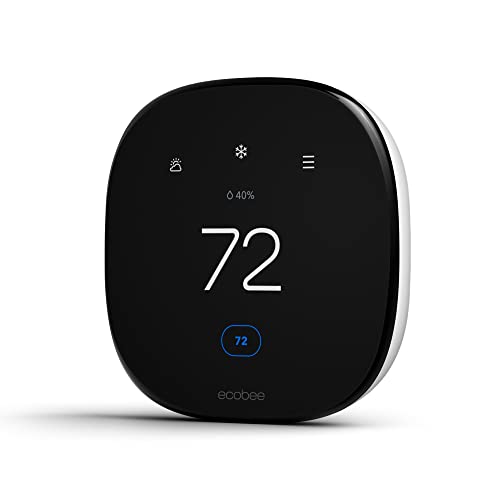
- Supports separately sold ecobee SmartSensors
- Adjusts for occupancy, sleep, and away periods
- Includes PEK and works with major smart platforms
Best For: Expandable smart-home setups
Design-Led Nest Comfort
Google Nest Learning Thermostat (4th gen) Obsidian

- Includes a Nest Temperature Sensor (2nd gen)
- Learns schedules and natural heating patterns
- Obsidian finish with Google Home and Matter support
Best For: Style-conscious Nest households
Best Value Starter
ecobee Smart Thermostat Essential

- Optional SmartSensor support for key rooms
- Compatible with 85% of HVAC systems
- Works with Alexa, Google Assistant, and HomeKit
Best For: Flexible smart-home setups that may add room sensors later
Best Bundled Sensor System

- Includes a wireless Room Sensor
- Sensor range extends up to 200 feet
- Supports occupancy-based room prioritization
Best For: Multi-room homes that need included sensing and flexible comfort control
Best for Privacy-Minded Homes
Sensi Touch 2 Smart Thermostat

- Works with optional Sensi Room Sensors
- Includes usage reports and maintenance alerts
- Sensi says it does not sell personal information
Best For: Privacy-conscious users who want optional room balancing and guided setup
Premium Doorway Comfort
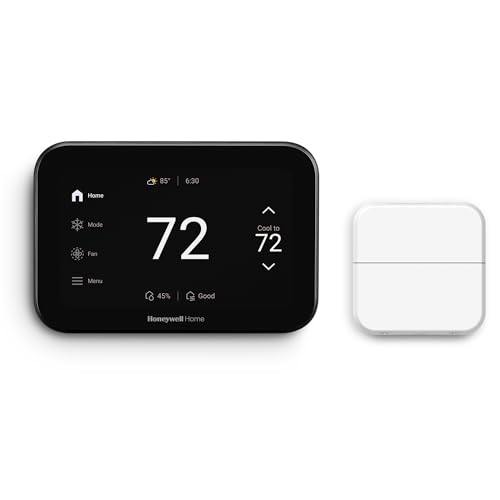
- Includes a wireless room sensor with up to 200-foot range
- 5-inch customizable display with doorbell camera compatibility
- Supports humidity, ventilation, occupancy, Matter, and voice control
Best For: Feature-focused homes wanting an included remote sensor
Learning Comfort
Google Nest Learning Thermostat

- Includes a second-generation Nest Temperature Sensor
- Learns routines and responds to outdoor temperature changes
- Works with many 24V systems and major voice platforms
Best For: Homes prioritizing adaptive schedules and smart-home integration
Flexible Room Focus
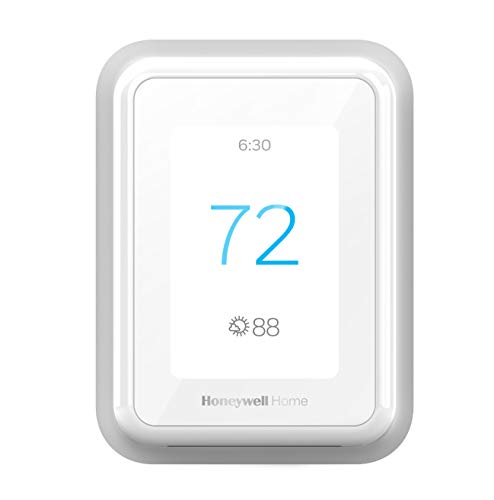
- Supports Smart Room Sensors for multi-room comfort
- Offers geofencing, adaptive schedules, alerts, and energy reports
- Works with several forced-air, hot-water, steam, and heat-pump systems
Best For: Homes planning to expand room sensing over time
Premium Room-by-Room Comfort – ecobee Smart Thermostat Premium
The ecobee Smart Thermostat Premium is a strong choice among smart thermostats with remote sensors for households that want room-by-room comfort, broad HVAC compatibility, and extra features. It includes one SmartSensor, a Power Extender Kit for many homes without a C-wire, and built-in air-quality monitoring.
Best For: Homes with hot or cold spots and shoppers who want a premium thermostat with voice control and air-quality features.
Pros:
- Includes a SmartSensor to prioritize comfort in occupied rooms.
- Built-in occupancy sensing can adjust comfort around your routine.
- Includes a Power Extender Kit, trim kit, and three-year warranty.
- Works with Siri and Alexa, with a built-in smart speaker.
Cons:
- Some features, including Siri support, require additional Apple or ecobee equipment.
- The ecobee Smart Security subscription is required for certain security features.
Choose this model if remote sensing is only part of what you want. Its display, air-quality monitor, voice features, and included installation accessories make it the most feature-rich option in this group, though its added capabilities may be more than necessary for basic temperature control.
Learning Sensor Control – Google Nest Learning Thermostat (4th gen)
Google Nest Learning Thermostat (4th gen) + Nest Temperature Sensor (2nd gen) - Silver
Check Price On AmazonThe Google Nest Learning Thermostat (4th gen) is a polished option among smart thermostats with remote sensors, pairing automatic scheduling with a Nest Temperature Sensor (2nd gen). It is designed to learn household patterns, manage hot and cold spots, and provide remote control through the Google Home app.
Best For: Households that want learning-based temperature control and a large, readable display.
Pros:
- Includes a Nest Temperature Sensor (2nd gen) for room-specific temperature targets.
- Learns routines and how outdoor conditions affect indoor temperature.
- Large display with Dynamic Farsight and automatic brightness adjustment.
- Works with most 24V systems, and a C-wire is not required in most homes.
Cons:
- Compatibility should still be confirmed with Google’s compatibility checker.
- Schedule changes may require approval rather than occurring entirely automatically.
This Nest bundle is a practical match for buyers who want the thermostat to learn over time while still offering sensor-based room control. Its Google Home and Matter compatibility add flexibility, and the included sensor makes it ready for remote-room monitoring out of the box.
Flexible ecobee Value – ecobee Smart Thermostat Enhanced
The ecobee Smart Thermostat Enhanced offers the core advantages of smart thermostats with remote sensors while keeping the sensor option modular. It uses occupancy sensing, remote app control, and automatic adjustments for sleep and away periods; additional ecobee SmartSensors can be added separately for room-by-room comfort.
Best For: Buyers who want an adaptable ecobee thermostat and may add remote sensors over time.
Pros:
- Supports add-on SmartSensors for occupied-room comfort.
- Automatically adjusts temperature when occupants are away or asleep.
- Works with Alexa, Google Assistant, Apple HomeKit, and SmartThings.
- Includes a Power Extender Kit and trim kit for many installations.
Cons:
- SmartSensors are sold separately.
- It lacks the Premium model’s included sensor and built-in air-quality monitor.
This is the better fit for a gradual upgrade path: install the thermostat now and add sensors where they matter most later. It covers the essential smart controls and integrations, but the total cost can rise if you need multiple room sensors.
Design-Led Nest Comfort – Google Nest Learning Thermostat (4th gen) Obsidian
Google Nest Learning Thermostat (4th gen) + Nest Temperature Sensor (2nd gen) - Obsidian
Check Price On AmazonThe Obsidian Google Nest Learning Thermostat (4th gen) combines sensor-based room management with a distinctive dark finish. Like other smart thermostats with remote sensors, it includes a Nest Temperature Sensor (2nd gen), while its learning features, Adaptive Eco mode, and Google Home control help balance comfort and energy use.
Best For: Buyers who want Nest’s sensor and learning features with an Obsidian-colored design.
Pros:
- Includes a Nest Temperature Sensor (2nd gen) for managing hot and cold spots.
- Can learn schedules and account for natural heating and cooling.
- Adaptive Eco helps select an energy-saving away temperature.
- Supports remote app control, voice assistants, and Matter.
Cons:
- The sensor system and compatibility should be reviewed before installation.
- The dark Obsidian finish may not suit every room or wall color.
Functionally, this model delivers the same sensor-focused Nest platform as the silver version, so the main distinction is the finish. It is a sensible pick when the design matters alongside learning automation, remote control, and included room sensing.
Best Value Starter – ecobee Smart Thermostat Essential
The ecobee Smart Thermostat Essential is a practical entry point for households shopping for smart thermostats with remote sensors. It supports optional ecobee SmartSensors, allowing you to monitor temperature and movement in rooms that matter most, while its schedule-based controls help manage comfort and energy use.
Best For: Homeowners who want an affordable, broadly compatible thermostat with the option to add room-by-room sensing later.
Pros:
- Works with optional ecobee SmartSensors for targeted room monitoring.
- Compatible with 85% of HVAC systems, including many conventional, heat pump, and boiler setups.
- Supports Apple HomeKit, Google Assistant, and Alexa.
- Offers schedule automation, energy tracking, humidity detection, and an easy-to-use color touchscreen.
Cons:
- SmartSensor 2-pack is sold separately.
- Homes without a C-wire need the separately sold Power Extender Kit.
- System compatibility should be confirmed before purchase.
Choose this model if you want a flexible foundation for remote-sensor temperature control without committing to a sensor bundle immediately. Its compatibility range and smart-home support make it a versatile option, but factor in the cost of accessories if you need room sensors or a power extender.
Best Bundled Sensor System – Honeywell Home X8S Premium
The Honeywell Home X8S Premium is a strong choice among smart thermostats with remote sensors because it includes a wireless Room Sensor in the box. Occupancy detection and day-or-night room prioritization help direct comfort where it is needed, while the 5-inch display provides clear local control.
Best For: Larger homes and families who want included wireless sensing, occupancy features, and flexible room prioritization.
Pros:
- Includes a wireless Room Sensor with up to 200 feet of range.
- Can prioritize living areas during the day and bedrooms at night.
- Supports humidity and ventilation control for indoor air-quality management.
- Offers Matter certification, app control, and compatibility with Alexa, Google Assistant, and Apple Home.
Cons:
- Requires a C-wire, although a voucher for a Honeywell C-Wire Adapter is included if needed.
- Does not work with 120–240V electric baseboard heat.
- Some air-quality functions may require additional HVAC equipment or accessories.
The X8S stands out for shoppers who want remote sensing without purchasing an additional sensor separately. Its broad feature set is especially useful for multi-room comfort, but verify HVAC compatibility and wiring requirements before installing.
Best for Privacy-Minded Homes – Sensi Touch 2 Smart Thermostat
The Sensi Touch 2 is a straightforward option for shoppers comparing smart thermostats with remote sensors. It works with separately sold Sensi Room Sensors to help balance temperatures throughout the home, while remote access, scheduling, and usage reports support everyday energy management.
Best For: Privacy-conscious households that want app-based control and optional room sensors for a mostly DIY installation.
Pros:
- Compatible with Sensi Room Sensors for more balanced temperatures across the home.
- Includes flexible scheduling, remote access, usage reports, alerts, and maintenance reminders.
- Privacy-focused design: Sensi says it will not sell personal information to third parties.
- Guided app setup uses Bluetooth to simplify installation.
Cons:
- Sensi Room Sensors are sold separately.
- A common wire is required.
- HVAC compatibility should be checked before installation.
This thermostat is a good fit when privacy and practical maintenance tools matter as much as room balancing. It offers useful sensor compatibility and clear app features, though the required C-wire and separate sensor purchase may add planning and cost.
Premium Doorway Comfort – Honeywell Home X8S
The Honeywell Home X8S is a strong option among smart thermostats with remote sensors if you want room-by-room comfort, a large customizable display, and connected-home features. Its included wireless sensor can prioritize living areas during the day and bedrooms at night, while occupancy detection helps adjust settings when you are away.
Best For: Homeowners who want premium controls, air-quality management, and a remote sensor included in the box.
Pros:
- Includes a wireless room sensor with up to 200 feet of range and flexible placement.
- Offers a 5-inch customizable display and doorbell camera viewing/intercom compatibility.
- Supports humidity and ventilation control, app control, voice assistants, and Matter.
- ENERGY STAR certified and eligible for energy-program participation and rebates.
Cons:
- Requires a C-wire, although a voucher for a Honeywell Home C-Wire Adapter is included if needed.
- Does not work with 120–240V electric baseboard heat.
- Some air-quality features may require additional HVAC equipment or accessories.
The X8S stands out for combining an included remote sensor with a large, feature-rich touchscreen. Confirm HVAC compatibility and wiring requirements before purchase, especially if you have electric baseboard heat.
Learning Comfort – Google Nest Learning Thermostat
The Google Nest Learning Thermostat is a polished choice among smart thermostats with remote sensors for households that want automated scheduling and broad smart-home compatibility. The included second-generation Nest Temperature Sensor helps address hot and cold spots by letting you set the temperature a specific room should reach at different times.
Best For: Users who want adaptive energy features, a refined display, and flexible control through Google Home, Alexa, Siri, or compatible smart-home systems.
Pros:
- Includes a second-generation Nest Temperature Sensor and supports additional Nest sensors.
- Learns heating and cooling patterns and can account for outdoor conditions.
- Works with many 24V systems, including gas, electric, oil, heat pump, forced-air, and radiant systems.
- Offers a larger display, Dynamic Farsight, app control, voice control, and Matter compatibility.
Cons:
- Compatibility still needs to be checked for the specific HVAC system.
- Some energy-saving and learning features may change temperatures or schedules with user approval.
- The polished gold finish may not suit every room’s decor.
Choose the Nest if you value automation and a wide range of controls alongside remote temperature sensing. Its compatibility checker is worth using before installation, even though a C-wire is not required in most homes.
Flexible Room Focus – Honeywell Home T9
The Honeywell Home T9 is a practical pick among smart thermostats with remote sensors when you want to expand room-by-room temperature control over time. It supports Smart Room Sensors for focusing comfort on multiple rooms, while geofencing, adaptive scheduling, alerts, and energy reports add useful everyday automation.
Best For: Households that want multi-room temperature prioritization and energy-management tools without buying sensors in the initial package.
Pros:
- Supports Smart Room Sensors for focusing comfort across multiple rooms.
- Provides remote app control, geofencing, adaptive scheduling, and temperature alerts.
- Compatible with forced air, hot water, steam, and heat pumps with electric backup.
- Includes a power adapter and installation hardware for a simpler setup in many homes.
Cons:
- Smart Room Sensors are sold separately.
- Requires a C-wire or the included power adapter, depending on the installation.
- Does not work with 120–240V electric baseboard heat.
The T9 makes sense if you want to build a sensor-based comfort system gradually. It offers useful scheduling and energy tools, but factor the cost of additional room sensors into your overall budget.
How We Picked the Best Smart Thermostats with Remote Sensors
We focused on thermostats that support one or more remote temperature sensors and evaluated the features that matter in everyday use: sensor availability, room prioritization, scheduling, app quality, voice-assistant compatibility, energy-saving tools, display usability, and HVAC compatibility. We also included multiple price levels and designs so you can match the thermostat to your home and budget.
Because identical products may appear in different finishes or retailer bundles, compare the included sensor count and compatibility details before purchasing. A listed sensor may be included, optional, or sold separately depending on the package.
Quick Comparison
| Best For | Brands to Consider | What to Look For |
|---|---|---|
| Premium features | ecobee Premium, Google Nest Learning Thermostat | Advanced comfort settings, strong displays, and broad smart-home support |
| Simple learning automation | Google Nest | Automatic scheduling, occupancy features, and easy app control |
| Flexible room sensing | ecobee, Honeywell Home T9 and X8S | Multiple sensor support and room-priority settings |
| Value and straightforward controls | ecobee Essential, Sensi Touch 2 | Core smart features, app access, and lower upfront cost |
Key Buying Factors for Smart Thermostats with Remote Sensors
Sensor Coverage and Room Priority
Check how many sensors the thermostat supports, whether sensors are included, and how the system averages readings. Some systems let you prioritize a specific room at certain times, while others use occupancy data or a whole-home average. Choose a thermostat with enough sensor coverage for the rooms where temperature differences are most noticeable.
HVAC Compatibility and Installation
Verify compatibility with your heating and cooling equipment before ordering. Pay particular attention to heat pumps, multi-stage systems, dual-fuel setups, humidifiers, dehumidifiers, and homes without a common wire. Professional installation may be worthwhile if your wiring or HVAC configuration is unusual.
Smart-Home Integration
Look for support that matches your existing setup. Google Nest is a natural fit for Google Home, while ecobee and several Honeywell Home and Sensi models work with Alexa. Compatibility can vary by feature, so confirm whether voice control supports temperature changes, schedules, sensor selection, and routines.
Energy and Automation Features
Scheduling, geofencing, occupancy detection, usage reports, and utility rebates can reduce energy consumption. These features work best when configured for your household’s routine rather than left entirely to automatic learning.
Who Should Buy Which Smart Thermostats with Remote Sensors?
Choose a premium ecobee or Google Nest model if you want a polished interface, advanced automation, and extensive smart-home features. Choose an ecobee Essential or Sensi Touch 2 if you mainly need app control, scheduling, and remote temperature monitoring at a lower price. Honeywell Home models are worth considering if you want flexible sensor placement and traditional HVAC compatibility. For Google Home households, Nest is often the most seamless choice; for Alexa-centered homes, ecobee, Honeywell Home, and Sensi provide strong alternatives.