When it comes to enhancing your home’s convenience, smart home voice control panels are game-changers. These devices simplify your daily tasks and connect seamlessly with various smart gadgets. From the versatile Amazon Echo Hub to the user-friendly eufy Smart Display E10, each panel offers unique features tailored to your needs. Curious about which ones stand out and how they can transform your living space? Let’s explore the top options available.
Amazon Echo Hub, 8” Smart Home Control Panel with Alexa

If you’re looking for a versatile smart home control solution, the Amazon Echo Hub is perfect for you. This 8” control panel integrates seamlessly with thousands of Alexa-compatible devices, letting you manage lights, smart plugs, and camera feeds effortlessly. With support for WiFi, Bluetooth, Zigbee, Matter, Sidewalk, and Thread, syncing is a breeze. You can also arm and disarm security systems and monitor your home remotely through the Alexa app. Plus, installation is simple with various mounting options, and privacy controls guarantee your peace of mind. Made from recycled materials, it’s a sustainable choice for your smart home.
Best For: Those seeking a comprehensive and user-friendly smart home control solution that integrates with a wide range of devices.
Pros:
- Seamless integration with thousands of Alexa-compatible devices for easy smart home management.
- Robust security features allow for remote monitoring and control of home security systems via the Alexa app.
- Eco-friendly design made from recycled materials, promoting sustainability in your smart home setup.
Cons:
- Additional accessories like table-top stands and power-over-Ethernet adapters are sold separately, which may increase overall costs.
- Limited functionality for devices that are not Alexa-compatible, potentially restricting user options.
- Installation may require additional effort for concealing cables, especially if wall mounting is chosen.
eufy Smart Display E10, Smart Home Hub

The eufy Smart Display E10 serves as an ideal solution for anyone seeking seamless home security management, particularly for families with members of varying ages. This 8-inch smart home hub is user-friendly, featuring a touchscreen that anyone can navigate easily. You’ll receive instant alerts when your doorbell rings or if motion is detected, with live feeds lighting up to keep you informed. Plus, you can monitor up to four video streams simultaneously. Historical events are automatically downloaded for quick playback, ensuring you never miss key moments. With its flexible monitoring capabilities, it’s perfect for any home setup.
Best For: Families seeking a user-friendly and efficient home security management system that accommodates all age groups.
Pros:
- User-friendly design with an 8-inch touchscreen that is easy to navigate for both kids and seniors.
- Instant alerts for doorbell rings, door unlocks, and motion detection to keep you informed in real-time.
- Ability to monitor up to four video streams simultaneously for comprehensive property surveillance.
Cons:
- Limited compatibility with certain devices, which may restrict some users’ smart home integrations.
- Dependent on Wi-Fi, meaning that any internet issues can affect performance and accessibility.
- Requires a power source, which may limit placement options in certain areas of the home.
Home Assistant Green Smart Home Hub

Home Assistant Green Smart Home Hub stands out as an ideal choice for individuals seeking a user-friendly entry point into home automation. With its small, fanless, and silent design, you can easily integrate it into your home. Just plug it in and connect it via Ethernet, and you’re ready to control your entire home without the clutter of multiple hubs and apps. The automation features let you dim lights for movie nights or turn off the heat when you leave. Plus, it stores data locally, ensuring your privacy while providing expandability options for various devices.
Best For: Homeowners looking for an easy-to-use and efficient smart home hub to manage their home automation needs.
Pros:
- User-friendly setup: Simply plug in the power supply and connect via Ethernet to get started.
- Quiet operation: The fanless design ensures silent performance, making it suitable for any living space.
- Local data storage: Keeps your personal data private and allows easy access for sharing and exporting.
Cons:
- Limited initial storage: The built-in 32GB of storage may not accommodate extensive data needs for larger setups.
- Dependence on Ethernet: Requires a wired connection for optimal performance, which may limit placement options.
- Expandability requires additional purchases: To fully utilize Z-Wave, Zigbee, or Thread devices, additional USB modules must be acquired.
MOES Smart Home Touchscreen Control Panel with Alexa Built-in

For tech-savvy homeowners seeking seamless smart living, the MOES Smart Home Touchscreen Control Panel with Alexa Built-in stands out as an ideal choice. This in-wall panel features a 5-inch full touchscreen, making it easy for you to manage devices and scenes with just a tap or your voice. Compatible with a wide range of Smart Life devices, it enhances your smart home’s interconnectedness. With built-in Alexa, you can control everything hands-free. Plus, its integrated Zigbee gateway functionality simplifies connectivity, while wired and wireless options guarantee easy installation. Embrace a smarter, more streamlined home experience with MOES.
Best For: Tech-savvy homeowners looking for an integrated solution to manage their smart home devices easily.
Pros:
- Built-in Alexa allows for hands-free control of devices and scenes.
- Wide compatibility with various Smart Life devices enhances smart home connectivity.
- Integrated Zigbee gateway functionality reduces the need for additional hubs or gateways.
Cons:
- Installation may require some technical knowledge for optimal setup.
- Touchscreen size might be small for users who prefer larger displays.
- Dependence on Wi-Fi or wired connections could limit functionality in areas with poor connectivity.
Lutron Caseta Smart Lighting Hub (L-BDG2-WH)
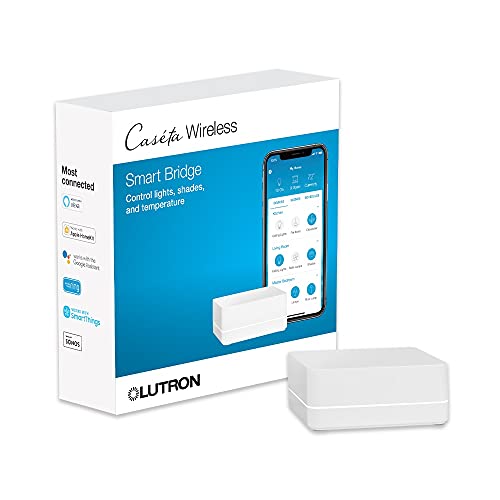
Looking for a smart lighting solution that seamlessly integrates with your existing devices? The Lutron Caseta Smart Lighting Hub (L-BDG2-WH) might be just what you need. It supports up to 75 devices and connects effortlessly with brands like Amazon Alexa, Apple HomeKit, and Google Assistant. You can control your lights with simple voice commands, thanks to its compatibility with Alexa. Installation is a breeze—just plug it in, connect to Wi-Fi, and set it up through the Lutron App. Plus, its Clear Connect Technology guarantees no interference with your Wi-Fi, making your home smarter without any hassle.
Best For: Those looking for an easy-to-use smart lighting hub that integrates with various smart home devices and supports voice control.
Pros:
- Supports up to 75 devices, allowing for extensive home automation.
- Compatible with multiple smart home brands, ensuring flexibility and versatility in your setup.
- Clear Connect Technology minimizes interference with Wi-Fi, enhancing overall performance.
Cons:
- Limited to Caséta devices, which may restrict options for users with other brands.
- Requires Wi-Fi connection, which may not be suitable for all users.
- Initial setup may still be daunting for those unfamiliar with smart home technology.
Hubitat Elevation Home Automation Hub (Model C-8 Pro)

The Hubitat Elevation Home Automation Hub (Model C-8 Pro) is perfect for tech-savvy users who want a robust smart home system that prioritizes speed and privacy. This hub supports over 1000 devices from popular brands, using Z-Wave, Zigbee, and Matter protocols for seamless integration. You can easily connect it to smart assistants like Apple HomeKit, Amazon Alexa, and Google Home for a unified experience. Plus, create detailed automation rules directly from the hub, eliminating the need for external services. With powerful antennas for extended range, it’s ideal for larger homes. Just follow the setup documentation for a smooth start!
Best For: Tech-savvy users seeking a robust smart home system that prioritizes speed, privacy, and extensive device compatibility.
Pros:
- Wide compatibility: Supports over 1000 smart devices from 100+ brands using Z-Wave, Zigbee, and Matter protocols.
- Local processing: Offers enhanced speed and reliability by processing data locally without relying on cloud services.
- Automation capabilities: Allows users to create detailed automation rules directly from the hub, simplifying management of smart devices.
Cons:
- Setup complexity: Initial setup may involve several updates and restarts, which can be challenging for some users.
- Limited out-of-the-box support: May require additional research for troubleshooting as it primarily relies on self-management.
- Higher learning curve: May not be as user-friendly for beginners compared to more simplistic smart home solutions.
MOES WiFi Smart IR Remote Controller for Smart Home

Experience seamless control of your home entertainment and climate devices with the MOES WiFi Smart IR Remote Controller. This handy device lets you manage infrared devices like TVs and air conditioners through the Smart Life or Tuya app on your smartphone. It works with Alexa for voice commands, so you can set your A/C to a specific temperature hands-free. Plus, the DIY learning function lets you program unsupported IR devices by copying commands from your original remote. Installation is simple with a UL certified adapter and USB cable, making it perfect for single-room use. Enjoy effortless control from anywhere!
Best For: Those looking for a convenient way to control various infrared devices in their home through a smartphone app or voice commands.
Pros:
- Easy Installation: Comes with a UL certified adapter and USB cable for straightforward setup.
- Voice Control Compatibility: Integrates with Alexa and Google Assistant for hands-free operation.
- DIY Learning Function: Allows users to program unsupported IR devices by copying commands from original remotes.
Cons:
- Limited Range: Best suited for single-room use as infrared signals do not penetrate walls.
- Brand Compatibility: Requires checking documentation for supported brands, which may limit use with some devices.
- App Dependency: Requires the Smart Life or Tuya app for full functionality, which may not appeal to all users.
Amazon Echo Show 15 Kitchen Hub with Fire TV and Alexa

If you’re seeking a powerful kitchen companion, the Amazon Echo Show 15 Kitchen Hub with Fire TV and Alexa is an ideal choice. Its 15.6″ Full HD display makes it perfect for recipes and cooking videos. You can stay organized with customizable widgets for calendars and to-do lists, while the built-in Fire TV gives you access to your favorite streaming apps. Control your smart home devices effortlessly through voice commands or the dashboard. Plus, enjoy enhanced video calling with the auto-framing camera. With privacy controls at your fingertips, it’s both convenient and secure for your family’s needs.
Best For: Families looking for an all-in-one kitchen hub that combines organization, entertainment, and smart home control.
Pros:
- Customizable widgets for easy access to calendars and to-do lists enhance family organization.
- Built-in Fire TV provides access to a wide range of streaming apps for entertainment during cooking or meal prep.
- Advanced video calling features with an auto-framing camera ensure smooth communication with friends and family.
Cons:
- The 15.6″ display may take up significant counter space in smaller kitchens.
- Subscription fees may apply for some streaming services accessed through the Fire TV.
- Privacy controls, while effective, may require users to remember to utilize them regularly for peace of mind.
SwitchBot Hub 2 (2nd Gen) – WiFi Thermometer Hygrometer and Smart Remote

For families with elderly members or children, the SwitchBot Hub 2 (2nd Gen) shines as an ideal smart home companion. This versatile device not only functions as a WiFi thermometer and hygrometer but also acts as a smart remote for your appliances. It’s compatible with Alexa and Google Assistant, making it easy to control your home environment. With accurate monitoring of temperature and humidity, you can automate devices like air conditioners based on real-time data. Plus, its user-friendly smart buttons guarantee everyone can stay comfortable without needing smartphones or voice commands. Enjoy peace of mind with this smart solution!
Best For: Families with elderly members or children who need an easy-to-use smart home solution for monitoring temperature and controlling appliances.
Pros:
- Accurate monitoring of temperature and humidity with a built-in Swiss-made chip.
- Compatible with Alexa and Google Assistant for seamless voice control.
- User-friendly smart buttons allow for easy operation without smartphones.
Cons:
- Limited to 2.4GHz Wi-Fi, which may not suit all home networks.
- Requires integration with other SwitchBot products for full automation capabilities.
- Some users may find the need for additional setup for appliances with IR remotes cumbersome.
Amazon Echo Hub Smart Home Control Panel with Alexa
The Amazon Echo Hub Smart Home Control Panel with Alexa is perfect for anyone looking to streamline their smart home experience. This 8” control panel lets you manage thousands of devices effortlessly, whether through voice commands or its touch display. You can control lights, cameras, and more, all while enjoying seamless integration with WiFi, Bluetooth, and other protocols. With robust security features, you can arm your system and monitor your home remotely. Plus, it emphasizes privacy and sustainability, using 27% recycled materials. Wall-mount it or use a table-top stand to fit your space perfectly.
Best For: Those looking to simplify their smart home management with a versatile and user-friendly control panel.
Pros:
- Easy integration with thousands of Alexa-compatible devices for seamless smart home control.
- Robust home security features allow remote monitoring and control of security systems.
- Designed with privacy in mind, featuring a mic off button and made from 27% recycled materials.
Cons:
- Requires additional purchases for wall-mounting or cable management accessories.
- Refurbished nature may not appeal to all consumers looking for brand new products.
- Limited compatibility with non-Alexa smart devices, potentially restricting some users’ options.
Factors to Consider When Choosing a Smart Home Voice Control Panel
When choosing a smart home voice control panel, you need to take into account several key factors. Think about compatibility with your existing devices, the voice assistant integration, and how user-friendly the interface is. Don’t forget to check the installation process and the privacy features to ascertain your home is secure.
Compatibility With Devices
Choosing a smart home voice control panel hinges on its compatibility with a wide range of devices, which guarantees seamless communication with your smart gadgets like lights, locks, and thermostats. Look for panels that support multiple communication protocols, such as WiFi, Bluetooth, Zigbee, and Z-Wave. This guarantees integration with various devices from different brands. It’s also essential to check compatibility with major ecosystems like Amazon Alexa, Google Assistant, and Apple HomeKit, as this enhances versatility. Consider how many devices a panel can manage; some can handle dozens or even hundreds simultaneously. Finally, opt for a model that receives frequent updates, as ongoing manufacturer support can expand compatibility over time, keeping your smart home connected.
Voice Assistant Integration
Integrating a smart home voice control panel with popular voice assistants like Alexa, Google Assistant, or Apple HomeKit can greatly enhance your overall smart home experience. When choosing a panel, check its compatibility with these voice assistants to maximize device integration. Look for hands-free voice command support, allowing you to control various devices seamlessly without manual input. Consider panels that enable voice control for multiple functions, such as lighting, temperature, security systems, and entertainment, for a thorough setup. It’s essential to evaluate how well the panel fits within the voice assistant’s ecosystem, as some work better with specific brands. Finally, features like built-in voice recognition can provide personalized responses, enhancing usability and efficiency in your smart home.
User Interface Design
Since a smart home voice control panel serves as the central hub for managing your devices, the user interface design plays an essential role in your overall experience. You’ll want a UI that prioritizes ease of navigation, allowing you to access features quickly without confusion. Look for touchscreen responsiveness and clarity, as these enhance interaction and make the display visually appealing. Accurate voice command recognition is vital, helping to minimize misunderstandings and ensuring smooth communication. Customization options let you personalize your panel, arranging widgets and shortcuts to fit your needs. Finally, consider accessibility features like voice feedback and adjustable text sizes, ensuring users of all ages and abilities can effectively engage with the control panel.
Installation and Setup
When selecting a smart home voice control panel, consider how easy it is to install and set up. Some panels offer wall mounting options or tabletop stands to fit your space. Look for features like in-wall cable pass-throughs or Power-over-Ethernet adapters to help manage and conceal cables effectively. You’ll also want a device that supports both wired and wireless connections, giving you flexibility based on your home network. Assess installation requirements and verify compatibility with your existing smart home ecosystem for seamless integration. Finally, check that the setup process is user-friendly, with straightforward instructions to minimize the time and complexity involved in getting started. This way, you can enjoy your smart home sooner rather than later.
Privacy Features
After you’ve set up your smart home voice control panel, it’s important to contemplate how it affects your privacy. Look for panels that feature a physical microphone off button, giving you control over when your device listens. Opt for products that store your data locally instead of in the cloud, enhancing your privacy. Review the privacy policies carefully; verify they’re transparent about data sharing and whether your information is sold to third parties. Robust privacy controls should allow you to manage data access and settings easily. Finally, consider panels made from sustainable materials—these companies often prioritize responsible data handling and user privacy. Your choices can greatly shape your smart home experience.