When it comes to enhancing your smart home, choosing the right presence sensor can make a significant difference. These devices not only detect motion but also integrate seamlessly with platforms like HomeKit, Alexa, and Google Home. With features like customizable zones and real-time alerts, they offer both convenience and security. Curious about which sensors stand out in the market and how they can elevate your smart living experience? Let’s explore the top options available.
meross Matter Human Presence Sensor for Smart Home Automation
If you’re looking to enhance your smart home automation, the meross Matter Human Presence Sensor is an ideal choice, especially for those who prioritize advanced detection capabilities. This 3-in-1 sensor combines PIR, light, and mmWave radar technologies, providing precise motion and presence detection. It recognizes your presence without requiring motion, ensuring seamless automation. With compatibility across platforms like HomeKit, Alexa, and Google Home, integration is a breeze. Plus, its adjustable design allows for optimal positioning. Enjoy enhanced stability and privacy, along with pet-proof features that prevent false alarms. This sensor truly elevates your smart living experience.
Best For: Those seeking advanced smart home automation with precise motion and presence detection capabilities.
Pros:
- Combines PIR and mmWave radar for enhanced accuracy in detection.
- Compatible with multiple platforms, ensuring versatile integration options.
- Adjustable design allows for optimal positioning and includes pet-proof features to minimize false triggers.
Cons:
- Requires continuous power supply, which may limit placement options.
- A hub is needed for Matter integration, potentially adding to setup complexity.
- May be overkill for users with simpler smart home needs.
Wireless Human Presence Sensor LWR01, mmWave Radar Occupancy & Motion Sensor

The Wireless Human Presence Sensor LWR01 stands out as an ideal choice for tech-savvy homeowners seeking seamless integration into their smart home ecosystems. Utilizing advanced mmWave Radar technology, it detects both subtle movements and stillness, with a range of up to 19.68 feet. This battery-powered sensor is IPX3 water-resistant, making it suitable for various environments. With over a year of battery life, you can rely on its performance. It supports multiple ecosystems, including Apple HomeKit and Google Home, ensuring you can customize your automation with ease. Enjoy smart light control and energy savings with this innovative sensor.
Best For: Tech-savvy homeowners looking for seamless integration into their smart home ecosystems.
Pros:
- Exceptional detection capabilities with mmWave Radar technology, sensing movement and stillness up to 19.68 feet.
- Long battery life of over a year, reducing the need for frequent replacements.
- Wide compatibility with various smart home ecosystems, including Apple HomeKit, Google Home, and Amazon Alexa.
Cons:
- Requires a Thread-compatible hub, which may necessitate additional investment if not already owned.
- Limited to specific operating systems, requiring iOS/iPadOS 16.4 or Android 8.1 and later.
- IPX3 water resistance may not be suitable for all outdoor environments, limiting placement options.
Aqara Presence Sensor FP2, mmWave Radar Smart Motion Sensor
For those seeking a reliable and private solution for home monitoring, the Aqara Presence Sensor FP2 stands out with its advanced millimeter-wave radar technology. This wired sensor operates on a 2.4 GHz Wi-Fi network, covers up to 430 sq ft, and allows you to create up to 30 custom detection zones. It detects up to five people simultaneously, ensuring your home remains secure. Plus, its IPX5 rating makes it perfect for humid areas. With no cameras involved, your privacy is guaranteed, while smart integrations with HomeKit, Alexa, and Google Home enhance your living experience effortlessly.
Best For: Individuals seeking a reliable, privacy-focused solution for home monitoring and elderly care.
Pros:
- Advanced millimeter-wave radar technology provides precise detection without compromising privacy.
- Supports integration with popular smart home platforms like HomeKit, Alexa, and Google Home.
- Customizable detection zones and fall detection features enhance safety and monitoring capabilities.
Cons:
- Requires a 2.4 GHz Wi-Fi connection and a separate power adapter, which is not included.
- Wired installation may not be suitable for all users or environments.
- Limited to detecting up to five people simultaneously, which may be insufficient for larger households.
AKAMATIS Human Presence Sensor v2.2 for Home Assistant

Smart home enthusiasts will appreciate the AKAMATIS Human Presence Sensor v2.2 for its advanced millimeter-wave radar technology, which detects both moving and stationary objects up to 20 feet away. This sensor offers higher precision and broader coverage than traditional PIR sensors, allowing you to automate your home efficiently. Its compact, plug-and-play design blends seamlessly into your interiors, and with USB-C power, you won’t have to worry about batteries. Pre-flashed with ESPHome firmware, setup is a breeze—you just connect to the device’s hotspot and input your Wi-Fi credentials. Plus, its FCC-certified components guarantee reliable operation.
Best For: Smart home enthusiasts looking for a reliable and efficient human presence detection solution.
Pros:
- Higher precision and broader coverage compared to traditional PIR sensors, detecting objects up to 20 feet away.
- Compact and minimalist design that seamlessly integrates into various home interiors.
- Easy setup with pre-flashed ESPHome firmware, allowing quick connection to Wi-Fi without manual configuration.
Cons:
- Limited to indoor use, as it is designed specifically for indoor environments.
- Requires a power source, as it is powered via USB-C and does not support battery operation.
- Potential interference in certain environments due to the nature of millimeter-wave radar technology.
GoveeLife Human Presence Sensor for Indoor Home Automation

GoveeLife’s Human Presence Sensor stands out for its dual detection capabilities, making it perfect for small pet owners who want an efficient home automation solution. It uses mmWave radar and infrared technology for ultra-high accuracy, even in tricky environments. You can customize automation based on presence duration and distance, ensuring your home responds just right. Installation is a breeze with its magnetic base, providing 360° rotation and a 120° folding angle. Plus, it seamlessly integrates with Alexa, Google Assistant, and IFTTT, creating an energy-saving home environment. Just remember, it requires 2.4GHz Wi-Fi to operate effectively.
Best For: GoveeLife’s Human Presence Sensor is best for small pet owners seeking a reliable and efficient home automation solution.
Pros:
- Dual detection with mmWave radar and infrared technology ensures high accuracy in various environments.
- Flexible automation options based on presence duration and distance enhance home management.
- Easy installation with a magnetic base allows for versatile mounting and positioning.
Cons:
- Requires constant power for operation, which may limit placement options.
- Limited to 2.4GHz Wi-Fi, potentially excluding users with 5GHz networks.
- Not compatible with Home Assistant (HA), which may deter some smart home enthusiasts.
Aqara Zigbee Presence Sensor FP1E

The Aqara Zigbee Presence Sensor FP1E stands out as a top choice for tech-savvy homeowners seeking seamless integration with their smart home ecosystem. Utilizing advanced mmWave technology, it detects subtle movements, ensuring quick automation triggers within a 120° field of view. Compatible with HomeKit, Alexa, and Google Home, it requires the Aqara Zigbee 3.0 Hub for peak performance. Installation is a breeze, thanks to its magnetic and adhesive brackets. Plus, its AI features adapt sensitivity to room conditions, enhancing accuracy and reducing false alarms. With the FP1E, you can elevate your home automation experience effortlessly.
Best For: Tech-savvy homeowners looking for seamless integration with smart home systems and precise motion detection.
Pros:
- Advanced mmWave technology ensures accurate detection of subtle movements and quick automation triggers.
- Compatible with major smart home ecosystems like HomeKit, Alexa, and Google Home, enhancing versatility.
- AI features adapt sensitivity to room conditions, minimizing false alarms and improving overall detection accuracy.
Cons:
- Requires Aqara Zigbee 3.0 Hub for functionality, limiting compatibility with other brand hubs.
- Installation requires a 5V/1A DC adapter, which is not included in the package.
- Detection range is limited to 6m and 35 ㎡, which may not cover larger spaces effectively.
ecobee Smart Sensor 2 Pack for Smart Home
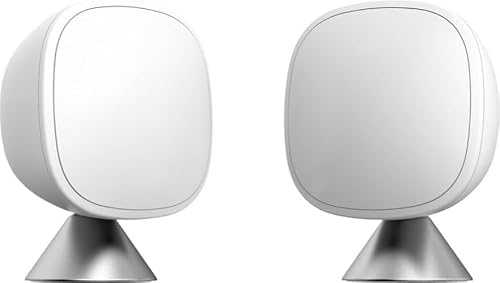
For homeowners seeking enhanced comfort and energy efficiency, the ecobee Smart Sensor 2 Pack stands out as a top choice. These sensors detect room occupancy and communicate temperature to your ecobee Smart Thermostat from up to 60 ft away, even through walls and floors. They adjust temperatures for ideal comfort, especially at night, while monitoring household activity to save energy in empty spaces. You can view temperature differences and occupancy through the ecobee app, making adjustments remotely. Installation is quick—just place them at least 5 ft off the ground. Plus, they offer security features with real-time alerts when needed.
Best For: Homeowners looking to enhance their home’s comfort, energy efficiency, and security with smart technology.
Pros:
- Easy installation with quick setup and flexible placement options.
- Remote monitoring and control via the ecobee app for personalized comfort.
- Energy-saving features that optimize heating and cooling by detecting occupancy.
Cons:
- Requires an ecobee Smart Security subscription for full security functionality.
- May have limited compatibility with non-ecobee thermostats.
- Placement restrictions suggest mounting at least 5 ft above the floor, which may not suit all home layouts.
TREATLIFE WiFi Presence Sensor, mmWave Radar Smart Motion Sensor

Looking for a smart presence sensor that prioritizes your privacy? The TREATLIFE WiFi Presence Sensor uses advanced mmWave radar technology to detect movements and stationary states with impressive accuracy. You won’t have to worry about unexpected lights turning off during your downtime. It connects directly to your 2.4GHz Wi-Fi, eliminating the need for a hub, and works seamlessly with Alexa and Google Assistant. With a customizable setup, you can create modes like Reading or Energy Saving. Plus, its magnetic base allows for flexible mounting, ensuring peak performance within a 20ft range. Enjoy peace of mind while staying connected!
Best For: Individuals seeking a smart motion sensor that values privacy and offers customizable home automation features.
Pros:
- High precision in detecting movements and stationary states without using cameras, ensuring user privacy.
- Direct Wi-Fi connectivity eliminates the need for a hub, simplifying installation and usage.
- Customizable modes enhance home automation, allowing users to tailor settings for different activities such as reading or energy saving.
Cons:
- Does not support SmartThings or IFTTT, limiting integration with some smart home systems.
- Installation should avoid areas with moving objects or moisture as it is not waterproof or moisture-proof.
- Maximum detection range of 20ft may not cover larger spaces effectively.
Emotion Max Presence Sensor, 60GHz mmWave Radar WiFi Smart Motion Sensor

Advanced millimeter-wave radar technology makes the Emotion Max Presence Sensor an ideal choice for those seeking an intelligent and responsive home monitoring solution. It detects even the slightest movements, like heartbeats and breathing, ensuring accurate monitoring. You can customize detection zones and set personalized automation rules, enhancing your smart home functionality without clutter. Plus, it supports independent living by alerting you to unusual inactivity. With seamless integration with Home Assistant and compatibility with Alexa, Google Assistant, and Siri, managing your home becomes effortless. Enjoy the convenience of real-time updates and enhanced automation tailored to your lifestyle.
Best For: Individuals and families seeking a comprehensive home monitoring solution that enhances safety and automation through advanced motion detection technology.
Pros:
- Highly sensitive detection of minute movements such as heartbeats and breathing ensures accurate monitoring.
- Customizable detection zones allow for tailored automation and enhanced smart home functionality without the need for multiple sensors.
- Seamless integration with Home Assistant, Alexa, Google Assistant, and Siri simplifies home management and provides real-time updates.
Cons:
- Requires a certified power adapter for operation, which may necessitate additional purchases if not already owned.
- Initial setup may require technical knowledge to fully utilize the advanced features and integrations.
- Privacy concerns may arise for users who are wary of continuous monitoring and data syncing to the cloud.
WenzhiIoT Smart Motion Sensor
The WenzhiIoT Smart Motion Sensor stands out as an ideal choice for homeowners seeking seamless automation and enhanced security. This Zigbee 5.8 GHz radar sensor detects human presence, micro motions, and static states with impressive accuracy. You can easily integrate it with the Tuya Smart APP to monitor illuminance and control lights, ensuring your home is perfectly lit. With adjustable sensitivity and detection range, you can customize its performance to fit your needs. The lightweight, mini wall mount design makes installation a breeze. For peak functionality, pairing it with a Tuya ZigBee gateway is highly recommended.
Best For: Homeowners looking for a reliable and customizable solution to enhance home automation and security.
Pros:
- Accurate Detection: Utilizes mmWave Radar Detection for precise identification of human presence and movement.
- Smart Integration: Compatible with the Tuya Smart APP, allowing for intelligent control of lighting based on ambient conditions.
- Customizable Settings: Offers adjustable sensitivity and detection range to cater to various user preferences and environments.
Cons:
- Requires Tuya ZigBee Hub: For optimal performance, a Tuya ZigBee gateway is recommended, which adds an additional cost.
- Limited Power Source: Powered by USB-Type-C 5V, which may limit placement options if outlets are not nearby.
- Detection Delay: The minimum detection delay of 0.1 seconds may not be suitable for all applications, particularly in fast-paced environments.
Factors to Consider When Choosing a Smart Presence Sensor for Home
When choosing a smart presence sensor for your home, think about several key factors. You’ll want to take into account detection technology types, compatibility with your existing ecosystem, and how easy the installation and setup process is. Also, don’t forget to check the power supply options, range, and sensitivity to make sure it meets your needs.
Detection Technology Types
Three main detection technologies dominate the smart presence sensor market: PIR (Passive Infrared), mmWave radar, and hybrid systems that combine both. PIR sensors excel at detecting motion by sensing changes in infrared radiation, typically from human bodies, with a range of up to 12 meters. However, mmWave radar takes it a step further, accurately detecting both motion and stationary presence, even sensing subtle movements like heartbeats and breathing, with detection capabilities extending beyond 20 feet. Hybrid systems leverage the strengths of both technologies, allowing for presence detection without motion—ideal for various smart home applications. Advanced sensors might also offer customizable detection zones and interference filtering, ensuring precise tracking while respecting user privacy.
Compatibility With Ecosystems
Choosing a smart presence sensor that fits seamlessly into your existing smart home ecosystem is vital for maximizing its potential. Make certain the sensor is compatible with platforms like Apple HomeKit, Amazon Alexa, Google Home, or Home Assistant for smooth integration and control. Some sensors use the Matter framework, which supports multiple ecosystems, enhancing compatibility. It’s important to check if the sensor needs a specific hub or gateway, as this can impact its functionality. Additionally, consider whether it supports wired and wireless connections, which can affect reliability in different settings. Finally, review the automation features available; effective compatibility guarantees the sensor can trigger actions and respond to other devices in your ecosystem efficiently.
Installation and Setup Ease
After ensuring compatibility with your smart home ecosystem, the next factor to contemplate is the installation and setup ease of the smart presence sensor. Many models offer a plug-and-play design, making installation quick and straightforward without complex configurations. Consider whether the sensor requires a constant power supply via USB or a specific voltage adapter, as this impacts your installation options. Some sensors come with adjustable mounting options, like magnetic bases or adhesive brackets, enhancing placement versatility. The setup process can also vary; some devices integrate directly with apps, while others may need a dedicated hub for full functionality. Overall, easy installation and setup can greatly enhance your smart living experience.
Power Supply Options
When selecting a smart presence sensor for your home, power supply options play a crucial role in ensuring reliable functionality. You can choose between battery-powered sensors, which offer flexibility in placement but may need periodic battery replacements, and those with continuous power supplies for uninterrupted operation. Sensors with USB-C connections provide easy plug-and-play installation, making them convenient for stable power without battery hassle. A wired power supply is often more dependable, especially in high-usage areas where frequent triggering occurs. Additionally, some models let you choose between battery or wired options based on your needs. Remember to assess water resistance ratings, as battery compartments can be more vulnerable in humid conditions compared to wired systems.
Range and Sensitivity
Power supply options are just one aspect to evaluate; the range and sensitivity of smart presence sensors greatly impact their effectiveness in your home. Detection ranges can vary greatly, with some sensors detecting motion up to 12 meters (39 feet) and others extending to 26 feet (approximately 8 meters). Sensitivity is equally essential, as some models can pick up subtle movements and stationary presence within a few centimeters. Advanced sensors often use mmWave radar technology to differentiate between human movement and static objects, enhancing reliability. Look for models with adjustable sensitivity settings, allowing you to tailor detection parameters to your environment. Additionally, a wider field of view—up to 120 degrees—can provide extensive monitoring for larger spaces.
Privacy and Security Features
As you consider smart presence sensors for your home, privacy and security features should be at the forefront of your decision-making. Many sensors use millimeter-wave radar technology, which detects minute movements like breathing and heartbeat without relying on cameras, ensuring your privacy. Look for advanced models that offer customizable interference zones to ignore pet movements, reducing false triggers. Some sensors let you set specific automation rules based on human presence or absence, alerting you to unusual inactivity while maintaining privacy. AI integration in certain models filters out non-human movements, enhancing accuracy. Finally, privacy-focused sensors often operate without continuous internet connectivity, allowing local automations and minimizing the risk of external data breaches.