The best commercial citrus juicer can turn a steady stream of lemons, limes, oranges, and grapefruits into fresh juice with less labor and mess. The right model depends on your daily volume, available counter space, preferred level of automation, and cleaning routine.
We selected 10 manual and electric presses ranging from compact countertop machines to heavy-duty commercial equipment. Use the comparison and buying advice below to match capacity, construction, extraction style, and budget to your operation.
Best 10 Citrus Juicer Commercial Picks for 2026
Classic Manual Workhorse

- Up to 2,000 pounds of manual pressing force
- Acid-resistant metal and enamel construction
- NSF certified with stable Sure Grip feet
Best For: Commercial counters prioritizing durable manual extraction
Premium Assisted Press
Breville 800CPXL Citrus Press Pro
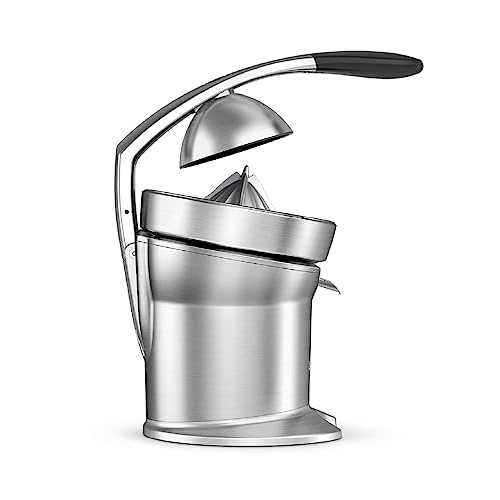
- Power-assisted lever makes pressing easier
- Acid-resistant die-cast stainless steel cone
- Dishwasher-safe removable juicing components
Best For: Cafés and bars wanting assisted, low-fuss pressing
Compact High-Throughput Choice

- Juices up to 120 oranges per hour
- Compact design for small workspaces
- Universal reamer handles various citrus fruits
Best For: Small bars and restaurants needing electric speed
Heavy-Duty Hand Press
Eurolux Cast Iron Citrus Juicer

- Cast-iron body supports continuous manual juicing
- Includes stainless steel collection cup
- Suction feet help keep the press in place
Best For: Stable countertop pressing with sturdy manual construction
Best Hands-Free Option
Compact Automatic Citrus Press

- Fully enclosed, splash-free automatic juicing
- Fits limes through 4.5-inch grapefruits
- 12-ounce bowl with two pulp filters
Best For: Small beverage stations and low-mess countertop juicing
Best Adjustable Pulp Control

- Three selectable pulp settings
- Auto-reversing cone with final-spin extraction
- Handles limes through large grapefruits
Best For: Countertop service with customizable pulp
Best High-Volume Capacity

- Stated ability of up to 20 gallons per hour
- Includes three interchangeable extracting bulbs
- Heavy 31-pound chrome-finished design
Best For: Commercial juice counters and high-throughput service
Best Electric Pick
Eurolux Premium Electric Citrus Juicer

- 160W high-torque motor
- One-touch soft-grip operation
- Dishwasher-safe stainless steel design
Best For: Home users wanting convenient, commercial-style electric citrus juicing
Best Manual Press
CO-Z Commercial Cast Iron Citrus Juicer

- Heavy-duty cast iron frame
- Long lever with nonslip base
- Removable dishwasher-safe strainer
Best For: Manual juicing in home kitchens, cafes, bars, and restaurants
Best High-Volume Machine
VEVOR Commercial Orange Juicer

- Processes up to 20 oranges per minute
- Automatic peeling, juicing, and filtering
- Large feed chute and peel bucket
Best For: Busy commercial settings requiring higher-volume citrus production
Classic Manual Workhorse – Hamilton Beach Commercial 932
For cafés, bars, and food-service counters seeking a dependable citrus juicer commercial setup, the Hamilton Beach 932 uses manual leverage to extract juice from lemons, limes, oranges, and grapefruits. Its acid-resistant finish, stable feet, and NSF certification suit demanding service environments.
Best For: Commercial operators who want maximum manual extraction and a durable, food-service-oriented design.
Pros:
- Lever delivers up to 2,000 pounds of force for high juice extraction.
- Metal construction and enamel finish resist citrus-acid wear.
- Sure Grip feet help prevent tipping during use.
- Removable strainer cone and funnel simplify cleaning and sanitizing.
Cons:
- Manual operation requires user effort for every serving.
- Hand-wash-only care is less convenient than dishwasher-safe alternatives.
- Its 8-fluid-ounce capacity may require frequent emptying during busy periods.
The Hamilton Beach 932 is a strong choice when durability, stability, and thorough manual pressing matter more than automation or compact storage.
Premium Assisted Press – Breville 800CPXL Citrus Press Pro
The Breville 800CPXL is a polished citrus juicer commercial option for users who want electric assistance without giving up hands-on control. Its power-assisted arm, acid-resistant die-cast parts, and dishwasher-safe removable components make it practical for varied citrus service.
Best For: Bars, cafés, and home professionals seeking effortless pressing with adjustable pulp control and easy cleanup.
Pros:
- Power-assisted triple-hinged arm reduces pressing effort.
- Quadra-Fin cone is designed to extract citrus of different sizes.
- Dual-switch safety prevents the cone from spinning until the arm is lowered.
- Key juicing parts are dishwasher safe, and the drip-stop spout helps limit spills.
Cons:
- Its 800 ml capacity is smaller than some higher-volume commercial units.
- Electric operation requires access to a 110–120-volt outlet.
- At 14.02 inches wide, it needs more counter space than compact models.
Choose the 800CPXL when ergonomic pressing and cleanup convenience are priorities. It offers a refined assisted workflow, though very high-volume operations may prefer a larger-capacity machine.
Compact High-Throughput Choice – Waring BJ120C Citrus Juicer
The Waring BJ120C is a compact electric citrus juicer commercial designed for bars and restaurants with limited counter space. Its universal reamer handles different citrus fruits, while the 120-oranges-per-hour capacity supports steady service.
Best For: Small commercial spaces that need electric citrus juicing and a stated capacity of up to 120 oranges per hour.
Pros:
- Compact 7.25-inch-square footprint fits smaller work areas.
- Universal reamer is designed for assorted citrus fruits.
- Rated for juicing up to 120 oranges per hour.
- Vibration-dampening feet support quiet, stable operation.
Cons:
- Its 1-quart capacity may require refilling or emptying during extended service.
- The plastic material may feel less substantial than metal-bodied presses.
- Electric operation requires a 120-volt connection.
The BJ120C balances throughput and footprint well. It is especially compelling for compact bars and restaurant stations that need more speed than a manual press can provide.
Heavy-Duty Hand Press – Eurolux Cast Iron Citrus Juicer
The Eurolux Ultra-Premium is a heavy-duty manual citrus juicer commercial suited to operators who prefer a straightforward lever press. Its cast-iron body, stainless steel cup, and suction-base feet support stable countertop use with oranges, lemons, pomegranates, and more.
Best For: Manual juicing stations that value sturdy construction, a built-in collection cup, and countertop stability.
Pros:
- Heavy-duty cast iron is designed for continuous juicing.
- Lever mechanism helps squeeze fruit with less effort.
- Removable fruit-contact parts are dishwasher safe.
- Stainless steel cup and suction feet make collection and pressing convenient.
Cons:
- Manual pressing is slower and more labor-dependent than electric juicing.
- At approximately 7.23 kg, it is heavy to reposition.
- The stated 15-ounce capacity may be modest for high-volume production.
The Eurolux is a practical pick for a stable, durable hand press. Its heavy construction favors permanence on the counter, while the removable parts keep routine cleanup manageable.
Best Hands-Free Option – Compact Automatic Citrus Press
For a citrus juicer commercial buyers can use with minimal mess and hands-on effort, the Vinci Electric Juicer offers enclosed, automatic extraction. It handles fruit from small limes through grapefruits up to 4.5 inches in diameter and completes a cycle in about 10 seconds.
Best For: Small commercial beverage stations, home bars, and kitchens that prioritize splash-free, hands-free juicing.
Pros:
- Fully enclosed operation helps contain juice and reduce splashing.
- Pressure-sensitive extraction is designed to limit bitter rind scraping.
- Includes fine and coarse pulp filters, a 12-ounce Tritan bowl, and a locking spout.
- Removable components are top-rack dishwasher safe.
Cons:
- The 12-ounce bowl is smaller than a high-volume commercial reservoir.
- Its 50-watt motor and single speed are geared toward compact countertop use.
The Vinci is a convenient choice when cleanliness and automation matter more than continuous high-volume output. Its compact format and broad citrus compatibility make it especially practical for made-to-order drinks and recipes.
Best Adjustable Pulp Control – Cuisinart Citrus Juicer
This Cuisinart is a versatile citrus juicer commercial buyers can consider for varied drink and recipe orders. Its universal cone accommodates small limes through large grapefruits, while three pulp settings and an auto-reversing reamer let users tailor the juice.
Best For: Kitchens and service counters that need adjustable pulp levels and straightforward electric citrus extraction.
Pros:
- Offers low, medium, and high pulp-control settings.
- Auto-reversing cone and final-spin feature support efficient extraction.
- Accommodates citrus ranging from small limes to large grapefruits.
- Dishwasher-safe parts and a three-year limited warranty simplify ownership.
Cons:
- The 12-ounce capacity is better suited to batch sizes than continuous high-volume service.
- It is listed with a manual special feature, so operation still requires placing and pressing the fruit.
The CCJ-500P1 is a balanced countertop option for users who want control over pulp without stepping up to a large commercial press. Its final-spin function and long snap-up spout are useful details for everyday serving.
Best High-Volume Capacity – Sunkist J-1 Commercial Juicer
For a citrus juicer commercial operations can use when throughput is the priority, the Sunkist Growers J-1 is built around a stated capacity of up to 20 gallons per hour. Its metal-and-PC construction, chrome finish, and three interchangeable extracting bulbs support a more demanding service environment.
Best For: Commercial kitchens, juice counters, and food-service settings that need substantially higher output than a small countertop juicer.
Pros:
- Rated for a 20-gallon-per-hour juicing ability.
- Includes three interchangeable extracting bulbs for citrus versatility.
- Uses a 200-watt corded electric motor and durable metal construction.
- Dishwasher-safe care is listed for the product.
Cons:
- At 31 pounds, it is considerably less convenient to move than compact countertop models.
- The supplied notes do not specify pulp-control settings or an enclosed splash-free chamber.
- Its commercial-focused design may be more equipment than occasional users need.
The J-1 stands apart in this group for its stated throughput and heavier construction. It is the logical pick when a business needs commercial-scale citrus extraction rather than a small bowl for individual orders.
Best Electric Pick – Eurolux Premium Electric Citrus Juicer
For home users who want citrus juicer commercial-style power without a large countertop machine, the Eurolux combines a 160W motor with one-touch operation. Its stainless steel build, universal cone, and dishwasher-safe parts make it a practical choice for regular orange, lemon, and lime juicing.
Best For: Home kitchens seeking fast, low-effort citrus juicing with a compact electric design.
Pros:
- High-torque 160W motor provides strong electric juicing performance.
- Soft-grip handle enables automatic one-touch operation.
- Stainless steel construction and dishwasher-safe parts simplify maintenance.
- Universal cone handles oranges, lemons, and limes without changing attachments.
Cons:
- Its 0.5-liter capacity may require frequent emptying during larger batches.
- It is designed for countertop home use rather than high-volume commercial production.
The Eurolux is a strong middle ground for buyers who value convenience and a durable finish. It offers more automation than a manual press while avoiding the size and complexity of a full commercial juicer machine.
Best Manual Press – CO-Z Commercial Cast Iron Citrus Juicer
The CO-Z is a practical citrus juicer commercial option for buyers who prefer manual control and do not want to rely on electricity. Its cast iron frame, long lever, suction base, and 304 stainless steel fruit-contact parts are suited to frequent countertop use in kitchens, cafes, bars, and restaurants.
Best For: Users who want a sturdy manual press for citrus, pomegranates, and other soft or hard fruits.
Pros:
- Heavy-duty cast iron construction is designed for repeated use.
- Long ergonomic lever and rubber grip reduce the effort needed to press fruit.
- Nonslip suction base helps keep the press steady during operation.
- Removable dishwasher-safe parts and a stainless steel strainer support easier cleanup.
Cons:
- Manual operation is slower and more labor-intensive than an electric machine.
- At about 6 kg, it is substantially heavier than a portable countertop juicer.
- The manufacturer lists a 1-year warranty.
This press makes sense when durability, simple operation, and quiet manual extraction matter more than automation. Its 0.8-liter capacity and broad fruit compatibility also make it useful for drinks, cocktails, and small service settings.
Best High-Volume Machine – VEVOR Commercial Orange Juicer
For businesses that need a citrus juicer commercial machine with greater throughput, the VEVOR is built around semi-automatic peeling, juicing, and filtering. Its 120W motor can process up to 20 oranges per minute, while the large feed chute and peel-collection bucket support continuous service.
Best For: Grocery stores, restaurants, juice shops, bars, and offices handling frequent orange and citrus orders.
Pros:
- Rated to process up to 20 oranges per minute.
- Combines peeling, juicing, and filtering in one semi-automatic unit.
- Accepts fruit measuring approximately 55–80 mm in diameter.
- Food-grade 304 stainless steel and detachable components support cleaning and food safety.
Cons:
- Its 82.9-pound weight and large footprint require dedicated counter or floor space.
- Parts are hand-wash only, which can make cleanup more time-consuming.
- The machine is specialized for commercial-volume use and may be excessive for occasional home juicing.
The VEVOR is the most production-focused option in this lineup. Its throughput and integrated processing can save labor in busy settings, but its size, weight, and hand-cleaning requirement should be considered before purchase.
How We Picked the Best Citrus Juicer Commercial
We focused on the factors that matter most in a working bar, café, restaurant, juice station, or high-volume home kitchen: extraction speed, press design, material durability, stability, fruit compatibility, cleanup, and operator effort. The lineup includes manual lever presses for simple, dependable service and electric models for faster, more consistent output.
We also considered practical details such as interchangeable reamers or bulbs, pulp control, removable parts, acid-resistant finishes, footprint, and the manufacturer’s stated capacity. Product specifications can vary by fruit size and operating conditions, so treat advertised throughput as a best-case reference rather than a guaranteed daily rate.
Quick Comparison
| Best For | Recommended Type | What to Prioritize |
|---|---|---|
| Low to moderate volume | Manual lever press | Stable base, comfortable handle, easy strainer removal |
| Busy beverage service | Electric citrus press | Motor power, continuous-use design, splash control |
| Maximum throughput | Commercial electric extractor | Capacity, durable components, fast cleaning |
| Small counters or occasional use | Compact electric model | Footprint, storage, simple controls |
| Custom pulp preferences | Adjustable pulp juicer | Multiple pulp settings and removable parts |
Key Buying Factors for a Citrus Juicer Commercial Setup
Volume and Speed
Estimate the number of drinks or juice servings you make during your busiest hour, not your average day. Manual presses are suitable when volume is modest or staff need precise control. For sustained service, choose an electric Citrus Juicer Commercial model with a motor and capacity suited to your expected workload.
Manual Versus Electric Operation
Manual presses are quiet, mechanically simple, and often easier to maintain. They also require more physical effort. Electric machines reduce repetitive labor and can improve consistency, but they add motor noise, electrical components, and more parts to clean.
Construction and Stability
Look for stainless steel, cast iron, or other corrosion-resistant materials that can withstand acidic juice and frequent sanitizing. A broad footprint, non-slip feet, and a rigid lever or housing help prevent movement during use. Confirm that the finish is suitable for food contact and commercial cleaning products.
Fruit Range, Yield, and Pulp
Check whether the reamer or included bulbs fit the fruits you serve, especially small limes and large grapefruits. Adjustable pulp controls are useful for mixed menus, while removable strainers make it easier to manage seeds and excess pulp. Yield also depends on fruit freshness, size, and operator technique.
Cleaning and Maintenance
Prioritize removable food-contact parts, accessible pulp screens, and smooth surfaces without difficult crevices. Follow the manufacturer’s instructions for hand washing, dishwasher use, lubrication, and sanitizing. A slightly slower machine that cleans quickly may outperform a faster model in daily operation.
Who Should Buy Which Citrus Juicer Commercial?
Choose a manual Hamilton Beach, Eurolux, or CO-Z press if you want durable, low-maintenance extraction for a bar, café, or small food-service station. Pick a Breville, Waring, Eurolux electric, or Vinci model when reducing hand effort and speeding up regular service are priorities. A Cuisinart is a practical choice for users who want adjustable pulp control and broad household versatility.
For demanding, high-volume operations, consider the Sunkist or VEVOR commercial machines and verify their electrical requirements, installation space, cleaning process, and expected throughput before purchasing. Whichever style you choose, match the juicer to peak demand, confirm replacement-part availability, and leave enough counter space for fruit preparation and safe cleanup.