Choosing the right battery can make a huge difference in how long your RV appliances, lights, and electronics stay powered off-grid.
This roundup highlights the best options for different needs, from budget-friendly AGM picks to longer-lasting lithium models.
Best 10 Deep Cycle Batteries for Rvs Picks for 2026
Budget-Friendly AGM Pick
Weize 12V 100Ah Maintenance-Free Deep Cycle Battery

- Sealed AGM design reduces maintenance and leakage worries
- 1-3% monthly self-discharge helps with storage
- Built for RV, solar, camping, marine, and UPS use
Best For: RV shoppers who want a simple maintenance-free AGM battery
Lightweight Lithium Upgrade
DUMFUME 12V 150Ah LiFePO4 Battery

- 1920Wh capacity and 4,000+ cycles to 80%
- Lightweight 41.03-lb design for easier RV installs
- 100A BMS with overcharge, short-circuit, and heat protection
Best For: RV owners who want a lightweight long-life lithium battery
Trusted All-Rounder
Renogy 12V 100Ah AGM Solar Battery

- Sealed AGM design emphasizes safety and stability
- Handles temperatures from -4 to 140°F
- Supports RV appliances and up to 4P parallel setups
Best For: RV buyers who want a proven AGM battery for mixed-use power
Dual-Purpose Power Choice
Interstate 12V 70Ah Group 24 AGM

- Dual-purpose AGM supports starting and deep cycling
- Built for rugged RV and marine conditions
- Can power accessories like lights, TVs, and water pumps
Best For: RV and boat users who want one battery for starting and house power
Editor’s Pick
12.8V 100Ah LiFePO4 with Bluetooth Monitoring

- 22 lb lithium battery with 1.28kWh capacity
- Bluetooth app tracks SOC, voltage, current, and temperature
- 100A BMS plus 4S4P expansion support
Best For: RV owners who want lightweight lithium power with app monitoring
Heavy-Duty AGM Pick
12V 110Ah AGM Deep Cycle Battery

- Maintenance-free, spill-proof AGM/VRLA design
- Built for deep discharge and heavy-demand use
- 12V 110Ah capacity for RV, solar, and wind applications
Best For: RV buyers who want a conventional sealed AGM battery
Value Lithium Choice
Group 24 12V 100Ah RV LiFePO4 Battery

- Group 24 drop-in fit with M8 terminals
- 21.6 lb lithium battery with Grade A cells
- 100A BMS and up to 4S4P expansion
Best For: RV users who want an easy drop-in lithium upgrade
Deep-Cycle Workhorse
Interstate 12V 100Ah AGM Group 31
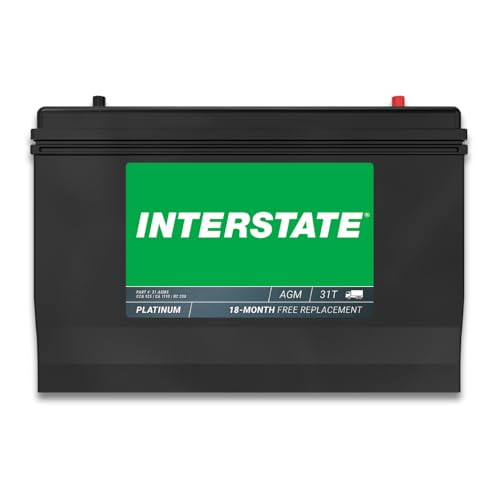
- Pure lead AGM for extended power delivery
- Built for repeated recharge cycles
- Group 31 12V 100Ah RV-friendly size
Best For: RV owners wanting a durable dual-purpose AGM battery
Budget Sealed Deep Cycle

- Maintenance-free, spill-proof sealed design
- 12V 100Ah capacity for RV and off-grid use
- Low 3% self-discharge rate
Best For: RV buyers wanting a simple sealed deep-cycle battery
Best Simple Pick

- Dual-purpose AGM for starting and deep cycling
- Quick-charge support and low maintenance
- Leak-proof design with strong vibration resistance
Best For: RV and marine users needing starting and deep-cycle power
Budget-Friendly AGM Pick – Weize 12V 100Ah Maintenance-Free Deep Cycle Battery
If you want deep cycle batteries for rvs without adding much upkeep, this Weize 12V 100Ah AGM battery is a straightforward option. It uses sealed AGM construction to reduce leakage concerns, offers a low 1-3% monthly self-discharge rate, and is built for RV, solar, camping, and other off-grid uses.
Best For: RV owners who want a maintenance-free 12V AGM battery for dependable everyday house power.
Pros:
- Sealed AGM design helps prevent acid leakage and frequent maintenance
- 1-3% self-discharge per month supports longer storage between uses
- Rated for RV, solar, camping, wind, marine, and UPS applications
- 1100A max discharge current for strong short-burst output
Cons:
- Heavy at 57 pounds
- Needs proper charging and temperature management for longest life
- Backed by a 1-year warranty, which is shorter than some alternatives
This is a practical choice if you prefer a conventional lead-acid battery with familiar AGM reliability and simple upkeep. It fits well as a general-purpose RV battery when cost and maintenance-free operation matter more than lithium weight savings.
Lightweight Lithium Upgrade – DUMFUME 12V 150Ah LiFePO4 Battery
For deep cycle batteries for rvs where weight and runtime matter, this 12V 150Ah LiFePO4 battery is a strong upgrade path. It delivers 1920Wh of energy, supports over 4,000 cycles to 80% capacity, and weighs far less than comparable lead-acid options.
Best For: RV and camper owners who want a lightweight lithium battery with long cycle life and easy expansion.
Pros:
- 1920Wh capacity with 4,000+ cycles to 80% capacity
- Weighs 41.03 lbs, making installation easier than heavier lead-acid batteries
- Built-in 100A BMS adds protection against overcharge, over-discharge, short circuit, and overheating
- Supports series and parallel connections up to 4S4P for custom setups
Cons:
- Not designed for engine starting
- Requires temperatures of 5°C or higher for proper performance
- Extended storage calls for a maintenance cycle every 6 months
This battery makes the most sense if you want lighter weight and longer service life than traditional AGM choices. Its compact size and expansion support also make it useful for RV electrical systems that may grow over time.
Trusted All-Rounder – Renogy 12V 100Ah AGM Solar Battery
If you are comparing deep cycle batteries for rvs and want a proven AGM option, this Renogy 12V 100Ah battery is built around safety and stable performance. It uses a sealed lead-acid AGM design, supports series and parallel connections, and is designed to handle extreme temperatures better than many comparable batteries.
Best For: RV owners who want a well-known AGM battery with broad compatibility and dependable cold- or heat-weather performance.
Pros:
- Sealed AGM construction offers higher chemical stability and less troubleshooting
- Works in a wide temperature range from -4 to 140°F
- Supports series connections and parallel setups up to 4 batteries
- Can power common RV loads like fridges, microwaves, CPAP machines, and laptops
Cons:
- Weighs 63.9 pounds, so it is not a lightweight option
- Lead-acid chemistry is less compact than lithium alternatives
- Only a 2-year prorated warranty is included
This is a solid pick if you want a conservative, widely trusted battery for a mixed RV and solar setup. Its stable AGM construction and broad appliance support make it a flexible all-around choice.
Dual-Purpose Power Choice – Interstate 12V 70Ah Group 24 AGM
This Interstate option is a good fit if you need deep cycle batteries for rvs that also handle starting duties. It is a dual-purpose AGM battery built for both cranking and sustained accessory power, with a rugged design intended for marine and RV use.
Best For: RV and boat owners who need one battery for both engine starting and accessory power.
Pros:
- Dual-purpose design can serve as both a cranking battery and deep cycle battery
- AGM construction is built for rugged conditions
- Designed to power lights, televisions, appliances, water pumps, and other accessories
- Group 24 size suits many RV and marine applications
Cons:
- 70Ah capacity is lower than many dedicated RV deep cycle batteries
- Not as specialized for house-bank use as a larger 100Ah or 150Ah battery
- Heavier than some compact battery options at 44.6 pounds
If your setup needs a versatile two-in-one battery instead of a pure house battery, this Interstate model is worth a look. It is especially useful when you want dependable starting power plus steady accessory output in one unit.
Editor’s Pick – 12.8V 100Ah LiFePO4 with Bluetooth Monitoring
If you want deep cycle batteries for rvs that cut weight and add visibility, this 12.8V 100Ah LiFePO4 option is built around modern camping power needs. It offers 1.28kWh of capacity, a 95% utilization rate, and Bluetooth app monitoring so you can check charge, voltage, temperature, and protection status from your phone.
Best For: RV owners who want a lightweight lithium battery with app-based monitoring and long cycle life.
Pros:
- Only 22 pounds, making it far lighter than comparable lead-acid batteries.
- Bluetooth 5.0 monitoring shows SOC, voltage, current, power, temperature, and protection status.
- Built-in 100A BMS adds protection against overcharge, over-discharge, short circuit, overheating, and overcurrent.
- Supports series/parallel expansion up to 4S4P for larger RV or off-grid systems.
Cons:
- Charging range is limited by the low-temperature protection features.
- Expansion and lithium setup may be more than casual users need for a simple single-battery install.
This is a strong pick if you value compact weight, long cycle life, and real-time battery tracking. Its maintenance-free design and versatile RV, marine, and solar use cases make it a practical upgrade from lead-acid.
Heavy-Duty AGM Pick – 12V 110Ah AGM Deep Cycle Battery
For shoppers comparing deep cycle batteries for rvs and related house-power setups, this Interstate 12V 110Ah AGM is a traditional sealed lead-acid choice with maintenance-free operation. It is designed for deep discharge usage and steady performance in demanding applications like solar, wind, mobility equipment, and marine-style power needs.
Best For: Buyers who want a sealed AGM deep-cycle battery and prefer a conventional lead-acid format.
Pros:
- Maintenance-free and spill-proof AGM/VRLA construction.
- Built for long life in deep discharge and heavy-demand applications.
- Works across multiple 12V use cases, including solar, wind, and RV applications.
- Large 110Ah capacity for steady reserve power.
Cons:
- Weighs 71.5 pounds, so it is much heavier than lithium options.
- It is not a replacement for a golf cart battery, per the product notes.
This is a straightforward choice if you want AGM reliability and do not mind the extra weight. It favors durability and familiar lead-acid handling over the lighter weight and higher utilization of lithium batteries.
Value Lithium Choice – Group 24 12V 100Ah RV LiFePO4 Battery
If you need deep cycle batteries for rvs in a drop-in form factor, this Group 24 12V 100Ah LiFePO4 battery is built for easy replacement and efficient daily use. It uses Grade A cells, a built-in 100A BMS, and a lightweight 21.6-pound design that fits standard battery boxes without modification.
Best For: RV and marine users who want a Group 24 lithium battery that installs like a standard lead-acid unit.
Pros:
- Group 24 size and M8 terminals make it a true drop-in replacement.
- Light at 21.6 pounds, which is much easier to handle than lead-acid options.
- 100A BMS protects against overcharge, over-discharge, overcurrent, short circuit, and temperature extremes.
- Supports up to 4S4P expansion for larger RV, marine, or solar systems.
Cons:
- Charging below 32°F is disabled by the BMS.
- Uses lithium-specific charging requirements, so non-lithium chargers are not recommended.
This model is a practical way to move from lead-acid to lithium without changing your battery box. Its cold-weather protections and expandable design make it a solid fit for RV house power, solar storage, and marine use.
Deep-Cycle Workhorse – Interstate 12V 100Ah AGM Group 31
Interstate Batteries Marine/RV Battery 12V 100Ah 925CCA 1110CA Group 31 AGM (31-AGM5)
Check Price On AmazonIf you want deep cycle batteries for rvs that can also handle high-demand accessories, this Interstate 12V 100Ah AGM is built for extended power delivery and repeated recharge cycles. Its pure lead AGM design and thick plates are aimed at steady output, making it a strong fit for owners who need dependable house power with some starting capability in the mix.
Best For: RV owners who want a dual-purpose AGM battery with strong deep-cycle performance and long service life.
Pros:
- Pure lead AGM construction for extended deep-cycle power
- Designed to be recharged many times without reducing lifespan
- Claims 2x-3x longer service life than conventional flooded batteries
- 12V 100Ah capacity in a Group 31 form factor
Cons:
- Heavier than many smaller battery options at 60 pounds
- Not intended to replace automotive or mobility-device batteries
This is a practical pick if your priority is dependable RV power and durability over the long haul. The AGM build and deep-cycle focus make it better suited to repeated discharge and recharge than basic flooded batteries.
Budget Sealed Deep Cycle – WEIZE 12V 100Ah Group 31
For shoppers comparing deep cycle batteries for rvs, this WEIZE 12V 100Ah sealed lead acid battery offers a straightforward, maintenance-free option. It is designed for steady rechargeable power and lists broad compatibility across RV, solar, camping, cabin, and off-grid uses, which makes it a simple pick for basic house-power needs.
Best For: RV buyers looking for a sealed, maintenance-free 12V 100Ah battery for general-use power.
Pros:
- Sealed lead acid design is maintenance-free and spill proof
- 12V 100Ah capacity with Group 31 sizing
- 3% self-discharge rate helps preserve charge in storage
- Listed for RV, solar, camping, cabin, and off-grid use
Cons:
- Lead-acid build is less advanced than AGM options
- No wire harness or mounting hardware included
This battery makes sense if you want a no-fuss sealed option and do not need premium AGM features. Its appeal is mainly in the combination of capacity, simple upkeep, and broad utility.
Best Simple Pick – WEIZE Group 27M AGM 92Ah
This WEIZE dual-purpose AGM is a strong option if you want deep cycle batteries for rvs that can also deliver starting power. With 92Ah capacity, low internal resistance, and a sealed leak-proof design, it is aimed at owners who want a balance of starting performance, cycling capability, and easier maintenance.
Best For: RV and marine users who need a dual-purpose AGM battery with starting power and deep-cycle capability.
Pros:
- Dual-purpose AGM design for starting and deep cycling
- Claims 2x more cycle life than traditional flooded marine batteries
- Quick-charge support with up to five times faster charging
- Leak-proof, low-maintenance construction with high vibration resistance
Cons:
- 92Ah capacity is lower than some 100Ah alternatives
- Charging needs to follow the specified voltage and current limits
For RV owners who want one battery that can cover more than one role, this dual-purpose model is appealing. The AGM build, vibration resistance, and warranty add practical value for travel and mixed-use setups.
How We Picked the Best Deep Cycle Batteries for Rvs
For this roundup of Deep Cycle Batteries for Rvs, we focused on real-world RV needs: usable capacity, cycle life, maintenance requirements, charging compatibility, cold-weather performance, weight, and overall value. We also looked at whether each battery type is a better fit for occasional weekend trips, frequent camping, or full-time boondocking.
Quick Comparison
AGM batteries are usually the easiest drop-in choice if you want familiar charging behavior and low maintenance. Lithium batteries tend to cost more up front, but they offer lighter weight, deeper usable capacity, and much longer cycle life. Higher-capacity models are better for extended stays without hookups, while smaller batteries can work well for lighter loads or as part of a battery bank.
Key Buying Factors for Deep Cycle Batteries for Rvs
Battery Chemistry
AGM and lithium are the two most common choices. AGM is sealed, maintenance-free, and generally simpler to integrate with existing RV systems. LiFePO4 lithium batteries are lighter and more efficient, but they may require a compatible charger and battery management features such as low-temperature protection.
Capacity and Real-World Runtime
Look at amp-hours, but also remember that usable capacity matters. Lithium batteries can typically use more of their rated capacity than AGM batteries before performance drops, which can translate to longer runtime for the same nominal rating.
Weight and Space
RV battery compartments can be tight. If you are trying to reduce tongue weight, improve handling, or free up cargo capacity, lithium is often the best upgrade. If space is less of a concern, AGM can still be a strong value.
Cold-Weather Performance
If you camp in cooler climates, check whether the battery includes low-temperature protection or if the chemistry is suitable for cold charging conditions. This is especially important for lithium users.
Who Should Buy Which Deep Cycle Batteries for Rvs?
If you want the simplest replacement for a factory-style setup, choose AGM. If you camp frequently without shore power and want maximum usable energy, lithium is usually the smarter long-term pick. For occasional RV travel with modest power needs, a mid-capacity AGM battery may offer the best balance of price and convenience. For boondockers, solar users, and anyone planning longer off-grid stays, a higher-capacity lithium model is often the best fit.
In short, the best choice depends on how often you camp, how much power you use, and whether you prioritize lower upfront cost or better long-term performance.