If you want fresher indoor air without wasting heating or cooling energy, an energy recovery ventilator with HEPA filter can be a smart upgrade. It helps bring in outdoor air while filtering particles that can affect comfort and air quality.
This roundup highlights standout options for whole-home and single-room use, with a focus on airflow, filtration, installation style, and control features.
Best 10 Energy Recovery Ventilator with HEPA Filter Picks for 2026
Whole-Home Balanced ERV
Panasonic Intelli-Balance Elite Plus+

- Dual MERV 13 filters
- SmartFlow ECM motors
- 30–120 CFM airflow range
Best For: Balanced home ventilation with high-efficiency filtration
Smart Through-Wall Fresh Air
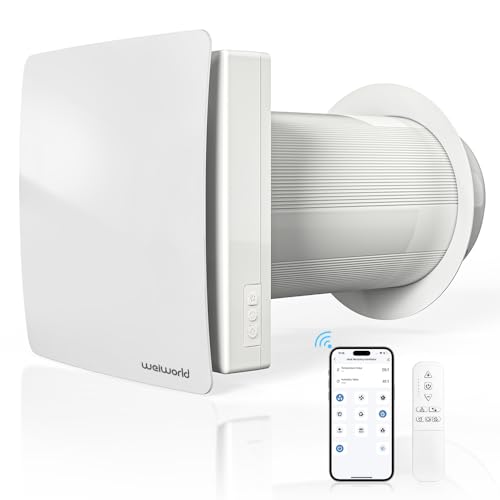
- 3-stage filtration with HEPA
- WiFi, remote, and app control
- Quiet 30 dB operation
Best For: Filtered fresh air in bedrooms and home offices
Side-Port Home ERV
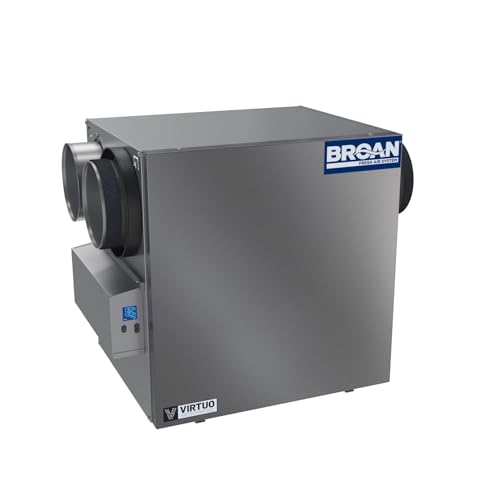
- 119 CFM ventilation capacity
- MERV 8 filters included
- Wall or ceiling mounting
Best For: Simple residential ERV installs with basic filtration
Compact Reversible Wall Vent
LINGGONGAIR 4-Inch Heat Recovery Fan

- Reversible intake and exhaust
- Washable ceramic heat core
- 5W EC motor for low power use
Best For: Small rooms needing simple reversible ventilation
Whole-Home AI Ventilation
Broan B210E75RS Wall/Ceiling ERV

- 210 CFM capacity for larger ventilation needs
- VIRTUO auto-balancing helps simplify installation
- Includes a MERV 8 filter, not true HEPA
Best For: Homes needing a high-capacity wall or ceiling ERV
Quiet Single-Room Ventilation

- Up to 30 CFM for rooms up to 500 sq. ft.
- Recovers up to 88% of heat or cooling
- Quiet operation as low as 0.2 sones
Best For: Retrofits and single rooms needing quiet ductless fresh air
Smart Wi-Fi Room Ventilation
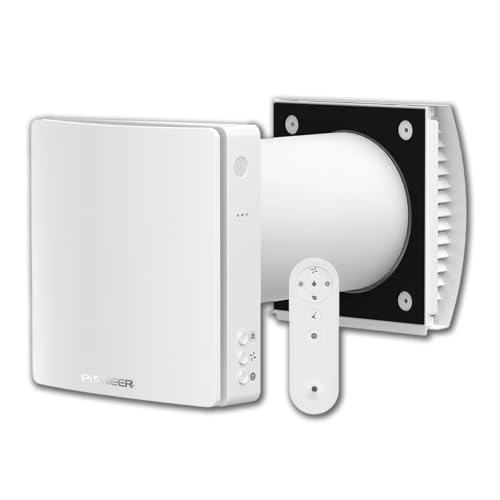
- Up to 35 CFM with very low 8W average power
- Wi-Fi app control and built-in CO2 sensor
- F7/MERV13 filter plus washable prefilters
Best For: Smart single-room ventilation with stronger filtration
Whole-House Fresh Air Pick
Aprilaire V22BEC 120 CFM ERV for Large Homes

- 120 CFM whole-house ERV for homes up to 6,000 sq. ft.
- Balanced air exchange helps preserve indoor temperature and humidity.
- Flexible wall, ceiling, or floor mounting options.
Best For: Large homes needing whole-house fresh air ventilation with simple controls.
Smart Room Air Choice
Pioneer ECOasis 150 Ductless Wi-Fi ERV
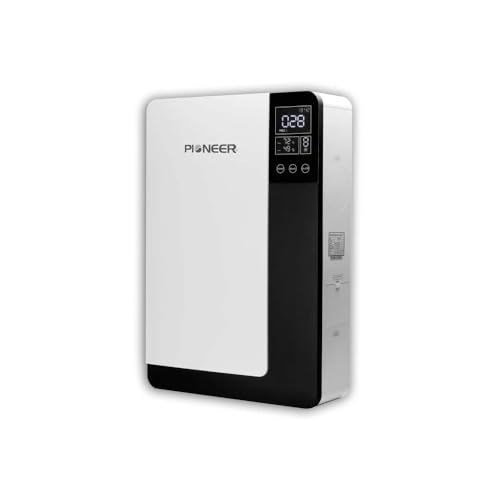
- 4-stage filtration includes HEPA H10 and activated charcoal.
- PM2.5 and CO2 monitoring can auto-adjust the 8-speed fan.
- Quiet ductless wall-mounted design suits rooms up to 500 sq. ft.
Best For: Bedrooms or living spaces needing monitored, quiet room ventilation.
High-Capacity Install Pick
Broan B160E65RT 142 CFM Wall/Ceiling ERV

- 142 CFM airflow for strong residential ventilation.
- Wall or ceiling mounting offers install flexibility.
- Remote control and LCD screen make operation simple.
Best For: Homes needing a high-capacity ERV with flexible installation.
Whole-Home Balanced ERV – Panasonic Intelli-Balance Elite Plus+
If you want an energy recovery ventilator with HEPA filter-level air cleaning, this Panasonic ERV is a strong whole-home option for managed ventilation. It uses dual MERV 13 filters, a hygroscopic transfer core for heat and moisture exchange, and SmartFlow ECM motors that automatically adjust to maintain airflow under static pressure.
Best For: Homeowners who want balanced ventilation with high-efficiency filtration and flexible installation.
Pros:
- Dual MERV 13 filters provide high-efficiency incoming and outgoing air cleaning.
- SmartFlow ECM motors automatically adjust airflow for quieter, more consistent performance.
- 30–120 CFM range supports positive, negative, or balanced pressure setups.
- Ceiling, wall, or floor mounting adds installation flexibility.
Cons:
- MERV 13 is effective filtration, but it is not a true HEPA filter.
- Installation and control options may be more complex than a simple plug-in fan.
This is a practical choice if you need an ERV that does more than move air: it also helps balance heat and moisture while filtering both directions of airflow. The added control options and mounting versatility make it well suited to planned residential ventilation projects.
Smart Through-Wall Fresh Air – HEPA Wall Ventilation Fan
This through-wall energy recovery ventilator with HEPA filter-style filtration is built for adding cleaner fresh air in rooms like bedrooms and home offices. It uses a 3-stage system with a pre-filter, HEPA filter, and activated carbon filter, plus WiFi and remote control for easy mode changes between intake, exhaust, and circulation.
Best For: Bedrooms, home offices, and other enclosed rooms that need filtered fresh air and simple smart control.
Pros:
- 3-stage filtration includes a HEPA filter plus activated carbon for dust, pollen, and odor reduction.
- Fresh air intake and exhaust modes support continuous air exchange.
- WiFi app, remote control, and button control make operation flexible.
- Low 30 dB noise level and 8.5W power draw suit quieter everyday use.
Cons:
- Designed as a through-wall fan rather than a central whole-home ERV.
- Requires through-wall installation and an adjustable duct.
For targeted room ventilation, this model stands out because it combines filtered intake air with smart controls in a compact wall-mounted format. It is best viewed as a room-by-room fresh air solution instead of a traditional full-house ERV.
Side-Port Home ERV – Broan B130E65RS AI
If you are comparing an energy recovery ventilator with HEPA filter alternatives, this Broan model is a straightforward home ERV built around MERV 8 filtration and 119 CFM airflow. It is designed for wall or ceiling mounting and includes side ports, making it a practical pick for planned residential ventilation.
Best For: Home ventilation projects that need a simple, mounted ERV with moderate filtration.
Pros:
- 119 CFM output supports residential ventilation needs.
- MERV 8 filters provide built-in air filtration.
- Wall or ceiling mounting offers installation flexibility.
- Side ports may help with certain layout requirements.
Cons:
- MERV 8 filtration is lower than the higher-efficiency options in this roundup.
- Supplied details provide limited information on controls and operating features.
This is a solid no-frills ERV for homes that need airflow and basic filtration without chasing premium smart features. It is best suited to buyers who prioritize compatibility and general ventilation performance over advanced controls.
Compact Reversible Wall Vent – LINGGONGAIR 4-Inch Heat Recovery Fan
This compact heat recovery ventilator is a practical wall-mounted option when you want fresh air exchange in a small space and are searching for an energy recovery ventilator with HEPA filter features. It uses a washable ceramic core for heat exchange, a 5W EC motor, and a reversible remote to switch between intake and exhaust modes.
Best For: Small rooms, garages, and bedrooms that need simple reversible ventilation with low power use.
Pros:
- Reversible remote lets you switch between intake and exhaust quickly.
- Washable ceramic core is reusable and avoids replacement filters.
- 5W EC motor emphasizes energy-efficient, near-silent operation.
- Plug-in design and wall-mount installation keep setup simple.
Cons:
- Uses a ceramic heat exchange core rather than a true HEPA filter.
- Best suited to single-room use, not whole-home ventilation.
For buyers who want a compact reversible wall vent with low running cost, this model is easy to understand and easy to install. It is most compelling where quiet operation and simple airflow direction changes matter more than advanced filtration.
Whole-Home AI Ventilation – Broan B210E75RS Wall/Ceiling ERV
If you need an energy recovery ventilator with HEPA filter-style air cleaning, this Broan ERV is worth considering for whole-home fresh air exchange and balanced ventilation. It’s a wall- or ceiling-mounted unit with VIRTUO technology, auto-balancing, and an included MERV 8 filter, making it a practical fit for homes that want continuous ventilation with less guesswork during setup.
Best For: Homeowners wanting a higher-capacity ERV for wall or ceiling installation with built-in balancing and basic filtration.
Pros:
- 210 CFM airflow supports broader home ventilation needs.
- VIRTUO technology with auto-balancing can simplify setup.
- Wall-mount or ceiling-mount installation adds placement flexibility.
- Includes a MERV 8 filter for supplied-air filtration.
Cons:
- Not a true HEPA-filtered ERV based on the supplied specs.
- 55-pound unit may require more involved installation.
- Best suited to dedicated indoor mounting locations.
This Broan model is a strong choice if you want a robust ERV with straightforward controls and flexible mounting, but it’s better viewed as a ventilation solution with MERV-level filtration rather than a true HEPA filtration system. For buyers focused on airflow and balanced exchange, it offers a solid, high-capacity package.
Quiet Single-Room Ventilation – TwinFresh Comfo Ductless ERV
This ductless energy recovery ventilator is a smart fit when you want fresh-air ventilation without adding ductwork. The VENTS-US TwinFresh Comfo brings in filtered outdoor air, recovers up to 88% of heat or cooling, and is designed for quiet room-by-room use in spaces like bedrooms, offices, basements, and tiny homes.
Best For: Single rooms or retrofits where ductwork is impractical and quiet continuous ventilation matters.
Pros:
- Up to 30 CFM of fresh, filtered air for rooms up to 500 sq. ft.
- Recovers up to 88% of heat or cooling to reduce HVAC strain.
- Very quiet operation down to 0.2 sones for noise-sensitive rooms.
- Built-in humidity sensor and MERV 5 filters support everyday air quality.
Cons:
- MERV 5 filtration is lighter than true HEPA-level filtration.
- 30 CFM is best for single-room use rather than whole-home coverage.
- Through-the-wall install still requires a suitable wall opening.
For buyers comparing an energy recovery ventilator with HEPA filter expectations, this model is better understood as a quiet ductless ERV with basic filtration rather than a HEPA purifier. Its strengths are simplicity, efficiency, and targeted ventilation where traditional ducting would be overkill.
Smart Wi-Fi Room Ventilation – Pioneer 50 Single-Room ERV
If you’re shopping for an energy recovery ventilator with HEPA filter expectations, this Pioneer unit stands out for its F7 filter, Wi-Fi control, and strong single-room air treatment. It delivers up to 35 CFM, uses very little power, and adds features like a CO2 sensor and washable prefilters for more automated room ventilation.
Best For: Tech-friendly buyers who want smart, low-power single-room ventilation with stronger-than-basic filtration.
Pros:
- F7 filter is rated as MERV13 in the supplied notes for finer filtration.
- Wi-Fi app control plus standard controller adds convenience.
- Up to 35 CFM airflow with average power draw of only 8W.
- Built-in CO2 sensor helps automate air-quality management.
Cons:
- Single-room capacity is limited compared with whole-home ERVs.
- Not marketed as a true HEPA system in the supplied details.
- Requires wall-mounted installation with a specific in-wall channel span.
This Pioneer model is compelling if you want a compact ERV with smart controls and more robust filtration than basic room ventilators. It won’t replace a whole-house system, but for one room it combines efficiency, monitoring, and strong convenience features.
Whole-House Fresh Air Pick – Aprilaire V22BEC 120 CFM ERV for Large Homes
If you want an energy recovery ventilator with HEPA filter-style fresh air support for a whole house setup, the Aprilaire V22BEC focuses on balanced ventilation, temperature and moisture transfer, and simple controls. It replaces stale indoor air with outdoor air while tempering incoming air through its energy recovery core, making it a practical fit for year-round ventilation needs.
Best For: Large homes that need whole-house fresh air ventilation with balanced airflow and simple operation.
Pros:
- 120 CFM capacity is designed for homes up to 6,000 sq. ft.
- Energy recovery core helps temper incoming air and reduce HVAC load.
- Balanced air exchange preserves indoor temperature and humidity.
- Wall, ceiling, or floor mounting adds installation flexibility.
Cons:
- Does not include a HEPA filter in the supplied specifications.
- No smart app or Wi-Fi controls listed.
- Bulky unit size may require dedicated installation space.
For buyers prioritizing whole-home ventilation over room-by-room air cleaning, this ERV is built around efficient air exchange and comfort control. It is a straightforward choice when you want fresh air delivery without giving up temperature and humidity balance.
Smart Room Air Choice – Pioneer ECOasis 150 Ductless Wi-Fi ERV
The Pioneer ECOasis 150 is a room-focused energy recovery ventilator with HEPA filter support, combining fresh-air exchange, multi-stage filtration, and indoor air monitoring in one ductless unit. It is aimed at users who want cleaner air in a bedroom or living space, with automatic fan adjustment based on PM2.5 and CO2 readings.
Best For: Bedrooms or living areas where monitoring, filtration, and quiet operation matter most.
Pros:
- Built-in PM2.5 sensor and CO2 monitor track indoor air quality.
- 4-stage filtration includes a HEPA H10 filter and activated charcoal.
- Whisper-quiet operation at 23 to 37.9 dB(A).
- Wi-Fi, touch panel, and remote control options add convenience.
Cons:
- Coverage is limited to rooms up to 500 sq. ft.
- Smart home compatibility is not listed.
- Higher feature set may be more than needed for basic ventilation.
This model stands out if you want targeted ventilation with filtration and automatic monitoring instead of a whole-house system. Its slim wall-mount design and low power draw make it especially appealing for daily use in occupied rooms.
High-Capacity Install Pick – Broan B160E65RT 142 CFM Wall/Ceiling ERV
The Broan B160E65RT is a high-capacity energy recovery ventilator built for wall or ceiling mounting, with remote control and an LCD screen for straightforward operation. It is a practical option when you need mechanical ventilation that focuses on efficient air circulation and flexible installation.
Best For: Homes that need a high-capacity wall- or ceiling-mounted ERV with remote control.
Pros:
- 142 CFM airflow offers strong ventilation capacity.
- Wall or ceiling mounting supports different install layouts.
- Remote control and LCD screen simplify day-to-day use.
- High-efficiency rating and air flow efficiency are listed in the specs.
Cons:
- No HEPA filter is mentioned in the supplied details.
- Heavier 44-pound unit may require more careful installation planning.
- More basic ventilation focus than models with indoor air sensors.
If you want a robust ERV for residential ventilation without extra smart-air features, this Broan unit keeps the focus on airflow and installation flexibility. It is best for buyers who value capacity and control over built-in filtration extras.
How We Picked the Best Energy Recovery Ventilator with HEPA Filter
We focused on models that balance fresh-air delivery, filtration, noise control, and practical installation options. For an Energy Recovery Ventilator with HEPA Filter use case, the most important factors are airflow capacity, filtration quality, heat/moisture recovery performance, and whether the unit fits a whole-house or single-room setup.
We also looked for features that make ownership easier, such as smart controls, remote operation, wall-mount flexibility, and maintenance-friendly filter access.
Quick Comparison
Higher-CFM units are better for larger homes or central ventilation needs, while lower-CFM ductless and single-room models are usually better for apartments, additions, and targeted air exchange. Wall- or ceiling-mounted ERVs are typically more versatile for existing homes, while compact units may be easier to retrofit into limited spaces.
Key Buying Factors for an Energy Recovery Ventilator with HEPA Filter
Airflow and Room Size
Match the unit’s CFM rating to your home’s size and ventilation goals. Undersized systems may not move enough fresh air, while oversized systems can be unnecessary or harder to install.
Filtration and Indoor Air Quality
HEPA filtration is ideal when particle reduction is a priority, but some ERVs use MERV-rated filters instead. Check the actual filter specification, replacement cost, and how often maintenance is required.
Energy Recovery Performance
The point of an ERV is to exchange stale indoor air with fresh outdoor air while reducing energy loss. Look for efficient cores and balanced airflow so you get ventilation without a big penalty to comfort.
Installation Type
Decide early whether you need a ducted whole-house unit, a wall-mounted model, or a ductless single-room solution. Installation complexity can vary widely, especially in retrofits.
Noise and Controls
Quieter motors are better for bedrooms, offices, and living spaces. Smart features, app control, LCD screens, and remotes can make daily use simpler, especially if you want to adjust ventilation seasonally.
Who Should Buy Which Energy Recovery Ventilator with HEPA Filter?
Choose a whole-house ERV if you want broad ventilation for a larger home and already have, or plan to add, ducting. Pick a single-room or ductless model if you want fresher air in one area without a major remodel.
If air filtration is your top concern, prioritize the model with the strongest verified filtration spec and easy filter servicing. If you want the best all-around value, look for a balanced mix of airflow, quiet operation, and straightforward installation rather than chasing the highest CFM number alone.