Growing vegetables indoors gives you more control over light, temperature, humidity, and the growing season. The right tent can also make ventilation, plant training, and cleanup considerably easier.
We selected 10 grow tents and related indoor-growing setups for different spaces and budgets, including compact 2×2 models, multi-tier shelves, complete kits, and larger enclosures for serious production.
Best 10 Grow Tents for Vegetables Picks for 2026
Best Space-Saving Tent

- Reflective mylar interior helps contain light
- Tool-free frame supports quick assembly
- Viewing window and removable tray simplify maintenance
Best For: Compact indoor vegetable-growing setups
Best All-in-One Shelf
Spider Farmer 4 Tier Plant Stand

- Four adjustable tiers suit seedlings and microgreens
- Six full-spectrum LED bars are included
- Waterproof trays and wheels improve convenience
Best For: Multi-level indoor vegetable starts
Best Heavy-Duty Tent

- 2000D canvas and 1-inch steel poles add durability
- Multiple duct ports support climate equipment
- 72-inch height accommodates taller plants and gear
Best For: Robust, equipment-ready vegetable growing
Best Lighting Upgrade
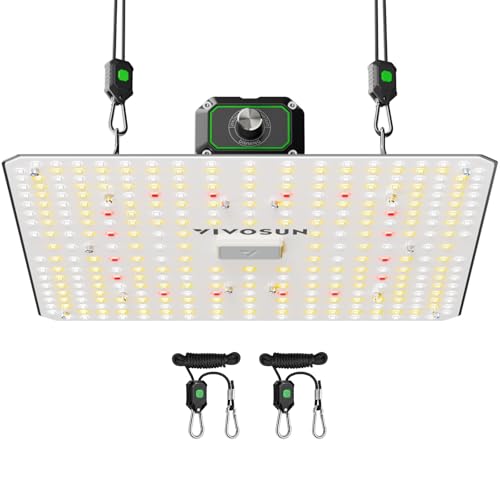
- Full spectrum supports growth from seedling to harvest
- Dimmable output ranges from 25% to 100%
- IP65 design suits humid indoor growing
Best For: Adding adjustable light to an existing vegetable tent
Best for Large Vegetable Gardens

- Large 32-square-foot growing area
- 98% reflective Mylar interior
- Multiple mesh vents and removable tray
Best For: Large indoor vegetable gardens needing space and sturdy support
Best Starter Bundle
2x2 Grow Tent Setup with LED and Ventilation
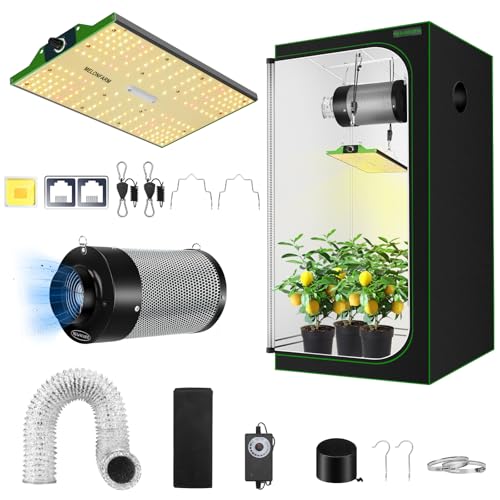
- Includes tent, 70W LED, fan, filter, and ducting
- 190 CFM ventilation supports airflow and humidity control
- Compact 24-by-24-by-48-inch design
Best For: Beginners and small-space vegetable growers
Best for Easy Monitoring
ATOUR 4x2 Reflective Grow Tent

- Observation window enables quick plant checks
- 600D reflective construction with metal frame
- 8 square feet of compact growing space
Best For: Indoor growers wanting convenient monitoring in a medium-sized tent
Best Reflective Finish
2x2 Transparent-Door Grow Tent

- Highly reflective 2100D diamond lining
- Double-layer viewing doors
- Includes floor tray and tool-free setup
Best For: Compact indoor vegetable gardens needing strong light reflection
Best Compact Hydroponic Fit
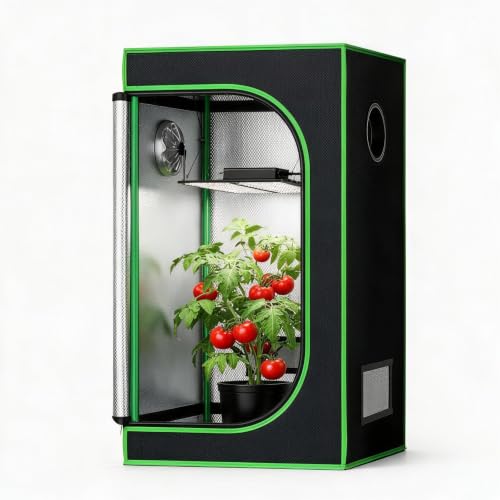
- Space-saving hydroponic design
- 600D reflective waterproof lining
- Viewing windows, floor tray, and storage bag
Best For: Small indoor vegetable or Aerogarden-style setups
Best Height for Compact Plants

- Taller 2x2 format for vertical growth
- Reflective waterproof 600D lining
- Includes windows, tray, and storage bag
Best For: Compact vegetable gardens with taller plants
Best Space-Saving Tent – VIVOSUN S425 2×4 Grow Tent
For gardeners comparing grow tents for vegetables, the VIVOSUN S425 offers a practical 2×4-foot footprint with a 60-inch height. Its reflective mylar interior, light-blocking zipper lining, viewing window, and removable floor tray support a contained setup for indoor vegetable growing.
Best For: Growers who need a compact, easy-to-assemble tent for vegetables in a garage, closet, balcony, or laundry room.
Pros:
- 100% reflective mylar interior and black-lined zipper help limit light leaks.
- Strong metal frame with a stated 100-pound maximum weight capacity per product details.
- Viewing window, ventilation openings, tool organizer, hanging straps, and removable floor tray add convenience.
- Tool-free corner connectors simplify assembly.
Cons:
- The 60-inch height may limit taller vegetable plants and equipment arrangements.
- Lighting and ventilation equipment are not included.
This is a well-rounded choice when footprint and straightforward setup matter most. Before buying, mark out the 48-by-24-inch floor area and account for the additional space needed around ventilation ports and access panels.
Best All-in-One Shelf – Spider Farmer 4 Tier Plant Stand
Among grow tents for vegetables, the Spider Farmer 4 Tier Plant Stand stands out as a shelf-style indoor greenhouse with integrated lighting. Four adjustable tiers, waterproof trays, wheels, and six full-spectrum LED bars make it suited to seedlings, microgreens, and compact vegetables.
Best For: Gardeners starting vegetables at multiple heights or stages who want a movable, lighted shelf rather than a conventional single-chamber tent.
Pros:
- Four height-adjustable tiers provide flexible space for seedlings and smaller plants.
- Includes six 18W full-spectrum LED bars with linkable, plug-and-play design.
- Each tier has a reusable waterproof drainage mat to help contain spills.
- Lockable swivel wheels make the stand easier to reposition.
Cons:
- The tiered format is less suitable for tall vegetable plants.
- Its 59-inch width and 27.5-inch depth require more floor space than a narrow tent.
- The product is designed for indoor use.
This option is especially practical for seed starting and compact vegetable production. The blackout curtain can reduce light leakage, while the clear curtain allows plant checks without fully opening the enclosure.
Best Heavy-Duty Tent – AC Infinity CLOUDLAB 642
For growers seeking durable grow tents for vegetables, the AC Infinity CLOUDLAB 642 combines a 4×2-foot footprint with a taller 72-inch chamber. Its 1-inch steel poles, 2000D canvas, reflective mylar, multiple duct ports, and controller mounting plate are built for a more equipment-intensive indoor setup.
Best For: Vegetable growers who want a tall, robust tent with room for climate-control equipment and up to two plants in 5-gallon pots.
Pros:
- Thick 2000D canvas and 1-inch steel poles provide a sturdy structure.
- Lab-tested reflective mylar is designed for high light reflectivity.
- Multiple 4-, 6-, and 8-inch duct ports support fans, humidifiers, heaters, or air-conditioning equipment.
- Tall viewing windows, a catch tray, extra hanging bars, and a tool bag improve usability.
Cons:
- Heavier materials contribute to a listed item weight of 14 kg.
- The 48-by-24-inch footprint still limits side-by-side plant capacity.
- Lighting and climate-control hardware are not included.
The CLOUDLAB 642 is the strongest fit here for gardeners prioritizing structure and expandability. Its taller profile is useful for vegetables and hanging equipment, though its heavy-duty construction may be more than a basic starter setup requires.
Best Lighting Upgrade – VIVOSUN LumaLight 100W LED
Although it is a light rather than an enclosure, the VIVOSUN LumaLight 100W can complete a setup built around grow tents for vegetables. Its full-spectrum mix, adjustable output, heat management, and water-resistant IP65 design make it suitable for supporting vegetables from seedlings through harvest.
Best For: Growers who already have a tent and need a dimmable, full-spectrum light for indoor vegetable growth.
Pros:
- White, blue, red, and far-red LEDs provide full-spectrum illumination.
- Four-level dimming from 25% to 100% helps adjust intensity for different growth stages.
- IP65 waterproof and dustproof construction suits humid growing environments.
- Compatible with the Vivosun GrowHub and mobile app for optional remote control.
Cons:
- This product is only a grow light and does not include a tent or enclosure.
- The GrowHub is sold separately for app-based automation.
- One 100W fixture may not suit every tent size or plant density.
The LumaLight is a useful add-on when a tent’s enclosure is already in place. Its dimming range and broad spectrum offer flexibility, but match the fixture to the tent dimensions and vegetable crop before relying on it as the sole light source.
Best for Large Vegetable Gardens – 8×4 Reflective Grow Tent
For gardeners planning a substantial indoor vegetable setup, this 96-by-48-by-78-inch tent provides 32 square feet of growing area and a tall metal frame. Its 98% reflective Mylar interior, light-blocking 600D canvas, multiple mesh vents, and removable floor tray support controlled, year-round growing.
Best For: Large indoor vegetable gardens that need generous floor space, sturdy support, and flexible ventilation.
Pros:
- Large 8-by-4-foot footprint with 78 inches of height.
- 98% reflective Mylar interior and thick, double-stitched canvas help contain and redirect light.
- Multiple mesh vents accommodate fans and ducting while helping keep insects out.
- Removable floor tray simplifies cleanup, and the frame installs without tools.
Cons:
- Its large 208-cubic-foot chamber requires substantial available space.
- No observation window is included.
- Lighting, fan, and other growing equipment are not included.
This is a practical choice when capacity matters most. The reinforced connectors and metal poles support a durable structure, while the ventilation openings provide useful setup flexibility for vegetables with different airflow needs.
Best Starter Bundle – 2×2 Grow Tent Setup with LED and Ventilation
If you want grow tents for vegetables without sourcing every component separately, this 24-by-24-by-48-inch bundle includes the tent, a 70W full-spectrum LED, and a 4-inch ventilation system. The included 190 CFM inline fan, carbon filter, ducting, clamps, and coupling create a compact setup for getting started indoors.
Best For: Beginners and small-space growers who want a bundled vegetable-growing setup with lighting and ventilation included.
Pros:
- Complete kit includes the tent, 70W LED, inline fan, carbon filter, ducting, clamps, and coupling.
- Samsung LM301 diodes provide an energy-efficient 2.75 µmol/J light output specification.
- 190 CFM airflow helps circulate fresh air, transfer heat, and reduce humidity.
- Rubber coupling and stainless steel clamps help limit air leaks and vibration noise.
Cons:
- The 2-by-2-foot footprint and 48-inch height limit plant quantity and size.
- The included 70W light is intended for a compact setup rather than a large growing area.
- Compared with a tent-only purchase, the bundle may include equipment you would otherwise select separately.
As a compact all-in-one option, this bundle reduces compatibility concerns and setup time. Its smaller chamber suits a limited vegetable garden, seedling area, or grower working with restricted indoor space.
Best for Easy Monitoring – ATOUR 4×2 Reflective Grow Tent
This 48-by-24-by-60-inch ATOUR tent offers 8 square feet of growing space for indoor vegetables while keeping plant checks convenient. The reflective polyester interior, 600D construction, observation window, metal rods, and floor tray provide a straightforward foundation for a compact garden in a basement, wardrobe, or balcony.
Best For: Growers who want a medium-sized vegetable tent with an observation window for quick plant checks.
Pros:
- 4-by-2-foot footprint provides a useful middle ground for compact indoor gardens.
- Observation window allows quick viewing without opening the main enclosure.
- Reflective interior helps improve grow-light efficiency and block most escaping light.
- Heavy metal rods, zippers, and double stitching support durability, while assembly requires no tools.
Cons:
- At 60 inches high, it offers less vertical room than taller models.
- The supplied notes do not specify included lighting or ventilation equipment.
- Its 40-cubic-foot chamber is smaller than large-format vegetable tents.
This tent balances usable floor area with easier monitoring. It is a sensible choice when you want more room than a 2-by-2-foot starter tent but still need a manageable enclosure for an indoor vegetable setup.
Best Reflective Finish – 2×2 Transparent-Door Grow Tent
For gardeners comparing grow tents for vegetables, this 24-by-24-inch tent emphasizes light reflection, sturdy construction, and easy plant monitoring. Its 2100D diamond polyester lining, double observation doors, and included floor tray make it a practical choice for a compact indoor growing setup.
Best For: Indoor vegetable growers who want a durable, highly reflective tent with private and transparent viewing options.
Pros:
- 100% highly reflective 2100D diamond polyester lining helps maximize light utilization.
- Durable 2100D canvas and double stitching are designed for long-term use.
- Double-layer observation doors allow plant checks without frequently opening the tent.
- Tool-free setup and an included floor tray simplify maintenance.
Cons:
- The compact 24-by-24-inch footprint may limit the number or size of vegetable plants.
- The product listing provides mixed height measurements, so verify the dimensions before purchase.
Choose this model when reflective performance and sturdy materials matter most in a small indoor garden. The viewing-door design is especially useful for monitoring plants while helping maintain the tent environment.
Best Compact Hydroponic Fit – 18×18 Small Grow Tent
This small grow tent is a space-conscious option for shoppers seeking grow tents for vegetables in closets, basements, or balconies. Its 18-by-18-inch design pairs reflective waterproof lining with a viewing window, floor tray, and storage bag for a straightforward hydroponic setup.
Best For: Small hydroponic vegetable gardens and Aerogarden-style indoor systems where floor space is limited.
Pros:
- Compact 18-by-18-by-36-inch format fits smaller indoor spaces.
- 600D double-stitched canvas is described as tear-resistant and light-blocking.
- Transparent observation windows make it easier to monitor plant growth.
- Includes a floor tray, storage bag, and tool-free installation.
Cons:
- The smaller footprint offers less growing room than a standard 2×2 tent.
- Its 600D lining is less heavy-duty than the 2100D material used by the first product.
- Check the listed dimensions carefully, as the product details show a different length measurement.
This tent is a sensible pick for beginners or anyone building a compact indoor vegetable garden. Its accessories and viewing windows reduce setup and maintenance friction, though capacity is best suited to smaller plants or systems.
Best Height for Compact Plants – 2×2 48-Inch Grow Tent
Among grow tents for vegetables, this 2-by-2-foot model provides more vertical room than shorter compact tents. The 48-inch class design combines a reflective waterproof lining, 600D double-stitched canvas, observation windows, and a floor tray for indoor hydroponic growing.
Best For: Vegetable growers who need a compact footprint with additional vertical space for taller plants.
Pros:
- 2-by-2-foot footprint with approximately 48 inches of listed height supports vertical growth.
- Reflective waterproof film and 600D canvas help block unwanted light.
- Double transparent observation windows support convenient plant checks.
- Includes a heavy-duty zipper door, storage bag, floor tray, and tool-free setup.
Cons:
- The compact floor area may still limit the number of vegetable plants.
- At 4.74 kg, it is heavier than the smaller 18-by-18-inch option.
- The supplied specifications list an unusually low 24-watt light-source figure, so lighting equipment may require separate planning.
This model stands out when vertical clearance is more important than minimizing the footprint. It offers useful monitoring and containment features, but growers should plan their lighting and confirm the actual dimensions before setting it up.
How We Picked the Best Grow Tents for Vegetables
We evaluated the selected products by looking at usable growing space, tent dimensions, reflective material, frame construction, access points, ventilation options, viewing windows, included accessories, and setup value. Because vegetable growers have different priorities, the list includes standalone tents, complete bundles, grow-light systems, and shelving solutions rather than treating one format as ideal for everyone.
We also considered whether each option suits seedlings, leafy greens, herbs, compact fruiting plants, or larger indoor gardens. A tent should provide enough height and airflow for the crops you plan to grow without wasting floor space or making equipment difficult to manage.
Quick Comparison
- Best for a narrow growing area: A 2×4 tent provides useful planting width while fitting against a wall.
- Best for beginners: A complete 2×2 setup can simplify the first purchase by combining a tent, light, and ventilation components.
- Best for seedlings and herbs: A compact tent or tiered plant shelf works well when plants have modest height requirements.
- Best for larger harvests: An 8×4 enclosure offers substantially more room but requires stronger lighting and ventilation.
- Best for equipment flexibility: A tent with sturdy poles, multiple vents, and generous access openings leaves more room for upgrades.
Key Buying Factors for Grow Tents for Vegetables
Size and Plant Height
Measure the available floor area before choosing a tent. Account for clearance around the frame, doors, and ventilation equipment. Short tents suit lettuce, herbs, microgreens, and seedlings, while taller models are more practical for tomatoes, peppers, trellised plants, and crops that need vertical space.
Reflective Interior and Light Control
Reflective Mylar interiors help direct light back toward the plants and reduce bright spill into the room. Look for durable fabric, well-finished seams, and doors that close securely. A viewing window is convenient for checking plants without disturbing the growing environment.
Ventilation and Access
Vegetables need consistent air movement and, in many cases, active exhaust. Check the number and placement of duct ports, cable openings, and intake vents. Larger openings make it easier to install fans, filters, humidifiers, and sensors without sharply bending ducting.
Lighting and Power
A tent is only part of an indoor garden. Confirm that the enclosure can accommodate the size and hanging height of your grow light. Full-spectrum LED lights are commonly used for vegetables, but the required output depends on crop type, plant density, and growth stage.
Frame, Fabric, and Cleanup
Thicker poles and stronger connectors matter more as equipment and plant weight increase. A removable floor tray helps contain spills, soil, and nutrient solution. Durable fabric and a stable frame are especially valuable when the tent will be assembled and moved repeatedly.
Who Should Buy Which Grow Tents for Vegetables?
Apartment growers and beginners should start with a compact 2×2 tent or complete bundle that fits their available space and reduces compatibility questions. Herb and leafy-green growers may prefer a small enclosure or tiered shelf with integrated lighting for easy access and staggered planting.
Growers cultivating peppers, tomatoes, or other taller vegetables should prioritize height, ventilation, and a frame that can support hanging equipment. Serious indoor gardeners with sufficient room should consider the 4×2 or 8×4 options, but they should budget for appropriately sized lights, fans, electrical capacity, and climate monitoring.