The best microwave ovens with sensor cooking take the guesswork out of reheating and cooking by adjusting time based on the food’s moisture and steam. That makes everyday tasks—from warming leftovers to preparing vegetables—simpler and more consistent.
We selected 10 countertop models spanning compact, family-size, inverter, flatbed, and air-fryer designs. Use the guide below to compare capacity, power, sensor features, cleaning convenience, and the best fit for your kitchen.
Best 10 Microwave Ovens with Sensor Cooking Picks for 2026
Family-Size Sensor Pick
Toshiba Smart Sensor Microwave

- 1.6 cu. ft. capacity with a 13.6-inch turntable
- 1,200W output and sensor menus for popular foods
- Position-memory turntable and muteable buzzer
Best For: Families seeking a spacious, feature-rich countertop microwave
Even-Heating Choice
Sharp Inverter Sensor Microwave

- Sensor Cook supports precise cooking and reheating
- Inverter technology with 1,100W output
- Express controls, melt/soften, and LED lighting
Best For: Households wanting sensor cooking with inverter technology
Compact Inverter Favorite
Panasonic Genius Sensor Microwave

- Genius Sensor includes ten sensor cook settings
- 1,200W inverter cooking for even heating
- Compact 1.2 cu. ft. design with a 13.4-inch turntable
Best For: Small kitchens needing advanced sensor and inverter features
Best Flatbed Pick
Toshiba Inverter Sensor Microwave

- Flatbed design fits varied dishes and skips turntable noise
- Inverter technology supports precise, even heating
- 11 humidity-sensing menus and 11 power levels
Best For: Cooks wanting sensor cooking with a turntable-free interior
Best Large-Capacity Value

- Roomy 1.6-cubic-foot countertop capacity
- Smart sensor settings plus six one-touch options
- Ten power levels and multi-stage cooking
Best For: Families and offices needing practical countertop capacity
Best Simple Carousel Model

- 1.4-cubic-foot capacity with a removable 12.4-inch carousel
- Sensor Cook, Auto Cook, and two-stage cooking
- Express Cook, +30 seconds, and LED lighting
Best For: Households preferring familiar turntable-style operation
Large-Capacity Sensor Pick
Toshiba Smart Sensor 2.2 Cu. Ft.
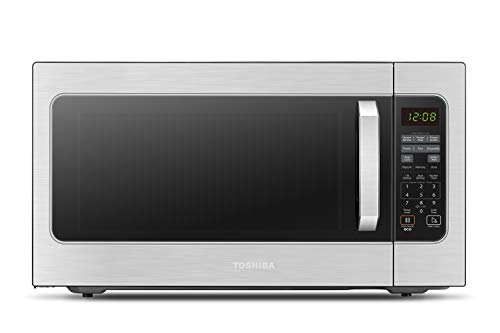
- 2.2-cubic-foot capacity for large meals
- Humidity sensor adjusts cooking automatically
- Includes 23 menus and weight/time defrost
Best For: Families needing a spacious countertop microwave
Inverter Performance Pick
Panasonic Genius Sensor 2.2 Cu. Ft.
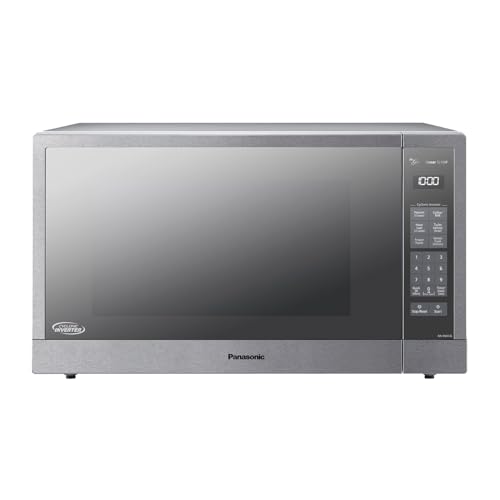
- Genius Sensor adjusts time and power
- Inverter technology supports consistent cooking
- Includes 20 presets and Turbo Defrost
Best For: Families wanting sensor cooking with inverter control
Multifunction Sensor Pick
Toshiba OptiChef Pro Max Air Fryer Combo

- Combines microwave, air fry, and convection-style cooking
- Humidity sensor and inverter support even results
- Color screen and 25 programs simplify operation
Best For: Cooks seeking an all-in-one countertop appliance
Family-Size Sensor Pick – Toshiba Smart Sensor Microwave
The Toshiba Smart Sensor Microwave is a strong option for shoppers comparing microwave ovens with sensor cooking and needing generous countertop capacity. Its 1.6-cubic-foot interior, 1,200 watts of power, and preset sensor menus are suited to everyday family meals and popular foods such as pizza, potatoes, and vegetables.
Best For: Families wanting high power, a large interior, and convenient sensor cooking presets.
Pros:
- 1.6-cubic-foot capacity and 13.6-inch position-memory turntable can accommodate a 13-inch pizza.
- Sensor menus automatically support cooking common foods, including pizza, potatoes, and vegetables.
- Includes auto defrost, fast cooking, memory and multi-stage cooking, a child lock, and sound control.
- Ten power levels and 1,200 watts provide flexible everyday cooking performance.
Cons:
- Its larger footprint may be less suitable for small counters.
- At 36.6 pounds, it is relatively heavy to move.
Choose this Toshiba if capacity and feature depth matter more than a compact footprint. The position-memory turntable and optional sound mute add practical convenience, while the sensor menu keeps routine cooking simple.
Even-Heating Choice – Sharp Inverter Sensor Microwave
The Sharp SMC1464KS combines sensor cooking with inverter technology, making it a noteworthy choice among microwave ovens with sensor cooking. Its 1.4-cubic-foot capacity, 1,100 watts, and carousel turntable offer a balanced setup for reheating, defrosting, and preparing everyday meals.
Best For: Users who want sensor cooking and inverter technology in a family-sized stainless steel countertop model.
Pros:
- Sensor Cook helps adjust cooking and reheating for more precise results.
- Inverter cooking technology is designed for even cooking performance.
- Includes ten power levels, two-stage cooking, melt/soften, auto cook, and weight and time defrost.
- Express Cook, a “+30 seconds” key, white LED display, and LED interior lighting add convenience.
Cons:
- The 1.4-cubic-foot capacity is smaller than some 1.6-cubic-foot alternatives.
- Its 12.4-inch turntable may be limiting for especially large dishes.
This Sharp model is a well-rounded middle ground for shoppers who value more controlled heating without moving to an oversized appliance. Its combination of sensor programs, inverter technology, and straightforward express controls suits varied daily use.
Compact Inverter Favorite – Panasonic Genius Sensor Microwave
The Panasonic NN-SN65KW is a practical pick for shoppers seeking microwave ovens with sensor cooking in a space-saving design. It pairs 1,200 watts with Genius Sensor cooking, ten sensor settings, and inverter technology while maintaining a relatively small countertop footprint.
Best For: Smaller kitchens and users who want sensor reheat, inverter cooking, and broad preset coverage.
Pros:
- Genius Sensor automatically adjusts power and cooking time, with ten sensor cook settings.
- Inverter technology provides a continuous stream of cooking power for even heating.
- Offers 15 auto cook options, sensor reheat, Turbo Defrost, Keep Warm, and 11 power levels.
- The 1.2-cubic-foot interior includes a 13.4-inch turntable while keeping the exterior footprint compact.
Cons:
- Its 1.2-cubic-foot capacity is smaller than the larger family-size models in this roundup.
- The white finish may not match every kitchen.
Panasonic’s main advantage here is feature density in a smaller package. It is especially appealing when counter space is limited but you still want sensor cooking, inverter heating, and useful defrost and keep-warm functions.
Simple Family Workhorse – GE Sensor Countertop Microwave
The GE Countertop Microwave offers a straightforward approach to microwave ovens with sensor cooking. Its sensor controls monitor moisture and adjust cooking time, while the 1.6-cubic-foot capacity and 1,150 watts of power make it suitable for family meals, reheating, and everyday snacks.
Best For: Families wanting a spacious microwave with simple one-touch controls and sensor cooking.
Pros:
- Sensor Cooking Controls monitor moisture and automatically adjust cooking time.
- 1.6-cubic-foot capacity, 1,150 watts, and a 13.63-inch glass turntable support larger portions.
- Eight convenience cook settings and one-touch express controls simplify daily operation.
- Includes manual and auto defrost, a digital display, electronic keypad, and child lock.
Cons:
- It has ten power levels but fewer listed specialty features than some competing models.
- The 39-pound weight makes it less convenient to reposition.
- Countertop clearance requirements call for three inches on each side and above, plus one inch at the rear.
This GE is a sensible choice when ease of use and capacity are the priorities. Its moisture-sensing control and one-touch settings cover common tasks without requiring a long list of specialized cooking programs.
Best Flatbed Pick – Toshiba Inverter Sensor Microwave
For shoppers comparing microwave ovens with sensor cooking, this Toshiba model stands out for its flatbed design and inverter technology. The 1.3-cubic-foot countertop oven uses humidity-sensing menus to adjust heating for foods such as pizza, pasta, and vegetables, while its turntable-free interior accommodates varied dish shapes and simplifies cleanup.
Best For: Cooks who want sensor cooking, quieter operation, and a turntable-free interior.
Pros:
- Flatbed interior handles multiple plates or oddly shaped dishes without a turntable.
- Inverter technology supports precise temperature control and more even cooking.
- Offers 11 smart sensor menus and 11 power levels.
- Includes a mute function, eco mode, child safety lock, and stainless-steel interior.
Cons:
- Its 1.3-cubic-foot capacity is smaller than some full-sized countertop options.
- Button controls may be less streamlined than touchscreen controls.
This is a strong fit if sensor automation and easy loading matter more to you than having a traditional carousel. The inverter system and flatbed layout give it useful flexibility for everyday reheating and cooking.
Best Large-Capacity Value – Farberware Sensor Microwave
This Farberware countertop model is a practical choice among microwave ovens with sensor cooking, combining a roomy 1.6-cubic-foot capacity with 1100 watts of power. Its press-and-go controls, one-touch cooking options, multi-stage cooking, and defrost-by-weight or time settings are suited to everyday family meals.
Best For: Families or offices needing a larger countertop microwave with straightforward preset cooking.
Pros:
- 1.6-cubic-foot capacity provides full-sized cooking space in a countertop format.
- Includes smart sensor auto-cook settings and six one-touch options.
- Ten power levels and multi-stage cooking allow more control.
- Easy-clean surfaces, interior lighting, a kitchen timer, and child safety lock add convenience.
Cons:
- At 21.8 inches wide and 34.5 pounds, it may need more counter space than compact models.
- Its 1100-watt output is lower than the Toshiba model in this roundup.
Choose this Farberware when capacity and uncomplicated controls are priorities. It offers useful sensor and preset functions without giving up manual power-level and multi-stage cooking options.
Best Simple Carousel Model – Sharp Sensor Cook Microwave
The Sharp SMC1461KW offers a conventional carousel layout for shoppers seeking microwave ovens with sensor cooking and familiar controls. Its 1.4-cubic-foot capacity, 1100-watt output, Sensor Cook function, auto-cook programs, and weight- and time-defrost options cover common reheating and meal-preparation tasks.
Best For: Households wanting a family-sized microwave with sensor cooking and familiar preset controls.
Pros:
- 1.4-cubic-foot capacity and 12.4-inch removable carousel turntable support everyday dishes.
- Sensor Cook helps automate cooking and reheating.
- Includes ten power levels, two-stage cooking, Auto Cook, and Melt/Soften functions.
- White LED display, LED interior lighting, Express Cook, and a +30 seconds key improve usability.
Cons:
- The carousel requires more interior clearance and cleaning around a moving turntable than a flatbed design.
- Its 1100-watt output is moderate for a 1.4-cubic-foot microwave.
This Sharp model is a sensible middle-ground option for buyers who prefer a standard turntable and easy-access controls. It combines sensor cooking with useful quick-start, defrost, and preset functions for routine kitchen use.
Large-Capacity Sensor Pick – Toshiba Smart Sensor 2.2 Cu. Ft.
If you need one of the larger microwave ovens with sensor cooking, this Toshiba model combines a 2.2-cubic-foot interior with 1,200 watts of output. Its smart humidity sensor adjusts cooking time and power automatically, while one-touch menus make everyday reheating and cooking straightforward.
Best For: Families that want a spacious countertop microwave for large dishes, pizzas, and whole chickens.
Pros:
- 2.2-cubic-foot capacity and 16.5-inch turntable accommodate large meals.
- Smart humidity sensor helps adjust time and power for more even results.
- Includes 23 menus, auto-defrost by weight or time, ECO mode, mute option, and child lock.
Cons:
- Its large footprint may require substantial countertop space.
- At 49.2 pounds, it is relatively heavy to move.
This is a practical choice when capacity matters most. The combination of sensor cooking, extensive presets, and a stainless-steel interior gives it useful everyday flexibility, though smaller kitchens may favor a more compact model.
Inverter Performance Pick – Panasonic Genius Sensor 2.2 Cu. Ft.
This Panasonic is a strong option among microwave ovens with sensor cooking for shoppers who also want inverter power control. Its Genius Sensor adjusts cooking time and power based on the food, while Cyclonic Wave technology and 1,250 watts are designed to support consistent cooking across the large interior.
Best For: Larger households seeking sensor cooking with inverter technology and a built-in-ready design.
Pros:
- 2.2-cubic-foot capacity with a 16.5-inch turntable suits family-size portions.
- Inverter Technology delivers a continuous stream of power for consistent cooking.
- Offers 20 preset menu items, Turbo Defrost, warming, delay start, and a child lock.
Cons:
- The large countertop footprint may not suit compact kitchens.
- The supplied specifications list a smaller 8.25-inch turntable, so buyers should verify tray details before ordering.
With sensor automation, inverter control, and a warming feature, this Panasonic is geared toward convenient, controlled cooking rather than basic reheating alone. Its spacious capacity is useful, but confirm the exact installation and turntable requirements for your kitchen.
Multifunction Sensor Pick – Toshiba OptiChef Pro Max Air Fryer Combo
For shoppers who want more than microwave reheating, this Toshiba combines sensor cooking with air-fry and convection-style functions. The humidity sensor supports automatic cooking adjustments, while Origin Inverter technology is designed for precise control and even results in a compact 1.3-cubic-foot countertop format.
Best For: Cooks who want a microwave, air fryer, and additional cooking modes in one appliance.
Pros:
- ChefFry Plus uses a fan and heating element to replicate air-fryer cooking.
- Humidity sensor and Origin Inverter technology support even cooking and moisture retention.
- Features a color touchscreen, 25 programs, Alexa compatibility, and a child safety lock.
Cons:
- The 1.3-cubic-foot capacity is smaller than the two 2.2-cubic-foot models in this roundup.
- Its five power levels provide less listed power-level flexibility.
This model makes the most sense when countertop versatility is more important than maximum microwave capacity. Its sensor cooking and inverter features add control, while the air-fry function can reduce the need for a separate appliance.
How We Picked These Microwave Ovens with Sensor Cooking
We focused on models that combine automatic sensor programs with practical countertop performance. Our comparison considers cooking power, interior capacity, control simplicity, heating technology, cleaning features, and flexibility for different household sizes. We also included several models with inverter technology, which is designed to deliver steadier power at lower settings, plus flatbed and combination options for shoppers with specific space or cooking needs.
Quick Comparison
- Best for large households: Choose a 2.2-cubic-foot model when you regularly heat large dishes, serving bowls, or family-size meals.
- Best everyday size: A 1.4- to 1.6-cubic-foot countertop microwave offers a useful balance of capacity and footprint.
- Best for smaller kitchens: Models around 1.2 to 1.3 cubic feet take up less counter space while still handling common plates and bowls.
- Best for even low-power heating: Look for inverter technology, especially if you often soften, defrost, or gently reheat delicate foods.
- Best for added versatility: An air-fryer combination model can replace or supplement another small appliance, but it generally requires more counter space.
Key Buying Factors
Capacity and Counter Space
Measure both the available counter area and the microwave’s door clearance. Capacity is listed in cubic feet, but interior dimensions matter more when you need to fit a wide dinner plate, casserole dish, or tall container. Larger units are useful for families but may be unnecessarily bulky for one or two people.
Power and Cooking Control
Most models in this roundup range from about 1,100 to 1,250 watts. Higher wattage can shorten cooking times, though the sensor program and food quantity still affect results. Preset sensor menus are helpful for common foods, while adjustable power levels provide better control for melting, defrosting, and reheating without drying.
Sensor and Inverter Features
Sensor cooking detects moisture released during heating and adjusts the remaining cooking time. It is convenient, but results are best when food is arranged evenly and covered as directed. Inverter technology can provide smoother low-power heating, making it particularly useful for defrosting and delicate foods. A sensor-equipped microwave without an inverter can still be an excellent everyday choice.
Cleaning, Safety, and Controls
Stainless-steel finishes can be attractive but may show fingerprints. Easy-clean interiors, removable turntables, and flatbed designs reduce maintenance. If children use the kitchen, prioritize a reliable control lock. Bright displays, one-touch buttons, and clearly labeled presets are also worth considering if you want quick, uncomplicated operation.
Who Should Buy Which Microwave Ovens with Sensor Cooking?
Choose a compact model for an apartment, office, dorm, or light reheating workload. Choose a mid-size 1.4- to 1.6-cubic-foot microwave for the best all-around balance of capacity and price. Choose a large 2.2-cubic-foot model if you frequently cook for several people or use oversized dishes. Choose an inverter model when even low-power heating and better defrosting control matter most. Choose the air-fryer combination if you want one appliance to handle crisping and microwave cooking, and have enough ventilation and counter space. Whatever the format, verify the external dimensions, outlet requirements, warranty, and included accessories before ordering.