The best raised garden beds make it easier to control soil, improve drainage, and create a productive growing space almost anywhere. This lineup includes metal, wood, elevated, compact, and extra-deep designs for different gardens and budgets.
Use the comparison and buying advice below to narrow the options by size, material, height, capacity, and assembly needs before choosing a bed for your outdoor space.
Best 10 Raised Garden Beds Picks for 2026
Best Modular Pick

- Nine configuration options for flexible layouts
- 17-inch height supports roots and easier access
- Weather-resistant coated steel construction
Best For: Gardeners seeking a configurable, deep metal bed
Best Mobile Option
Elevated Raised Bed with Wheels

- 31.6-inch standing height reduces bending
- Wheels and handle make repositioning easier
- Shelf and drainage features suit container growing
Best For: Patio, balcony, senior, and accessible gardening
Best Deep-Growing Pick
Best Choice Products 6x3 Raised Bed
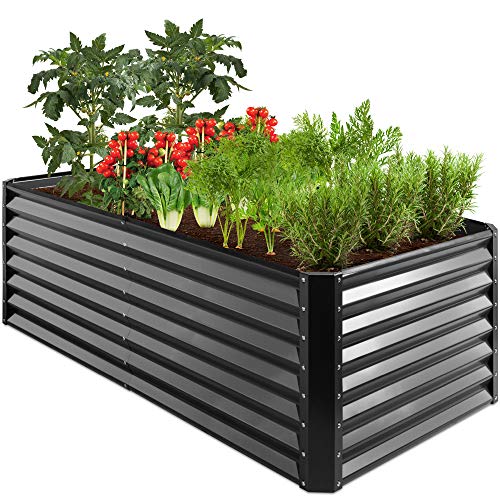
- 24-inch planting depth suits deeper roots
- 269-gallon capacity offers abundant growing space
- Tool-free assembly with stakes and stabilizing rods
Best For: Large outdoor gardens and deep-rooted crops
Best Small-Space Value
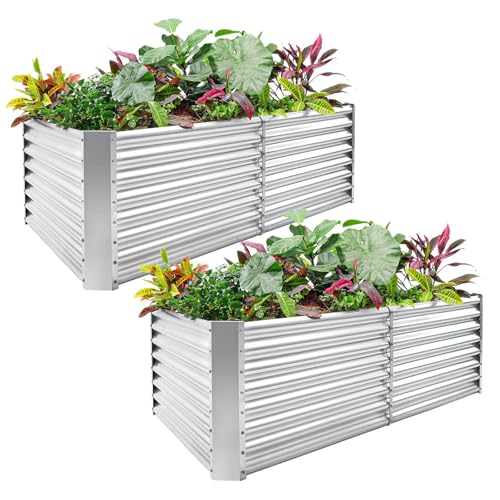
Galvanized 4x2 Raised Bed 2-Pack

- Two compact beds help organize separate crops
- Open bottoms provide natural drainage
- Galvanized steel and tool-free setup
Best For: Small gardens needing two accessible planting areas
Flexible Wood Pick
Yaheetech Wooden Raised Garden Bed

- Removable divider for flexible layouts
- Open-bottom 8-by-2-foot design
- Fir wood with stable side plates
Best For: Customizable vegetable, flower, or herb planting
Deep-Capacity Pick
Land Guard Galvanized Raised Garden Bed
- 24-inch depth for deeper-rooted crops
- Large 8-by-4-foot planting area
- Reinforced galvanized steel construction
Best For: Large-scale vegetable gardening with deep soil
Compact Multi-Bed Pick
SnugNiture Oval Metal Garden Beds

- Three separate 4-by-2-foot beds
- 17-inch height with open bases
- Rubber edging for added protection
Best For: Flexible multi-crop layouts in outdoor spaces
Deep-Root Champion
Land Guard 6×3×2 ft Raised Garden Bed

- 24-inch depth for medium- to deep-rooted plants
- 249-gallon capacity per bed
- Open bottom with reinforced steel construction
Best For: Large gardens growing deep-rooted vegetables
Compact Starter
67-Inch Galvanized Raised Garden Bed

- 7 cubic feet of planting capacity
- Open bottom and ventilated sides improve drainage
- Galvanized, painted steel resists outdoor corrosion
Best For: Beginners and smaller outdoor growing spaces
Large-Coverage Pair
12×4×1 ft Galvanized Raised Beds

- Two long beds provide 48 cubic feet total
- 12×4-foot footprint supports mixed crops
- Galvanized metal with protected edges and corners
Best For: Large outdoor gardens needing broad, low-profile planting space
Best Modular Pick – Vego Garden 9-in-1 Raised Bed
This 17-inch Vego Garden raised garden bed offers nine possible layouts, making it a flexible choice for gardeners working around different backyard dimensions. Its 23-cubic-foot capacity provides substantial room for vegetables and flowers, while the taller profile can reduce bending and support deeper root systems.
Best For: Gardeners who want a durable, configurable metal bed with extra planting depth.
Pros:
- 9-in-1 modular design adapts to different garden spaces.
- 17-inch height supports deeper roots and more comfortable tending.
- VZ 2.0 coated steel is weather resistant with a stated 20+ year life.
- Oval corners and rubber edge trim improve handling safety.
Cons:
- Its 8-by-2-foot footprint may be too large for compact spaces.
- With 23 cubic feet of capacity, filling it requires a substantial amount of soil.
Choose this model when layout flexibility, durability, and reduced bending matter more than minimizing the initial soil volume. The included tools and straightforward assembly also make it practical for many home gardeners.
Best Mobile Option – Elevated Raised Bed with Wheels
This elevated raised garden bed is designed for patio, balcony, and accessible gardening. Its 31.6-inch standing height reduces kneeling, while two wheels and a handle let you reposition a planted bed when sunlight or weather conditions change.
Best For: Small-space gardeners, seniors, and anyone who prefers standing-height container gardening.
Pros:
- Two wheels and an ergonomic handle support mobility.
- 31.6-inch height helps reduce back strain and kneeling.
- Five drainage holes and two cross-channels help prevent waterlogging.
- Detachable lower shelf provides storage for tools and supplies.
Cons:
- The 2.5-cubic-foot capacity is smaller than full-size raised garden beds.
- It supports more than 200 pounds when planted, so moving it may still require care.
- Painted iron requires prompt attention to scratches to help reduce corrosion.
This is a practical choice when accessibility and mobility are priorities. It trades growing capacity for convenient height, drainage, storage, and the ability to follow available sunlight.
Best Deep-Growing Pick – Best Choice Products 6×3 Raised Bed
For gardeners growing medium- to deep-rooted crops, this 24-inch-deep metal raised garden bed provides a generous 36-cubic-foot planting area. The 6-by-3-foot box holds up to 269 gallons of soil and is sized for vegetables, herbs, flowers, and other plants that benefit from substantial root space.
Best For: Gardeners who need a deep, high-capacity bed for crops such as broccoli, beans, and other deeper-rooted plants.
Pros:
- Two feet of depth accommodates medium- to deep-rooting plants.
- Large 269-gallon capacity creates a substantial growing environment.
- Powder-coated steel, ground stakes, and stabilizing rods support durability.
- Tool-free assembly uses included wingnuts and bolts.
Cons:
- The bottomless design does not include a bottom panel.
- Its large soil capacity can make filling expensive and labor intensive.
- The 6-by-3-foot footprint needs considerable outdoor space.
This bed is best suited to a dedicated garden area rather than a small patio. Its depth and capacity are the main advantages, especially for gardeners planning crops that need more room below the surface.
Best Small-Space Value – Galvanized 4×2 Raised Bed 2-Pack
This two-pack of galvanized raised garden beds gives gardeners two compact 4-by-2-foot growing areas for organizing vegetables, herbs, flowers, and strawberries. The bottomless, 12-inch-deep design supports natural drainage and can let roots access native soil when placed over a lawn or garden bed.
Best For: Small outdoor gardens that benefit from two separate, easy-to-reach planting areas.
Pros:
- Two beds provide flexible placement and crop organization.
- Open bottoms allow natural drainage and access to soil below.
- 1mm galvanized steel with corrugated panels supports structure and weather resistance.
- Tool-free assembly is designed to take about 20 minutes.
Cons:
- The 12-inch depth is less suitable for very deep-rooted plants.
- Bottomless construction may allow roots or weeds to interact with native soil.
- Each bed offers a relatively compact growing area compared with larger models.
This set makes sense for gardeners who want a simple, space-conscious way to separate crops. Its open base is especially useful on soil or lawn, while the modest height keeps plants within easy reach.
Flexible Wood Pick – Yaheetech Wooden Raised Garden Bed
If you prefer a natural-looking setup, this wooden raised garden bed offers an 8-by-2-foot planting area with an open bottom. Its removable divider lets you separate plants or create one larger growing space.
Best For: Gardeners who want a customizable wooden bed for vegetables, flowers, or herbs in a patio, yard, garden, or greenhouse.
Pros:
- Removable baffle supports divided or larger planting areas.
- Complete side plates help contain soil and reduce leakage.
- Corner posts support flexible combinations with additional beds.
- Includes tools and an instruction manual for assembly.
Cons:
- Unfinished fir wood may require more care than metal construction.
- Its 11-inch height may be less suitable for deeper-rooted plants.
- The long, narrow footprint requires sufficient outdoor space.
This is a practical choice among raised garden beds if you value a classic wood appearance and adaptable planting layout. The divider and open-bottom design make it especially useful for organizing smaller crops.
Deep-Capacity Pick – Land Guard Galvanized Raised Garden Bed
This galvanized raised garden bed is designed for substantial planting capacity, with a 24-inch depth and an open base. Reinforced crossbars and fixed piles help support the large metal structure while the coated steel is intended to resist rust and corrosion.
Best For: Gardeners growing medium- to deep-rooted crops such as beans and broccoli who have room for a large 8-by-4-foot bed.
Pros:
- 24-inch depth provides ample room for deeper root systems.
- Open-bottom construction supports drainage and unrestricted root growth.
- Galvanized coated steel is designed for rust and corrosion resistance.
- Crossbars and fixed piles help prevent warping and soil leakage.
Cons:
- The large footprint requires considerable outdoor space.
- Its stated 396-gallon capacity can require a substantial amount of soil.
- Metal construction may be less visually warm than a wooden bed.
Among raised garden beds, this Land Guard model stands out for its height and capacity. Choose it when deep soil volume and durable metal construction matter more than a compact footprint.
Compact Multi-Bed Pick – SnugNiture Oval Metal Garden Beds
This three-pack of oval metal raised garden beds gives you multiple 4-by-2-foot planting areas, each 17 inches tall. The open bases support drainage, while rubber edging adds protection around the bed rims.
Best For: Gardeners who want several separate beds for vegetables, fruits, flowers, herbs, or other plants in a compact outdoor layout.
Pros:
- Three individual beds allow flexible placement and crop grouping.
- 17-inch height provides a moderately raised planting area.
- Open-base design helps prevent water accumulation and decay.
- Oval galvanized metal construction is designed for durability and rust resistance.
Cons:
- Each bed offers less planting space than a large single unit.
- Assembly is required for all three beds.
- The oval shape may be less efficient against straight walls or fences.
This set is a useful option among raised garden beds when you want to divide crops across multiple containers. Its moderate height, protective edging, and open bases offer a balanced setup for varied planting.
Deep-Root Champion – Land Guard 6×3×2 ft Raised Garden Bed
If you need raised garden beds for substantial crops, this two-pack from Land Guard offers a generous 24-inch depth and 249-gallon capacity per bed. The open-bottom design supports deep-rooted plants while galvanized, coated steel is built for outdoor exposure.
Best For: Gardeners growing medium- to deep-rooted vegetables such as beans and broccoli, especially those wanting high soil capacity.
Pros:
- Two-foot depth accommodates deeper root systems.
- Large 249-gallon capacity per 6×3-foot bed.
- Open base improves drainage and allows unrestricted root growth.
- Reinforced cross bars and fixed piles help limit warping and soil leakage.
Cons:
- The deep, large format requires a substantial amount of soil.
- Its 6×3-foot footprint may be too large for compact patios.
Choose this set when planting depth and volume matter more than a compact setup. Its durable construction and included instructions make it a practical option for a sizable outdoor garden.
Compact Starter – 67-Inch Galvanized Raised Garden Bed
This 67-inch galvanized raised garden bed provides a manageable 7 cubic feet of growing space for vegetables, flowers, or herbs. Its 10-inch height and open base suit patios, yards, greenhouses, and other outdoor areas where easy assembly and drainage are priorities.
Best For: Beginners and space-conscious gardeners who want a moderate-size bed for vegetables, flowers, or herbs.
Pros:
- Moderate 67×20-inch footprint fits a range of outdoor spaces.
- Open bottom helps prevent water buildup and rot.
- Side ventilation supports root respiration and excess-water removal.
- Galvanized steel and two anti-corrosion paint layers provide weather resistance.
Cons:
- The 10-inch height offers less root depth than taller beds.
- Its 7-cubic-foot capacity is limited for larger planting plans.
For a straightforward entry point into raised-bed gardening, this model balances usable length with a relatively modest capacity. It is especially practical when you want defined planting space without a very deep or oversized box.
Large-Coverage Pair – 12×4×1 ft Galvanized Raised Beds
This two-piece set is designed for broad planting coverage, with each raised garden bed measuring 12 feet by 4 feet and 12 inches high. Galvanized metal construction, polished edges, and corner pads make it a practical choice for growing vegetables, fruits, herbs, and flowers outdoors.
Best For: Gardeners who need extensive, low-profile planting space for mixed crops and want two large rectangular beds.
Pros:
- Two beds provide a combined 48 cubic feet of growing capacity.
- Extra-long 12×4-foot dimensions offer substantial planting area.
- Galvanized surfaces are designed to resist corrosion.
- Corner pads and polished edges help reduce sharp-edge concerns.
Cons:
- The 12-foot length requires considerable garden space.
- At 12 inches high, it provides less depth than two-foot raised beds.
- The set’s components arrive together in one box, so unpacking may be required before assembly.
This set favors planting area over height, making it well suited to expansive gardens and mixed crops with moderate root depth. Consider the required footprint carefully before buying, since each bed is exceptionally long.
How We Picked These Raised Garden Beds
We focused on the factors that most affect everyday gardening: construction material, dimensions, planting depth, stability, drainage, capacity, assembly, and intended use. The selection includes galvanized steel beds for durability, a wooden option for a more traditional look, elevated models for easier access, and multiple sizes for balconies, patios, yards, and larger vegetable gardens.
Because product dimensions and included hardware can vary, verify the manufacturer’s specifications before buying. You should also confirm whether a liner, bottom panel, trellis, or other accessories are included.
Quick Comparison
| Best For | Look For |
|---|---|
| Large vegetable gardens | Long or multi-pack beds with generous soil capacity |
| Deep-rooted crops | Beds around 2 feet deep |
| Small patios | Compact footprints or wheeled elevated designs |
| Accessible gardening | Raised working height and convenient storage |
| Long-term outdoor use | Galvanized metal with corrosion-resistant construction |
Key Buying Factors for Raised Garden Beds
Size and Placement
Measure the available area before choosing a bed. Leave enough room to walk around it and reach the center without stepping into the soil. Longer beds suit larger yards, while narrower designs work better along fences, patios, and walkways.
Depth and Soil Volume
Shallow beds are suitable for herbs, lettuce, flowers, and many leafy vegetables. Extra-deep models provide more room for carrots, tomatoes, root crops, and plants with larger root systems, but they require substantially more soil and may be heavier to assemble and fill.
Material and Durability
Galvanized steel is lightweight, relatively low-maintenance, and commonly chosen for outdoor longevity. Wood offers a warmer appearance but may require more care over time. Check edge finishing and structural bracing, especially for tall or wide beds.
Drainage and Assembly
Bottomless beds can drain directly into the ground, while elevated units need effective drainage openings. Review assembly instructions and allow time for panel alignment, hardware tightening, and site leveling. A level surface helps prevent shifting and uneven water distribution.
Who Should Buy Which Raised Garden Beds?
Choose a compact or wheeled elevated model if you garden on a patio, need easier access, or want storage beneath the planting area. Pick a deep metal bed if you plan to grow tomatoes, root vegetables, or other crops that benefit from substantial soil depth.
For families or serious vegetable gardeners, larger two-pack and long rectangular kits can create more planting capacity and make crop rotation easier. Smaller two-pack beds are a practical choice when you want separate growing zones without committing to one oversized planter. Select the wooden planter if appearance is a priority and you prefer a traditional garden accent.