When disaster strikes, safe drinking water is one of the first essentials to disappear. The best reverse osmosis systems for emergencies help you turn questionable water into a dependable supply you can actually trust.
Below, we focus on practical survival-ready options for home backup, travel, camping, and off-grid use—so you can choose a system that fits your space, power setup, and water risks.
Best 10 Reverse Osmosis Systems for Emergencies Picks for 2026
Portable RO Hand Pump
Portable Reverse Osmosis Water Filter Pump for Travel

- Portable hand-pump RO system
- Filters up to 8,000 liters
- 200-300 ml/min flow rate
Best For: Solo adventurers and emergency kits needing a compact manual purifier
Marine Survival Desalinator
Hand-Powered Seawater RO Filter

- Manual seawater reverse osmosis
- No electricity, batteries, or fuel
- Up to 5.7 gallons per day
Best For: Marine survival kits and life rafts
3-Stage Survival Pump

- 3-stage filter with 0.0001 micron RO membrane
- Rated for 10,000 liters
- Portable freestanding survival pump
Best For: Campers and preppers wanting a simple high-capacity purifier
Electric Emergency RO Purifier

- Electric RO system with dual UV lamps
- Built-in TDS monitoring and display
- Fast 2.1L fill in about 3 minutes
Best For: RV trips and home emergency backup water
Portable Tankless RO for Off-Grid Use

- No electricity needed for quiet operation
- NSF/ANSI 42 & 372 certified materials
- 600 GPD tankless design with TDS meter
Best For: homes, RVs, and backup water setups
Backpacking Survivor Filter for Emergencies

- 12.8 oz portable filter for kits and travel
- Non-electric 3-stage system with reusable filters
- Fast 500 ml/min flow from fresh water sources
Best For: camping, hiking, and emergency kits
High-Flow Tankless RO Backup
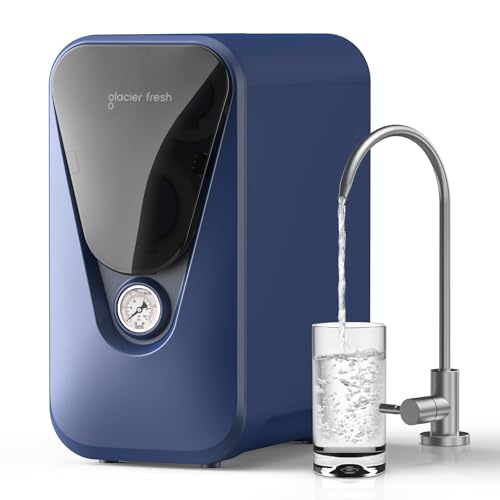
- Electric-free, water-powered operation
- 800 GPD high flow with tankless design
- NSF/ANSI 58, 372, and 401 certified
Best For: prepared households needing fast backup water
Portable RO Survival Purifier
Purewell K8680 10-Stage RO with UV
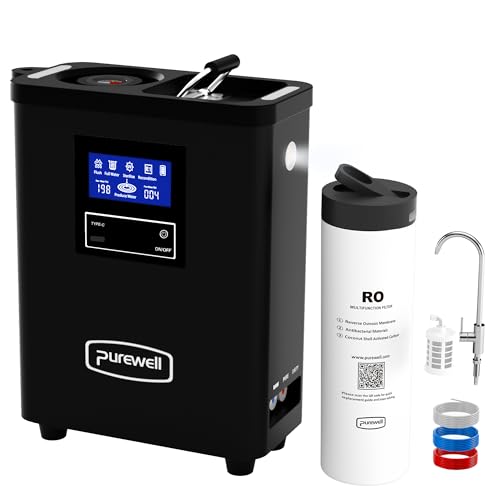
- Battery-powered RO purifier with UV support
- 0.0001 micron membrane and TDS monitoring
- Includes SOS light, compass, and device charging
Best For: Emergency kits, RV trips, and camp setups needing powered purification
Gravity Backup Filter
Yuclet 2-Gal Gravity Water Filter System

- 2-gallon gravity-fed system for group hydration
- 0.1-micron filter with very high contaminant reduction
- No shelf-life concerns and no power required
Best For: Basecamps, families, and emergency kits that want large-capacity filtration
Hybrid Solar Survival Filter
BKLES 3-in-1 Emergency Water System

- Electric, hand pump, and solar charging options
- 0.01-micron dual ultrafiltration with 6 stages
- Lightweight kit with LED, SOS light, and phone charging
Best For: Preppers and travelers who want backup filtration methods and charging flexibility
Portable RO Hand Pump – Portable Reverse Osmosis Water Filter Pump for Travel
If you want reverse osmosis systems for emergencies that stay simple and portable, this hand pump is built for field use. It uses high-precision RO filtration to help remove small particles and impurities from creek or stream water, making it a practical option for camping, hiking, and emergency preparedness.
Best For: Hikers, campers, and emergency kits that need a compact manual RO water source.
Pros:
- Portable freestanding design for outdoor and emergency use
- RO filtration with chemical-free operation
- Fast flow rate of 200 to 300 ml per minute
- Long filter capacity rated up to 8,000 liters
Cons:
- Lower TDS support is listed at 300 ppm maximum
- Manual pumping may be slower than electric options
- Not designed for large-group water production
This is a straightforward survival filter for people who value portability and simplicity over output volume. Its main strengths are compact size, no-fuss operation, and a long service life for backcountry or emergency storage.
Marine Survival Desalinator – Hand-Powered Seawater RO Filter
For reverse osmosis systems for emergencies where seawater is the only option, this hand-powered desalinator is designed for marine survival. It produces fresh water without electricity, batteries, or fuel, making it a strong fit for life rafts, sailboats, and other space-limited emergency setups.
Best For: Marine survival kits, rafts, and sailors who need manual seawater desalination.
Pros:
- Turns seawater into drinking water with manual reverse osmosis
- Compact and lightweight for ditch bags and life rafts
- Energy recovery pump lowers pumping effort
- Corrosion-resistant stainless steel and marine-grade build
Cons:
- Produces only up to 5.7 gallons per day
- Manual operation can be tiring over time
- Best suited to marine use rather than general camping
This model is about dependable survival performance, not convenience. If your emergency plan includes offshore or coastal scenarios, its no-power design and seawater capability make it especially valuable.
3-Stage Survival Pump – Portable RO Water Purifier
If you are comparing reverse osmosis systems for emergencies, this 3-stage survival pump stands out for combining multi-stage filtration with a 0.0001 micron RO membrane. It is aimed at hiking, camping, and emergency survival water needs where a portable freestanding purifier is easier to manage than a full fixed system.
Best For: Outdoor users who want a simple portable purifier with multi-stage filtration.
Pros:
- 3-stage design with 0.0001 micron RO membrane
- Portable freestanding format for field use
- Large capacity rated up to 10,000 liters
- Good fit for camping and emergency survival water
Cons:
- Limited published detail on flow rate and pump effort
- No battery or electric features listed
- Not described as suitable for seawater desalination
This is a practical pick if you want a basic RO-based survival purifier with a high capacity rating. The feature set is lean, but the multi-stage approach and long service life make it appealing for emergency prep.
Electric Emergency RO Purifier – Portable UV Water Filter
Among reverse osmosis systems for emergencies, this electric purifier is built for speed, monitoring, and added UV protection. It uses a 0.0001 micron RO membrane plus dual UV lamps, and it is designed for fresh or brackish water use during camping, RV travel, and power outages.
Best For: Families, RV travelers, and emergency setups that want electric RO with UV treatment.
Pros:
- 0.0001 micron RO filtration with dual UV lamp support
- Built-in TDS display for water quality monitoring
- Fast fill rate: 2.1-liter bottle in about 3 minutes
- Portable design with carry bag, night light, and emergency light mode
Cons:
- Not designed for ocean seawater
- Requires charging and battery management
- Replacement filters are sold separately
This model is a strong choice when you want more automation than a hand pump can offer. Its mix of electric operation, UV treatment, and TDS monitoring makes it well suited to prepared households and mobile emergency kits.
Portable Tankless RO for Off-Grid Use – Ontulor 6-in-1 Tankless RO
If you want reverse osmosis systems for emergencies that can still fit in a home, RV, or office setup, this Ontulor unit is built around simplicity and no-power operation. It uses water pressure instead of electricity, includes a TDS meter, and packs 6-stage-style composite filtration into a compact tankless body for everyday backup drinking water.
Best For: Homes, RVs, and emergency-preparedness buyers who want a compact, non-electric RO system with a built-in TDS check.
Pros:
- NSF/ANSI 42 & 372 certified and third-party tested for lead-free materials and improved water clarity
- No electricity needed, so it can operate quietly without a power connection or pump
- 600 GPD tankless design delivers water on demand with no storage tank
- Includes a dedicated faucet and TDS meter for quick water-quality checks
Cons:
- Requires water pressure to operate, so it is not a true gravity-only emergency purifier
- Under-sink installation still needs a suitable setup and tubing connection
This is a strong pick if you want a space-saving RO system that can keep working without electricity during outages. It is more of a preparedness-friendly household purifier than a grab-and-go survival filter, but the no-power design makes it relevant for backup water planning.
Backpacking Survivor Filter for Emergencies – Survivor Filter PRO Portable
For buyers comparing reverse osmosis systems for emergencies, this Survivor Filter PRO is a different kind of solution: a portable survival filter designed for immediate use from fresh water sources. It is lightweight, non-electric, and built to remove tested virus, bacteria, staph, and protozoa while also reducing heavy metals according to NSF/ANSI standards.
Best For: Campers, hikers, and emergency kits that need a lightweight portable purifier for untreated fresh water.
Pros:
- Very compact at 12.8 oz and easy to pack for emergencies or travel
- Three-stage system with replaceable and reusable filters for long-term use
- Fast 500 ml per minute flow rate for on-the-go water access
- Non-electric design means no charging or waiting before use
Cons:
- It is a portable hollow-fiber/ultrafiltration system, not a full under-sink RO unit
- Works directly from fresh water sources, so it is not meant for household plumbing installation
This is the most emergency-ready portable option in the group, especially if you need something packable and fast. If your priority is field use, evacuation bags, or trail water treatment, it makes more sense than a fixed home RO system.
High-Flow Tankless RO Backup – GLACIER FRESH GFU03
If you are shopping for reverse osmosis systems for emergencies, this GLACIER FRESH GFU03 stands out for being electric-free while still delivering a high under-sink flow rate. Its tankless, water-powered design is meant for households that want purified water available during outages without relying on a separate storage tank or pump noise.
Best For: Families who want a non-electric under-sink RO system with fast output and a space-saving tankless layout.
Pros:
- Non-electric, water-powered design with zero operating noise
- 800 GPD output and roughly 8-second cup fill time for fast access
- NSF/ANSI 58, 372, and 401 certified filtration with 5 stages
- 3:1 pure-to-drain ratio helps reduce wastewater compared with many RO systems
Cons:
- Needs at least 40 PSI inlet pressure for best performance
- Requires under-sink installation and a drilled faucet hole
- Cabinet size must be checked carefully because the unit is relatively large
This is a compelling emergency-friendly home RO choice if you want fast output without electricity. It is better suited to a prepared household installation than to portable survival use, but the no-power operation and tankless design make it practical for outage planning.
Portable RO Survival Purifier – Purewell K8680 10-Stage RO with UV
If you’re comparing reverse osmosis systems for emergencies, the Purewell K8680 stands out as a self-contained portable purifier built for rough conditions. It combines RO filtration with UV treatment, a battery-powered design, and onboard monitoring, making it a practical option when you need treated water away from grid power.
Best For: Campers, RV travelers, and emergency kits that need a battery-powered RO purifier with UV support.
Pros:
- 0.0001 micron RO membrane plus dual UV lamp for multi-stage purification
- Battery-powered with a 5200 mAh battery and Type-C charging, plus reverse charging for devices
- Built-in TDS display helps track filter status and water quality
- Portable case includes compass, SOS strobe, and night lighting for survival use
Cons:
- Needs replacement filter components over time, including pre-filter and RO element
- More complex and bulky than a simple gravity or straw filter
- Best suited to planned emergency prep rather than ultra-light backpacking
For emergency preparedness, this model is strongest when you want a powered RO system that can also handle practical survival needs like lighting and device charging. It is less minimalist than other options, but the added features may be useful when outages or travel disruptions last longer than expected.
Gravity Backup Filter – Yuclet 2-Gal Gravity Water Filter System
For shoppers looking at reverse osmosis systems for emergencies, the Yuclet system takes a different approach with gravity-fed filtration instead of powered RO. It is a simple, low-maintenance way to make drinking water from a 2-gallon reservoir, which is useful when you want an easy backup that does not depend on electricity.
Best For: Families, basecamps, and emergency go-bags that need a large-capacity gravity filter.
Pros:
- 2-gallon dirty reservoir supports group use and camp or RV hydration
- 0.1-micron filter removes 99.9999% of harmful substances, microplastics, silt, sand, and cloudiness
- Up to 1,300 gallons per filter with no expiration worries
- Can connect to the pouch, standard 28mm or 30mm bottles, or drink directly from sources
Cons:
- Gravity-fed design is slower than electric purification systems
- Not a reverse osmosis unit, so it uses a different filtration method than RO buyers may expect
- Large bag setup is less compact than a straw-only filter for solo carry
This is a practical emergency option if you want a dependable, power-free water solution with a large reservoir. It is especially appealing for longer basecamp stays or household preparedness where speed matters less than capacity and simplicity.
Hybrid Solar Survival Filter – BKLES 3-in-1 Emergency Water System
If you’re shopping reverse osmosis systems for emergencies, the BKLES BK3000 is worth a close look even though it uses ultrafiltration rather than RO. Its value is the combination of electric, hand pump, and solar charging modes, which gives you multiple ways to keep water moving when conditions are unpredictable.
Best For: Preppers, hikers, and emergency bags that need flexible charging and backup pumping.
Pros:
- 3-in-1 setup with electric mode, hand pump backup, and solar charging
- 0.01-micron dual ultrafiltration membranes and 6-stage purification system
- Includes LED light, SOS light, and reverse charging for mobile devices
- Lightweight at 450 grams with a storage case for easier carry
Cons:
- Not an RO purifier, so it is not a true reverse osmosis system
- Battery runtime depends on charge level and use conditions
- Replacement filters must be sourced separately when needed
As an emergency water filter, this model is strongest when redundancy matters most. The solar and hand-pump options make it more flexible than many portable units, especially for storm prep, travel, and off-grid situations where electricity may be limited.
How We Picked the Best Reverse Osmosis Systems for Emergencies
We focused on emergency use first: portability, ease of operation, filtration depth, and whether the system can still work when electricity is limited or unavailable. We also considered desalination capability, contaminant reduction claims, build quality, and whether the design makes sense for real-world preparedness.
Quick Comparison
In this category, the biggest split is between hand-powered, battery/electric, tankless, and gravity-fed designs. Hand pumps and electric-free units are ideal for off-grid backup. Portable electric RO systems are better if you have generator, vehicle, or battery support. Larger tankless systems may suit a home emergency plan, but they are less travel-friendly.
Key Buying Factors for Reverse Osmosis Systems for Emergencies
Power Independence
If you want true emergency readiness, prioritize systems that do not rely on grid power. Hand-powered and electric-free models are valuable during outages, while electric units are best when paired with backup power.
Filtration Performance
Look for RO membranes, multi-stage filtration, and any support for saltwater, brackish water, or chemical reduction. If your concern includes coastal flooding or seawater, desalination performance matters more than basic sediment removal.
Portability and Setup
For bug-out bags, camping, or evacuation kits, weight and setup time matter. A compact pump or gravity system is easier to deploy than a larger tankless purifier. For home use, a bigger RO unit may be worth the tradeoff.
Capacity and Output
Think in terms of daily water needs. Solo users may need very little capacity, while families should favor higher-output systems or a plan that allows repeated batch purification.
Maintenance and Supplies
In emergencies, replacement filters may be hard to source. Simpler designs can be easier to store and maintain, but you should still check filter life, spare availability, and whether the unit needs priming, flushing, or batteries.
Who Should Buy Which Reverse Osmosis Systems for Emergencies?
If you want the most off-grid flexibility, choose a hand-powered or electric-free option. If you need the best balance of convenience and emergency readiness, a portable electric RO unit with backup power support is a smart middle ground. For home preparedness, a higher-output tankless system may be the better fit. And if your priority is lightweight travel or basic backup filtration, a gravity or pump-based purifier can be enough.
For most buyers, the best choice is the system that matches your most likely emergency: power outage, evacuation, contaminated tap water, or coastal/saltwater exposure. The right reverse osmosis system is the one you can realistically use when conditions are at their worst.