Starting seeds throughout the year is easier when your trays match your space, planting schedule, and preferred level of control. The right setup can help maintain moisture, organize seedlings, and support healthy early growth indoors.
We compared 10 seed-starting options ranging from compact cell trays and humidity-dome kits to reusable designs and models with built-in LED grow lights. Use the guide below to choose a practical fit for your growing routine.
Best 10 Seed Starting Trays for Year Round Growing Picks for 2026
Bulk Growing Trays
Reusable No-Drain Seed Starting Trays

- 10 reusable plastic trays for batch growing
- No-drain design suits drip trays and hydroponics
- Fits 20-by-10-inch grow pads and micro-mats
Best For: Indoor growers needing flexible trays for microgreens, seedlings, or hydroponics
Mini Greenhouse Kit
120-Cell Seed Starter Trays with Domes

- Includes 10 trays, bases, domes, and labels
- Adjustable vents provide humidity control
- Drainage holes support healthier watering
Best For: Starting batches of flowers and seedlings with a contained humidity setup
Easy Transplanting Tray
Burpee SuperSeed 36-Cell Reusable Tray

- 36 flexible silicone cells ease transplanting
- Drainage channels support watering and aeration
- Labeled rows help track seedlings
Best For: Indoor growers seeking gentle transplanting for herbs, flowers, and vegetables
Indoor Lighted Kit
5-Pack Seed Starter Trays with LED Domes

- Five trays provide 60 planting spaces
- Each dome includes a 12-LED grow light
- Clear vented design supports viewing and humidity control
Best For: Indoor propagation where supplemental light and compact multi-tray coverage matter
Best All-in-One Kit
Mr. Pen 40-Cell Seed Starter Trays

- 10 trays provide 400 total cells
- Includes bases, vented domes, and tools
- Useful for home, classroom, or greenhouse projects
Best For: Larger sowing projects needing a complete kit
Best for Humidity Control
MIXC 40-Cell Mini Propagator Kit
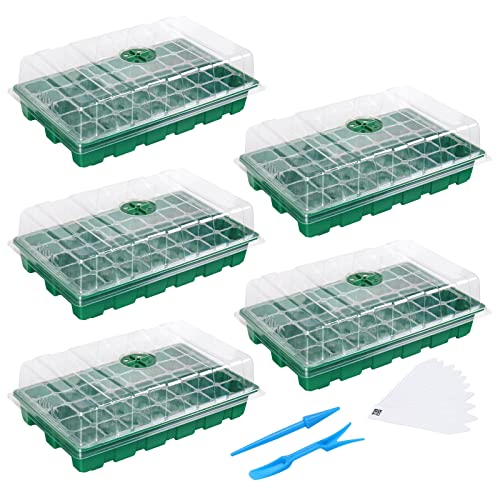
- Adjustable vents regulate humidity and temperature
- Clear domes make seedlings easy to monitor
- Stackable bases help save space
Best For: Small-seed propagation in compact growing areas
Best Compact Cell Inserts
216-Cell Seedling Starter Trays
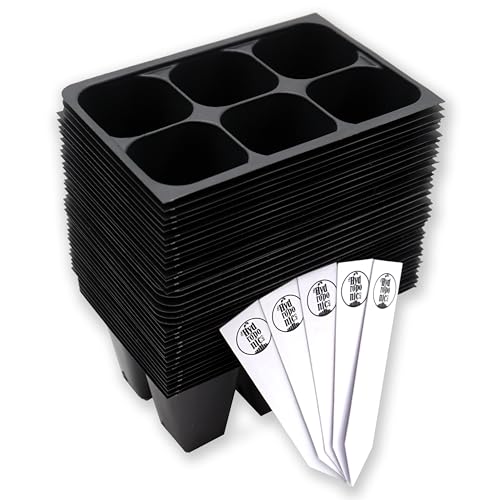
- 36 six-cell trays provide 216 cells
- 2.25-inch-deep cells support root development
- Drainage slits and plant stakes are included
Best For: High-volume indoor propagation with existing covers
Best All-in-One Setup
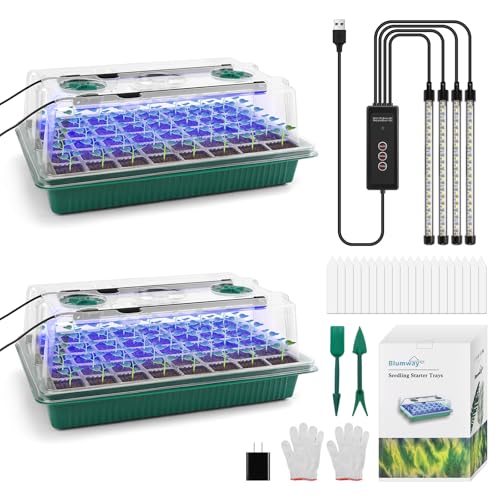
- 80 cells across two trays with deeper cells
- Built-in full-spectrum lights and timers
- Tall domes with adjustable ventilation
Best For: Indoor gardeners growing seedlings year-round with controlled lighting
Best Heavy-Duty Support Trays

- Two sturdy 11-by-9-inch plastic trays
- Designed to catch excess drainage water
- Usable for pots, potting, and seed projects
Best For: Supporting pots and simple indoor or outdoor growing setups
Best Value Multi-Pack
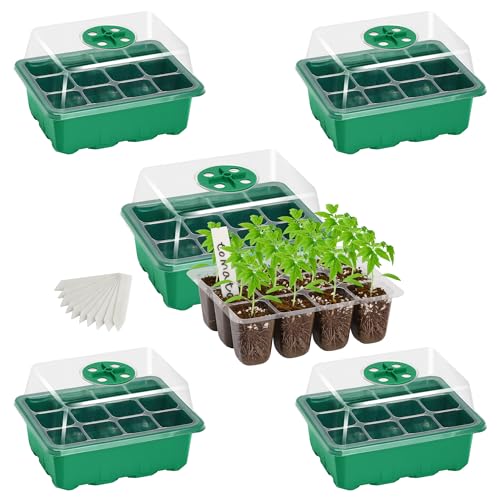
- Five trays provide 60 larger 1.5-inch cells
- Includes bases, domes, vents, and labels
- Designed for heat-mat use and humidity control
Best For: Starting larger vegetable seeds in multiple indoor batches
Bulk Growing Trays – Reusable No-Drain Seed Starting Trays
For gardeners assembling seed starting trays for year round growing, this 10-pack offers a simple, reusable setup for seedlings, microgreens, wheatgrass, or hydroponic projects. The trays have no drain holes, so they can also function as drip trays or hold compatible growing pads.
Best For: Indoor growers who need multiple large, reusable trays for soil-free growing, microgreens, or seedling organization.
Pros:
- Ten reusable plastic trays provide strong quantity for batch growing.
- No-drain design works well as a drip tray or for hydroponic applications.
- Accommodates 20-by-10-inch hydroponic grow pads and micro-mats.
Cons:
- No drainage holes require careful watering and may not suit every soil-growing setup.
- Does not include domes, inserts, labels, or grow lights.
This is a practical bulk option when you already have your preferred growing medium and want flexible trays rather than a complete propagation kit. Its no-drain construction is especially useful for contained indoor growing, but bottom drainage will need to be managed separately.
Mini Greenhouse Kit – 120-Cell Seed Starter Trays with Domes
For seed starting trays for year round growing, the MIXC kit provides a structured mini-greenhouse environment with trays, watertight bases, humidity domes, and labels. Adjustable vents let you manage airflow, temperature, and humidity as seedlings develop.
Best For: Gardeners starting many flowers or seedlings indoors or outdoors who want humidity control and a ready-to-use multi-tray kit.
Pros:
- Includes 10 trays, 10 watertight bases, 10 humidity domes, and 10 labels.
- Adjustable vents help regulate the seedling environment.
- Drainage holes support excess-water removal and help reduce root-rot risk.
- Reusable, lightweight plastic design is easy to transport between growing areas.
Cons:
- The numerous small cells may be less suitable for seedlings needing substantial root space.
- Details identify the kit as a 12-cell, 10-pack configuration, so cell capacity should be confirmed before ordering.
This kit stands out for growers who want humidity domes and base trays included rather than purchased separately. Its portable, reusable design makes it a versatile choice for repeated propagation cycles throughout the year.
Easy Transplanting Tray – Burpee SuperSeed 36-Cell Reusable Tray
Gardeners using seed starting trays for year round growing may appreciate the Burpee SuperSeed tray for its reusable design and flexible silicone cells. The 36-cell layout includes drainage and aeration features, while the cells flex to help release seedlings during transplanting.
Best For: Indoor gardeners growing vegetables, herbs, or flowers who prioritize gentle transplanting and a durable single-tray system.
Pros:
- Flexible food-grade silicone cells help seedlings pop out with less root disturbance.
- Molded slots and deep watering channels support drainage and soil aeration.
- Alphanumeric rows and an included Plant-o-Gram help identify seedlings.
- Easy to clean, reuse, and store; the top shelf is dishwasher safe.
Cons:
- This is a single tray rather than a multi-tray bundle.
- No humidity dome or grow light is included.
The SuperSeed is a strong fit when transplanting convenience matters more than maximum capacity. Its labeled cells and water-management design support organized indoor propagation, while the reusable silicone construction helps make seasonal growing less wasteful.
Indoor Lighted Kit – 5-Pack Seed Starter Trays with LED Domes
For seed starting trays for year round growing in indoor spaces, this five-pack combines clear 12-cell inserts with a 12-LED grow light on each tray. Elevated vented domes help retain moisture while the transparent design makes roots and moisture easier to monitor.
Best For: Indoor gardeners who want several compact propagation trays with supplemental lighting and visible root zones.
Pros:
- Five trays provide 60 planting spaces in total.
- Each tray includes a 12-LED full-spectrum supplemental grow light.
- Vented domes offer adjustable humidity and airflow.
- Drainage holes and clear bases support bottom watering and observation.
Cons:
- USB power adapter is not included.
- No built-in timer is provided.
- The five trays share a 1-to-5 USB cable, requiring suitable power access.
This kit is particularly useful when natural light is limited and you want several small propagation stations. Before using it, plan for a compatible 5V/2A adapter and manual light scheduling, since neither the adapter nor a timer is included.
Best All-in-One Kit – Mr. Pen 40-Cell Seed Starter Trays
For gardeners looking for seed starting trays for year round growing, the Mr. Pen kit combines 40-cell trays with matching bases, vented humidity domes, and basic planting tools. Its 10-pack setup is practical for larger sowing projects at home, in classrooms, or in a greenhouse.
Best For: Gardeners who want a complete multi-tray kit with humidity control and sowing tools.
Pros:
- Includes 10 seed trays, 10 bases, and 10 transparent humidity domes.
- Vented domes help create a warm, humid environment while allowing growth monitoring.
- Includes a dibber and widger for accurate sowing and easier transplanting.
- Provides 400 cells across the 10-pack.
Cons:
- The 40-cell design may be more capacity than needed for small seed-starting projects.
- The supplied notes describe indoor use, so outdoor placement may require additional protection.
With its generous quantity and included tools, this is a convenient choice for starting many seedlings at once. The domes and bases also make it easier to maintain a consistent propagation setup.
Best for Humidity Control – MIXC 40-Cell Mini Propagator Kit
The MIXC kit is a space-conscious option for seed starting trays for year round growing, with transparent cells, adjustable dome vents, and stackable bottom trays. Its small cells suit small seeds, while the clear construction makes it easy to observe seedlings during propagation.
Best For: Indoor or outdoor growers who want adjustable humidity and a stackable tray setup.
Pros:
- Includes five seed trays, five bottom trays, and five humidity domes.
- Adjustable vents let you regulate temperature and humidity around seedlings.
- Transparent plastic supports easy observation without disturbing the plants.
- Includes two garden tools and 10 plant labels.
Cons:
- The 1.5-by-1.5-by-2-inch cells are intended for small seeds and may not suit larger starts.
- The five-pack offers less overall capacity than larger multi-pack kits.
Stackable bases help conserve operating space before germination, making this a useful choice where shelf or tabletop room is limited. The adjustable vents add flexibility for managing the seedling environment.
Best Compact Cell Inserts – 216-Cell Seedling Starter Trays
For high-volume seed starting trays for year round growing, this set supplies 36 compact trays with six cells each, plus plant stakes. The 2.25-inch-deep cells include drainage slits and are sized for flowers, herbs, succulents, and vegetables.
Best For: Growers who need many small, reusable cell inserts for organized indoor propagation.
Pros:
- Provides 36 trays and 216 total cells.
- Each cell measures 1.5 inches square by 2.25 inches deep.
- Drainage slits help reduce excess water and support suitable soil moisture.
- Includes five plant stakes for labeling and organization.
Cons:
- These are six-cell trays rather than complete tray-and-dome propagator kits.
- The compact cell format may require more frequent handling as seedlings grow.
This set emphasizes quantity, drainage, and flexible crop use rather than humidity-dome control. It is a practical fit for gardeners who already have trays or propagation covers and want numerous labeled inserts.
Best All-in-One Setup – LED Seed Starter Tray
For seed starting trays for year round growing, this two-pack combines 80 cells with built-in full-spectrum lighting, humidity domes, and adjustable ventilation. The deeper cells and taller domes give seedlings room to develop indoors, while timers and brightness settings help simplify daily care.
Best For: Indoor gardeners who want an integrated, adjustable light-and-humidity setup for herbs, vegetables, flowers, and other seedlings.
Pros:
- Built-in full-spectrum strip lights offer adjustable brightness, three modes, and 3-, 6-, or 12-hour timers.
- Includes two trays with 80 cells, 9 cm domes, and deeper 1.96-inch cells for root development.
- Adjustable vents help manage humidity, while drainage holes help reduce excess moisture.
- Reusable ABS construction is described as durable, lightweight, and easy to clean.
Cons:
- The setup requires USB power or the included plug-in adapter.
- Its integrated lighting and dome design may take more space than simple open trays.
This is the most complete option in the group for year-round indoor propagation. It is especially useful when natural light is limited and you want lighting, humidity, and ventilation controls in one kit.
Best Heavy-Duty Support Trays – Rectangular Plant Saucers
These rectangular trays are a straightforward choice for seed starting trays for year round growing when you need a sturdy base rather than a complete propagation kit. The two plastic saucers catch drainage water and can also support potting, seed-starting, and other small gardening projects.
Best For: Gardeners who need durable catch trays for pots, tabletop growing projects, or simple seed-starting setups.
Pros:
- Thickened PP plastic is designed to be durable, water resistant, and capable of holding up to 100 pounds.
- The 1.2-inch height helps catch excess water from pots and drainage holes.
- Two 11-by-9-inch trays provide a broad rectangular footprint for indoor or outdoor use.
- Can be used for plant saucers, potting, seed starting, and other gardening tasks.
Cons:
- These are saucer-style trays and do not include cells, domes, lights, or ventilation controls.
- The product information lists a black color, while the description also references a classic brown style.
This set works best as a durable containment layer beneath pots or as a basic growing surface. Choose it when flexibility and load capacity matter more than the controlled germination features of a dedicated starter kit.
Best Value Multi-Pack – 60-Cell Humidity Dome Set
For gardeners comparing seed starting trays for year round growing, this five-pack offers 60 total cells along with watertight bases, clear domes, adjustable vents, and plant labels. The 1.5-inch square cells are sized for larger seeds, and the trays are designed to tolerate use on a heat mat.
Best For: Starting larger vegetable seeds such as potatoes, tomatoes, peppers, and eggplants in multiple batches.
Pros:
- Five 12-cell trays provide 60 cells, with each set including a base, dome, and two labels.
- Clear trays and lids make it easier to monitor seedlings without removing the covers.
- Adjustable vents allow control over the germination environment’s temperature and humidity.
- Heat-mat compatibility and 1.5-inch square cells suit larger seeds.
Cons:
- The 12-cell format provides fewer individual cells per tray than high-density propagation trays.
- The notes identify the product for indoor use and do not mention built-in lighting.
This is a practical batch-starting kit for gardeners who prefer several compact trays over one large flat. Its larger cells, covers, and vents make it a strong fit for warm-season vegetables and controlled indoor germination.
How We Picked the Best Seed Starting Trays for Year Round Growing
We focused on the features that matter most when growing seedlings indoors across multiple seasons: cell count, tray dimensions, drainage, humidity control, durability, lighting, and ease of transplanting. We also considered how well each format suits different crops, available space, and experience levels.
Because year-round growing often means starting several batches at different times, organization and reusability were important factors. Kits with domes or lights can simplify environmental control, while basic trays may offer more flexibility and lower ongoing costs.
Quick Comparison
| Tray type | Best for | Standout feature |
|---|---|---|
| Basic planting trays | Flexible seed starting | Open-ended configuration |
| Humidity-dome kits | Germination and moisture retention | Covered growing environment |
| High-cell-count kits | Starting many seedlings | Efficient use of space |
| Grow-light trays | Low-light rooms | Integrated LED lighting |
| Reusable heavy-duty trays | Frequent seasonal use | Sturdier construction |
Key Buying Factors for Seed Starting Trays for Year-Round Growing
Cell Size and Count
Small cells maximize capacity and work well for herbs, flowers, and crops that transplant early. Larger cells provide more root space for seedlings that need additional time before moving outdoors. Choose capacity based on how many plants you can realistically light, water, and transplant.
Drainage and Water Management
Drain holes help prevent saturated growing media and reduce the risk of root problems. If a tray lacks drainage, use carefully measured watering and place it inside a separate saucer or catch tray. Bottom trays are useful for containing runoff and supporting bottom watering.
Humidity Domes and Ventilation
A clear dome can speed germination by retaining warmth and moisture, but seedlings need ventilation as they emerge. Look for adjustable vents or remove the cover gradually after germination to avoid excessive humidity and weak growth.
Lighting and Growing Location
For indoor seed starting outside the brightest part of the year, an integrated grow light can simplify setup. Check the light’s coverage and height adjustment, and make sure the complete tray fits on your shelf or counter. A tray without lighting may be better if you already own a suitable fixture.
Durability and Reuse
Thin plastic trays can be inexpensive but may bend when moved while full. If you start seeds repeatedly, sturdier trays and washable components can provide better long-term value. Clean and sanitize reusable trays between batches.
Who Should Buy Which Seed Starting Trays for Year Round Growing?
- Choose a basic tray if you want flexibility, already have lighting, or are starting a modest number of plants.
- Choose a humidity-dome kit if you are new to seed starting or need more consistent moisture during germination.
- Choose a high-capacity kit if you grow many herbs, flowers, or vegetables and have enough light and space for multiple seedlings.
- Choose a grow-light model if your home lacks a bright window or you want a more self-contained indoor setup.
- Choose a heavy-duty reusable tray if you start seeds every season and prioritize durability over the lowest upfront price.
Before buying, measure your growing area and confirm the tray’s cell layout, drainage design, dome clearance, and lighting requirements. The best Seed Starting Trays for Year Round Growing are the ones that fit both your crops and your ability to maintain consistent light, moisture, and airflow.