When it comes to managing your home’s energy consumption, choosing the right smart energy monitoring system can make a significant difference. With various options available, you can track your usage in real-time and identify patterns that lead to savings. Each system offers unique features designed to fit different needs. Curious about which ones stand out and how they could transform your energy management? Let’s explore the top ten systems that can help you optimize your home’s efficiency.
Emporia Vue 3 Home Energy Monitor
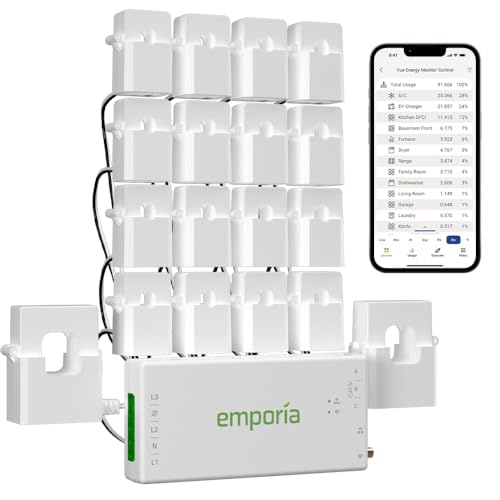
If you’re looking to take control of your energy usage and save on costs, the Emporia Vue 3 Home Energy Monitor is an excellent choice. This UL Listed device guarantees safety while providing real-time monitoring of your electricity consumption. Installation is straightforward, fitting into most circuit panels using clamp-on sensors. You can manage your energy 24/7 through the Emporia Energy App, which helps you automate settings for peak demand and solar usage. With accurate data collection and the ability to monitor multiple appliances, you’ll gain insights that lead to significant cost savings and a more efficient home.
Best For: Homeowners looking to monitor and optimize their energy usage for cost savings and efficiency.
Pros:
- UL Listed: Ensures safety and reliability by meeting rigorous electrical standards.
- Real-Time Monitoring: Provides live data and insights into electricity consumption through a user-friendly app.
- Multiple Appliance Monitoring: Equipped with sixteen sensors, allowing detailed tracking of critical household loads.
Cons:
- WiFi Dependency: Requires a stable 2.4 GHz WiFi connection for real-time data access.
- Additional Sensors Sold Separately: Some features may require purchasing extra sensors for complete monitoring.
- Installation Complexity: While designed for straightforward installation, it may still be challenging for those unfamiliar with electrical systems.
Smart Home Energy Monitor with 16x60A Circuit Sensor

The Refoss Smart Home Energy Monitor with 16x60A Circuit Sensor is ideal for homeowners looking to gain detailed insights into their energy consumption. This ETL Certified device supports two main circuit sensors and up to 16 branch sensors, making installation a breeze. With real-time monitoring through the Refoss app, you can track power and voltage, potentially saving 10%-20% on energy bills. Plus, it integrates with solar systems, automating energy use to maximize savings. Set personalized alerts for unusual spikes to optimize your energy habits. Enjoy detailed charts and data storage for up to three years, all while keeping your information private.
Best For: Homeowners seeking to optimize energy consumption and save on electricity bills while integrating solar energy solutions.
Pros:
- Real-time monitoring of energy consumption through the Refoss app, offering detailed insights into power usage.
- Automated solar integration that maximizes energy savings by managing surplus energy effectively.
- User-friendly installation with a clamp-on design and compatibility with various electrical systems.
Cons:
- Limited API support may restrict advanced integrations with other smart home devices.
- Data stored locally means users must manage their own data without cloud backup.
- Firmware updates are required for seamless operation with Home Assistant, which may require technical knowledge.
Smart Home Energy Monitor with 16 Circuit Level Sensors

For homeowners looking to optimize their energy consumption, the Smart Home Energy Monitor with 16 Circuit Level Sensors stands out as an exceptional choice. This device features 16 flexible 50A sensors that accurately measure real-time power usage across various systems, including single-phase and three-phase setups. Installation is straightforward with clamp-on sensors, and you won’t face voltage restrictions on branch lines. You can access detailed energy statistics via your smartphone, allowing you to track usage and savings effortlessly. By providing actionable insights, this monitor helps reduce your electric bills while promoting a more environmentally responsible lifestyle.
Best For: Homeowners seeking to optimize energy consumption and reduce electric bills through real-time monitoring and insights.
Pros:
- Real-time monitoring of energy usage across various appliances and systems, enhancing energy management.
- Easy installation with clamp-on sensors and no voltage restrictions on branch lines, making it user-friendly.
- Accessible data through smartphone apps, allowing users to track and export energy statistics effortlessly.
Cons:
- Requires Home Assistant and MQTT for operation, which may not be suitable for all users.
- Limited to LAN operation without internet access, potentially restricting remote monitoring capabilities.
- The 1-year warranty may not be sufficient for long-term reliability concerns.
Smart Home Energy Monitor with Live Electricity Usage Tracking
Looking to take control of your energy consumption? The Smart Home Energy Monitor with live electricity usage tracking is your solution. With its 2 x 120A CTs, this monitor accurately tracks voltage, current, and total energy usage in real-time. Installation is a breeze, thanks to pluggable terminals and compact split-core CTs that eliminate complex wiring. It seamlessly integrates with the Smart Life app, allowing you to analyze data, receive alerts, and set up customizable automation. Plus, its dynamic load balancing and zero grid export mode maximize energy efficiency, helping you cut down on electricity costs while optimizing your home’s energy management.
Best For: Homeowners looking to monitor and optimize their energy consumption while integrating with smart home technology.
Pros:
- Accurate real-time tracking of voltage, current, power, and energy consumption.
- Easy installation with pluggable terminals and compact CTs, requiring no complex wiring.
- Seamless integration with Smart Life app for data analysis, alerts, and customizable automation.
Cons:
- May require a stable 2.4GHz Wi-Fi connection for optimal performance.
- Compatibility limited to single-phase 3-wire systems, which may not suit all homes.
- Initial setup and app navigation might be challenging for users unfamiliar with smart home technology.
SIEMENS Inhab Smart Home Energy Monitor

Designed for homeowners who want to take control of their energy consumption, the SIEMENS Inhab Smart Home Energy Monitor offers real-time monitoring of both main and individual circuit levels. With sensors capable of handling 16-50Amp circuits and 2-200Amp mains, you can track your energy usage 24/7. The device provides personalized notifications for energy-saving opportunities and alerts for unusual activity, like an oven left on. Advanced features include Time of Use Management and load shedding for smart devices. Plus, it meets rigorous safety standards, ensuring compliance and peace of mind while optimizing your home’s energy efficiency.
Best For: Homeowners looking to monitor and optimize their energy consumption effectively with real-time data and personalized alerts.
Pros:
- Real-time monitoring of energy usage at both main and circuit levels, providing detailed insights into consumption.
- Personalized notifications help users identify energy-saving opportunities and unusual activity, enhancing energy management.
- Advanced features such as Time of Use Management and load shedding capabilities for smart devices contribute to improved energy efficiency.
Cons:
- Installation may require professional assistance, which could add to overall costs.
- The initial investment could be high for some homeowners compared to traditional energy monitors.
- Requires a stable internet connection for full functionality and remote monitoring capabilities.
Sense Energy Monitor – Track Electricity Usage in Real Time
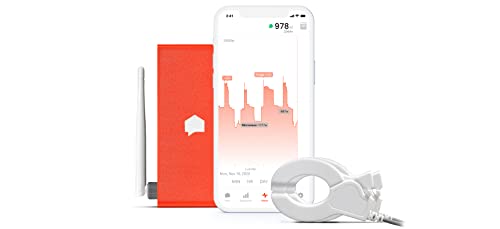
The Sense Energy Monitor is ideal for homeowners who want to gain control over their electricity usage and save on energy costs. This device tracks real-time electricity consumption, helping you identify usage patterns and make informed decisions. With compatibility for iOS, Android, and web apps, you can monitor your home’s energy use from anywhere, even when you’re not home. Custom notifications for critical devices keep you safe by alerting you to potential issues. By engaging with the data, you and your family can enhance energy efficiency and security, ultimately reducing your bills and environmental impact.
Best For: Homeowners who want to monitor and optimize their electricity usage to save on energy costs.
Pros:
- Real-time tracking of electricity usage helps identify patterns for better energy management.
- Remote monitoring via iOS, Android, and web apps allows users to check energy consumption anytime, anywhere.
- Custom notifications for critical devices enhance safety by alerting users to potential risks.
Cons:
- Currently only available in the United States and Canada, limiting accessibility for users in other regions.
- Requires installation within electrical panels, which may necessitate professional help for some homeowners.
- May not provide detailed insights for users with complex energy systems or multiple large appliances.
Smart Home Energy Monitor with Bi-Directional Power Tracking
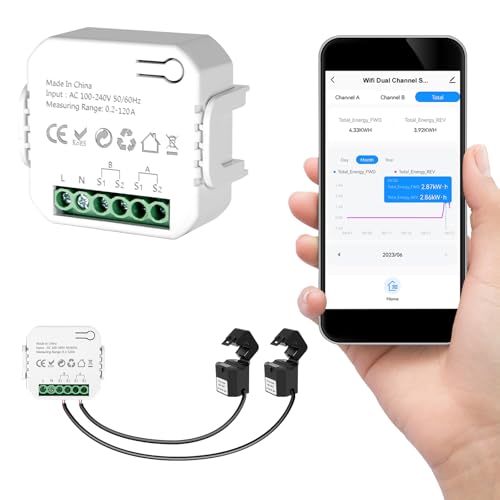
For homeowners seeking efficient energy management, the Smart Home Energy Monitor with Bi-Directional Power Tracking stands out as an ideal solution. It features two 120A CT sensors for precise real-time monitoring of major appliances like air conditioners and water heaters. With its bi-directional tracking, you can easily manage both energy generation and consumption, helping you save money. Installation is a breeze—just clamp the sensors, connect to your 2.4GHz Wi-Fi, and set it up via the Tuya or Smart Life app. This monitor works seamlessly with solar systems and enhances your home’s overall energy efficiency.
Best For: Homeowners looking to enhance their energy management and reduce costs through real-time monitoring of electricity usage.
Pros:
- Accurate monitoring of major appliances with 2 x 120A CT sensors.
- Easy installation process with minimal setup required through Tuya or Smart Life apps.
- Supports bi-directional energy tracking for both generation and consumption, ideal for solar system users.
Cons:
- Limited to 2.4GHz Wi-Fi compatibility, which may not suit all home networks.
- Requires smartphone access for full functionality through the associated apps.
- May not provide detailed monitoring for smaller appliances or devices.
Smart Energy Monitor with 3 Circuit Level Sensors

Homeowners seeking to optimize energy usage will find the Smart Energy Monitor equipped with three circuit level sensors an invaluable tool. With its ability to track real-time power consumption, voltage, and current, you can manage your energy use effectively. The three 200A sensors accurately monitor appliances like air conditioners and water heaters, helping you conserve energy and reduce costs. Installation is straightforward, fitting most home circuit panels, and it’s compatible with various systems. Plus, the SmartLife app allows you to monitor everything from anywhere and export data for detailed insights. It’s a must-have for energy-conscious homeowners!
Best For: Homeowners looking to optimize their energy consumption and reduce utility costs through real-time monitoring.
Pros:
- Accurate Monitoring: Equipped with three 200A sensors, it accurately tracks the energy usage of major appliances.
- User-Friendly App: The SmartLife app provides convenient remote monitoring and data export options for detailed analysis.
- Easy Installation: Designed for straightforward installation into most home circuit panels, compatible with various system types.
Cons:
- Requires WiFi: Needs a 2.4 GHz WiFi connection for app monitoring, which may limit use in some areas.
- Professional Installation Recommended: Installation should be performed by qualified personnel for safety, potentially adding to initial costs.
- Sensor Limitations: Only supports up to 200A per circuit, which may not be sufficient for larger homes or high-demand appliances.
Eyedro Home Energy Monitor – Real-Time Electricity Usage Monitor

Looking to take control of your energy consumption? The Eyedro Home Energy Monitor is your go-to solution. This real-time electricity usage monitor connects via WiFi or Ethernet, giving you instant insights into your home’s power consumption. With two 200A sensors, you can track energy use in dollars, watts, amps, and volts—24/7. Ideal for energy-conscious households, it helps you identify waste and lower utility bills. Plus, it’s compatible with solar setups and requires no subscription for cloud access. With Eyedro, you’ll make smarter energy choices and enhance your home’s efficiency effortlessly.
Best For: Energy-conscious households, DIY enthusiasts, and anyone looking to monitor and reduce their electricity usage.
Pros:
- Provides real-time insights into electricity consumption and production.
- Helps identify energy waste, leading to potential savings on utility bills.
- Compatible with solar setups and requires no subscription for cloud access.
Cons:
- Requires two Eyedro units for separating grid energy usage from solar generation.
- Limited to WiFi (2.4 GHz) or wired Ethernet connectivity, which may not suit all households.
- Initial setup may require technical assistance for some users.
Shelly Pro 3EM Smart Energy Meter

The Shelly Pro 3EM Smart Energy Meter stands out for those seeking precise energy monitoring across multiple phases. This Wi-Fi-operated, DIN-mountable device accurately measures energy consumption with a 1% precision rate. With three 120A Current Transformers, it tracks both the energy you use and produce from sources like solar panels. Its Bluetooth gateway enhances smart home connectivity, working seamlessly with Alexa and Google Home. You can control everything via the Shelly Smart Control App, receiving real-time notifications. Plus, with robust security features and a 5-year warranty, you’re not just investing in efficiency; you’re ensuring peace of mind.
Best For: Those who require precise monitoring of energy consumption in multi-phase systems, such as households with solar panels or smart home automation.
Pros:
- High accuracy: Measures energy consumption with a precision rate of 1%.
- Smart home integration: Compatible with Alexa and Google Home, allowing for seamless control.
- Comprehensive monitoring: Tracks both energy usage and production, providing valuable insights into energy efficiency.
Cons:
- Installation complexity: Requires DIN mounting and may need professional installation for optimal use.
- Wi-Fi dependency: Functionality may be impacted by Wi-Fi connectivity issues.
- Limited historical data: Stores data for only up to 60 days, which may not be sufficient for all users.
Factors to Consider When Choosing a Smart Energy Monitoring System
When choosing a smart energy monitoring system, you’ll want to take into account several key factors. Think about the installation requirements and how easily it integrates with your existing systems. Also, pay attention to data accuracy, real-time monitoring features, and the user-friendly app interface to guarantee it meets your needs.
Installation Requirements and Complexity
Choosing a smart energy monitoring system involves considering installation requirements and complexity, as these factors can greatly impact your experience. Installation can vary widely; some systems require professional help for circuit panel setups, while others feature easy DIY clamp-on sensors. Clamp-on options are typically quicker to install since they attach to existing circuits without needing electrical modifications. You’ll also need to check compatibility with your home’s electrical system—whether it’s single-phase, split-phase, or three-phase—since this affects feasibility. Additionally, verify your Wi-Fi connection is stable for real-time data reporting, as many systems depend on it. Finally, consider any additional software setups for integrating with smart home systems, as this can add to the installation complexity.
Data Accuracy and Reliability
To guarantee you make an informed decision about a smart energy monitoring system, it’s crucial to prioritize data accuracy and reliability. Look for devices with an accuracy rating of ±1% to ±2% to ascertain reliable energy consumption measurements. Real-time data tracking enhances your ability to monitor and respond effectively to usage patterns. Make sure the system retains historical data, like hourly records for at least 90 days, for long-term analysis. Choose monitors certified by recognized safety standards, such as UL or ETL, to assure reliability and performance. Finally, assess the system’s capability to provide actionable notifications based on energy usage trends, helping you identify inefficiencies and optimize your energy consumption effectively.
Compatibility With Existing Systems
Understanding the accuracy and reliability of your smart energy monitoring system lays the groundwork for effective energy management. To optimize your system, guarantee compatibility with your home’s electrical setup—whether it’s single-phase, split-phase, or three-phase. Check if the monitor supports clamp-on sensors that fit your circuit panel without complicated wiring. Additionally, verify that the device integrates seamlessly with existing smart home platforms like Home Assistant or Smart Life, enhancing your monitoring experience. Wireless connectivity is vital, so confirm it operates on a 2.4 GHz Wi-Fi network for remote access via mobile apps. Finally, make certain the system can accurately track energy usage across your appliances, handling the specific electrical loads present in your home.
Real-Time Monitoring Features
How effectively can you monitor your energy consumption in real time? Real-time monitoring features let you track your electricity use continuously, giving you instant insights into your patterns and costs. Many systems allow you to customize data reporting intervals, helping optimize network stability while keeping you updated. You can access detailed metrics like voltage, current, power factor, and total energy consumption, which aids in managing energy effectively. Some monitors even offer historical data views, allowing you to analyze usage trends over days, months, or years. Plus, real-time alerts notify you of unusual energy spikes, enabling you to quickly address potential malfunctions or inefficiencies. This proactive approach can lead to significant savings and improved energy management.
User-Friendly App Interface
When choosing a smart energy monitoring system, the app interface plays an essential role in your overall experience. A user-friendly app should offer real-time data visualization, making it easy for you to track your energy consumption and spot usage patterns at a glance. Customizable dashboards can enhance your experience by letting you prioritize specific metrics and appliances that matter most. Intuitive navigation and seamless access to historical data allow you to review your energy usage over different timeframes, like hourly, daily, or monthly. Additionally, push notifications about unusual energy spikes or savings opportunities help you manage your consumption effectively. Finally, integration with smart home devices offers centralized control, enabling you to automate energy management based on your preferences.