Keeping a greenhouse stable is easier when temperature, humidity, and ventilation respond automatically instead of relying on guesswork. The right controller can reduce stress on plants and make day-to-day growing far more consistent.
Below, we highlight 10 smart greenhouse climate controller options chosen for practical automation, useful control features, and fit for different setups, from compact grow tents to more advanced multi-zone environments.
Best 10 Smart Greenhouse Climate Controller Picks for 2026
Smart Tent Automation Hub
VIVOSUN GrowHub Controller E42A+

- Unifies compatible grow devices in one app
- Monitors temperature and humidity with probe
- Supports schedules, cycles, and grow recipes
Best For: Tent growers wanting centralized automation
Humidity Control Pick
Inkbird Wi-Fi Humidity Controller IHC-200
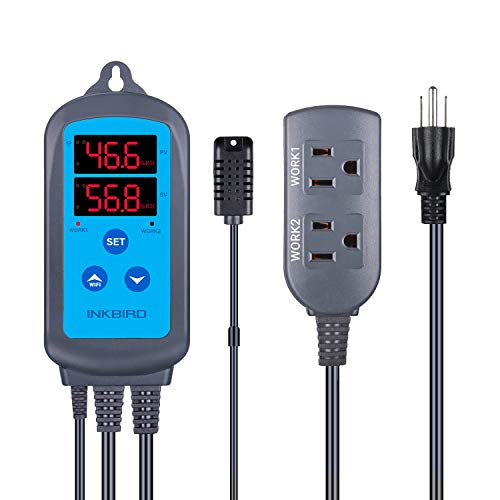
- Remote humidity control through INKBIRD app
- Dual outlets support humidifier and dehumidifier
- Includes high/low alarms and probe error alerts
Best For: Humidity-focused greenhouse and enclosure control
Smart Temperature Thermostat
meross Wi-Fi Temperature Controller

- Controls heating and cooling equipment
- Works with Apple Home, Alexa, and Google Home
- Includes scheduling, timers, and compressor protection
Best For: Temperature-controlled grow or fermentation setups
Easy Plug-In Climate Control
KETOTEK 120V Thermostat Outlet Plug

- No-wiring plug-in setup
- Auto heating and cooling modes
- Backlit LCD with sensor cable
Best For: Simple greenhouse temperature automation
Smart Multi-Device Climate Hub
AC Infinity Outlet AI+ Smart WiFi Strip
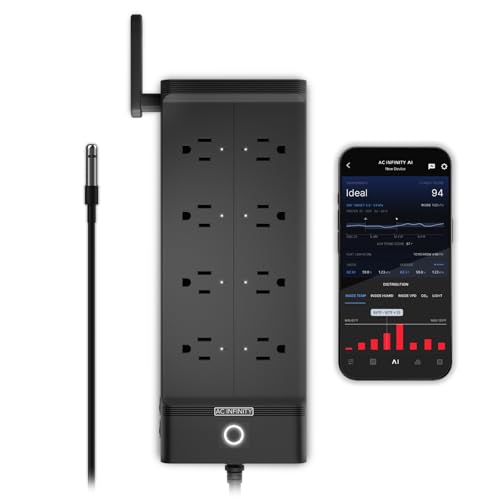
- Eight individually controlled outlets
- WiFi app with alerts and charts
- Dual-zone temp, humidity, and VPD tracking
Best For: Advanced multi-device greenhouse automation
Reliable Dual-Stage Control
Inkbird ITC-308 2-Stage Controller

- Dual relay for heat and cooling
- Dual display window for set and measured temp
- Buzzer alarms and compressor delay
Best For: Hands-on growers needing dependable two-stage control
AI Climate Hub
AC Infinity 4-Outlet Smart Controller

- Dual-zone temperature, humidity, and VPD tracking
- Independent smart outlets with AI targeting
- WiFi app control with alerts and data charts
Best For: Multi-device grow environments that need app control and advanced climate automation
Humidity Guard
Plug-In Temp/Humidity Controller
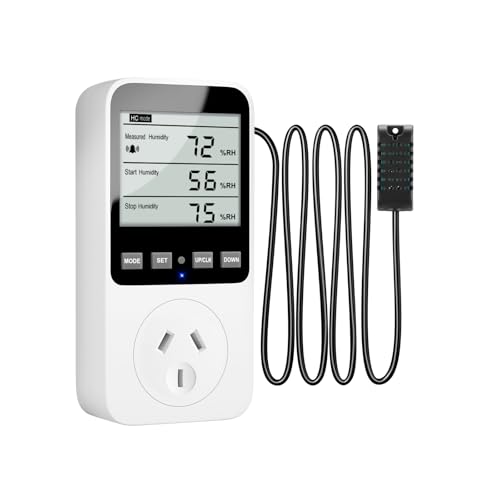
- Four modes: humidify, dehumidify, heat, cool
- Temperature and humidity alarms with audible alerts
- Calibration and settings memory for stable operation
Best For: Simple single-zone climate control for greenhouses, reptiles, and mushrooms
Dial-In Heat Control

- Simple two-knob temperature control
- Heating and cooling modes with LCD display
- 0.1°F resolution and outage memory
Best For: Hands-on growers and hobbyists who want easy temperature-only control
Smart Tent Automation Hub – VIVOSUN GrowHub Controller E42A+
If you want a smart greenhouse climate controller that can manage more than one part of your setup, the VIVOSUN GrowHub E42A+ is built around unifying fans, lighting, and environmental monitoring in one app-driven system. It reads temperature and humidity with a built-in gauge plus probe, then lets you program schedules, cycle timing, and growth-stage settings for a more controlled grow tent environment.
Best For: Growers who want one WiFi controller to coordinate lighting, ventilation, and basic climate monitoring in a tent.
Pros:
- Unifies compatible smart devices into one controller for simpler management
- Built-in temperature and humidity monitoring with app viewing and programming
- Supports automated light, fan, airflow, schedule, and cycle controls
- WiFi app control works from anywhere and adds Grow Recipes and other settings
Cons:
- Compatibility depends on supported VIVOSUN devices and some third-party gear
- Some setup flexibility may be more than casual users need for a basic grow space
Overall, this is a strong pick if you want to build a more coordinated grow environment instead of managing each device separately. It stands out for automation depth and multi-device control rather than being a simple plug-and-play thermostat.
Humidity Control Pick – Inkbird Wi-Fi Humidity Controller IHC-200
The Inkbird IHC-200 is a focused smart greenhouse climate controller for keeping humidity in range without a complicated install. It connects to 2.4GHz Wi-Fi, lets you check or adjust settings in the app, and supports both humidifying and dehumidifying equipment for tighter environmental control.
Best For: Users who need straightforward humidity automation for greenhouses, mushroom grows, reptile enclosures, or curing spaces.
Pros:
- Remote humidity monitoring and adjustment through the INKBIRD app
- Dual relay output supports both humidifier and dehumidifier equipment
- Plug-and-play design with no complicated installation required
- High/low humidity alarms plus probe error alerts for added protection
Cons:
- Controls humidity only, so you’ll need separate gear for temperature management
- Requires 2.4GHz Wi-Fi for app features
For growers who care most about humidity stability, this controller keeps the job simple and practical. It is less of an all-in-one climate hub and more of a dedicated humidity safeguard.
Smart Temperature Thermostat – meross Wi-Fi Temperature Controller
The meross smart temperature controller is a practical smart greenhouse climate controller for heating and cooling equipment that needs reliable temperature-based switching. It works with the Meross app and voice assistants, and it adds scheduling, countdowns, cycle timers, and temperature history for more flexible control.
Best For: Growers, fermenters, and reptile keepers who want app and voice control over temperature-based heating or cooling.
Pros:
- Supports heating and cooling equipment such as heaters and refrigerators
- Works with Apple Home, Alexa, Google Home, and SmartThings
- Offers scheduling, countdown timers, cycle timers, and temperature history
- Includes compressor protection, power-off memory, and sensor failure alerts
Cons:
- Temperature-focused design means humidity control requires a separate device
- Default control range may need app adjustment for some applications
This is a strong option if your climate control needs center on temperature rather than full environmental automation. The mix of app control, scheduling, and hardware safeguards makes it especially useful for equipment that should not cycle too aggressively.
Dual-Zone Climate Monitor – LUXBIRD LTC-318-W WiFi Controller
The LUXBIRD LTC-318-W is a flexible smart greenhouse climate controller with a split monitor-and-outlet design that makes it easier to place the display where you can actually see it. It supports remote app control, alerts, and dual-zone operation so you can manage temperature equipment and humidity equipment separately in one system.
Best For: Users who want visible, app-connected control over both temperature and humidity in a grow tent, terrarium, or greenhouse.
Pros:
- Split design separates the display from the outlet for easier placement
- Controls temperature and humidity equipment independently with dual outputs
- App control includes remote adjustments and alerts when conditions go out of range
- Offers Constant, Manual, Timer, and Cycle modes for different projects
Cons:
- Information provided does not list detailed range or load specs
- Best suited to users who want dual-zone control rather than a very basic plug-in solution
Compared with single-function controllers, this one is more adaptable for mixed climate jobs where both heat and humidity matter. Its split layout and mode options make it a good fit for people who want easy viewing plus more precise control.
Easy Plug-In Climate Control – KETOTEK 120V Thermostat Outlet Plug
If you want a simple smart greenhouse climate controller without rewiring, this KETOTEK thermostat outlet plug is a practical pick. It handles heating and cooling automatically, uses a 3-meter sensor for real-time temperature monitoring, and supports both Fahrenheit and Celsius for flexible setup in a greenhouse or other temperature-sensitive space.
Best For: Growers who want an easy plug-in temperature controller for basic heating and cooling automation.
Pros:
- Plug-in design requires no wiring, which makes setup fast and straightforward.
- Supports automatic heating/cooling switching with a wide temperature range.
- Backlit LCD makes readings easier to see in low light or from different angles.
- Includes temperature calibration and power-outage memory for stable operation.
Cons:
- Temperature control mode cannot run at the same time as the timer modes.
- Limited to a single outlet-style controller rather than a multi-device climate system.
Overall, this is a strong no-fuss option if you mainly need reliable temperature control for a greenhouse, incubator, terrarium, or similar setup. It keeps the feature set focused on core climate control rather than advanced automation.
Smart Multi-Device Climate Hub – AC Infinity Outlet AI+ Smart WiFi Strip
This AC Infinity smart greenhouse climate controller is built for users who want more than a basic thermostat. With eight individually controlled outlets, dual-zone temperature and humidity tracking, and AI targeting, it can coordinate multiple devices in a grow space, aquarium, terrarium, or home HVAC setup.
Best For: Advanced users who want app-based climate automation across multiple devices and zones.
Pros:
- Eight independent outlets let you program equipment separately or together.
- WiFi app control includes alerts, data charts, guides, and AI-powered insights.
- Dual-zone temperature, humidity, and VPD tracking adds more detailed monitoring.
- Supports heaters, lights, fans, pumps, and other compatible outlet devices.
Cons:
- More advanced than a basic plug-in thermostat, so it may be overkill for simple setups.
- Optional sensors for CO₂, hydro, and soil are sold separately.
- Higher-capacity system may be more than you need if you’re controlling just one device.
For a greenhouse or grow room that needs coordinated climate management, this is the most feature-rich option in the group. It is especially appealing if you want remote control, automation rules, and detailed environmental data in one unit.
Reliable Dual-Stage Control – Inkbird ITC-308 2-Stage Controller
The Inkbird ITC-308 is a straightforward smart greenhouse climate controller for users who need dependable heating and cooling management. Its dual-relay design can power refrigeration and heating equipment as conditions change, while the dual display window shows both the measured temperature and the set point at the same time.
Best For: Greenhouse, homebrew, or terrarium users who want an easy dual-stage temperature controller.
Pros:
- Dual relay supports both heating and cooling equipment.
- Dual display shows current and target temperature together.
- Buzzer alarms warn about high/low temperatures or sensor problems.
- Customizable temperature and compressor delay help protect connected equipment.
Cons:
- Maximum load is 1100W at 110V, so it is not suited for higher-power setups.
- Uses a basic button-control interface rather than app-based smart control.
As a practical temperature controller, this model focuses on the essentials: accurate sensing, two-stage output, and basic safety features. It is a good fit if you want reliable greenhouse climate control without needing WiFi or advanced automation.
AI Climate Hub – AC Infinity 4-Outlet Smart Controller
If you want a smart greenhouse climate controller that can coordinate more than one device at once, this AC Infinity outlet controller stands out. It combines dual-zone temperature, humidity, and VPD tracking with AI targeting, so you can manage heaters, fans, lights, pumps, and other outlet-powered gear from one app-based setup.
Best For: Growers and hobbyists who want app control, multi-device automation, and advanced climate monitoring in one controller.
Pros:
- Independent smart outlets let you run different equipment on separate climate triggers, schedules, or timers.
- AI targeting helps sync devices toward one environment in grow spaces, aquariums, terrariums, and home setups.
- Dual-zone temperature, humidity, and VPD monitoring adds more precise climate oversight.
- WiFi control includes real-time alerts, data charts, guides, and AI-powered insights.
Cons:
- Optional CO₂, hydro, and soil sensors are sold separately.
- May be more controller than needed if you only want a basic plug-and-play thermostat.
This is the most feature-rich option in the group, especially if you need a smarter way to coordinate multiple climate devices. The 1800W rating and surge protection make it practical for a serious multi-device setup.
Humidity Guard – Plug-In Temp/Humidity Controller
This smart greenhouse climate controller is a straightforward plug-in solution for managing humidity and temperature without a complicated setup. It combines humidification, dehumidification, heating, and cooling modes in one outlet switch, making it useful for spaces that need automatic climate support.
Best For: Users who want a simple all-in-one controller for greenhouse, mushroom, reptile, or terrarium climate management.
Pros:
- Four modes cover humidifying, dehumidifying, heating, and cooling in one unit.
- Custom high/low alarms add audible alerts when temperature or humidity goes out of range.
- Calibration features help fine-tune readings for better control.
- Settings are saved automatically if the sensor is disconnected or a short circuit occurs.
Cons:
- It is a wired plug-in controller, not an app-based smart home device.
- Best suited to single-zone control rather than managing multiple independent outlets.
For buyers who want direct temperature and humidity control with clear alarms, this is a practical choice. Its 1800W support and simple interface make it easy to use in everyday controlled-environment setups.
Dial-In Heat Control – WILLHI WH2408 Thermostat Plug
If you need a basic smart greenhouse climate controller for heating or cooling, the WILLHI WH2408 keeps things simple with two knobs and a clear LCD display. It is designed for temperature-only control, making it a practical pick for seedling mats, terrariums, aquariums, and other environments where precise thermal switching matters more than app features.
Best For: Buyers who want a straightforward temperature controller with manual adjustment and broad hobby use.
Pros:
- Easy two-knob setup avoids complicated menus and speeds installation.
- Heating and cooling modes support a wide range of uses, from greenhouses to fermentation.
- 0.1°F control resolution allows fine temperature adjustments.
- Settings are memorized during power outages for less disruption.
Cons:
- Controls temperature only, so it does not manage humidity.
- 1200W rating is lower than some higher-capacity alternatives.
This is a solid no-frills thermostat plug when you want reliable temperature switching without extra complexity. Its probe-based design and broad temperature range make it versatile, but it is best for users who do not need a full climate platform.
How We Picked the Best Smart Greenhouse Climate Controller
We focused on controllers that are useful for real greenhouse conditions, not just app features on paper. Priority went to accurate sensing, dependable switching, straightforward setup, and control options that match common growing needs like heating, cooling, humidity, and timed cycling.
We also considered whether a Smart Greenhouse Climate Controller supports practical use cases such as remote monitoring, dual-zone management, and compatibility with home automation platforms. Build quality, outlet capacity, and clear interfaces mattered too.
Quick Comparison
Some models are best for basic temperature switching, while others offer broader automation with humidity logic, scheduling, and multi-outlet control. If you want simple plug-and-play temperature regulation, a single-function thermostat may be enough. If you want tighter climate management across several devices, a networked controller or power strip-style unit is usually the better fit.
Key Buying Factors for a Smart Greenhouse Climate Controller
Control Type
Decide whether you need temperature only, humidity only, or a full environment controller. A basic thermostat is ideal for heaters and fans, while more advanced units can coordinate humidifiers, dehumidifiers, and circulation equipment.
Output Capacity
Check the amperage and wattage rating before buying. Heaters, grow lights, and humidifiers can draw more power than expected, so the controller must be rated for the devices you plan to plug in.
Sensor Accuracy and Placement
Reliable readings depend on a good sensor and proper placement. In a greenhouse, where sun exposure and airflow can vary, accurate sensing is essential for avoiding short cycling or unstable climate swings.
Smart Features
App access, Wi-Fi connectivity, alerts, schedules, and automation rules are the main reasons buyers choose a Smart Greenhouse Climate Controller. These features help you react faster and fine-tune conditions without being on-site.
Compatibility and Ease of Use
Some controllers work best within a specific ecosystem, while others are simple standalone units. Choose the option that matches your comfort level and the equipment you already use.
Who Should Buy Which Smart Greenhouse Climate Controller?
If you want the simplest setup, choose a basic plug-in thermostat or humidistat. If you need remote monitoring and automation, look at Wi-Fi-enabled models with app control. Growers managing multiple devices or separate climate zones should consider a controller with several individually managed outlets. For hobby growers, reptile enclosures, fermenting, and small greenhouse projects, a compact controller may be enough. For more advanced growers, a feature-rich system can offer better consistency and less manual adjustment.
In short, the best choice depends on how much automation you want, how many devices you need to control, and whether you need temperature, humidity, or both. The right controller should make your greenhouse easier to manage, not more complicated.