As we move closer to 2026, optimizing your energy usage is more important than ever. Smart home energy management hubs can help you monitor and control your energy consumption effectively. With options like the Emporia Vue 3 and SIEMENS Inhab, you’ll find powerful tools designed for convenience and efficiency. But with so many choices available, how do you know which one fits your needs best? Let’s explore the top contenders that could transform your energy management.
Emporia Vue 3 Home Energy Monitor
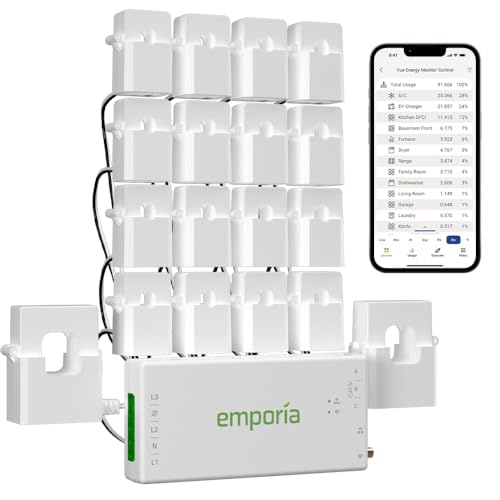
If you’re looking for a reliable and efficient way to monitor your home’s energy usage, the Emporia Vue 3 Home Energy Monitor is an excellent choice. This UL Listed device installs easily in your circuit panel using clamp-on sensors, making it compatible with various electrical systems. With 24/7 energy management, you can automate settings to save money and conserve energy. The app provides real-time data and actionable notifications, keeping you informed about your usage. Plus, with sixteen branch sensors, you can accurately monitor essential appliances. It’s a smart investment for optimizing your energy consumption and enhancing home automation.
Best For: Homeowners seeking an efficient and reliable solution for monitoring and managing their energy consumption.
Pros:
- Real-time monitoring allows users to track energy usage instantly through a mobile app or web interface.
- Easy installation in various electrical systems using clamp-on sensors, making it user-friendly for most homeowners.
- Energy-saving features enable automation of settings for peak demand, time of use, and solar consumption, helping to reduce costs.
Cons:
- Requires a 2.4 GHz WiFi connection for real-time data access, which may limit functionality in some homes with different network setups.
- Additional sensors may be needed for full monitoring capabilities, potentially increasing overall cost.
- The data retention limits for 1-second and 1-minute data may not meet the needs of users requiring longer historical tracking.
Aeotec Smart Home Hub (Compatible with Alexa & Google Assistant)
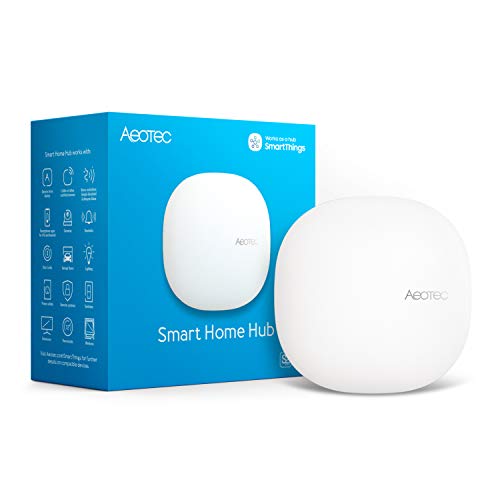
The Aeotec Smart Home Hub stands out as an ideal choice for tech-savvy homeowners looking to streamline their smart devices. This versatile hub functions as a SmartThings Hub, Z-Wave, Zigbee, and Matter Gateway, making it compatible with thousands of devices. You can easily connect and control your lighting, comfort settings, and energy usage through Alexa or Google Assistant. The SmartThings app allows you to create custom automations, enhancing your home’s efficiency. With quick setup via Wi-Fi or wired Ethernet, the Aeotec Hub simplifies your smart home experience, ensuring reliability and speed for your connected lifestyle.
Best For: Tech-savvy homeowners looking to streamline and automate their smart home devices.
Pros:
- Supports a wide range of devices with compatibility for SmartThings, Z-Wave, Zigbee, and Matter.
- Easy setup process in minutes through the SmartThings app, allowing for quick integration into your home.
- Custom automation capabilities enhance home efficiency and can run locally for improved speed and reliability.
Cons:
- Primarily designed for use in North America, which may limit international usability.
- Some users may find the initial learning curve for the SmartThings app challenging.
- Limited support for older smart home devices that do not comply with newer standards like Matter.
Kasa Smart Plug Power Strip HS300 with 6 Smart Outlets and 3 USB Ports
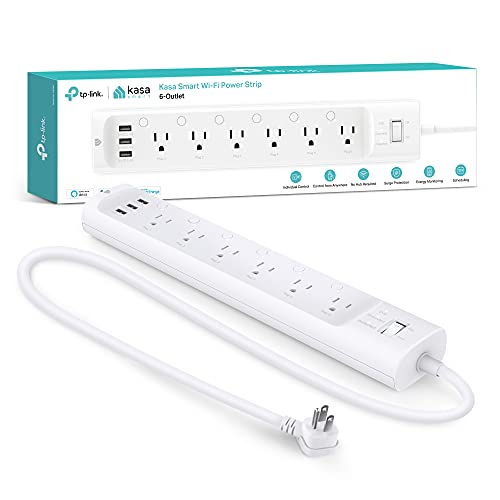
For tech-savvy homeowners looking to maximize their energy efficiency, the Kasa Smart Plug Power Strip HS300 stands out with its six smart outlets and three USB ports. You can independently control each outlet using the Kasa Smart app, allowing you to monitor energy consumption and shut off devices that drain power. Plus, it supports voice commands via Alexa, Google Assistant, and Microsoft Cortana for hands-free operation. With ETL certified surge protection, your sensitive electronics are safe from power surges. This power strip makes managing your home energy usage simple and effective, ensuring you stay in control of your devices.
Best For: Tech-savvy homeowners looking to maximize energy efficiency and control their devices remotely.
Pros:
- Independently control each of the six outlets through the Kasa Smart app for tailored energy management.
- Voice activation capability allows for hands-free operation with Alexa, Google Assistant, and Microsoft Cortana.
- ETL certified surge protection safeguards sensitive electronics from potential damage due to power surges.
Cons:
- Requires Wi-Fi for full functionality, limiting usability in areas with poor connectivity.
- App-dependent control may be inconvenient for users who prefer traditional switches.
- Limited USB ports (only three) may not be sufficient for households with multiple USB-powered devices.
Tapo Smart Wi-Fi Power Strip with 6 Smart Outlets and 3 USB Ports

Designed for those who crave efficiency and control in their home or office, the Tapo Smart Wi-Fi Power Strip with 6 Smart Outlets and 3 USB Ports elevates energy management to a new level. You can connect up to 9 devices simultaneously, enjoying seamless control through major platforms like Alexa and Google Home. Monitor energy consumption per outlet, schedule devices to save on costs, and benefit from overcharge prevention. With a slim design for discreet placement and local control via the Tapo app, you can automate your routine confidently, knowing TP-Link prioritizes cybersecurity for your peace of mind.
Best For: Those seeking efficient energy management and control over multiple devices in their home or office settings.
Pros:
- Individually controlled outlets allow for customized power management for each device.
- Energy monitoring features provide insights to help reduce electricity costs.
- Voice control compatibility with major smart home platforms enhances convenience.
Cons:
- Limited USB ports compared to some competitors may not suffice for heavy users.
- Dependence on Wi-Fi means functionality can be affected during internet outages.
- Setup complexity may deter users less familiar with smart home technology.
SIEMENS Inhab Smart Home Energy Monitor

Looking to take control of your home’s energy usage? The SIEMENS Inhab Smart Home Energy Monitor is your answer. With 16-50Amp circuit level sensors and 2-200Amp main sensors, it delivers real-time electricity monitoring. You can track your energy consumption 24/7, measuring usage directly at the panel and individual circuits. Set personalized alerts to catch energy-saving opportunities or detect unusual behaviors, like an oven left on. Plus, it boasts advanced features like Time of Use Management and Peak Demand Management, ensuring you optimize your energy usage effectively. It’s CE marked and UL Listed for safety, giving you peace of mind.
Best For: Homeowners and renters looking to monitor and optimize their energy usage effectively.
Pros:
- Real-time electricity monitoring at both the main and circuit level.
- Custom alerts for energy-saving opportunities and unusual behaviors.
- Advanced energy management features like Time of Use and Peak Demand Management.
Cons:
- Installation may require professional assistance for optimal setup.
- Higher upfront cost compared to basic energy monitors.
- Compatibility limitations with certain older electrical systems.
Aeotec Smart Home Hub2 – V4
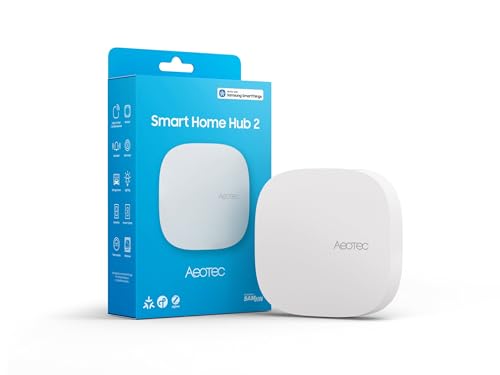
Aeotec Smart Home Hub2 – V4 stands out as the ideal choice for those seeking a versatile and user-friendly smart home hub. It functions as a SmartThings Hub and Matter Gateway, ensuring compatibility with thousands of devices, including lighting, sensors, and thermostats. You can easily control your devices using Amazon Alexa or Google Assistant with simple voice commands. Setup is a breeze via Wi-Fi or wired Ethernet, making it perfect for any living space. Plus, you can create custom routines for energy savings and comfort, with many automations functioning offline if your internet goes down. Enjoy seamless smart home management!
Best For: Those looking for a user-friendly and versatile smart home hub that supports a wide range of devices and voice control options.
Pros:
- Compatible with thousands of devices through SmartThings and Matter standards.
- Easy setup via Wi-Fi or wired Ethernet, suitable for various living spaces.
- Allows for custom automation routines that can function offline during internet outages.
Cons:
- Does not support Z-Wave devices, limiting compatibility with some smart home products.
- May require additional configurations for optimal performance with certain devices.
- Voice control functionality relies on compatible assistants like Alexa and Google Assistant, which may not suit all users.
Smart Home Energy Monitor with Circuit Sensor and Real-Time Tracking

If you’re serious about managing your energy consumption, the Refoss Smart Home Energy Monitor stands out with its real-time tracking capabilities and circuit sensor technology. It supports two main circuit sensors and 16 branch sensors, allowing precise monitoring of your home’s energy use. With 24/7 tracking via the Refoss app, you can optimize appliance usage and potentially cut energy bills by 10%-20%. The monitor integrates seamlessly with solar systems, automating usage for maximum efficiency. Plus, you’ll receive smart alerts for unusual spikes, helping you maintain control over your energy consumption while keeping your data private and secure.
Best For: Homeowners looking to optimize energy consumption and reduce utility bills through real-time monitoring and automation.
Pros:
- Real-time tracking of energy consumption with a user-friendly app for easy management.
- Integration with solar systems to maximize energy efficiency and savings.
- Smart alerts for unusual energy spikes help prevent potential malfunctions and optimize usage.
Cons:
- Requires firmware updates for compatibility with Home Assistant, which may be inconvenient for some users.
- No API support available, limiting advanced integrations with other smart home devices.
- Data is stored locally, which may not suit users who prefer cloud-based solutions for remote access.
Eve Energy Outlet – Smart Outlet & Power Meter with App & Voice Control

The Eve Energy Outlet stands out as an ideal choice for tech-savvy homeowners who crave effortless control over their devices. With this smart outlet, you can individually manage two power outlets via voice commands or an intuitive app. Enjoy remote control of your lights and appliances, optimizing energy usage based on your presence. It’s Matter-enabled, ensuring compatibility across major platforms like Apple Home, Alexa, and Google Home. Setup is a breeze, and its UL certification guarantees safety. Plus, with a commitment to privacy, there’s no cloud dependency—just local communication for peace of mind in your smart home.
Best For: Tech-savvy homeowners seeking effortless control over their devices and optimized energy usage.
Pros:
- Individually controls two power outlets, allowing for flexible management of multiple devices.
- Matter-enabled for compatibility with major smart home platforms like Apple Home, Alexa, and Google Home.
- No cloud dependency ensures privacy and local communication for enhanced security.
Cons:
- Requires a compatible hub for integration with chosen smart home platforms.
- Limited to devices that support iOS/iPadOS 16.4 (or later) or Android 8.1 (or later).
- Initial setup may be challenging for users unfamiliar with smart home technology.
Govee Smart Plug with Energy Monitoring (4 Pack)

Looking to take control of your energy consumption? The Govee Smart Plug with Energy Monitoring (4 Pack) is your perfect tool. With real-time monitoring through the Govee Home App, you can track power, current, and voltage, helping you save energy effectively. Enjoy stable WiFi and Bluetooth connectivity to control your appliances remotely—just remember, it doesn’t support 5G Wi-Fi. Plus, it works seamlessly with Alexa and Google Assistant for voice control. Schedule your devices to turn on or off automatically, maximizing savings while ensuring safety with ETL and FCC certifications. Upgrade your energy management today!
Best For: Individuals and families looking to monitor and manage their energy consumption efficiently.
Pros:
- Real-time energy monitoring through the Govee Home App helps track consumption effectively.
- Compatible with Alexa and Google Assistant for convenient voice control.
- Scheduling feature allows for automated on/off control of appliances, promoting energy savings.
Cons:
- Does not support 5G Wi-Fi, which may limit connectivity options.
- Requires a stable WiFi connection for remote control functionality.
- Limited to high-power appliances up to 15A, which may restrict usage for some devices.
TP-Link Tapo Smart Plug Wi-Fi Mini (2-Pack)

For those enthusiastic to optimize their energy usage without sacrificing convenience, the TP-Link Tapo Smart Plug Wi-Fi Mini (2-Pack) is an excellent choice. With energy monitoring features and programmable scheduling, you can track your power consumption and automate devices during off-peak hours to save on costs. It integrates seamlessly with Alexa, Google Assistant, and Samsung SmartThings, letting you control everything with your voice or remotely via the Tapo app. Plus, safety features like auto-shutoff and smart charging guarantee your devices operate safely and efficiently. This smart plug is user-friendly, making energy management straightforward and effective.
Best For: Individuals looking to enhance energy efficiency in their homes while enjoying the convenience of smart technology.
Pros:
- Energy Monitoring: Provides insightful tracking and estimates of energy costs, helping to optimize power usage.
- Voice Control: Compatible with Alexa and Google Assistant for hands-free operation.
- User-Friendly App: The intuitive Tapo app allows for easy management and control of devices from anywhere.
Cons:
- Limited to 2.4G Wi-Fi: Only supports 2.4G Wi-Fi, which may limit connectivity options in some environments.
- Requires Smart Home Integration: May not be fully functional without integration with smart home systems.
- Max Load Limit: Limited to 15A/1800W, which might not suffice for high-power devices.
Factors to Consider When Choosing a Smart Home Energy Management Hub
When you’re choosing a smart home energy management hub, there are several key factors to keep in mind. You’ll want to evaluate compatibility with your existing devices, energy monitoring features, and how easy it is to install. Additionally, think about automation capabilities and voice control options to enhance your home’s efficiency.
Compatibility With Devices
As you explore options for a smart home energy management hub, guaranteeing compatibility with various devices is vital. Look for hubs that support protocols like Zigbee, Z-Wave, and Matter, which allow you to connect a wide range of devices effortlessly. It’s also important to verify if the hub integrates with popular voice assistants like Amazon Alexa, Google Assistant, and Apple Home for seamless control. Consider the hub’s ability to manage devices across different brands and ecosystems, creating a unified smart home experience. Additionally, check if it can handle both wired and wireless devices to meet your diverse energy management needs. Finally, choose hubs with local automation capabilities to make sure your devices function reliably, even without internet access.
Energy Monitoring Features
How can energy monitoring features transform your smart home experience? They provide real-time tracking of your electricity usage, letting you see your consumption throughout the day. With detailed insights into individual circuit usage, you can pinpoint high-energy appliances and adjust your habits for better efficiency. Many systems offer consumption statistics over various timeframes, like daily or monthly reports, helping you analyze trends and make informed decisions. You can also set up alerts for unusual energy spikes or potential malfunctions, allowing for proactive management and maintenance. Plus, if you have solar energy, integration features let you monitor both production and consumption, maximizing efficiency and ultimately reducing your utility bills.
Ease of Installation
Choosing a smart home energy management hub can be overwhelming, but focusing on ease of installation can simplify the process. Look for hubs that feature clamp-on sensors, eliminating the need for complex wiring. Verify compatibility with your home’s setup by selecting devices that support both single-phase and multi-phase electrical systems. Opt for systems that provide straightforward app-based installation guidance, so you can quickly set up the hub using Wi-Fi or wired connections. User-friendly interfaces are a must; avoid products requiring additional hubs or complicated configurations. Finally, check for UL Listed or certified devices, as these often indicate a commitment to safety and reliable, simpler installation. You’ll appreciate a hassle-free setup that gets you up and running quickly.
Automation Capabilities
When selecting a smart home energy management hub, considering automation capabilities is vital for maximizing your home’s efficiency. Look for hubs that let you create custom automations, coordinating devices like lights, sensors, and switches for seamless integration. It’s important to choose hubs that support local automations, guaranteeing they function offline for added reliability during internet outages. Evaluate features that allow you to schedule devices to turn on or off based on specific routines, optimizing energy usage and cutting costs. Also, verify compatibility with various protocols—like Zigbee, Z-Wave, and Matter—so you can connect multiple smart devices across brands. Finally, check if the hub offers personalized notifications about energy usage, empowering you to make informed decisions and automate energy-saving actions.
Voice Control Options
In today’s smart homes, voice control options have become a key factor in enhancing your energy management experience. Many hubs support popular platforms like Amazon Alexa and Google Assistant, letting you manage devices hands-free. With voice commands, you can easily turn devices on or off, adjust settings, or activate routines, adding convenience to your daily life. When choosing a hub, consider its compatibility with various voice assistants, as this can expand your range of devices and create a unified smart home environment. Some systems even offer multi-platform voice control, allowing you to switch between assistants based on your preference. Utilizing voice control not only simplifies management but can also lead to more efficient energy usage by enabling quick responses to consumption alerts.
Data Privacy Measures
As you explore options for a smart home energy management hub, it’s important to prioritize data privacy measures that protect your information. Look for hubs that facilitate local communication, reducing reliance on cloud services and enhancing security. Opt for devices that don’t require user registration or tracking, ensuring a more private experience. Compliance with privacy standards like GDPR is vital, as it guarantees responsible data handling. Always review the manufacturer’s privacy policy to understand how your data is collected and used, focusing on their commitment to user anonymity. Finally, choose products that utilize secure communication protocols, such as Thread or Zigbee, to safeguard your data from potential breaches during transmission. Prioritizing these factors will enhance your smart home’s privacy.