Shopping for a smart thermostat without a C wire can make an upgrade much easier, especially in older homes where the existing thermostat wiring is limited. The best models combine flexible power options with dependable Wi-Fi, scheduling, app control, and compatibility with your heating and cooling system.
We compared 10 promising options across installation requirements, controls, smart-home support, display design, and everyday value. Use the guide below to narrow the list based on your wiring, HVAC setup, and preferred features.
Best 10 Smart Thermostats Without a C Wire Picks for 2026
Best Overall

- No C-wire required in most applications
- DIY setup with built-in level and app guidance
- Works with major smart-home platforms
Best For: Most homes seeking simple installation and broad compatibility
Best for Google Homes

- Works without a C wire in most homes
- Google Home app scheduling and remote control
- HVAC monitoring and energy-saving suggestions
Best For: Google Home households with compatible HVAC systems
Best for Alexa Users

- Alexa app supports DIY installation
- Home, away, and sleep scheduling
- Presence-based control with select Alexa devices
Best For: Alexa households wanting routines and remote control
Best for C-Wire-Free Flexibility
ecobee Smart Thermostat Enhanced
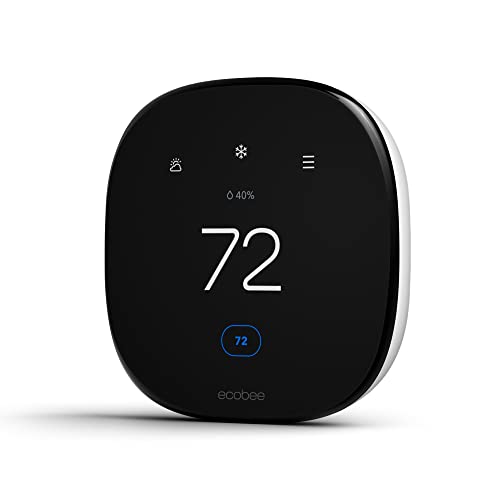
- Includes a Power Extender Kit for no-C-wire systems
- Occupancy sensing adjusts comfort automatically
- Works with major smart-home platforms
Best For: Feature-focused homes needing a supplied no-C-wire power solution
Best DIY Pick

- Works without a C wire in most homes
- Easy DIY setup with built-in level
- App, voice, scheduling, and geofencing controls
Best For: DIY-focused homeowners seeking flexible smart control
Best Color Display Value
WiFi LCD Color Smart Thermostat

- Advertises no-C-wire installation
- Color LCD screen with touch control
- App and voice control for heating and cooling
Best For: Buyers wanting a colorful display and basic remote control
Best Ecosystem Support
ecobee Smart Thermostat Essential

- No-C-wire setup with a separately sold PEK
- Works with Alexa, Google Assistant, and HomeKit
- Energy tracking and automatic scheduling
Best For: Connected-home users wanting broad ecosystem support
Best for Room-by-Room Comfort
Honeywell Home T9 WiFi Smart Thermostat
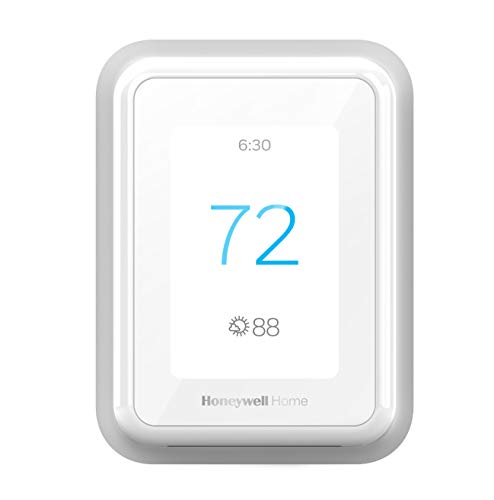
- Optional sensors focus comfort where it matters
- App, geofencing, scheduling, and voice control
- Verify C-wire and system compatibility
Best For: Homes wanting room-focused control and smart scheduling
Best No-C-Wire Feature Match
Smart WiFi Voice-Control Thermostat
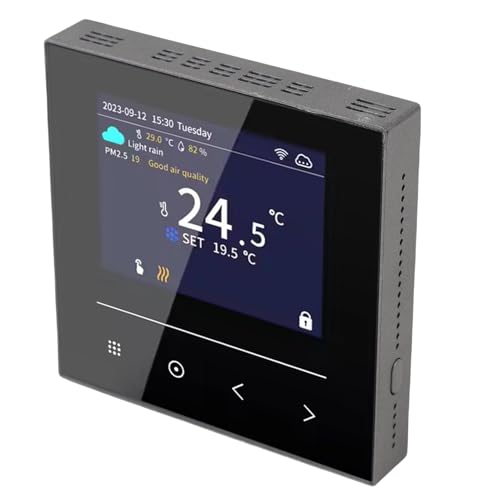
- Advertised as requiring no C wire
- Color LCD with app and voice control
- Positioned for programmable floor heating
Best For: Floor-heating users seeking a no-C-wire smart option
Best Overall – Sensi ST55
The Sensi ST55 is a practical choice for shoppers seeking smart thermostats without a c wire. It does not require a common wire in most applications, and its built-in level, guided app installation, and traditional button-based design make the switch from a conventional thermostat straightforward.
Best For: Most homes wanting an easy DIY thermostat with broad smart-home compatibility.
Pros:
- Common wire is not required in most applications.
- Works with Alexa, Apple HomeKit, Google Assistant, SmartThings, and Vera.
- Includes flexible scheduling, remote access, usage reports, alerts, and filter reminders.
- Designed to fit the same space as a traditional thermostat, reducing the need for wall repairs.
Cons:
- Compatibility still depends on the home’s HVAC equipment.
- The no-C-wire claim applies to most applications rather than every installation.
With privacy-focused features, a three-year warranty, and energy-saving tools, the ST55 is a well-rounded option for homeowners who want a familiar thermostat interface and a relatively simple installation.
Best for Google Homes – Nest Thermostat
Google Nest Thermostat - Smart Thermostat for Home - Programmable Wifi Thermostat - Snow
Check Price On AmazonThe Google Nest Thermostat is designed for smart thermostats without a c wire in most homes, but buyers should verify compatibility before ordering. Google specifically notes that heating-only, cooling-only, zone-controlled, and some heat-pump systems may need a C wire or compatible power accessory.
Best For: Google Home users who want scheduling, remote control, and automated energy-saving suggestions.
Pros:
- Designed to work without a C wire in most homes.
- Controls temperature through the Google Home app and compatible voice assistants.
- Offers scheduling, Savings Finder recommendations, HVAC monitoring, and maintenance alerts.
- ENERGY STAR certified and compatible with Matter-certified voice assistants.
Cons:
- Some heating, cooling, zone-control, and heat-pump systems may require a C wire or accessory.
- Compatibility should be checked before purchase.
The Nest Thermostat is appealing for households already using Google Home, though its system-specific C-wire requirements make the compatibility check especially important.
Best for Alexa Users – Amazon Smart Thermostat
Amazon Smart Thermostat – Save money and energy - Works with Alexa and Ring - C-wire required
Check Price On AmazonThe Amazon Smart Thermostat is a compelling option for Alexa households comparing smart thermostats without a c wire, with installation guidance provided through the Alexa app. Before buying, confirm that the thermostat suits your HVAC setup, since the supplied product information does not specify universal C-wire-free compatibility.
Best For: Alexa users who want app-based control, routines, and automatic temperature adjustments.
Pros:
- Alexa app guides the DIY installation process.
- Supports home, away, and sleep schedules.
- Can use select Alexa devices for temperature readings or presence detection.
- Offers remote control through the Alexa app and may qualify for utility rebates.
Cons:
- The supplied details do not confirm that it works without a C wire in every application.
- Its strongest smart-home integration is centered on Alexa and Ring.
This model makes the most sense for Alexa-centered homes that value automated routines and straightforward app control. Check HVAC compatibility and wiring requirements before installation.
Best for C-Wire-Free Flexibility – ecobee Smart Thermostat Enhanced
The ecobee Smart Thermostat Enhanced is a strong choice among smart thermostats without a c wire because it includes a Power Extender Kit for homes that lack one. It also includes a trim kit and supports a wide range of HVAC equipment, although ecobee recommends using its compatibility checker before installation.
Best For: Homeowners wanting advanced comfort automation and a supplied solution for systems without a C wire.
Pros:
- Includes a Power Extender Kit for homes without a C wire.
- Compatible with 90% of HVAC systems according to the supplied notes.
- Built-in occupancy sensing can adjust comfort when people are home or away.
- Works with Alexa, Google Assistant, Apple HomeKit, and SmartThings.
Cons:
- Compatibility should still be confirmed with ecobee’s checker.
- Optional SmartSensors for room-by-room comfort are sold separately.
- Its feature set may be more than needed for shoppers seeking basic thermostat control.
The included Power Extender Kit gives the ecobee an important advantage for C-wire-free installations, while occupancy sensing, humidity adjustments, and extensive platform support make it the most feature-rich option in this group.
Best DIY Pick – Sensi Lite Smart Thermostat
The Sensi Lite is a practical choice for shoppers comparing smart thermostats without a C wire. It is designed to work without one in most homes, while offering app, touch, and voice control, flexible scheduling, geofencing, remote access, and usage reports. Some heating-only, cooling-only, and heat-pump systems may still require a C wire or compatible power accessory.
Best For: DIY-focused homeowners who want broad smart-home compatibility and energy-saving controls.
Pros:
- Works without a C wire in most homes.
- Includes a built-in level and step-by-step installation guidance.
- Supports Alexa, Google Assistant, and SmartThings.
- Offers scheduling, geofencing, remote access, and usage reports.
Cons:
- Some heating-only, cooling-only, and heat-pump systems may need a C wire or power accessory.
- Compatibility should be checked before installation.
Choose the Sensi Lite when easy installation and privacy-conscious smart control matter most. Its battery-or-C-wire power design is flexible, but system compatibility remains important.
Best Color Display Value – WiFi LCD Color Smart Thermostat
This WiFi thermostat is aimed at shoppers seeking smart thermostats without a C wire and a straightforward color-screen experience. It advertises no-C-wire installation, mobile app access, touch operation, and voice control for heating and cooling management in homes, offices, or other spaces.
Best For: Buyers who prioritize a color LCD display and basic app-based temperature control.
Pros:
- Advertises installation without a C wire.
- Uses a vibrant LCD color screen for local adjustments.
- Supports mobile app, touch, and voice control.
- Designed for both heating and cooling cycles.
Cons:
- Supplied details do not identify specific smart-home ecosystem compatibility.
- The product information provides limited system-compatibility details.
- Brand and model information is less established than the named alternatives.
This model may suit a buyer who wants a colorful interface and remote control on a budget. Confirm HVAC compatibility and the installation requirements before ordering, especially for a less-documented system.
Best Ecosystem Support – ecobee Smart Thermostat Essential
The ecobee Smart Thermostat Essential is a strong option among smart thermostats without a C wire because it supports installation with an separately sold Power Extender Kit. It combines a color touchscreen, app control, scheduling, energy monitoring, and compatibility with Alexa, Google Assistant, and Apple HomeKit.
Best For: Connected-home users who want broad ecosystem support and energy-focused automation.
Pros:
- Supports no-C-wire installations with the separately sold Power Extender Kit.
- Works with Alexa, Google Assistant, and Apple HomeKit.
- Offers scheduling, auto-away, energy tracking, and eco+ features.
- Supports many 24 VAC systems, including conventional, heat-pump, and boiler setups.
Cons:
- The Power Extender Kit is sold separately for homes without a C wire.
- Compatibility should be verified with ecobee’s checker before purchase.
- Optional SmartSensors are sold separately.
The ecobee is a good fit when smart-home integration and automation are higher priorities than an entirely self-contained no-C-wire installation. Budget for the Power Extender Kit if your system lacks a C wire.
Best for Room-by-Room Comfort – Honeywell Home T9 WiFi Smart Thermostat
The Honeywell Home T9 is a strong option for shoppers comparing smart thermostats without a c wire, but compatibility needs careful checking: the supplied notes identify C-wire requirements and include a power adapter for many installations. It supports Wi-Fi control, voice assistants, scheduling, geofencing, and optional room sensors.
Best For: Homes that want room-focused temperature control, remote access, and broad forced-air, hot-water, steam, or compatible heat-pump support.
Pros:
- Supports Smart Room Sensors for focusing comfort across multiple rooms.
- Offers app control, geofencing, scheduling, alerts, and energy reports.
- Works with Alexa and Google Assistant and includes a power adapter for many homes.
Cons:
- C-wire compatibility must be verified before purchase; the product is described as C-wire required.
- Does not work with 120–240V electric baseboard heat.
- Room sensors are sold separately.
The T9 is feature-rich and especially appealing if you want sensor-based comfort. However, confirm your wiring and heating system first, particularly for heating-only oil systems.
Best No-C-Wire Feature Match – Smart WiFi Voice-Control Thermostat
This thermostat is marketed specifically for smart thermostats without a c wire, making it a direct option for shoppers seeking a no-C-wire installation. It adds Wi-Fi app access, voice control, programmable heating, and a color LCD screen, though the supplied details emphasize floor-heating applications.
Best For: Users seeking a programmable Wi-Fi thermostat for floor-heating systems in a home, office, or hotel.
Pros:
- Advertised as requiring no C wire.
- Provides app, touch, and voice control over Wi-Fi.
- Includes a color LCD display and programmable temperature settings.
- Supplied components include a cable, screws, and user manual.
Cons:
- The notes provide limited information about supported heating and cooling system types.
- Its listed precision-control use is for floor-heating systems, so broader compatibility should be confirmed.
- The product details do not identify named voice assistants.
This is the most explicitly no-C-wire-focused choice in the group. Before buying, confirm that your system matches its floor-heating positioning and that the installation instructions fit your wiring.
Best for Customizable Scheduling – Honeywell Home RTH9585WF Wi-Fi Thermostat
The Honeywell Home RTH9585WF offers a customizable color touchscreen, seven-day programming, Wi-Fi access, and voice-assistant support. It is not a straightforward no-C-wire model—the supplied notes state that a C wire is required—so treat it as a comparison option only after confirming your existing wiring or adapter needs.
Best For: Homes with compatible C-wire installations that want flexible schedules, energy reporting, and a color touchscreen.
Pros:
- Provides flexible seven-day programming and fan-control options.
- Features a customizable, easy-to-read color touchscreen.
- Supports Alexa, Google Home, and mobile app control.
- Includes Energy Star certification and monthly energy reports.
Cons:
- C wire is required, so it may not suit homes specifically seeking no-C-wire installation.
- Does not work with 120–240V electric baseboard heat.
- Compatibility should be checked for heating-only oil systems and other equipment.
This model makes sense when scheduling flexibility and display customization matter more than avoiding a C-wire installation. Its system compatibility and wiring requirements should be confirmed before ordering.
How We Picked the Best Smart Thermostats Without a C Wire
We focused on thermostats that can work in homes without a conventional common wire or that offer a practical alternative, such as a power adapter, included accessory, battery-based operation, or clearly documented compatibility. We also considered installation difficulty, HVAC support, Wi-Fi reliability, app quality, scheduling, voice-assistant compatibility, and the availability of room sensors.
Because no thermostat works with every system, verify the product’s wiring requirements before buying. Heat pumps, multi-stage systems, dual-fuel setups, electric baseboard heaters, and systems with humidifier or dehumidifier controls may require additional compatibility checks or professional installation.
Quick Comparison
| What to Compare | Why It Matters |
|---|---|
| Power method | Determines whether the thermostat can operate without a C wire and whether an adapter is needed. |
| HVAC compatibility | Confirms support for your heating, cooling, heat-pump, or multi-stage configuration. |
| Smart-home support | Shows whether the thermostat works with Alexa, Google Assistant, Ring, or other platforms. |
| Control options | Includes touchscreen controls, mobile apps, schedules, geofencing, and voice commands. |
| Sensor support | Helps manage comfort in specific rooms instead of relying only on the thermostat’s location. |
Key Buying Factors for Smart Thermostats Without a C Wire
Confirm the Power Solution
“No C wire required” can mean different things. Some models use batteries, while others need a proprietary power accessory or an adapter installed at the furnace. Check what is included and whether installation changes the wiring at your HVAC control board.
Check Compatibility Before Installation
Match the thermostat to your system type, number of heating and cooling stages, and available wires. If your system uses uncommon equipment or has limited labeling, photograph the existing wiring and consult the manufacturer’s compatibility checker.
Prioritize the Controls You Will Use
App scheduling is useful for routine energy savings, while geofencing can adjust settings when you leave home. A clear display is better for local adjustments, and voice control is convenient when the thermostat is in an awkward location.
Consider Sensors and Energy Features
Room sensors can improve comfort in bedrooms, offices, or areas that run warmer than the hallway. Look for usage reports, adaptive scheduling, temperature limits, and energy-saving recommendations if reducing operating costs is a priority.
Who Should Buy Which Smart Thermostats Without a C Wire?
Choose a Sensi model if you want a familiar thermostat layout and a DIY-friendly approach. Google Nest and Amazon options are strong choices for households already using their respective smart-home ecosystems. Ecobee models make sense for shoppers who value room sensors and detailed comfort controls.
Honeywell Home models are worth considering if you prefer a traditional wall-mounted thermostat with a larger display and broad scheduling features. The lower-cost LCD options may suit landlords, offices, or basic installations, but confirm their wiring documentation and app support carefully before purchase. When compatibility or wiring is uncertain, professional installation is the safest choice.