Choosing the right solar charge controller for lithium batteries can make a big difference in charging speed, battery health, and long-term system reliability. The best models match your battery chemistry, array size, and voltage setup without adding unnecessary complexity.
Below, we’ve narrowed the field to 10 standout options for 2026, including MPPT and PWM controllers for everything from compact off-grid kits to larger battery banks.
Best 10 Solar Charge Controller for Lithium Batteries Picks for 2026
Top MPPT Pick
Victron SmartSolar MPPT 100V 30A

- MPPT helps maximize output in partial shade
- VictronConnect app adds Bluetooth monitoring
- Can synchronize with multiple controllers
Best For: Off-grid setups needing efficient charging and app control
Budget-Friendly PWM Choice

- Supports lithium, AGM, gel, and flooded batteries
- DC Home App adds monitoring and fault alerts
- Compact 12V PWM controller for tight spaces
Best For: 12V RV, boat, and off-grid setups on a budget
High-Capacity MPPT Option
Victron SmartSolar MPPT 100V 50A

- 50A output suits larger systems
- Bluetooth app shows real-time and historical data
- UL1741 certified and supports smart load output
Best For: Larger solar banks needing higher charging capacity
Simple 12V LCD Pick
20A PWM Controller for LiFePO4

- LCD and LED indicators make status easy to read
- Supports lithium, AGM, gel, and lead-acid modes
- USB and Type-C ports add device charging
Best For: Small 12V systems that need simple monitoring and outputs
Smart Bluetooth MPPT
Victron SmartSolar MPPT 75V 15A

- Bluetooth app with real-time data and 30-day history
- MPPT charging helps maximize output in partial shade
- Supports 12/24V systems with intelligent load output
Best For: users who want smart MPPT monitoring for 12/24V lithium-capable systems
Compact RV PWM
- Manual lithium mode plus AGM, Gel, and Flooded support
- LCD screen and optional Bluetooth monitoring via BT-1
- Load control modes and built-in safety protections
Best For: small RV or marine solar systems needing compact load control
Portable Mini MPPT

- 12V-only MPPT controller for small solar setups
- Supports LiFePO4 plus AGM, Gel, and lead-acid batteries
- LCD, LED indicators, and plug-and-play SAE wiring
Best For: portable 12V lithium projects needing a small, easy-to-install MPPT controller
Bluetooth-ready lithium controller
ECO-WORTHY 30A 12/24V Bluetooth PWM Controller

- Supports LiFePO4, lead-acid, and gel batteries
- Bluetooth app monitoring plus LCD display
- Built-in protections and dual USB output
Best For: people who want easy Bluetooth monitoring in a basic 12/24V lithium-friendly controller
Weatherproof compact pick
LNEX 10A Waterproof 12/24V PWM Controller
- IP65 waterproof body for outdoor installs
- Auto-detects 12V/24V systems
- Supports LiFePO4 and multiple other battery types
Best For: small lithium setups that need a slim, weather-resistant controller
Feature-rich 30A option
30A 12/24V Auto-Switch Lithium Controller

- Works with lead-acid and lithium batteries
- Large LCD shows current, temperature, and status
- Dual USB ports and built-in safety protections
Best For: buyers who want a 30A controller with a detailed screen and broad battery compatibility
Top MPPT Pick – Victron SmartSolar MPPT 100V 30A
Victron Energy SmartSolar MPPT 100V 30 amp 12/24-Volt Solar Charge Controller (Bluetooth)
Check Price On AmazonIf you want a solar charge controller for lithium batteries that focuses on efficiency and battery life, the Victron SmartSolar MPPT 100V 30A is built around fast maximum power point tracking and smart charging. It is a strong fit for systems where panel output can vary, since it keeps harvesting power even when solar input is partially shaded.
Best For: Off-grid users who want Bluetooth monitoring, high charging efficiency, and flexible system control.
Pros:
- MPPT design helps maximize available solar power, including in partial shade.
- VictronConnect app provides real-time data, 30-day history, settings changes, and firmware updates.
- Supports synchronized operation with multiple controllers for system-wide optimization.
- Can be used to power loads directly with configurable low-voltage disconnect settings.
Cons:
- Does not include a display on the unit itself.
- Priced and positioned more like an advanced system component than a basic controller.
This is a practical choice if you want a lithium-capable controller that prioritizes energy harvest and app-based visibility. It stands out most in systems where performance and expandability matter more than simplicity.
Budget-Friendly PWM Choice – Renogy Wanderer Li 30A 12V
The Renogy Wanderer Li 30A is a straightforward solar charge controller for lithium batteries if you want a 12V PWM unit with simple monitoring and chemistry-specific charging options. It is designed for RV, boat, and off-grid systems where compact size and easy setup matter more than premium MPPT features.
Best For: 12V RV and marine systems that need a compact lithium-ready PWM controller with basic app support.
Pros:
- Supports lithium, AGM, gel, and flooded batteries, with manual lithium selection.
- LED indicators and the DC Home App provide charging status and fault monitoring.
- Compact, lightweight design fits tight installation spaces.
- Built-in protections include reverse polarity, overcharge, overload, and short-circuit safeguards.
Cons:
- Designed for 12V systems only, so it will not fit higher-voltage battery banks.
- PWM design is less advanced than MPPT for squeezing every bit of solar output.
For users who want an affordable lithium-compatible controller with easy monitoring, this Renogy model covers the essentials well. It is a practical pick when you value simplicity, compact size, and broad battery support.
High-Capacity MPPT Option – Victron SmartSolar MPPT 100V 50A
If you need a solar charge controller for lithium batteries with more output headroom, the Victron SmartSolar MPPT 100V 50A is built for larger systems. Like the smaller SmartSolar model, it uses fast MPPT charging and Bluetooth connectivity to help you get more usable energy from your panels.
Best For: Larger 12/24V solar systems that need high charging capacity and detailed app-based monitoring.
Pros:
- 50A MPPT charging supports bigger solar arrays and battery banks.
- VictronConnect app offers real-time data, 30-day history, and easy setup.
- Certified to UL1741, adding an extra layer of product credibility.
- Smart load output can disconnect loads automatically if battery voltage drops too low.
Cons:
- No built-in display on the controller.
- Best suited to users who need and can use a more advanced system.
This model makes sense when the smaller 30A version is not enough for your solar setup. It keeps the same connected, efficiency-focused approach while offering more charging capacity for demanding systems.
Simple 12V LCD Pick – 20A PWM Controller for LiFePO4
This 12V solar charge controller for lithium batteries is aimed at users who want a simple, compact PWM unit with clear on-device status information. It supports lithium and other common battery types, and its LCD plus LED indicators make it easy to see charging state without extra setup.
Best For: 12V campers and small off-grid builds that want an easy-to-read controller with basic device charging ports.
Pros:
- LCD screen and LED indicators show battery level, voltage, current, and charging mode.
- Supports lithium, lead-acid, AGM, and gel charging modes.
- Zero idle drain design helps avoid unnecessary battery draw.
- Includes USB and Type-C outputs for directly charging small electronics.
Cons:
- Works only with 12V batteries and solar panels below 300W.
- PWM design is simpler than MPPT for higher-efficiency solar harvesting.
- No polarity converter is included, so wiring must be correct.
This controller is a good fit when you want basic lithium support, visible system status, and built-in charging outputs in one compact unit. It is best treated as a straightforward small-system controller rather than a high-end power optimizer.
Smart Bluetooth MPPT – Victron SmartSolar MPPT 75V 15A
If you want a solar charge controller for lithium batteries that leans toward premium monitoring and efficient charging, the Victron Energy SmartSolar MPPT is built for that job. Its MPPT tracking helps capture available power even when panels are partly shaded, and the battery presets plus Bluetooth app make setup and day-to-day checks straightforward.
Best For: Off-grid users who want Bluetooth monitoring and smart MPPT charging for 12/24V systems.
Pros:
- MPPT tracking is designed to maximize power output, including in partial shade.
- VictronConnect Bluetooth app provides real-time data, 30-day history, and easy configuration.
- Supports battery presets and intelligent charge control to help protect battery longevity.
- Load output can directly power DC devices with low-voltage disconnect settings.
Cons:
- Rated at 15A, so it is not sized for larger solar arrays.
- Works with 12/24V systems only.
- No built-in LCD display is listed; setup and monitoring rely mainly on the app.
Overall, this is a strong choice if you value smart controls, compact design, and detailed system insight in a lithium-ready solar setup. It is especially appealing when reliable charging performance matters as much as remote monitoring.
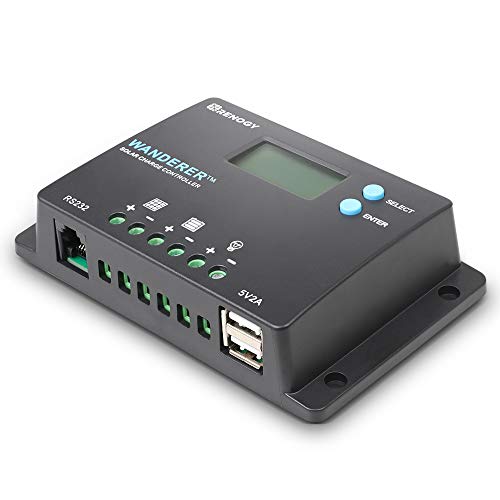
Compact RV PWM – Renogy Wanderer 10A 12/24V
The Renogy Wanderer is a practical solar charge controller for lithium batteries when you need a compact, budget-friendly controller for an RV or marine build. It supports manual lithium activation, includes a backlit LCD, and adds multiple protection features for everyday off-grid use.
Best For: RV and marine users who want a compact controller with manual lithium settings and load control.
Pros:
- Supports AGM, Gel, Flooded, and Lithium batteries with manual lithium activation.
- LCD display shows system information, and the RS232 port supports Bluetooth monitoring with the BT-1 module.
- Includes manual, automatic, and timed load control modes for DC loads.
- Built-in protections cover overcharge, over-discharge, overload, short-circuit, and reverse polarity.
Cons:
- PWM design is less advanced than MPPT for solar harvest efficiency.
- Rated at 10A, so it fits smaller systems better than larger arrays.
- Lithium mode requires manual activation rather than automatic detection.
For small RV or marine solar setups, this controller offers a useful mix of protections, compact size, and flexible load management. It is a sensible pick when you want lithium compatibility without adding much complexity.
Portable Mini MPPT – Bateria Power SunRock 10
If you need a solar charge controller for lithium batteries in a small 12V setup, the Bateria Power SunRock 10 is aimed at portability and easy use. It uses MPPT charging, includes an LCD and LED indicators, and is designed for 12V batteries including LiFePO4.
Best For: Portable 12V solar setups that need a small MPPT controller with simple plug-and-play wiring.
Pros:
- 100% efficient MPPT charging is claimed, with automatic 12V system voltage monitoring.
- Works with AGM, Gel, Lead Acid, and LiFePO4 batteries.
- Compact body with LCD display and LED indicators makes monitoring easy outdoors.
- Plug-and-play SAE connections plus extension cables simplify setup.
Cons:
- Designed specifically for 12V batteries and should not be used with higher-voltage batteries.
- Input limits are narrow, with PV Voc required between 15V and 30V.
- Rated for 10A and up to 150W, so it is only suitable for small systems.
This is a handy option if portability and simple installation matter more than high capacity. It suits compact lithium battery projects where you want MPPT charging without bulky hardware.
Bluetooth-ready lithium controller – ECO-WORTHY 30A 12/24V Bluetooth PWM Controller
If you want a solar charge controller for lithium batteries that also makes monitoring easy, this ECO-WORTHY 30A model is a practical pick for 12V or 24V systems. It supports LiFePO4 along with lead-acid and gel batteries, and the built-in Bluetooth plus LCD make day-to-day checking straightforward.
Best For: Users who want Bluetooth monitoring, dual USB charging, and basic all-in-one control for a small to mid-size lithium setup.
Pros:
- Supports lithium phosphate batteries plus lead-acid and gel.
- Built-in Bluetooth with app integration for remote monitoring.
- LCD display shows operating status and parameter settings.
- Includes multiple protections such as short-circuit, reverse, overload, and open-circuit protection.
Cons:
- PWM design, not MPPT.
- 10A discharge current may be limiting for heavier load use.
- Best installed in a flat, well-ventilated location because it can warm up during operation.
This is a solid utility-focused controller if you want lithium support, Bluetooth visibility, and simple setup features rather than advanced MPPT optimization.
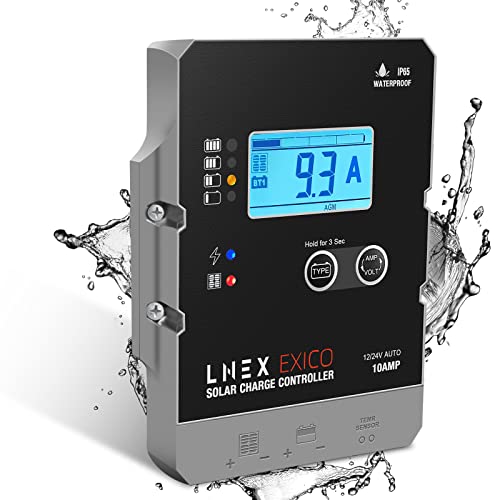
Weatherproof compact pick – LNEX 10A Waterproof 12/24V PWM Controller
This LNEX option is a compact solar charge controller for lithium batteries with a practical waterproof build for outdoor use. It automatically detects 12V or 24V systems and supports LiFePO4 along with several other battery types, making it a flexible choice for smaller installs.
Best For: Buyers who need a thin, IP65-rated controller for a small lithium system exposed to weather.
Pros:
- IP65 waterproof design for rain, spray, or condensation.
- Supports LiFePO4, LTO, AGM, gel, flooded, lead-acid, and calcium/EFB batteries.
- Backlit LCD and LED indicators help track current and voltage.
- 5-stage PWM charging with automatic 28-day equalization for calcium/EFB batteries.
Cons:
- 10A output is best suited to smaller systems.
- PWM charging, not MPPT.
- Short 90-day manufacturer warranty.
Overall, this controller stands out for weather resistance and compact size, but it is most compelling when your system stays within modest power needs.
Feature-rich 30A option – 30A 12/24V Auto-Switch Lithium Controller
For shoppers comparing a solar charge controller for lithium batteries, this 30A unit emphasizes display detail and broad battery support in a 12/24V auto-switching format. It offers a large LCD, dual USB ports, and 3-stage charging management to help handle routine battery care.
Best For: Users who want a 30A controller with a detailed display and simple all-purpose battery support.
Pros:
- Supports lead-acid and lithium batteries in 12/24V auto-switch systems.
- Large LCD shows charging and discharging current, temperature, power data, and system status.
- Dual USB outputs provide up to 2A each.
- Built-in protections include overcurrent, short-circuit, and open-circuit safeguards.
Cons:
- The listing notes MPPT in the title, but the supplied details emphasize 3-stage charging rather than MPPT performance specifics.
- Plastic housing may be less rugged than metal alternatives.
- USB output is useful, but not the highest-current option available.
This model is appealing if you want a feature-rich interface and broad compatibility, though buyers focused specifically on advanced solar harvesting should verify whether its control style matches their needs.
How We Picked the Best Solar Charge Controller for Lithium Batteries
We focused on lithium compatibility, charge control accuracy, usable current output, build quality, and real-world flexibility. For a Solar Charge Controller for Lithium Batteries, the most important factor is safe charging profile support, followed by efficiency, monitoring features, and match-up with your panel wattage.
Quick Comparison
MPPT controllers are usually the better choice when you want higher harvest from your panels, especially in cooler weather or with longer wire runs. PWM models are often simpler and more affordable, making them a better fit for smaller systems or budget builds. Bluetooth, LCD displays, and waterproof housings can also make setup and ongoing monitoring easier.
Key Buying Factors for Solar Charge Controller for Lithium Batteries
Battery Chemistry Support
Check that the controller explicitly supports LiFePO4 or lithium battery charging profiles. Adjustable absorption and float settings matter if you want to fine-tune charging behavior for your specific battery bank.
Controller Type and Efficiency
MPPT controllers convert excess panel voltage into usable charging current, which can improve performance in many real-world systems. PWM controllers are fine when panel and battery voltages are closely matched and the system is small.
Voltage and Current Ratings
Make sure the controller’s amperage rating exceeds your array’s expected output with margin to spare. Also verify whether the unit supports 12V only, or auto-switches between 12V and 24V systems.
Monitoring and Installation
Bluetooth apps, LCD readouts, and clear status indicators simplify troubleshooting and setup. Compact or waterproof designs can be especially helpful for RVs, vans, boats, and outdoor enclosures.
Who Should Buy Which Solar Charge Controller for Lithium Batteries?
If you want maximum charging efficiency and broader system flexibility, an MPPT model is usually the best starting point. If your setup is small, simple, or cost-sensitive, a reliable PWM option may be enough.
Choose a higher-amperage controller for larger solar arrays, and a lower-amperage model for portable kits, battery maintenance, or light-duty off-grid use. For anyone building around lithium, prioritize correct charge settings first, then use features like Bluetooth and displays to make the system easier to manage.