If you want clearer system monitoring and fewer charging guesswork mistakes, a solar charge controller with display is a smart upgrade. The right model makes it easier to track battery status, confirm settings, and protect your batteries from overcharge.
Below, we’ve narrowed the field to 10 options that balance display clarity, charging type, current capacity, and compatibility so you can choose with confidence.
Best 10 Solar Charge Controller with Display Picks for 2026
Flush-Mount RV Pick
Renogy 30A 12V/24V PWM Solar Charge Controller

- LCD display with DC Home app support
- Auto-detects 12V/24V systems
- Compatible with sealed, gel, flooded, and lithium batteries
Best For: RV and marine installs needing a clean flush-mount controller with display
High-Power MPPT Option
100A MPPT Solar Charge Controller with LCD

- 100A MPPT charging with up to 99% efficiency
- Auto-detects 12V/24V systems
- LCD screen for real-time monitoring and settings
Best For: High-capacity home or commercial systems that need an LCD and simple setup
Slim Waterproof Pick
LNEX 10A Waterproof PWM Solar Controller with LCD
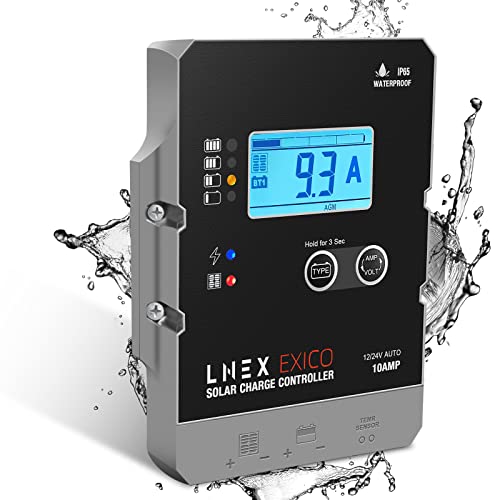
- IP65 waterproof and very thin design
- Backlit LCD plus LED indicators
- Supports 12V/24V systems and several battery types
Best For: Compact outdoor installs that need a slim, waterproof controller with display
MPPT With USB Convenience
30A MPPT Solar Charge Controller with LCD and USB

- 30A MPPT charging with 12V/24V auto-adaptation
- LCD display for real-time monitoring and settings
- Dual USB ports for phone and tablet charging
Best For: RV and small off-grid systems that want MPPT plus USB charging
Budget-Friendly Basic Choice
30A PWM Solar Controller with LCD

- LCD display with status and data readout
- Auto-adapts to 12V/24V systems
- Dual USB output and built-in protection
Best For: Small lead-acid solar setups and simple daily use
Expandable System Pick
60A MPPT Solar Controller with LCD

- LCD display with real-time energy logging
- Supports up to 12 controllers in parallel
- Works with lead-acid and lithium batteries
Best For: Expandable solar systems that may need more total capacity
Compact PWM Pick
30A PWM Solar Controller with LCD and Dual USB

- Auto-detects 12V/24V lead-acid systems
- LCD display supports mode and parameter adjustments
- Dual USB ports and built-in protection features
Best For: Small lead-acid solar setups needing simple display-based control
High-Capacity MPPT Pick
PowMr 100A MPPT Controller with LCD

- Supports 12V to 48V systems with up to 100A output
- Parallel use with up to 12 units for expansion
- Compatible with lead-acid and lithium batteries
Best For: Large solar systems that need expansion, display monitoring, and high current
Feature-Rich Value Pick
100A MPPT Controller with LCD and Dual USB

- Supports 12V to 48V systems with dual USB ports
- LCD shows voltage, current, temperature, and delay data
- Offers seven operating modes and broad battery compatibility
Best For: Buyers who want detailed display data and flexible load control
Flush-Mount RV Pick – Renogy 30A 12V/24V PWM Solar Charge Controller
If you want a solar charge controller with display for an RV or off-grid setup, the Renogy Adventurer 30A keeps things straightforward. It auto-detects 12V/24V systems, supports sealed, gel, flooded, and lithium batteries, and adds an LCD readout plus app connectivity for easier day-to-day monitoring.
Best For: RV and marine users who want a flush-mount controller with LCD monitoring and broad battery compatibility.
Pros:
- Auto-detects 12V/24V systems and supports multiple battery types, including lithium
- LCD display plus DC Home app compatibility for real-time tracking
- Flush-mount design with included surface kit for cleaner installation
- Built-in protections and temperature compensation for harsher conditions
Cons:
- PWM design, not MPPT
- Best suited to 12V/24V systems rather than larger setups
This is a practical pick if you value a tidy install and clear status visibility over maximum charging sophistication. The 30A rating, LCD display, and safety features make it a solid fit for common RV and marine solar builds.
High-Power MPPT Option – 100A MPPT Solar Charge Controller with LCD
This solar charge controller with display is aimed at users who want simple setup and a more powerful MPPT charging style. It auto-recognizes 12V/24V systems, shows real-time information on an LCD screen, and includes built-in protections for everyday reliability.
Best For: Home or commercial users who want a high-amperage MPPT controller with an easy-to-read LCD and plug-and-play setup.
Pros:
- 100A MPPT controller with up to 99% efficiency
- LCD screen shows real-time performance and settings
- 12V/24V auto-recognition simplifies installation
- Built-in protection against overcharging, short-circuits, and reverse polarity
Cons:
- No battery chemistry list is provided in the supplied notes
- Larger 100A capacity may be more than small systems need
For buyers focused on output and visibility, this model checks the main boxes: MPPT optimization, a clear display, and automatic voltage detection. It suits systems where you want more control without a complicated setup process.
Slim Waterproof Pick – LNEX 10A Waterproof PWM Solar Controller with LCD
If you need a compact solar charge controller with display for small builds, the LNEX focuses on slim packaging and outdoor durability. It is a 10A PWM controller with an LCD monitor, IP65 waterproofing, and support for several common battery types.
Best For: Small RV, marine, car, or backup setups where waterproofing and a thin profile matter.
Pros:
- Very thin design with IP65 waterproof protection
- Backlit LCD and LED indicators show current and battery voltage
- Auto-detects 12V/24V systems and supports LiFePO4, AGM, gel, flooded, and more
- Multiple built-in protections, including over-temperature and short-circuit protection
Cons:
- 10A output is lower than many larger controllers
- PWM design may not suit users looking for MPPT performance
The LNEX stands out when space and weather resistance are higher priorities than raw output. Its LCD readout and waterproof body make it a sensible choice for exposed or compact installations.
MPPT With USB Convenience – 30A MPPT Solar Charge Controller with LCD and USB
For shoppers comparing a solar charge controller with display for everyday off-grid use, this 30A MPPT model keeps the feature set practical. It auto-adapts to 12V/24V systems, includes dual USB ports, and uses an LCD screen to make monitoring and adjustments easy.
Best For: RV, home, or small commercial setups that want MPPT charging, USB charging, and a readable LCD.
Pros:
- 30A MPPT controller with automatic 12V/24V adaptation
- LCD screen displays real-time system data and settings
- Dual USB ports add convenient device charging
- Built-in protection against overcharging, short-circuits, reverse polarity, and low voltage
Cons:
- USB output is limited to 5V/2.5A max
- Product details don’t specify supported battery chemistries in the supplied notes
This is a useful middle-ground option if you want MPPT performance without giving up simple visibility or basic USB charging. The LCD and memory function make it easy to live with in a daily-use solar setup.
High-Capacity Smart Pick – 100A MPPT Solar Charge Controller with LCD
If you want a solar charge controller with display for a larger off-grid setup, this 100A unit is built around monitoring and control. It automatically recognizes 12V, 24V, 36V, and 48V systems, supports lead-acid and lithium batteries, and uses an LCD display to show working voltage and other live data. The MPPT-based design is aimed at improving harvesting efficiency while giving you clearer feedback on system status.
Best For: Larger off-grid systems, solar street lights, backup power setups, and users who want visible real-time system data.
Pros:
- Large LED/LCD-style display shows working voltage, PV charging/discharging current, temperature, and error codes.
- Supports 12V/24V/36V/48V systems and both lead-acid and lithium batteries.
- Built-in protection for surges, short circuits, and overheating.
- Includes load timing, light control, and memory function.
Cons:
- Feature-rich design may be more than basic small-system users need.
- Notes describe a mixed MPPT/PWM-style execution approach, so it may not suit buyers expecting a traditional controller layout.
- Best fit is for setups that can use its higher-capacity and advanced control features.
This is the most capable option in the group if you need a display-heavy controller with broad voltage support and advanced monitoring. It is especially practical when system visibility and configurable load control matter as much as charging performance.
Budget-Friendly Basic Choice – 30A PWM Solar Controller with LCD
This solar charge controller with display is a straightforward choice for smaller 12V or 24V systems. It uses an LCD screen to show working status and data, and it includes auto-adaptation plus memory for user settings. If you mainly need simple solar-to-battery management with dual USB output, this controller keeps the setup practical and easy to follow.
Best For: Small home systems, basic solar projects, and lead-acid battery setups that need an easy LCD readout.
Pros:
- LCD display shows operating status and system data.
- Automatic 12V/24V adaptation with user-parameter memory.
- Dual USB 5V/2.5A max output adds charging convenience.
- Built-in protections for overcurrent, short-circuit, reverse polarity, and overcharge.
Cons:
- Only suitable for lead-acid battery types, not lithium.
- 30A output is best for lighter-duty systems rather than larger arrays.
- PWM design is more basic than MPPT-based alternatives.
For buyers who want a simple controller with an LCD display and solid protection features, this model covers the essentials well. It is a sensible pick when your battery type and system size fit its narrower compatibility range.
Expandable System Pick – 60A MPPT Solar Controller with LCD
If you need a solar charge controller with display for a larger, expandable system, this 60A MPPT model is built for that job. The LCD display provides real-time information, and the controller supports 12V, 24V, 36V, and 48V systems with lead-acid and lithium battery options. Its standout feature is parallel support for up to 12 units, which makes it well suited to growing installations.
Best For: Larger off-grid systems, RVs, boats, and users planning to expand controller capacity over time.
Pros:
- LCD display and real-time energy logging help track system behavior.
- Supports up to 12 controllers in parallel for higher system capacity.
- Compatible with lead-acid and customizable lithium battery settings.
- MPPT tracking efficiency is rated at not less than 98.1%.
Cons:
- Lithium users need to set parameters manually according to battery voltage.
- PV input must be disconnected before changing settings.
- Higher-capacity design and setup flexibility may be more than casual users need.
This model stands out when scalability matters, especially if you want a display-equipped controller that can grow with your system. It offers a strong mix of monitoring, battery compatibility, and expansion potential for serious installations.
Compact PWM Pick – 30A PWM Solar Controller with LCD and Dual USB
This solar charge controller with display is a straightforward fit for smaller 12V or 24V lead-acid systems. It uses PWM control, auto-detects system voltage, and gives you an easy-to-read LCD for checking status, adjusting parameters, and managing load timing.
Best For: Small home or backup solar setups using lead-acid batteries that need simple monitoring and load control.
Pros:
- Auto-detects 12V/24V systems and supports OPEN, AGM, and GEL lead-acid batteries
- LCD display lets you view data and adjust float, reconnect, and stop-discharge settings
- Built-in protections include overcurrent, short circuit, reverse connection, and open circuit recovery
- Dual USB 5V outputs add convenient charging for small devices
Cons:
- Not suitable for lithium batteries
- PWM design is simpler than MPPT controllers for larger or more demanding systems
Overall, this is a practical controller if you want basic solar regulation, visible status feedback, and simple load control without extra complexity. It is best suited to users who are staying within lead-acid battery compatibility and modest system requirements.
High-Capacity MPPT Pick – PowMr 100A MPPT Controller with LCD
If you need a solar charge controller with display for a larger build, this 100A MPPT model is aimed at expandable systems. It supports 12V through 48V setups, an LCD interface, and parallel operation so you can scale the controller side of a solar array more easily.
Best For: Large expandable solar systems that need high current capacity, LCD monitoring, and battery flexibility.
Pros:
- 100A MPPT controller supports 12V/24V/36V/48V systems
- Parallel support for up to 12 units helps expand system capacity
- Works with lead-acid and lithium batteries, plus user-defined settings
- LCD display and multi-stage charging help monitor and manage battery charging
Cons:
- Best suited to users who actually need the higher-capacity feature set
- Larger systems may require more careful planning and configuration
This model stands out for scale and flexibility rather than simplicity. If you want a display-equipped controller that can grow with a bigger solar setup, its high current rating and parallel support make it a strong candidate.
Feature-Rich Value Pick – 100A MPPT Controller with LCD and Dual USB
This solar charge controller with display is built for users who want more control from the front panel. It supports 12V, 24V, 36V, and 48V systems, adds dual USB charging, and shows operating data like battery voltage, charging current, discharging current, temperature, and delay time.
Best For: Users who want a display-heavy controller with multiple operating modes and broad battery support.
Pros:
- Advanced MPPT algorithm with automatic 12V/24V/36V/48V recognition
- LCD backlight display shows detailed system data and working status
- Seven operating modes, including timing and light-control options
- Compatible with Seal, GEL, Flooded, and LiFePO4 batteries
Cons:
- Mixed MPPT/PWM design may not match the expectations of pure MPPT buyers
- Feature-rich setup may be more than needed for simple installs
For buyers who value monitoring and control, this controller offers one of the most detailed displays in the group. It is a good fit when you want configurable timing, broader battery compatibility, and real-time operating feedback.
How We Picked the Best Solar Charge Controller with Display
We focused on display usefulness, charging architecture, voltage and current range, battery compatibility, and overall value. For a Solar Charge Controller with Display, the screen should do more than light up—it should clearly show charging status, battery voltage, load data, and error information when possible.
We also looked for practical features buyers actually use, such as auto-detection, USB outputs on some models, and support for common battery chemistries and system voltages.
Quick Comparison
PWM controllers are generally the simpler, more budget-friendly choice for smaller systems and closer panel-to-battery voltage matching. MPPT models cost more, but they are usually the better pick for maximizing energy harvest, especially in larger or higher-voltage setups.
Lower-amp units tend to suit compact RV, shed, or backup systems, while 60A to 100A controllers are aimed at larger off-grid banks and multi-panel arrays. If you need easier monitoring and broader system flexibility, an MPPT Solar Charge Controller with Display is usually the stronger long-term option.
Key Buying Factors for a Solar Charge Controller with Display
Controller Type
PWM is fine for basic, cost-conscious systems. MPPT is typically more efficient and better suited to expanding arrays or maximizing output in variable conditions.
System Voltage and Current
Match the controller to your battery bank voltage and make sure the amperage rating exceeds your array’s expected output with some headroom. A 10A or 30A unit is common for smaller setups; 60A and 100A are better for larger systems.
Display Readability
Look for a screen that is easy to read in bright light and shows the data you care about most: battery voltage, charging current, load status, and selected battery mode. An informative LCD can make setup and troubleshooting much easier.
Battery Compatibility
Check that the controller supports your battery type, whether sealed, gel, flooded, or lithium if applicable. The best Solar Charge Controller with Display for your setup is the one that matches both chemistry and charging profile.
Installation and Extras
Consider flush-mount designs for clean panel installs, waterproofing if the unit will live in a tougher environment, and dual USB ports only if you’ll actually use them.
Who Should Buy Which Solar Charge Controller with Display?
Choose a smaller PWM model if you want an affordable controller for a straightforward 12V or 24V setup. Step up to MPPT if efficiency, expansion room, and better performance matter more than lowest upfront cost.
If you’re building a larger off-grid system, choose a higher-amp model with an LCD that gives you clear monitoring at a glance. If your priority is simplicity, a mid-range controller with automatic parameter recognition is often the easiest path.