A well-sized solar setup can turn a dark backyard shed into a practical, powered workspace without running a trench from the house. The right kit depends on what you plan to run, how much sunlight your shed gets, and how much battery backup you need.
Below, we focus on compact, buyer-friendly options that are easier to install and better suited to shed use than oversized home systems.
Best 10 Solar Power Kit for Backyard Shed Picks for 2026
Budget Off-Grid Starter
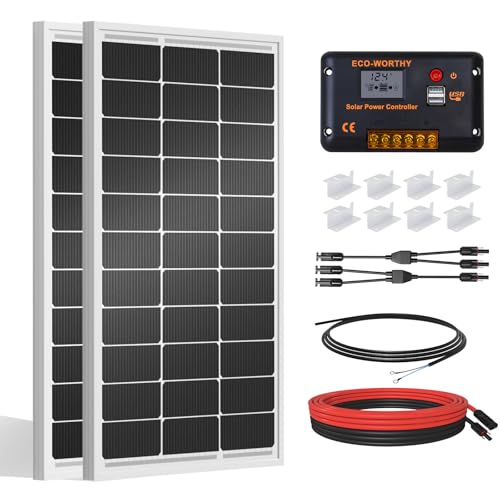
- Two 100W mono panels with 30A controller
- Includes brackets, cables, and plug-and-play parts
- Durable aluminum frame with IP65 junction box
Best For: Small sheds, cabins, and basic off-grid power
Portable Backup Pick
ZeroKor 300W Solar Generator Kit

- 300W power station with included 60W foldable panel
- Multiple outputs for USB, DC, and AC charging
- Built-in safety protections and SOS flashlight
Best For: Portable backup for small devices and light-duty use
Best All-Around Starter

- 100W mono panel with 30A LCD PWM controller
- Includes adapter kit, tray cables, and Z brackets
- UL/IEC listed panel with weather-resistant design
Best For: Reliable starter power for sheds and other small off-grid setups
Solar Lighting Backup

- Flexible 30W panel with backup battery and LEDs
- Includes phone-charging output and cables
- Lightweight kit for simple emergency use
Best For: Shed lighting and basic emergency backup
High-Output Shed Power
Renogy 400W 12V Solar Power Kit

- 400W output for higher shed energy needs
- MPPT controller with Bluetooth monitoring
- Includes panels, fuses, brackets, and cables
Best For: Sheds needing more daily power and better monitoring
Compact Lithium Starter
100W Solar Kit with 20Ah LiFePO4 Battery

- 100W panel with included LiFePO4 battery
- 10A PWM controller auto-detects 12V/24V
- Basic cables and brackets are included
Best For: Small sheds and light-duty off-grid projects
Most Complete All-in-One
ECO-WORTHY 200W Solar Starter Kit

- Includes panels, controller, battery, and inverter
- 50Ah LiFePO4 battery adds stored power
- 600W pure sine inverter supports small AC loads
Best For: Sheds that need both battery storage and AC output
Compact RV-Ready Solar Kit
Renogy 200W 12V Monocrystalline Kit
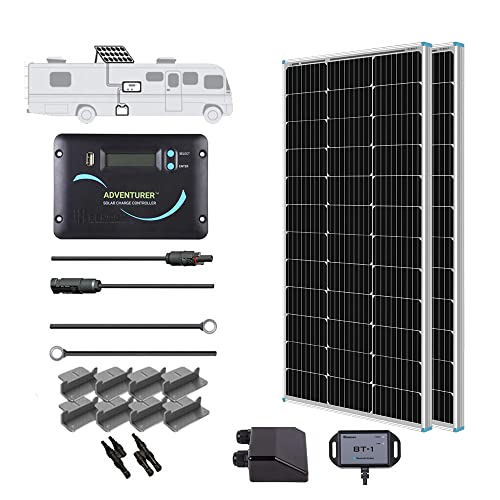
- 200W system with about 800Wh daily output
- Includes 30A PWM controller and mounting brackets
- Pre-drilled panels and Plug&Play cables simplify setup
Best For: Small sheds, greenhouses, and compact off-grid 12V systems
High-Capacity Shed Power Bundle
ECO-Worthy 1.6KWH 400W Complete Kit

- 400W kit with MPPT controller, inverter, and lithium batteries
- Estimated 1.6KWh daily output under ideal sunlight
- Built for AC devices with a 2000W pure sine inverter
Best For: Larger sheds and off-grid spaces needing full power backup
All-In-One Beginner Kit
ECO-WORTHY 200W Complete Starter Kit
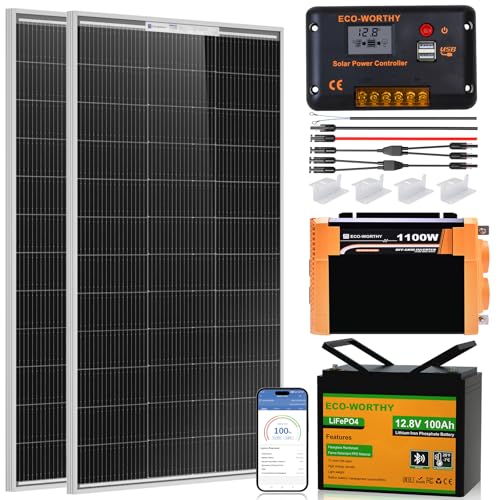
- Includes panels, lithium battery, inverter, controller, and cables
- Estimated 800Wh daily generation with 1.28KWh stored
- Designed for novice-friendly 4-step installation
Best For: Beginners setting up a small shed or other modest off-grid space
Budget Off-Grid Starter – ECO-WORTHY 200W Solar Kit
If you’re shopping for a solar power kit for backyard shed use, this ECO-WORTHY 200W set is a straightforward way to add basic off-grid power. It combines two 100W monocrystalline panels, a 30A PWM controller, and mounting hardware, so it’s aimed at simple shed, cabin, and backup-power setups where you want a complete package.
Best For: Sheds, cabins, RVs, and other small off-grid setups that need a complete starter kit.
Pros:
- Includes 2 x 100W panels, 30A controller, brackets, and cables for a ready-to-install bundle.
- Monocrystalline panels are rated up to 21.5% higher efficiency under sufficient light.
- Built for durability with an aluminum alloy frame, IP65 junction box, and wind/snow load ratings.
- Can be wired in series for 24V or parallel for 12V use.
Cons:
- PWM controller is simpler than an MPPT option.
- 200W output is better for light-duty shed power than heavier loads.
- Performance depends on available sunshine, with daily output tied to strong sun hours.
This is a practical pick if you want a compact solar power kit for backyard shed projects and prefer an all-in-one package over separate components. It focuses on easy installation and dependable basics rather than high-end system expansion.
Portable Backup Pick – ZeroKor 300W Solar Generator Kit
For buyers who want a solar power kit for backyard shed use but also need portability, this ZeroKor bundle combines a 300W power station with a foldable 60W solar panel. It’s better suited to small electronics, lights, and occasional backup charging than to running larger shed equipment.
Best For: Portable backup power for small devices, light shed use, camping, and emergency charging.
Pros:
- Includes both a 300W portable power station and a 60W foldable solar panel.
- Offers AC outlets, DC output, USB ports, quick-charge USB, and an SOS flashlight.
- Built-in BMS adds short-circuit, overload, over-voltage, over-current, and overheating protection.
- Can be charged from AC, solar, or a 12V car port for flexible recharging.
Cons:
- 300W limit rules out many higher-draw appliances.
- Best suited to phones, tablets, laptops, and other small devices.
- Solar panel junction box is not waterproof, so it needs to be kept dry.
This kit makes sense if portability matters more than whole-shed coverage. It is a compact, practical backup option for users who want light power support in and around a shed without installing a fixed system.
Best All-Around Starter – Renogy 100W Solar Starter Kit
If you want a solar power kit for backyard shed setups with a more established brand and a clean starter layout, this Renogy 100W kit is a strong middle-ground choice. It pairs a monocrystalline panel with a 30A LCD PWM controller, adapter kit, tray cables, and Z brackets, making it easy to build a simple off-grid system.
Best For: Shed power, RVs, campers, and small off-grid projects that value a complete starter package.
Pros:
- 100W monocrystalline panel with an average daily output of about 500Wh under sunlight conditions.
- 30A LCD PWM controller and included mounting/cabling accessories simplify setup.
- High-efficiency panel with 22.5% cell efficiency and 100% EL testing.
- Strong safety and weather claims, including UL/IEC certifications, IP65 J-box, and IP67 connectors.
Cons:
- Single-panel 100W output is modest for larger electrical needs.
- PWM controller is more basic than an MPPT controller.
- Expansion is limited compared with larger systems, though it supports up to 400W.
For a straightforward shed installation, this kit offers a balanced mix of components, support, and safety features. It is a sensible option if you want a dependable starter setup without overcomplicating the build.
Solar Lighting Backup – 30W Shed Solar Light Kit
This solar power kit for backyard shed use is really geared toward lighting and emergency basics rather than full electrical service. It combines a 30W flexible panel, backup battery, LED bulbs, and phone-charging output, making it a practical choice when you mainly need light and simple off-grid convenience.
Best For: Shed lighting, emergency backup, and lightweight off-grid use in small spaces.
Pros:
- Complete lighting-focused kit with flexible solar panel, battery, LED bulbs, controller, and cables.
- Includes phone charging support through a 5V 2A output.
- Flexible panel can mount on curved or irregular surfaces.
- Lightweight kit design at 9.9 lbs makes handling and installation easier.
Cons:
- 30W output is limited to lighting and small-device charging.
- Uses a 2A capacity system, so it is not meant for larger loads.
- Best fit is emergency and basic shed use, not whole-shed power.
If your shed needs dependable lights and a little backup charging, this kit keeps things simple. It is less of a general power system and more of a compact solar lighting solution with off-grid resilience.
High-Output Shed Power – Renogy 400W 12V Solar Power Kit
If you want a solar power kit for backyard shed use that can support larger daily energy needs, this Renogy 400W 12V system is built for more than just lights and a small fan. It combines four 100W panels, a 40A MPPT controller, Bluetooth monitoring, and full wiring hardware for a more complete off-grid setup.
Best For: Backyard sheds that need higher output, app-based monitoring, and a more robust all-in-one install.
Pros:
- 400W array can deliver about 2 to 2.5kWh per day in good sunlight
- MPPT controller is rated for 99% tracking efficiency and 98% peak conversion efficiency
- Includes fuses, tray cables, Z brackets, and Bluetooth module for a more complete kit
- Panels use 3.2mm low-iron glass and 35mm aluminum frames for durability
Cons:
- More system than a simple low-power shed setup may need
- Installation is still a full solar project, not a plug-and-play gadget
- Requires enough roof or ground space for four panels
This is the strongest option here if your shed will power more than just basic accessories. The combination of higher wattage, MPPT charging, and monitoring features makes it a practical pick when reliability and expandability matter.
Compact Lithium Starter – 100W Solar Kit with 20Ah LiFePO4 Battery
This solar power kit for backyard shed projects is a compact entry-level choice if you want to run small DC loads and keep the system simple. It includes a 100W monocrystalline panel, a 12V 20Ah LiFePO4 battery, a 10A PWM controller, and the basic cables and brackets needed to get started.
Best For: Small backyard sheds, light-duty setups, and buyers who want lithium battery storage in an affordable kit.
Pros:
- Includes a 12V 20Ah LiFePO4 battery for built-in storage
- Battery is rated for at least 2000 cycles at 80% DOD and up to 5000 at 50% DOD
- PWM controller automatically detects 12V or 24V systems
- Controller includes protections for over-charge, over-discharge, overload, and short circuit
Cons:
- 100W output is best for modest shed loads only
- PWM charging is less advanced than MPPT-based systems
- Battery capacity is relatively small for longer runtime needs
For a shed, this kit makes the most sense when your power needs are light and you value a lithium battery over a larger panel array. It is a practical starter package, but not the best fit if you expect heavy or all-day electrical use.
Most Complete All-in-One – ECO-WORTHY 200W Solar Starter Kit
If you want a solar power kit for backyard shed use with battery backup and AC output, this ECO-WORTHY package is a well-rounded middle ground. It pairs 200W of solar panels with a 30A controller, a 50Ah LiFePO4 battery, and a 600W pure sine wave inverter, so you can cover both charging and small appliance use.
Best For: Backyard sheds that need stored power plus a small inverter for tools, chargers, or electronics.
Pros:
- Includes solar panels, charge controller, LiFePO4 battery, and 600W inverter
- Battery offers Type-C, USB, and adapter support for convenient device charging
- N-Type monocrystalline panel design is rated for 25% efficiency and better low-light performance
- Pure sine wave inverter delivers 600W continuous power with 1200W surge
Cons:
- 200W output is still limited for higher-demand shed equipment
- Best performance depends on having around 4 hours of sunlight
- Some loads may exceed the battery interface’s 30A limit
This kit stands out as the most complete all-in-one option for a shed because it includes storage and inverter power in the same package. It is a smart choice if you want a practical off-grid setup without sourcing each component separately.
Compact RV-Ready Solar Kit – Renogy 200W 12V Monocrystalline Kit
If you’re comparing a solar power kit for backyard shed use, this Renogy 200W kit is a compact option built for smaller off-grid setups. It includes two 100W monocrystalline panels, a 30A Adventurer-Li PWM charge controller, and mounting hardware, so it’s aimed at straightforward installations where space matters.
Best For: Small sheds, greenhouses, RVs, and other compact off-grid spaces that need a simple 12V solar setup.
Pros:
- 200W system with an estimated 800Wh daily output in about 4 hours of sunlight
- 22% high solar cell efficiency with corrosion-resistant aluminum framing
- Charge controller includes protection against overcharging, overload, short-circuit, and reverse polarity
- Pre-drilled holes and Plug&Play cables help speed up installation
Cons:
- Output is sized for smaller power needs, not heavy shed equipment
- Uses a PWM controller rather than an MPPT controller
- Best suited to 12V battery-based systems
Overall, this kit makes sense when you want a durable, easy-to-install solar power kit for backyard shed projects with modest energy demands. The included brackets, cables, and controller protections make it more approachable than piecing together components separately.
High-Capacity Shed Power Bundle – ECO-Worthy 1.6KWH 400W Complete Kit
This solar power kit for backyard shed projects is built more like a full off-grid bundle than a basic starter set. With 400W of panels, a 40A MPPT controller, two 12V 100Ah lithium batteries, and a 2000W pure sine wave inverter, it is designed for bigger energy needs and AC appliance use.
Best For: Larger sheds, cabins, and off-grid setups that need battery storage and inverter output for AC devices.
Pros:
- Complete package includes panels, MPPT controller, lithium batteries, inverter, and Bluetooth module
- Estimated 1.6KWh daily output under 4 hours of sunlight
- 40A MPPT controller is rated for up to 99% tracking efficiency
- Includes 12V 2000W updated pure sine wave inverter for 110V AC devices
Cons:
- More system than many small backyard sheds will need
- Higher upfront complexity than a basic panel-and-controller kit
- Performance claims depend on ideal sunlight conditions
For buyers who want a shed system that can do more than basic charging, this package is the most capable option here. It trades simplicity for size and flexibility, which can be a good fit if your shed is acting as a real off-grid workspace.
All-In-One Beginner Kit – ECO-WORTHY 200W Complete Starter Kit
If you want a solar power kit for backyard shed use without assembling every part separately, this ECO-WORTHY starter kit keeps things simple. It pairs 2x 100W panels with a 100Ah lithium battery, 30A PWM controller, 1100W inverter, and cables, so you get a basic off-grid package in one box.
Best For: Beginners who want a straightforward 12V solar kit for a small shed, RV, or other modest off-grid setup.
Pros:
- Complete kit includes panels, battery, inverter, controller, and cables
- Estimated 800Wh of daily power generation and 1.28KWh of stored power
- Novice-friendly 4-step quick installation
- Includes a 1100W inverter for running compatible loads
Cons:
- PWM controller is less advanced than MPPT options
- 200W output is best for light to moderate shed loads
- Not intended for large appliances or high-demand systems
This kit is a practical pick when you want the easiest route into solar-powered shed basics. It focuses on convenience and compatibility, making it a strong choice for users who value a ready-to-go bundle over custom component selection.
How We Picked the Best Solar Power Kit for Backyard Shed
For a Solar Power Kit for Backyard Shed, the most important factors are real-world usability and system balance. We looked for kits with clear wattage ratings, included charge controllers, usable battery options, and hardware that makes installation easier for non-experts. We also favored products that can support common shed needs like lights, phone charging, small fans, security cameras, and light tool charging.
Quick Comparison: What Matters Most
In a shed setup, panel size determines how fast you recover from cloudy days, while battery capacity determines how long you can run loads after sunset. PWM-based kits are often simpler and lower cost, while MPPT systems usually harvest more energy and make better use of limited roof space. Portable power stations are convenient, but they are best for lighter-duty use unless you need a plug-and-play option.
Key Buying Factors for a Solar Power Kit for Backyard Shed
Daily Power Needs
Start by listing what you want to power. LED lighting and device charging need very little energy, but a mini fridge, power tools, or a heater quickly push you into larger panel and battery territory. Match the kit to your real usage rather than buying the biggest system available.
Battery Chemistry and Capacity
LiFePO4 batteries generally last longer and handle more charge cycles than lead-acid batteries, making them a smart choice if the shed will be used regularly. For occasional use, a smaller battery may be enough, but capacity should still cover at least one full day of expected use.
Controller Type
An MPPT controller is usually the better choice for higher efficiency, especially in colder weather or when panel space is limited. PWM controllers can still work well for basic shed lighting and charging if you want to keep costs down.
Installation and Expandability
Look for kits that include mounting brackets, cables, and clear component matching. If you expect to add more lights, a camera, or extra storage later, choose a system that can be expanded without replacing the controller or battery bank.
Who Should Buy Which Solar Power Kit for Backyard Shed?
If you want simple lighting and phone charging, a smaller starter kit or portable power station is usually enough. If your shed is used daily, a mid-range panel-and-battery system gives a better balance of cost, runtime, and flexibility. For a workshop shed or off-grid outbuilding with larger loads, choose a higher-capacity kit with stronger charging hardware and lithium storage.
For most buyers, the best Solar Power Kit for Backyard Shed is the one that meets everyday needs with a little extra margin, not the one with the highest wattage on the box.