A live-view trail camera lets you check a feeder, trail, or remote property without walking in and disturbing the area. The right choice depends on more than picture quality: cellular coverage, data costs, battery life, and nighttime performance all matter.
These 10 options include solar-powered models, 360° cameras, and cameras with animal detection. Use the buying guide below to narrow down which features are worth paying for.
Best 10 Wildlife Camera with Live Streaming Picks for 2026
Easy-Start Pick
2.5K Cellular Trail Camera with 360° Live Feed

- Pre-inserted SIM with 100MB trial data
- Solar panel and two night-vision options
- Motion alerts through the phone app
Best For: Simple setup with trial cellular data
Pan-and-Tilt Pick
SEHMUA 2K Solar Cellular Trail Camera

- App-controlled pan, tilt, and 4X digital zoom
- 2K live view with low-glow night vision
- Seven-day data trial; paid plan thereafter
Best For: Remote viewing across wide open areas
Local-Recording Option
WIMIDING 2K Solar Trail Camera

- Records to SD card without a data plan
- 2K live view and two-way talk with cellular service
- Solar charging and IP66-rated housing
Best For: Switching between remote access and local recording
Best for Discreet Night Monitoring
SEHMUA 3rd 4G LTE Trail Camera
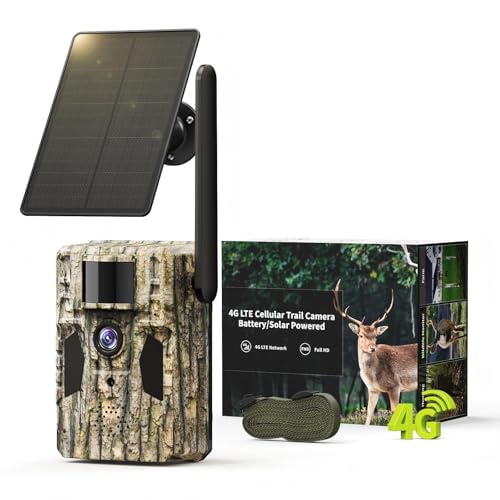
- 2K live view and 48MP photos
- 940nm no-glow night vision
- 4W solar panel; IP66 housing
Best For: Discreet, solar-powered observation at a fixed trail viewpoint
Best for Theft-Aware Deployment

- Live video and HD photo requests
- GPS movement alerts
- Switchable no-glow or low-glow IR
Best For: Field placements where camera tracking and flash choice matter
Best for Wide-Area Scanning
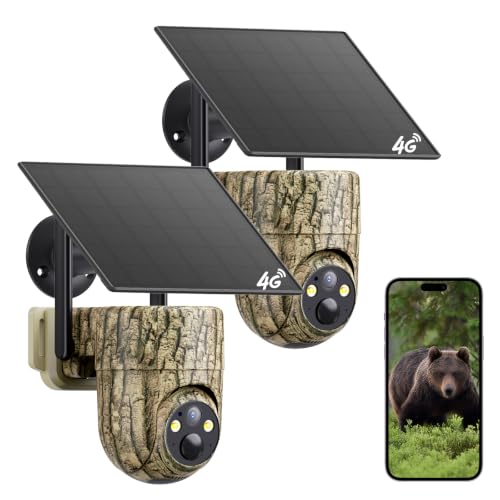
- 2K cellular live stream
- Remote 350° pan and 100° tilt
- 6W solar panel; IP65 housing
Best For: Broad outdoor sites that benefit from remote pan and tilt
Best for Wide-Area Viewing
TKENPRO 360° Solar Cellular Trail Camera
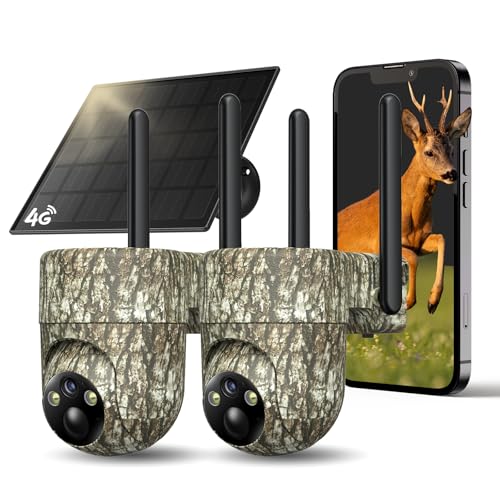
- 2K live view with remote pan and tilt
- 0.2-second PIR trigger and phone alerts
- 5W solar panel; 85-foot rated night vision
Best For: Scanning large wildlife areas remotely
Best for Fast Motion Alerts
VOOPEAK 2.5K Cellular Trail Camera

- 2.5K live feed over 4G LTE
- 0.1-second claimed PIR response
- Adjustable motion zones and 355° pan
Best For: Fast alerts along active wildlife routes
Best for Shared Viewing
Loatos 2K Solar Cellular Trail Camera

- 2K live view for up to four users
- Local recording works without a data plan
- 0.2-second trigger and 940nm infrared
Best For: Shared remote wildlife viewing with local backup
Easy-Start Pick – 2.5K Cellular Trail Camera with 360° Live Feed
If you want a wildlife camera with live streaming without setting up Wi-Fi, this 4G LTE model offers app-based viewing, a 360° live feed, and a pre-inserted SIM. Its included 100MB of data lets you try the cellular features before buying more.
Best For: Buyers who want a straightforward cellular setup and a small amount of trial data.
Pros:
- Pre-inserted SIM and 100MB of complimentary data.
- Solar panel helps reduce charging visits.
- PIR motion alerts and full-color or infrared night-vision options.
Cons:
- Memory card must be purchased separately.
- Continued cellular use requires app-managed data purchases, with a separate top-up for each camera.
The trial data makes it easy to test the app, but factor ongoing data and storage into the total cost.
Pan-and-Tilt Pick – SEHMUA 2K Solar Cellular Trail Camera
For watching a broad clearing from your phone, this wildlife camera with live streaming combines 2K video with app-controlled 355° horizontal rotation, 100° tilt, and 4X digital zoom. Its built-in U.S. SIM uses 4G LTE rather than Wi-Fi wherever a supported cellular signal is available.
Best For: Monitoring wide pastures, food plots, or other open areas from a distance.
Pros:
- Remote pan, tilt, and digital zoom let you adjust the view after mounting.
- Includes a 6W solar panel and IP65-rated housing.
- Low-glow infrared night vision, PIR alerts, and a stated 0.2-second trigger.
Cons:
- After the seven-day data trial, a separate paid plan is required for each camera.
- The built-in SIM is non-removable and intended for U.S. use only.
The adjustable view is its main advantage over a fixed trail camera; check cellular coverage and ongoing plan costs before choosing a mounting spot.
Local-Recording Option – WIMIDING 2K Solar Trail Camera
This wildlife camera with live streaming offers 2K app viewing over 4G, but it also has a useful fallback: without a SIM data plan, it can record locally to a memory card for review on its 2-inch screen or a computer. That makes it a flexible choice if you do not need remote access every month.
Best For: Buyers who want live viewing when needed and local recording when they pause cellular service.
Pros:
- Local SD-card recording remains available without a data plan.
- 2K live view, two-way talk, and motion alerts through the app.
- Built-in 5200mAh rechargeable battery with solar charging and IP66-rated housing.
Cons:
- Live viewing and phone alerts require a cellular data plan; the listed introductory offer is $0.01 for the first month, then plans start at $4.99 per month.
- Its fixed 120° view does not provide remote pan and tilt.
Choose it for the ability to keep recording locally between paid-plan periods, rather than for sweeping remote coverage.
Species-ID Pick – SEHMUA 2K Solar Trail Camera
If identifying visitors matters as much as seeing them, this wildlife camera with live streaming pairs 2K app viewing with optional AI species recognition. It connects through its built-in U.S. 4G LTE SIM, so you do not need Wi-Fi at the camera site.
Best For: Wildlife watchers interested in app-based species identification and activity insights.
Pros:
- 2K live viewing, phone alerts, and a stated 0.2-second trigger.
- Optional AI species recognition and seven-day animal-activity predictions in the Ucon app.
- 4W solar panel, IP66-rated housing, and low-glow infrared night vision rated to 82 feet.
Cons:
- Cellular access needs a paid per-camera data plan after the seven-day trial.
- AI species recognition requires a cloud storage subscription; a memory card for local storage is not included.
The AI tools distinguish this model, but compare subscription costs carefully if you plan to use both cellular viewing and cloud-based identification.
Best for Discreet Night Monitoring – SEHMUA 3rd 4G LTE Trail Camera
The SEHMUA is a wildlife camera with live streaming for watching animals remotely without local Wi-Fi. Its cellular connection, 2K live view, and 940nm no-glow infrared make it a practical choice when you want to check a trail without disturbing nighttime activity.
Best For: Remote wildlife observation where discreet night vision and solar power matter.
Pros:
- 48MP photos, 2K video, and app access to live streams.
- 940nm no-glow infrared; switches to black-and-white vision in complete darkness.
- Included 4W solar panel and IP66-rated housing suit outdoor deployment.
Cons:
- A cellular subscription is needed after the seven-day data trial.
- Solar performance depends on placing the panel where it gets sufficient sunlight.
Its 65-foot PIR detection range and 120° lens cover a useful stretch of trail. Choose it for a fixed viewpoint; the solar setup works best where sunlight is reliable.
Best for Theft-Aware Deployment – TACTACAM Reveal Ultra
The TACTACAM Reveal Ultra is a wildlife camera with live streaming aimed at buyers who also want to keep track of the camera itself. Alongside live video and on-demand HD photos, it offers GPS movement alerts for a unit left in the field.
Best For: Hunters or wildlife observers placing a camera where location tracking adds peace of mind.
Pros:
- Live video, HD photo requests, and automatic 4G LTE network connection.
- GPS tracking can alert you if the camera moves more than half a mile.
- Switchable 80-foot no-glow and 96-foot low-glow infrared options.
- 2-inch LCD, 16GB internal storage, and an SD slot for expansion.
Cons:
- Cellular use requires selecting a data plan.
- Solar panels and other extended-power options are separate accessories.
The combination of selectable flash and GPS makes this a flexible field camera, particularly when theft is a concern. Its listed imaging features include 4K stills and 2.5K video; check the viewing and plan options against how often you expect to stream.
Best for Wide-Area Scanning – Oculview 4G LTE Trail Camera
The Oculview is a wildlife camera with live streaming for sites where one fixed angle may miss activity. Its 2K phone view and app-controlled pan, tilt, and digital zoom let you inspect different parts of a field or property without visiting the camera.
Best For: Monitoring broad outdoor areas where remote camera repositioning is useful.
Pros:
- App-controlled 350° horizontal rotation, 100° vertical adjustment, and 4× digital zoom.
- 2K live streaming over cellular service without local Wi-Fi.
- Adjustable 6W solar panel and IP65-rated housing.
- PIR-triggered alerts with cloud or memory-card recording options.
Cons:
- Each camera needs its own cellular data subscription; cloud storage costs extra.
- The embedded SIM is non-removable and works only in the United States.
- 850nm infrared is low-glow rather than no-glow.
The movable view is the main reason to choose Oculview over a fixed trail camera. Its 65-foot night-vision range and 0.2-second PIR trigger add useful coverage, but factor the ongoing service costs into your decision.
Best for Wide-Area Viewing – TKENPRO 360° Solar Cellular Trail Camera
If you want a wildlife camera with live streaming that can scan a broad area, the TKENPRO pairs 2K live video with app-controlled 355° pan, 120° tilt, and 4x digital zoom. Its built-in SIM uses 4G LTE rather than Wi-Fi, making it suited to locations with cellular coverage but no local internet.
Best For: Watching wildlife across a large clearing, farm, or remote property from your phone.
Pros:
- Wide pan-and-tilt coverage lets you reposition the view remotely.
- 0.2-second PIR trigger sends motion alerts; two-way audio is also included.
- 5W solar panel, IP65 weather rating, and infrared night vision rated to 85 feet support outdoor use.
Cons:
- Built-in SIM is non-removable and works only in the United States.
- Live cellular access requires a paid data plan after the seven-day trial; Wi-Fi is not supported.
Choose this model for flexible viewing angles rather than a fixed frame. Before installing it, check cellular reception and account for the ongoing per-camera data cost.
Best for Fast Motion Alerts – VOOPEAK 2.5K Cellular Trail Camera
The VOOPEAK is a wildlife camera with live streaming for buyers who prioritize quick motion capture and remote control. It offers a 2.5K live feed over 4G LTE, a stated 0.1-second PIR response, and app-controlled 355° pan and 100° tilt.
Best For: Monitoring active wildlife routes or larger outdoor areas where fast phone alerts and adjustable framing matter.
Pros:
- Custom motion zones and sensitivity settings can help limit unwanted alerts.
- Solar panel and built-in 7,800mAh battery reduce routine battery changes.
- IP68 weather rating, night vision rated to 65 feet, and optional local SD storage up to 256GB.
Cons:
- The included cellular data allowance is 100MB; check ongoing data costs before relying on live viewing.
- SD card is not included, and cloud storage is optional.
This is a strong fit when a fast claimed trigger and configurable detection are more important than maximum night-vision reach. Make sure the installation site has compatible 4G coverage.
Best for Shared Viewing – Loatos 2K Solar Cellular Trail Camera
For a wildlife camera with live streaming that several people can watch, the Loatos supports 2K live viewing for up to four simultaneous users. Its built-in U.S. 4G SIM and solar panel are designed for spots without Wi-Fi or mains power.
Best For: Sharing a remote wildlife feed with family or a small scouting group while keeping a local recording option.
Pros:
- 940nm infrared provides discreet nighttime recording.
- 0.2-second trigger, animal alerts, and adjustable detection zones and schedules.
- Records to a memory card up to 128GB even without an active data plan; 4W solar panel and IP66 rating suit outdoor placement.
Cons:
- Cellular service is limited to the United States and requires a plan after the seven-day data trial.
- Memory card is not included; remote live viewing depends on cellular service.
The useful distinction here is the combination of shared live access and offline local recording. Compare the available data plans before committing to frequent live viewing.
How We Picked the Best Wildlife Camera with Live Streaming
We focused on cameras marketed with live viewing or live streaming, then compared the features most likely to affect everyday use: connection type, field of view, power source, detection options, nighttime imaging, and stated photo and video resolution. Product specifications are a starting point, not a guarantee of performance in the field. In particular, a camera may record high-resolution photos while offering a lower-resolution live feed.
Quick Comparison: Which Type Fits Your Setup?
For a remote site without Wi-Fi, start with a 4G LTE cellular model and confirm that its supported carrier has service at the mounting location. If the camera faces a broad clearing rather than a single trail, a 360° pan-and-tilt design may reduce blind spots. Solar-equipped models make sense where the panel can receive reliable sunlight; a conventional battery setup may be simpler under dense cover. If you mainly want alerts rather than frequent check-ins, consider models advertising AI animal detection or adjustable motion settings.
Key Buying Factors for a Wildlife Camera with Live Streaming
Coverage and Ongoing Costs
Check carrier compatibility before buying, even when a SIM card is included. Look at the cost of the required data plan and whether live viewing, video downloads, cloud storage, or additional cameras affect the bill. Weak cellular service can make a promising live-view feature frustrating to use.
Power and Placement
Live viewing and frequent alerts use power. Match your expected check-in frequency to the battery capacity, solar option, and ease of reaching the camera for maintenance. For solar models, check whether the panel can be positioned away from shade while keeping the camera aimed at the target area.
Image Detail, Night Vision, and Coverage
Compare recorded video, photos, and live-feed resolution separately. For night use, consider flash type and effective range, not just megapixel claims. No-glow illumination may be preferable where visible light could disturb wildlife; a wider or rotating view helps only if the camera can still capture useful detail at your intended distance.
Detection and App Controls
Look for adjustable sensitivity, alert schedules, and animal-detection features if false notifications are a concern. Check whether the app allows remote settings changes and whether multiple people need access. A reliable alert and a fast, usable live view are often more valuable than a long list of imaging modes.
Who Should Buy Which Wildlife Camera with Live Streaming?
Choose a straightforward LTE camera for a narrow trail or feeder you cannot visit regularly. Pick a 360° model for a clearing or property entrance with activity coming from several directions. Consider solar power for an exposed, hard-to-reach site, and prioritize detection controls if you need selective alerts. Before committing to any Wildlife Camera with Live Streaming, verify its network coverage, plan terms, and mounting conditions at the exact place you intend to use it.