As you think about the future of your home, consider how smart control and monitoring systems can transform your daily life by 2026. With innovations in energy efficiency, security, and convenience, these top systems promise to enhance your living experience. But what specific features should you look for? Let’s explore some of the best options available and their unique benefits that could make your home smarter and more efficient.
Emporia Vue 3 Home Energy Monitor
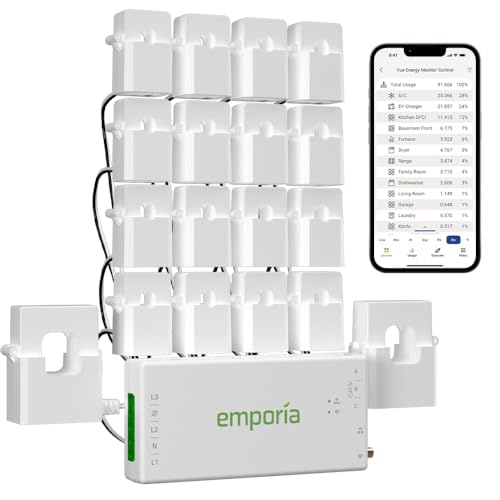
The Emporia Vue 3 Home Energy Monitor is perfect for homeowners who want to take control of their energy usage while maximizing savings. This UL Listed device installs easily in your circuit panel, accommodating various electrical systems. With real-time monitoring, you can manage energy consumption 24/7 via the Emporia Energy App, receiving actionable notifications for savings opportunities. The monitor tracks critical appliances with its sixteen branch sensors, ensuring accurate readings. Plus, data retention allows you to access detailed usage reports anytime. By automating settings for peak demand or solar energy, you’ll effectively reduce costs and enhance your home’s energy efficiency.
Best For: Homeowners looking to monitor and optimize their energy consumption for cost savings and efficiency.
Pros:
- Real-time monitoring: Provides continuous updates on energy usage through the Emporia Energy App.
- Easy installation: Compatible with various electrical systems and installs directly in the circuit panel using clamp-on sensors.
- Data retention: Offers detailed usage reports with the ability to access historical data anytime.
Cons:
- WiFi dependency: Requires a stable 2.4 GHz WiFi connection for real-time data monitoring.
- Additional sensor cost: An extra 200A sensor is needed for certain setups, which is sold separately.
- Limited accuracy range: Energy data collection has an accuracy of ±2%, which may not be sufficient for some users.
Ring Alarm 14-Piece Kit, Wireless Smart Home Security System

Looking for a reliable security solution for your home or small business? The Ring Alarm 14-Piece Kit is an excellent choice, offering a wireless setup that’s easy to install and expand. With 24/7 professional monitoring and mobile app control, you’ll stay connected to your property at all times. The kit includes a base station, keypads, contact sensors, and motion detectors, ensuring thorough coverage. Plus, it integrates seamlessly with Alexa for voice control. For added peace of mind, consider the subscription services for remote arming and emergency response. Protect what matters most with Ring’s smart home security system.
Best For: Homeowners and small business owners looking for an easy-to-install, expandable security system with professional monitoring.
Pros:
- Expandable system allows for additional sensors and devices to be added as needed.
- Mobile app control provides real-time notifications and monitoring from anywhere.
- Alexa compatibility enables convenient voice control for arming and disarming the system.
Cons:
- Subscription services for remote arming and professional monitoring are sold separately.
- Wi-Fi dependency may pose challenges during outages unless the subscription service is active.
- Limited to 2-4 bedroom homes, which may not be suitable for larger properties.
Smart Home Energy Monitor with Circuit Sensor and Real-Time Tracking

For eco-conscious homeowners seeking to optimize their energy consumption, the Refoss Smart Home Energy Monitor stands out with its advanced circuit sensors and real-time tracking capabilities. You can track energy usage across major appliances, saving an average of 10%-20% on bills. With 98% accuracy, it stores three years of detailed data, allowing you to visualize consumption trends. The monitor supports solar integration, automating energy use from solar surplus. Set personalized targets and receive alerts for unusual spikes, ensuring efficient usage. Plus, its compatibility with Home Assistant means seamless control while keeping your data private. Embrace smarter living today!
Best For: Eco-conscious homeowners looking to optimize their energy consumption and reduce utility bills.
Pros:
- Offers 98% accuracy in energy consumption tracking and saves an average of 10%-20% on energy bills.
- Supports solar integration, allowing for automated energy use from solar surplus to maximize savings.
- Provides real-time monitoring and personalized alerts for unusual energy spikes, promoting efficient usage.
Cons:
- Requires firmware updates in the Refoss app for compatibility with Home Assistant.
- Lacks cloud processing, which may limit access to data remotely.
- API support is not available, potentially restricting advanced customization options.
Kasa Matter Smart Plug with Energy Monitoring (4-Pack)

Kasa’s Matter Smart Plug with Energy Monitoring (4-Pack) is perfect for tech-savvy homeowners aiming to simplify their smart home experience. With Matter compatibility, you can easily connect to Apple Home, Amazon Alexa, Google Home, and Samsung SmartThings—all from one app. These plugs communicate directly over your local network, ensuring seamless operation without needing the cloud. The energy monitoring feature tracks usage patterns, helping you make informed decisions and save on bills. Plus, their compact design won’t block other outlets, and with a UL certified flame-retardant design, you can enjoy peace of mind. Control them remotely or via voice commands for ultimate convenience.
Best For: Tech-savvy homeowners looking to streamline their smart home experience with versatile and energy-efficient devices.
Pros:
- Matter compatibility allows seamless integration with major smart home platforms like Apple Home, Amazon Alexa, Google Home, and Samsung SmartThings.
- Energy monitoring feature helps track consumption and optimize usage patterns, potentially leading to savings on energy bills.
- Compact design ensures that other outlets remain accessible, making it user-friendly for various setups.
Cons:
- Requires initial setup and configuration, which may be challenging for non-tech-savvy users.
- Limited to Matter-certified ecosystems, which may not include all existing smart home devices.
- Some users may prefer traditional smart plugs that do not require app connectivity for basic functions.
PGST Wireless Home Security System

The PGST Wireless Home Security System stands out as an ideal choice for homeowners seeking an extensive DIY security solution without the burden of monthly fees. With eight contact sensors, two motion sensors, and a PTZ camera, this system covers your home thoroughly. You’ll enjoy real-time control via the Smart Life/Tuya app, backed by a loud 120dB alarm that alerts you through SMS and phone calls. Plus, it’s expandable, allowing you to add more devices as needed. Weighing just one pound, it’s easy to install and fits seamlessly into your lifestyle—ensuring peace of mind at home.
Best For: Homeowners looking for a comprehensive DIY security solution without ongoing fees.
Pros:
- No monthly fees for ownership, providing a cost-effective security option.
- Expandable system allows for customization with additional sensors and devices.
- Real-time control via Smart Life/Tuya app with multiple alert options ensures you never miss an event.
Cons:
- Battery life of 8 hours may require regular monitoring and charging.
- Limited maximum range of 1000 feet might not cover larger properties adequately.
- Installation might be challenging for those unfamiliar with DIY systems.
Wireless Home Security System with App Alert and Alexa Compatibility
Imagine controlling your home security from anywhere with just a tap on your smartphone. The wireless home security system offers WiFi and 4G connectivity, letting you monitor your home in real-time through a dedicated app. Coupled with Alexa and Google Home, it provides seamless voice control for added convenience. You’ll enjoy extensive protection with door sensors, window sensors, and motion detectors covering every corner of your home. Plus, there are no monthly subscription fees—just a self-monitored solution with professional-grade features. With easy DIY installation, you can set it up quickly and start securing your space without hassle.
Best For: Homeowners seeking a flexible, cost-effective, and user-friendly security solution without monthly fees.
Pros:
- No monthly subscription fees for a self-monitored security system.
- Easy DIY installation allows for quick setup without professional help.
- Comprehensive protection with door sensors, window sensors, and motion detectors for complete home coverage.
Cons:
- Self-monitoring may not provide the same level of security as a professional monitoring service.
- Dependent on WiFi or 4G connectivity, which could be an issue during outages.
- Limited advanced features compared to some higher-end security systems.
Kasa Smart Plug Power Strip HS300 with 6 Smart Outlets and 3 USB Ports
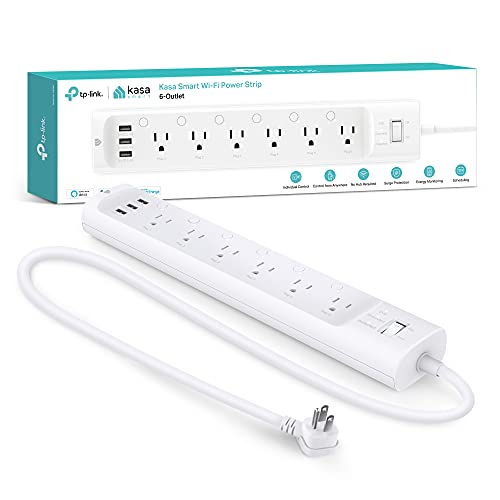
For tech-savvy homeowners looking to streamline their device management, the Kasa Smart Plug Power Strip HS300 stands out with its six smart outlets and three USB ports. You can independently control each outlet through the Kasa Smart app, making it easy to monitor energy consumption and turn off devices that draw too much power. Plus, with voice activation support for Alexa, Google Assistant, and Microsoft Cortana, you can enjoy hands-free operation. The surge protection keeps your sensitive electronics safe from power spikes, ensuring everything runs smoothly in your smart home ecosystem.
Best For: Tech-savvy homeowners looking to streamline their device management with smart outlets and USB charging options.
Pros:
- Independently control each of the 6 outlets through the Kasa Smart app for efficient energy management.
- Voice control compatibility with Alexa, Google Assistant, and Microsoft Cortana for hands-free operation.
- Surge protection feature safeguards sensitive electronics from potential power surges.
Cons:
- Requires Wi-Fi connectivity for full functionality, which may not be suitable for all users.
- Limited to Kasa ecosystem, potentially restricting integration with other smart home devices.
- USB ports output may not be sufficient for fast charging multiple devices simultaneously.
Emporia Vue 3 Home Energy Monitor

Smart homeowners looking to optimize their energy consumption will find the Emporia Vue 3 Home Energy Monitor an excellent choice, as it combines real-time monitoring with smart automation features. UL Listed for safety, it installs easily in most circuit panels using clamp-on sensors, supporting various systems. With the Emporia Energy App, you can manage home energy usage, track spending, and automate settings for peak demand or solar usage. Enjoy precise monitoring with ±2% accuracy and real-time insights on your phone or web app. Plus, expand your monitoring capabilities by adding up to sixteen sensors for detailed appliance tracking.
Best For: Smart homeowners looking to optimize their energy consumption and manage their electricity usage efficiently.
Pros:
- Real-time monitoring with ±2% accuracy allows for precise tracking of energy usage.
- User-friendly Emporia Energy App enables easy management of home energy settings and spending insights.
- Expandable system supports adding up to sixteen sensors for detailed appliance monitoring.
Cons:
- Requires a 2.4 GHz WiFi connection for functionality, which may not be suitable for all homes.
- Additional sensors sold separately can increase the overall cost of the system.
- Installation may require professional assistance for complex systems or if homeowners are not comfortable with electrical work.
eufy Smart Display E10, Smart Home Hub

With its user-friendly 8-inch touchscreen, the eufy Smart Display E10 serves as an ideal choice for families seeking an all-in-one smart home hub that everyone can easily navigate. You’ll appreciate the instant alerts, like hands-free notifications when your doorbell rings or when motion is detected, lighting up the display with live feeds. Monitor your property with four simultaneous live video streams for extensive coverage. Plus, historical events are automatically downloaded for quick playback. The smart daily reports keep you updated on key security events, making it accessible for all ages, from kids to seniors. Enjoy seamless control in your home!
Best For: Families looking for a user-friendly smart home hub that provides easy navigation and extensive security monitoring.
Pros:
- Instant alerts for doorbell rings, motion detection, and door unlocks enhance home security.
- Four simultaneous live feeds allow for comprehensive monitoring of your property.
- User-friendly design with an 8-inch touchscreen makes it accessible for all ages.
Cons:
- Limited compatibility with some smart home devices may restrict functionality.
- Relies on a stable internet connection for optimal performance and alerts.
- The touchscreen size may not be sufficient for detailed viewing in larger spaces.
WiFi Home Alarm Security System (10 Pieces Kit)
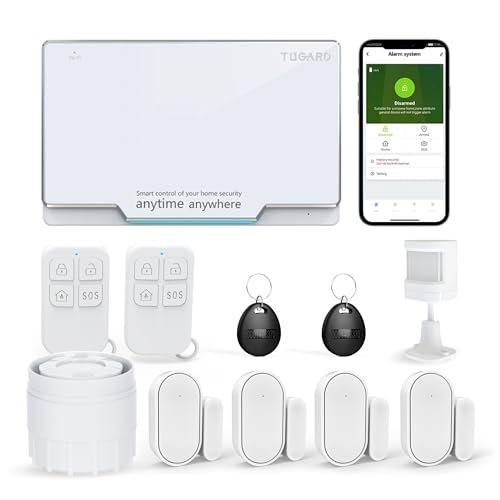
The WiFi Home Alarm Security System (10 Pieces Kit) is perfect for homeowners seeking a reliable and customizable security solution without the burden of monthly fees. This wireless DIY smart alarm kit includes everything you need: a WiFi control panel, door and window sensors, a motion sensor, remote controls, and a wired siren. It’s compatible with Alexa and Google Home, making voice control seamless. You can set up to 100 wireless protection zones and customize alarm modes to fit your lifestyle. With easy installation and support for multiple languages, you can enhance your home security effortlessly.
Best For: Homeowners looking for a customizable and cost-effective security system that offers flexibility without monthly fees.
Pros:
- Easy DIY installation with no professional help required.
- Compatible with popular voice control systems like Alexa and Google Home.
- Customizable settings and multiple zone configurations for tailored security.
Cons:
- Limited to 2.4GHz WiFi, which may not be compatible with all home networks.
- Requires a smartphone for full functionality through the app.
- May have a learning curve for users unfamiliar with smart home technology.
Factors to Consider When Choosing a Smart Home Control and Monitoring System
When you’re choosing a smart home control and monitoring system, you’ll want to take into account several key factors. Think about how compatible the system is with your existing devices and the complexity of installation. Don’t forget to evaluate data security features, real-time monitoring capabilities, and energy management options to guarantee you get the best fit for your needs.
Compatibility With Existing Devices
How can you guarantee your new smart home control system works seamlessly with your existing devices? Start by verifying compatibility with your current technology, as this integration saves you from replacing devices. Look for products that support Matter compatibility, which connects with certified platforms like Apple Home, Amazon Alexa, and Google Home, enhancing interoperability. It’s essential to check for standard communication protocols like WiFi, Zigbee, or Z-Wave to guarantee smooth connectivity. Also, consider systems offering API support or integration with platforms like Home Assistant for centralized control. Finally, review user manuals and compatibility lists to confirm that your new system can effectively communicate with your existing home automation setup, ensuring a cohesive smart home experience.
Installation Complexity
Integrating your existing devices sets the stage for exploring installation complexity in smart home systems. The installation process can vary widely depending on the system you choose. Some options require professional help due to intricate wiring and setup, while others are designed for easy user installation. Plug-and-play devices minimize the need for technical skills, allowing you to get started quickly. Systems with clamp-on sensors simplify installation by fitting directly into circuit panels, accommodating various electrical setups. Wireless systems often provide a DIY approach, letting you install sensors and cameras without extensive electrical knowledge. Ultimately, the ease of installation can greatly impact your satisfaction, as complicated setups might discourage you from fully enjoying your smart home experience.
Data Security Features
As you explore smart home control and monitoring systems, prioritizing data security features is vital to protect your personal information. Look for systems that implement strong encryption protocols, like AES-256, to safeguard data transmitted over your network. It’s also wise to choose options with local data storage, reducing reliance on cloud services and enhancing your privacy. Regular firmware updates are essential, as they address security vulnerabilities and improve system integrity. Additionally, opt for devices that support multi-factor authentication (MFA) to bolster security against unauthorized access. Finally, check if the system complies with industry standards and certifications, such as GDPR or CCPA, which help guarantee your privacy rights are respected and maintained.
Real-Time Monitoring Capabilities
Data security features lay the groundwork for a robust smart home experience, but real-time monitoring capabilities take it a step further by giving you immediate insights into your home’s status. With these features, you can track energy consumption and security status instantly, ensuring a quick response to any issues. Many systems offer data retention options, allowing you to analyze trends with minute-level data stored for up to seven days and hourly data indefinitely. Accurate energy monitoring can achieve precision within ±2%, helping you make informed decisions. Plus, you can set up alerts for unusual activity or energy spikes, and compatibility with mobile apps lets you monitor and control everything from anywhere, enhancing your convenience and responsiveness.
Energy Management Options
When choosing a smart home control and monitoring system, it is crucial to contemplate the energy management options available. Look for systems that provide real-time monitoring of your electricity usage, so you can track consumption and spot cost-saving opportunities. Verify compatibility with your home’s electrical setup—whether single-phase or multi-phase—to maximize effectiveness. Advanced features like automated settings for peak demand management can help you optimize energy use and lower utility bills. Some systems even retain detailed usage data in the cloud, allowing you to analyze trends over time. If you have solar power, consider systems that integrate with smart home technology to control high-energy appliances, enabling automated adjustments based on energy availability or surplus.