The right butcher block table for meat gives you a stable, durable surface for trimming, portioning, and everyday kitchen prep. This roundup compares commercial work tables, oversized cutting boards, and solid-wood tops suited to custom islands or workstations.
We focused on useful differences such as wood species, dimensions, thickness, surface design, storage, and installation flexibility so you can choose a setup that matches your workspace and workload.
Best 10 Butcher Block Table for Meat Picks for 2026
Commercial Prep Pick
Maple Butcher Block Work Table

- Hard-rock maple top for chopping and prep
- NSF-certified galvanized steel base
- Adjustable undershelf adds storage
Best For: Dedicated kitchen, bakery, or workshop prep space
DIY Countertop Pick
Unfinished Hevea Butcher Block

- Solid hevea rubberwood construction
- Large 48-by-25-inch customizable surface
- Needs sanding and food-safe sealing
Best For: Custom islands, tables, and butcher block installations
Multi-Use Wood Top Pick

- Solid acacia wood with natural grain
- Beveled edge supports comfortable use
- Fits desks, islands, bases, and DIY projects
Best For: Versatile tabletop or butcher-block furniture projects
Best DIY Foundation
36-Inch Hevea Solid Wood Butcher Block

- 1.5-inch solid hevea wood construction
- Pre-sanded and ready for custom finishing
- Supports up to 300 pounds
Best For: Compact custom kitchen and meat-prep projects
Best Large Ready-to-Work Surface
48-Inch Rubberwood Butcher Block

- Spacious 48-by-30-inch work area
- Pre-sanded and pre-polished
- Easy to cut and maintain
Best For: Large meat-prep areas and custom counters
Best Thick Acacia Option
48-Inch Solid Acacia Wood Butcher Block
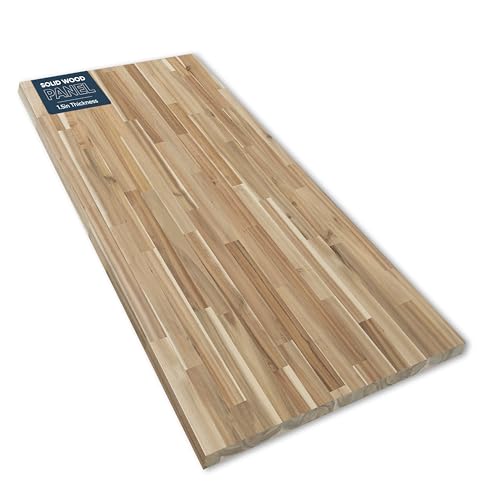
- 1.5-inch solid acacia wood construction
- 48-inch length for generous workspace
- Supports up to 300 pounds
Best For: Large custom islands and thick meat-prep counters
Premium Walnut-Style Solid Wood

- Solid acacia with a 1.5-inch thickness
- Large 60-by-36-inch surface
- Walnut-colored oil finish
Best For: Large kitchen islands, prep stations, and custom workbenches
Custom-Finish Hevea Hardwood
72-Inch Unfinished Hevea Tabletop

- Solid Hevea hardwood construction
- Pre-sanded and ready for finishing
- Long 72-by-30-inch work surface
Best For: DIY islands, custom prep tables, and workbenches
DIY Birch Prep Surface
36-Inch Unfinished Birch Countertop

- Solid birch with a 1.5-inch thickness
- Compact 36-by-25-inch size
- Can be cut, stained, and sealed
Best For: Compact islands, custom prep tables, and coffee bars
Commercial Prep Pick – Maple Butcher Block Work Table
If you need a butcher block table for meat rather than a portable cutting board, this AmGood model provides a full-size, knife-friendly hard-rock maple work surface at a practical commercial prep height. Its galvanized base and adjustable undershelf add useful storage for kitchen tools and supplies.
Best For: Home cooks, bakeries, restaurants, and workshops that need a sturdy, spacious prep table.
Pros:
- Genuine North American hard-rock maple top is suited to chopping, prepping, and dough work.
- NSF certified for commercial kitchen and food-service use.
- Adjustable undershelf provides a second storage tier.
- 48-by-18-inch work area offers substantial prep space.
Cons:
- Its 18-inch depth is narrower than many countertop-style work surfaces.
- Designed for indoor use and requires more floor space than a cutting board.
This is the most complete workstation in the group, especially if you want a dedicated butcher block table for meat with storage and commercial-grade construction. Choose it when stability and workspace matter more than portability.
Portable Cutting Board Pick – End Grain Acacia Meat Board
For shoppers who want a butcher block table for meat in a more compact format, the HOMESTEAD end-grain acacia board offers a generous 23-by-18-inch cutting area. Its end-grain construction is designed to be knife-friendly, while the deep juice groove helps contain meat drippings during prep.
Best For: Home kitchens that need a large cutting board for roasts, steaks, chopping, and serving.
Pros:
- End-grain surface is designed to reduce knife-edge wear during regular use.
- Large 23-by-18-inch format accommodates whole roasts and large cuts.
- Deep juice groove helps keep countertops cleaner.
- Built-in handles make it easier to carry from counter to table.
Cons:
- Hand-wash-only care requires drying upright and periodic mineral-oil treatment.
- It is a cutting board, not a raised table or freestanding workstation.
This board is a practical choice when counter space is available but a full prep table is not. Its reversible design and serving capability also make it useful for charcuterie, bread, and cheese after meat preparation.
DIY Countertop Pick – Unfinished Hevea Butcher Block
This solid hevea butcher block is a customizable option for building a butcher block table for meat, island, workbench, or countertop. The 48-by-25-inch unfinished board gives you a broad surface, but it should be sanded and treated with an appropriate food-safe finish before direct food preparation.
Best For: DIY projects where you want to build, trim, stain, oil, or seal a custom meat-prep surface.
Pros:
- Solid rubberwood construction provides a dense, sturdy hardwood surface.
- 48-by-25-inch size offers ample room for a custom table or island.
- Can be cut, drilled, sanded, stained, or sealed to fit a project.
- Care guidance covers food-safe finishing and ongoing maintenance.
Cons:
- Unfinished board needs sanding and food-safe sealing before direct food use.
- Requires a stable cabinet, frame, table base, or legs for installation.
- Should be protected from prolonged water exposure, direct heat, and open flames.
This is better suited to a planned installation than an instant-use purchase. It offers flexibility and a generous footprint, but the final food-prep performance depends on proper sanding, sealing, and support.
Multi-Use Wood Top Pick – Acacia Butcher Block Desktop
The FLEXISPOT acacia top can serve as a butcher block table for meat when mounted to a suitable table base, while also working as a desk, island top, or workbench. Its 48-by-24-inch solid wood surface has a beveled front edge and a natural grain pattern.
Best For: Multi-purpose spaces that need one solid wood top for food prep, work, or DIY furniture.
Pros:
- Solid acacia construction provides a dense, durable wood surface.
- 48-by-24-inch size gives plenty of room for general prep or project work.
- Beveled front edge is designed for more comfortable arm contact.
- Works with many desk frames and table bases.
Cons:
- It is a desktop or tabletop rather than a complete freestanding table.
- Supplied notes emphasize office and work uses more than direct meat preparation.
- Specific mounting and food-safe finishing requirements should be considered before kitchen use.
This is a flexible choice for buyers who want a solid acacia surface that can move between kitchen, office, and workshop roles. For meat prep, plan the supporting base and confirm that the surface has an appropriate food-safe finish.
Best DIY Foundation – 36-Inch Hevea Solid Wood Butcher Block
If you want a compact butcher block table for meat or a custom kitchen surface, this 36-by-25-inch hevea solid wood top offers a sturdy 1.5-inch-thick base. Its unfinished, pre-sanded surface lets you choose the oil, stain, or protective coating that fits your project.
Best For: DIY kitchen islands, compact meat-prep surfaces, dining areas, and workspaces where customization matters.
Pros:
- Solid hevea hardwood with a substantial 1.5-inch thickness.
- Pre-sanded unfinished surface is ready for sanding, oil, stain, or lacquer.
- Rated to support up to 300 pounds and designed for versatile indoor or outdoor projects.
- Protective foam and wood-reinforced packaging helps reduce shipping damage.
Cons:
- Unfinished wood requires treatment before use as a food-contact surface.
- The 36-inch length provides less working room than the larger options here.
This is a practical pick when you want a thick, customizable wood top rather than a ready-to-use finished cutting surface. Plan on applying an appropriate food-safe finish if you will prepare meat directly on it.
Best Large Ready-to-Work Surface – 48-Inch Rubberwood Butcher Block
For shoppers needing a roomy butcher block table for meat, this 48-by-30-inch rubberwood countertop provides substantial prep and work space. It arrives finely sanded and pre-polished, so it needs only simple cleaning and maintenance before installation or use.
Best For: Large meat-prep areas, kitchen counters, dining tables, laundry counters, desks, and workbenches.
Pros:
- Generous 48-by-30-inch surface offers plenty of working room.
- Natural rubberwood has a hard texture, clear grain, and water resistance.
- Easy to cut for custom installations and projects.
- Pre-sanded, pre-polished surface is easy to maintain with damp-cloth cleaning and wood wax oil.
Cons:
- At 0.8 inches thick, it is slimmer than the two 1.5-inch solid-wood options.
- Hand-wash care is specified, and regular maintenance is recommended to help prevent drying and cracking.
This option stands out for its broad footprint and relatively easy preparation. Its thinner profile may suit counters and furniture tops well, while users wanting a particularly heavy-duty butcher-block feel may prefer a thicker board.
Best Thick Acacia Option – 48-Inch Solid Acacia Wood Butcher Block
This 48-by-25-inch acacia top is a strong candidate for a customizable butcher block table for meat. Its 1.5-inch thickness provides a substantial work surface, while the unfinished, pre-sanded wood lets you select a suitable finish for a kitchen island, table, or prep area.
Best For: Large DIY kitchen islands, meat-prep counters, dining tables, and work surfaces where thickness and a distinctive wood grain are priorities.
Pros:
- Solid acacia wood construction with a sturdy 1.5-inch thickness.
- 48-inch length offers ample room for food preparation or other projects.
- Unfinished, pre-sanded surface can be customized with oil, stain, coating, or lacquer.
- Supports up to 300 pounds and is described as resistant to heat, impacts, and scratches.
Cons:
- Requires sanding or finishing before direct food preparation.
- Its 25-inch width is narrower than the rubberwood alternative.
Choose this acacia block when you want a thick, spacious top with a more distinctive natural appearance. Because it is unfinished, the final food-prep suitability depends on applying and maintaining an appropriate finish.
Premium Walnut-Style Solid Wood – 60-Inch Acacia Butcher Block
If you need a substantial butcher block table for meat, this 60-by-36-inch acacia slab provides a large, 1.5-inch-thick surface for food-prep stations, kitchen islands, or custom dining tables. Its walnut-colored oil finish adds warmth, though it is designed as a tabletop rather than a complete table.
Best For: Large kitchen islands, custom meat-prep tables, dining surfaces, and workbenches.
Pros:
- Made from solid acacia wood with a sturdy 1.5-inch thickness.
- Large 60-by-36-inch work surface suits spacious prep areas.
- Walnut-colored oil finish highlights the wood grain and adds a finished appearance.
- Multiple-layer packaging is intended to help reduce warping during delivery.
Cons:
- At 62 pounds, it may require help to position and install.
- Regular oiling is needed to maintain the finish and wood durability.
- It is a tabletop slab, so a base or support structure is required.
This is the strongest choice here for a broad, substantial butcher block table for meat when you want a walnut-toned appearance and enough room for larger prep projects. Plan the support system and ongoing oil maintenance before buying.
Custom-Finish Hevea Hardwood – 72-Inch Unfinished Hevea Tabletop
For a butcher block table for meat that you can finish to suit your space, this 72-by-30-inch Hevea tabletop offers a long, smoothly pre-sanded surface. It is unfinished, so you will need to apply an appropriate protective coating before using it for a demanding kitchen or prep application.
Best For: DIY kitchen islands, custom prep tables, standing desks, and workbenches requiring a personalized finish.
Pros:
- Made from solid Hevea hardwood with a clean, pre-sanded surface.
- Unfinished wood accepts oil, wax, stain, or clear coat for customization.
- Extra-long 72-inch by 30-inch dimensions provide generous working space.
- Multi-layer packaging is intended to help protect the top during transit.
Cons:
- The unfinished surface requires sealing before kitchen use.
- At 1 inch thick, it is thinner than the 1.5-inch options in this roundup.
- It is sold as a tabletop and does not include a table base.
This tabletop makes sense when customization matters more than a ready-made finish. Its length is useful for a dedicated prep or work surface, but budget time for finishing and installing the supporting base.
DIY Birch Prep Surface – 36-Inch Unfinished Birch Countertop
This unfinished birch countertop is a practical option for a smaller butcher block table for meat, especially when you want to cut, adjust, and finish the slab yourself. Its 36-by-25-inch size is more manageable than the larger options, while the 1.5-inch thickness gives it a substantial tabletop profile.
Best For: Compact kitchen islands, custom meat-prep surfaces, coffee bars, and small worktables.
Pros:
- Solid birch construction offers a light tone and even grain.
- 1.5-inch thickness provides a substantial base for a custom tabletop.
- Unfinished surface can be cut, adjusted, stained, or sealed for a personalized result.
- Available in sizes from 3 to 8 feet for broader project flexibility.
Cons:
- Sealing is recommended for long-term beauty and protection.
- Unfinished wood requires additional preparation before use.
- Natural grain, color, and mineral-streak variations are expected.
This birch slab is well suited to a compact, custom-built prep station where you want control over the final dimensions and finish. Its unfinished condition keeps the design flexible but adds finishing work before regular use.
How We Picked the Best Butcher Block Table for Meat
We selected products across three practical categories: ready-to-use work tables, portable butcher blocks, and unfinished solid-wood tops for DIY furniture. Our comparison emphasizes working surface, construction, thickness, stability, maintenance, and intended use rather than appearance alone.
For meat preparation, a suitable surface should be substantial enough to resist movement, easy to clean, and appropriate for repeated contact with food. Products marketed as countertops or desktops may require finishing before food use, so always follow the manufacturer’s care and sealing instructions.
Quick Comparison
| Best For | What to Look For |
|---|---|
| Commercial or high-volume prep | NSF-rated construction, adjustable shelving, durable finish, and a rigid base |
| Portable cutting and carving | Thick end-grain construction, juice grooves, handles, and reversible surfaces |
| Kitchen islands | Broad dimensions, sufficient thickness, sealed edges, and compatible mounting hardware |
| DIY workstations | Accurate sizing, unfinished wood, manageable weight, and a finish suited to the application |
Key Buying Factors for a Butcher Block Table for Meat
Wood Species and Construction
Maple is a traditional choice for commercial butcher blocks because it is hard and wear-resistant. Acacia, walnut, birch, rubberwood, and hevea can also work well, but each varies in hardness, grain, color, and maintenance needs. End-grain boards are especially resilient for knife work, while countertop-style tops are often more suitable as fixed prep surfaces or furniture components.
Size, Thickness, and Stability
Measure the available area, including clearance for movement and cleanup. Larger tops provide room for trimming and staging, but they are heavier and may need a reinforced base. A thickness around 1.5 inches offers useful rigidity for islands and workbenches; thinner tops may need additional support to prevent flexing or warping.
Cleaning, Sealing, and Food Safety
Look for smooth surfaces without difficult-to-clean gaps. A food-contact surface should be sealed and maintained according to its instructions, while unfinished slabs intended for DIY projects need an appropriate food-safe finish before meat preparation. Clean promptly, avoid prolonged soaking, and allow the wood to dry fully.
Features and Installation
Juice grooves can help contain liquid on portable boards. Handles improve portability, while shelves and adjustable feet add value to freestanding tables. For a countertop, check whether the top includes a finish, edge treatment, mounting guidance, or hardware; these details can significantly affect the total project cost.
Who Should Buy Which Butcher Block Table for Meat?
Choose the commercial maple work table if you need a ready-made, professional-style station with storage and a sturdy base. Pick the thick end-grain acacia board for portable carving and smaller prep areas. Countertop-style acacia, walnut, hevea, rubberwood, birch, and acacia options are better for shoppers building an island, desk, dining table, or custom workbench. The largest hevea tops suit expansive work surfaces, provided your base can safely support their size and weight.