Choosing the right dough mixer can help a small bakery increase output, improve consistency, and reduce the physical effort of preparing bread, pizza, pasta, and sourdough.
This roundup compares 10 countertop and commercial-style machines by capacity, controls, fermentation features, versatility, and suitability for different bakery workloads.
Best 10 Dough Kneading Machines for Small Bakeries Picks for 2026
Best Commercial Spiral Mixer
VEVOR 8.5Qt Commercial Food Mixer
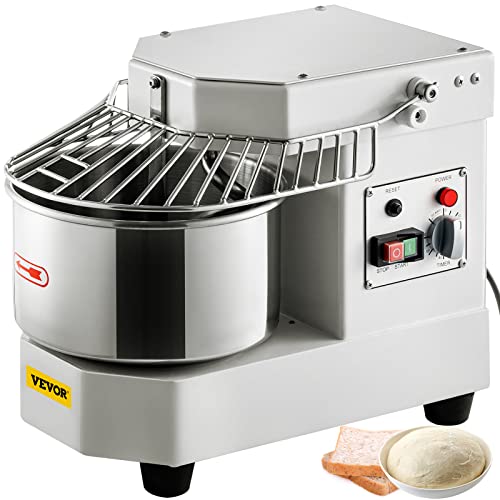
- Handles up to 3 kg of dough
- Dual-rotation mixing system
- Timer and safety-shield controls
Best For: Small bakeries and pizzerias needing heavier-duty batch mixing
Best Compact Fermenting Mixer
Sakerplus 7L Electric Dough Maker

- 7L bowl for smaller batches
- Kneads, rests and ferments
- Digital controls with stable footing
Best For: Compact bakery prep and lower-volume dough production
Best Hand-Kneading Simulation
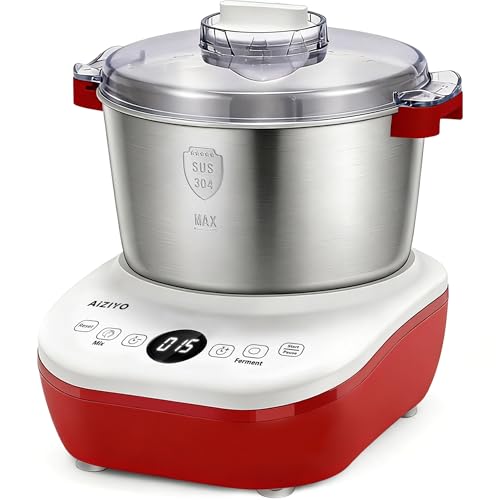
- Mix-pause-mix kneading program
- Built-in 77–100°F fermentation
- 304 stainless-steel bowl and removable lid
Best For: Small-batch bread and pizza dough with proofing
Best Seasonal Fermentation Controls
Joydeem 9.5Qt Electric Dough Maker

- 9.5-quart bowl for larger batches
- Four mixing and fermentation programs
- Winter and summer fermentation modes
Best For: Small bakeries making varied doughs and fillings year-round
Best for Beginners
5.3Qt Hands-Free Dough Kneader

- Dough-focused hands-free kneading
- Fermentation heats dough to 100°F
- Handles up to 1.4 kg of dough
Best For: Beginners and light-duty small-batch baking
High-Capacity Workhorse

- Handles up to 14.88 lb of dough per batch
- Timed mixing and 100–108°F fermentation
- Quiet 500W motor with removable stainless bowl
Best For: Small bakeries producing large bread and pizza batches
Compact Controlled Kneader
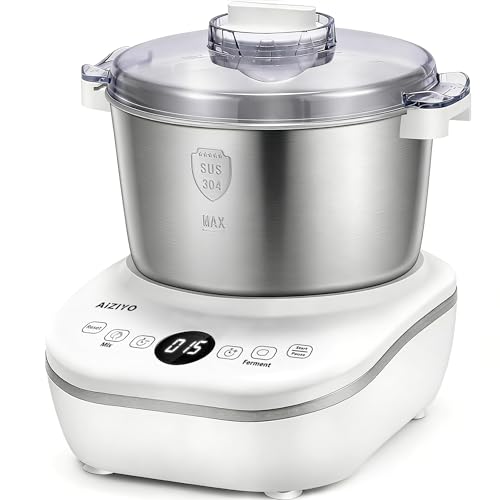
- Mix-pause-mix program for gentler kneading
- Three modes: Mix, Ferment, and Mix & Ferment
- Compact bowl with dishwasher-safe removable parts
Best For: Small workstations making family-size bread and pizza batches
Best Commercial Spiral Mixer – VEVOR 8.5Qt Commercial Food Mixer
For small bakeries needing dough kneading machines for small bakeries, the VEVOR 8.5Qt Commercial Food Mixer emphasizes batch capacity and commercial-style construction. Its dual-rotation system, stainless-steel bowl and timed operation make it suited to repeatable dough preparation.
Best For: Small bakeries, pizzerias and food businesses preparing up to 3 kg of dough per batch.
Pros:
- 8-liter bowl handles up to approximately 3 kg of dough.
- Dual rotation uses a 21 rpm bowl and 159 rpm hook for even mixing.
- 60-minute timer, safety shield and automatic shutoff support controlled operation.
- Food-grade stainless-steel food-contact parts are rust- and corrosion-resistant.
Cons:
- At 81.6 pounds, it is substantially heavier than the other listed machines.
- It has one speed rather than multiple speed settings.
- The listed noise level is 70 dB.
This is the most commercial-oriented option in the group, especially when stability and larger dough batches matter more than portability. Its single-speed design is less flexible, but the timer and dual rotation can simplify routine bakery production.
Best Compact Fermenting Mixer – Sakerplus 7L Electric Dough Maker
The Sakerplus Electric Dough Maker is a compact choice among dough kneading machines for small bakeries, combining automatic kneading with resting and fermentation functions. Its 7-liter bowl and digital controls suit lower-volume preparation where countertop space and easy handling are priorities.
Best For: Small operations or home-based bakeries making roughly 400–1600 g of dough at a time.
Pros:
- 7-liter stainless-steel bowl supports flexible small-batch preparation.
- Combines kneading, resting and fermentation in one machine.
- Digital controls allow working time to be adjusted for different recipes.
- Side handles and non-slip feet help with repositioning and stability.
Cons:
- Its stated capacity is smaller than the VEVOR and Joydeem models.
- The 220-watt motor may be better suited to lighter-duty workloads than continuous commercial production.
- The supplied details list a 7-volt rating, which should be verified before purchase.
Choose this model when a compact footprint and fermentation capability are more important than maximum throughput. The removable bowl, lid and included measuring accessories also support straightforward everyday preparation.
Best Hand-Kneading Simulation – AIZIYO DoughChief 7.4Qt Mixer
The AIZIYO DoughChief offers a hand-kneading-inspired program for bakers comparing dough kneading machines for small bakeries. Its mix-pause-mix cycle, 304 stainless-steel bowl and constant-temperature fermentation mode are designed for bread, pizza, pasta and similar doughs.
Best For: Small-scale bakers who want automated kneading plus controlled proofing for family-size batches.
Pros:
- Mix-pause-mix programming is intended to mimic hand kneading.
- Built-in fermentation maintains a stated 77–100°F range.
- 7.4-quart 304 stainless-steel bowl supports multiple loaves or a large pizza dough batch.
- Removable lid and detachable blade simplify ingredient access and cleaning.
Cons:
- It has one speed, limiting adjustment during mixing.
- The supplied notes specify that yeast or fermentation powder is required for ferment mode.
- Its 250-watt motor and 9.9-pound weight suggest a lighter-duty format than the VEVOR.
The DoughChief is a practical middle ground for a small bakery that values fermentation features and gentler, programmed kneading. It offers useful batch capacity without the weight of a traditional commercial mixer, though its single-speed operation may not suit every workflow.
Best Seasonal Fermentation Controls – Joydeem 9.5Qt Electric Dough Maker
The Joydeem 9.5Qt Electric Dough Maker stands out among dough kneading machines for small bakeries with four operating programs and separate winter and summer fermentation modes. It is designed for larger batches, dough kneading and continuous blending of fillings.
Best For: Small bakeries needing flexible fermentation settings and up to about 2,800 g of flour capacity.
Pros:
- 9.5-quart bowl accommodates flour weights from 900 g to 2,800 g.
- Four programs cover Mix, Ferment, Mix + Ferment and Blend.
- Winter and summer fermentation modes offer adjustable temperature ranges.
- 304 stainless-steel bowl and blade are durable and easy to clean.
Cons:
- The product uses intermittent MIX operation, which may not suit users seeking continuous kneading.
- Its plastic and stainless-steel construction may feel less heavy-duty than a commercial carbon-steel mixer.
- The listed flour guidance caps fermented dough at 2,500 g.
Joydeem is the most flexible option here for businesses making varied products, particularly when seasonal proofing conditions change. Its larger bowl and BLEND mode also make it useful beyond dough, although its design is still more compact and consumer-oriented than the VEVOR.
Best Overall – Joydeem 7.4Qt Dough Maker
For small bakeries seeking dough kneading machines for small bakeries with automated timing and proofing, the Joydeem JD-HMJ7L combines a 6.24-liter stainless steel bowl with a 250W motor. Its preset programs can knead dough in about 15 minutes or knead and proof it in about 45 minutes.
Best For: Small bakeries and home-based baking operations that want automated kneading and fermentation in a compact vertical design.
Pros:
- Microcomputer controls support preset timing and program selection.
- Fermentation function and intermittent kneading motion help automate dough preparation.
- Stainless steel bowl and blade are dishwasher safe; the top cover is removable.
- Weighted construction and suction cups help reduce movement and noise.
Cons:
- The machine has only one speed and is not speed-adjustable.
- Its listed noise level is 70 dB, so it may not be especially quiet in every setting.
- The base is not dishwasher safe.
The Joydeem is a well-rounded choice when timed kneading, proofing, and straightforward cleanup matter more than variable-speed control. Its capacity is useful for regular small-batch production, though the 250W motor and single-speed design are best matched to the dough workloads described by the manufacturer.
Best for Beginners – 5.3Qt Hands-Free Dough Kneader
Among dough kneading machines for small bakeries, this 5.3-quart model emphasizes simple, hands-free operation for bread, pizza, pasta, and sourdough. Its 150W low-speed motor, timer, and fermentation setting are designed for consistent everyday dough preparation.
Best For: Beginners and small baking setups that prioritize easy operation, hands-free kneading, and family-size batches.
Pros:
- Designed specifically for dough kneading rather than general mixing.
- Removable S-shaped 304 stainless steel blade supports hands-free operation.
- Fermentation function can heat dough to 100°F (38°C).
- 5.3-quart 304 stainless steel bowl accommodates up to 1.4 kg of dough.
Cons:
- The 150W motor is less powerful on paper than the 250W models in this roundup.
- Controls use a knob rather than a digital touch interface.
- The supplied notes identify a fermentation function but do not specify additional kneading speeds.
This kneader is a practical fit for operators who want a straightforward dough-focused appliance rather than a multipurpose stand mixer. Its capacity and fermentation control suit routine small-batch production, while the lower wattage may make it less appropriate for heavier workloads.
Best Large-Batch Capacity – 7.4Qt Commercial-Style Dough Maker
For small bakeries comparing dough kneading machines for small bakeries, this 7.4-quart dough maker offers one of the largest stated capacities in the group. Its 250W motor, automatic fermentation range of 77–100°F, and detachable stainless steel bowl support bread, pizza, buns, noodles, and dumpling dough.
Best For: Small bakeries that need larger single-batch capacity and want to monitor or add ingredients during mixing.
Pros:
- 7.4-quart bowl accommodates 300g to 2100g of flour per batch.
- Automatic fermentation starts after kneading and operates from 77–100°F.
- Touch controls, digital display, time setting, and auto shutoff add convenience.
- Transparent lid and top feeding window make monitoring and ingredient additions easier.
Cons:
- The supplied notes do not specify the machine’s number of speeds.
- Its larger capacity may occupy more counter space than smaller kneaders.
- The product is listed at 110 volts, so buyers should verify electrical compatibility.
This model stands out for capacity and process visibility. The broad flour range makes it flexible for different production sizes, while automatic fermentation and touch controls can reduce hands-on work. It is a strong option when batch volume matters more than compact dimensions.
High-Capacity Workhorse – 13.8QT Commercial Dough Mixer
For small bakeries that need dough kneading machines for small bakeries with substantial batch capacity, this 13.8-quart countertop mixer is built for higher-volume preparation. Its stainless steel bowl, spiral hook, timer, and fermentation function support bread and pizza production while keeping operation relatively quiet.
Best For: Small bakeries, cafeterias, and restaurants making large batches of dough.
Pros:
- Handles up to 14.88 pounds of dough or 9.92 pounds of flour per batch.
- Includes timed mixing and automatic 100–108°F fermentation support.
- 500W motor operates below 60 dB and includes a cooling system.
- Removable bowl and spiral hook simplify cleaning and handling.
Cons:
- Its nearly 20-inch width requires substantial counter space.
- The 110V unit is relatively large for very small production areas.
This is the strongest capacity-focused choice in the group. The generous bowl and commercial-oriented construction suit frequent batch work, while the timer and fermentation feature can streamline routine bakery prep.
Efficient Mid-Size Pick – 7.4QT Fermenting Dough Mixer
This 7.4-quart dough mixer offers a practical middle ground for small bakeries seeking dough kneading machines for small bakeries without the footprint of a larger commercial model. Its stainless steel construction, fermentation function, and ingredient-access window are useful for repeat bread, pizza, and pastry preparation.
Best For: Small bakery kitchens and larger household-style production requiring moderate batch capacity.
Pros:
- 7.4-quart capacity supports multiple servings of bread or pizza dough.
- Constant-temperature fermentation helps provide a consistent proofing environment.
- Top window allows water, seasoning, or other ingredients to be added during mixing.
- Digital display, time setting, and auto shutoff support hands-off operation.
Cons:
- Its single-speed design offers less control than a variable-speed mixer.
- The 250W motor is less powerful than the larger 500W model in this roundup.
Choose this model when you want useful fermentation and timed controls in a more compact format. It is well suited to moderate production, though the single speed may be limiting for operators who need finely adjustable mixing.
Compact Controlled Kneader – 5.3QT DoughChief Mixer
The AIZIYO DoughChief is a compact option among dough kneading machines for small bakeries, particularly where counter space and batch size are limited. Its mix-pause-mix program, fermentation modes, removable parts, and stainless steel bowl make it adaptable for bread, pizza, pasta, and mochi dough.
Best For: Small bakery workstations and family-size batches where compact cleanup-friendly equipment matters.
Pros:
- Mix-pause-mix operation is designed to mimic intermittent hand kneading.
- Offers Mix, Ferment, and Mix & Ferment modes.
- Removable lid permits ingredient additions without stopping the mixer.
- Compact 5.3-quart bowl and dishwasher-safe removable parts simplify cleanup.
Cons:
- Its 5.3-quart capacity is the smallest among these three options.
- The 200W motor may be better suited to family-size batches than demanding high-volume production.
- Listed noise level is 75 dB, higher than the 13.8-quart model’s stated level.
This mixer prioritizes controlled kneading and convenience over maximum throughput. It makes sense for a small bakery with modest batch requirements, especially one that values fermentation presets and easy access during mixing.
How We Picked the Best Dough Kneading Machines for Small Bakeries
We focused on machines that match the practical demands of a small bakery rather than simply choosing the largest models. Key considerations included bowl capacity, stated dough handling limits, motor power where provided, kneading and mixing functions, timer controls, fermentation features, bowl materials, countertop footprint, and ease of operation.
Because product specifications can vary by seller and batch size, treat advertised capacity as a guide rather than a guaranteed dough yield. Heavy or low-hydration dough places more strain on a mixer than lighter batters, so leave room in the bowl and follow the manufacturer’s instructions.
Quick Comparison
| Best For | What to Look For |
|---|---|
| Occasional production | Compact 5.3- to 7.4-quart bowl, simple controls, and easy cleanup |
| Daily bread and pizza batches | Stronger construction, timer programming, and a larger 7.4- to 9.5-quart capacity |
| Higher-volume countertop work | A 13.8-quart bowl, robust motor, stable base, and clear load limits |
| Fermented dough workflows | Dedicated fermentation settings, temperature guidance, and a covered bowl or lid |
| Multiple bakery preparations | Mixing, kneading, blending, or filling functions with accessible controls |
Key Buying Factors for Dough Kneading Machines for Small Bakeries
Capacity and Realistic Batch Size
Choose capacity based on your normal batch, not the largest occasional recipe. A smaller machine may be easier to clean and more efficient for frequent modest batches, while a 9.5- or 13.8-quart model can reduce the number of cycles during busy periods. Confirm the maximum flour or dough weight before buying.
Motor, Stability, and Durability
Dough creates more resistance than cake batter. Look for a stable countertop design, secure bowl, durable kneading components, and clear information about motor power and operating time. A timer is useful, but it does not replace monitoring the machine during heavy kneading.
Fermentation and Controls
Built-in fermentation can simplify proofing by combining mixing, timing, and resting in one workflow. Touch panels and programmable timers are convenient, while basic controls may be preferable for staff who value straightforward operation. Check whether temperature, time, and seasonal settings are adjustable enough for your recipes.
Cleaning, Noise, and Space
Stainless-steel bowls are generally practical in a bakery, but inspect whether lids, attachments, and touch controls are easy to clean. Measure counter depth and overhead clearance, and consider noise if the mixer will run near customers or a small front-of-house team.
Who Should Buy Which Dough Kneading Machines for Small Bakeries?
Choose a compact 5.3- or 7.4-quart machine if your bakery produces small daily batches and has limited counter space. A 7.4- to 9.5-quart model is a better middle ground for regular bread and pizza production, especially when timed fermentation or multiple functions can streamline prep. Select the 13.8-quart commercial-style option only when your recipes and sales volume justify its larger footprint and capacity.
For sourdough and other fermented products, prioritize reliable timing and fermentation controls. For a mixed menu, consider models that also support filling or blending. Before ordering, verify voltage, included attachments, warranty coverage, replacement-part availability, and the seller’s stated maximum dough load.