Making bread, pizza, and sourdough at home is easier when mixing and kneading no longer depends on constant hands-on work. The best electric dough kneading machines combine useful capacity with controlled mixing, fermentation, and straightforward cleanup.
We compared 10 models across bowl size, materials, controls, fermentation features, and intended workload so you can choose a machine that fits your recipes, counter space, and baking routine.
Best 10 Electric Dough Kneading Machines Picks for 2026
Best Large-Batch Versatility
Joydeem 9.5Qt Dual-Mode Dough Maker

- 9.5Qt capacity for large batches
- Mix, Blend, Ferment, and combined modes
- Winter and Summer fermentation settings
Best For: Large households and frequent bakers mixing doughs and fillings
Best Straightforward Kneading
VEVOR 6.9Qt Fermenting Dough Mixer

- 250W motor with 150 RPM mixing
- Kneading and constant-temperature proofing
- Detachable chute for adding ingredients
Best For: Home bakers wanting simple mixing and proofing for family batches
Versatile Fufu & Dough Maker

- Mixes, proofs, and heats fufu preparations
- 7-liter nonstick bowl for up to 1,000g flour
- Digital timer and removable bowl
Best For: Home cooks making dough and fufu
Compact Fermentation Option
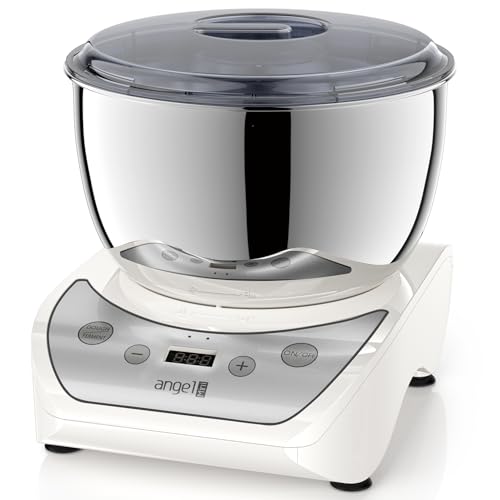
- 86–104°F constant-temperature fermentation
- One-touch mix and ferment programs
- Stainless bowl with low-noise stabilizing suction cups
Best For: Compact family baking setups
High-Volume Spiral Mixer
13.8-Quart Commercial Dough Maker

- Handles up to 14.88 pounds of dough
- 500-watt motor rated below 60 dB
- Five- to 120-minute timer
Best For: Commercial and high-volume home kitchens
Quiet Countertop Kneader

- Handles 300–1,400 grams of dough
- 77–95°F constant-temperature fermentation
- Suction-cup base and low-noise design
Best For: Everyday home bread and pizza baking
Best Smart Compact Pick – Joydeem 7.4Qt Timed Dough Maker
For shoppers comparing electric dough kneading machines, the Joydeem JD-HMJ7L combines timed programs, intermittent kneading, and automatic fermentation in a space-conscious vertical design. Its 250W motor and 6.6Qt bowl suit everyday bread, pizza, bun, and dumpling preparation.
Best For: Families wanting preset kneading and proofing with a relatively compact countertop footprint.
Pros:
- Microcomputer controls offer time presetting and multiple automatic programs.
- Can knead dough in about 15 minutes or knead and proof in about 45 minutes.
- Stainless steel bowl and blade are dishwasher safe, and the lid is removable.
- Weighted body and suction cups help reduce movement and noise.
Cons:
- Only one speed is listed, with no speed adjustment.
- The base is not dishwasher safe.
- Listed noise level is 70 dB.
This is a practical choice if automation and easy cleanup matter more than variable-speed control. The 6.6Qt capacity is useful for family batches without moving into the largest class of dough makers.
Best Large-Batch Versatility – Joydeem 9.5Qt Dual-Mode Dough Maker
Among electric dough kneading machines, the Joydeem HMJ-A901 stands out for its 9.5Qt capacity, separate Mix and Blend functions, and seasonal fermentation settings. Its 300W intermittent motor is designed for doughs ranging from bread and pizza to roti, sourdough, dumplings, and steamed buns.
Best For: Larger households and frequent bakers who also want to mix fillings.
Pros:
- Large bowl handles recommended flour weights from 900g to 2800g, with up to 2500g for fermented dough.
- Four modes cover mixing, fermenting, combined mixing and fermenting, and continuous blending.
- Winter and Summer fermentation modes provide temperature ranges for different conditions.
- Mixing time and fermentation time are adjustable across broad ranges.
Cons:
- Its 12.9-by-12.2-by-13.8-inch footprint requires substantial counter space.
- The notes do not list dishwasher-safe components.
- It is designed for home use only under the stated replacement coverage.
This model is the most flexible option in the group for high-volume preparation and varied recipes. Choose it when capacity and control are priorities, and make sure your counter can accommodate its larger vertical body.
Best Straightforward Kneading – VEVOR 6.9Qt Fermenting Dough Mixer
The VEVOR LY-801-07C is one of the more straightforward electric dough kneading machines, using a 250W motor and 150 RPM continuous mixing action. It combines kneading with constant-temperature proofing and provides a digital control panel for setting operating times.
Best For: Home bakers who want continuous mixing, proofing, and a moderate family-size capacity.
Pros:
- 6.5L stainless steel bowl accommodates up to 1600g of flour.
- Combines dough mixing and constant-temperature fermentation in one appliance.
- Detachable ingredient chute allows additions without stopping the machine.
- Face-up controls and guided operation are convenient for routine preparation.
Cons:
- Continuous mixing differs from machines that simulate intermittent hand-kneading.
- The notes do not specify adjustable mixing or fermentation ranges.
- The ABS body and bowl cover may require more care than an all-stainless exterior.
This VEVOR model keeps the feature set focused on everyday dough preparation. Its capacity is suitable for family batches, while the ingredient chute adds flexibility when adjusting a recipe during mixing.
Best Quiet Family-Size Option – 5.3Qt Touch-Control Dough Maker
This 5.3Qt dough maker offers a compact approach to electric dough kneading machines, with a 250W motor, touch controls, and automatic fermentation after kneading. It handles bread, pizza, dumpling, cookie, and cake mixtures while supporting up to 1600g of flour for mixing.
Best For: Smaller families seeking automatic fermentation and quieter operation for regular baking.
Pros:
- Automatic fermentation operates within a stated 77–100°F temperature range.
- 5Qt-class capacity supports 300g to 1600g of flour, with up to three loaves at once.
- Silicone noise-reduction padding is designed to limit operating noise.
- Transparent lid and top feeding window make monitoring and adding ingredients easier.
Cons:
- For best fermentation results, the recommended flour limit is 1300g.
- The notes do not list multiple speeds or mixing programs.
- Its 110V specification differs from the 120V models in this roundup.
This is a sensible middle-capacity choice for routine family baking, particularly if automatic proofing and a quieter base are important. Its lower recommended fermentation load is worth considering when making especially large batches.
Versatile Fufu & Dough Maker – 7.4-Quart VEVOR Ferment Mixer
For shoppers comparing electric dough kneading machines, the VEVOR 7.4-quart model stands out for combining dough mixing, constant-temperature proofing, and fufu preparation. Its 250W stirring motor, 800W bottom heater, timer, and nonstick bowl support both everyday dough work and thick starch-based recipes.
Best For: Home cooks who want one machine for dough, proofing, and smooth fufu preparation.
Pros:
- Combines mixing, proofing, and heated fufu preparation.
- 7-liter nonstick bowl accommodates up to 1,000g of flour.
- Removable bowl and nonstick surfaces simplify cleanup.
- Digital controls and a timer help organize the workflow.
Cons:
- The 800W heating function may be more than needed for shoppers focused only on bread dough.
- Its plastic exterior and beige finish may not suit every kitchen.
The VEVOR is a practical choice when versatility matters more than a dedicated bread-only design. Its larger capacity suits batches for roughly three to four people, while the heated mixing function gives it a broader cooking role than many standard kneaders.
Hand-Kneading Style Pick – AIZIYO DoughChief 7.4QT Mixer
Among electric dough kneading machines, the AIZIYO DoughChief focuses on bread-making flexibility with mix, ferment, and combined modes. Its pause-and-mix program is designed to simulate hand kneading, while the stainless steel bowl and removable parts support regular family baking.
Best For: Home bakers who want bread, pizza, pasta, and sourdough support with integrated proofing.
Pros:
- Mix-pause-mix operation is intended to mimic hand kneading.
- Stable 77–100°F fermentation range supports dough proofing.
- 7.4-quart 304 stainless steel bowl suits family-size batches.
- Removable lid allows ingredient additions while mixing.
Cons:
- It has one listed speed, limiting speed customization.
- The listed 75 dB noise level may matter to noise-sensitive users.
- Fermentation requires yeast or another fermentation powder.
The DoughChief is a strong fit for users who value controlled fermentation and a kneading pattern modeled on hand work. Its 3-in-1 program layout is straightforward, though the single-speed design is less adjustable than some conventional mixers.
Compact Fermentation Option – Mini Angel 5.5QT Dough Mixer
This 5.5-quart Mini Angel is one of the more compact electric dough kneading machines for home bread, pizza, and pastry batches. It pairs a 250W motor with one-touch mix-and-ferment programs, constant-temperature proofing, a transparent lid, and a stainless steel bowl.
Best For: Families wanting a compact, easy-to-use dough mixer with automatic fermentation.
Pros:
- 86–104°F constant-temperature fermentation helps support consistent proofing.
- Touch controls let users choose mixing, fermenting, or both and set a time.
- 5.5-quart capacity handles multiple bread, pizza, or pastry batches.
- 304 stainless steel bowl, suction cups, and automatic shutoff aid everyday use.
Cons:
- Its 5.5-quart capacity is smaller than the 7.4-quart options in this roundup.
- The motor operates intermittently during mixing, which may require adjusting expectations.
- The splash-guard opening requires counterclockwise rotation.
The Mini Angel balances useful capacity with simple controls and a relatively compact footprint. Choose it when straightforward fermentation and cleanup are priorities, but consider a larger model if you regularly prepare especially large batches.
Family-Batch Fermenter – 7.4-Quart Dough Maker
If you need electric dough kneading machines for regular bread, pizza, or pastry baking, this 7.4-quart model emphasizes capacity and convenience. Its stainless-steel construction, constant-temperature fermentation, and top ingredient window make it practical for preparing multiple batches with minimal interruption.
Best For: Families and home bakers who want large-batch dough mixing with built-in proofing.
Pros:
- 7.4-quart capacity suits large families and gatherings.
- Constant-temperature fermentation supports consistent proofing.
- Top window lets you add water or seasoning while mixing.
- Touch controls include time setting, digital display, and auto shutoff.
Cons:
- The 250-watt motor and single-speed control offer less adjustment than higher-powered mixers.
- The large bowl may be more capacity than small households need.
This is a sensible choice when batch size and fermentation features matter more than multi-speed versatility. Its intermittent kneading design is also intended to help limit overheating and premature rising.
High-Volume Spiral Mixer – 13.8-Quart Commercial Dough Maker
Among electric dough kneading machines, this commercial-style mixer is built for substantially larger batches. Its 13.8-quart stainless-steel bowl, spiral hook, timer, and fermentation setting make it a strong fit for busy kitchens that need repeatable dough preparation.
Best For: Bakeries, restaurants, cafeterias, and large households handling high-volume dough production.
Pros:
- Handles up to 14.88 pounds of dough or 9.92 pounds of flour per batch.
- 500-watt motor is rated below 60 dB for a quieter workspace.
- Five- to 120-minute timer and LED touch controls simplify operation.
- Removable bowl and hook support faster cleaning without extra tools.
Cons:
- Its 19.7-inch width and 17.3-inch height require substantial counter space.
- The commercial capacity may be excessive for occasional home baking.
- The supplied specifications do not identify a broad range of mixing speeds.
Choose this model when production volume, timer control, and a detachable stainless-steel bowl are priorities. The auto-temperature fermentation range and spiral mixing action add useful commercial-style functionality.
Quiet Countertop Kneader – 6.5-Quart Fermenting Mixer
This 6.5-quart option is one of the more approachable electric dough kneading machines for everyday bread, pizza, pasta, and dumpling preparation. It combines a stainless-steel S-shaped blade with timed mix-pause-mix kneading, constant-temperature fermentation, and a hands-on knob control.
Best For: Home bakers who want a quieter, compact dough mixer with straightforward controls and proofing support.
Pros:
- Recommended working range of 300 to 1,400 grams of dough supports typical home batches.
- Fermentation maintains 77–95°F for a consistent yeast environment.
- Removable blade and smooth stainless-steel bowl simplify cleanup.
- Suction-cup base, safety buckles, and low-noise operation improve stability.
Cons:
- The bowl is not recommended for dishwasher cleaning.
- Mechanical knob controls may offer fewer automated settings than touch-panel models.
- Fermentation requires yeast or baking powder to work as intended.
This model balances useful capacity with a quieter, stable design for routine home baking. Its intermittent operation and ventilation are also intended to reduce heat buildup during kneading.
How We Picked the Best Electric Dough Kneading Machines
We focused on the features that matter most during regular baking: bowl capacity, dough-focused mixing performance, fermentation controls, construction, ease of use, and cleanup. Models with stainless steel bowls, removable lids, timers, or dedicated fermentation functions received particular attention because these features can make repeated batches more convenient.
Capacity was also considered in context. A larger bowl may suit families or frequent bakers, while a compact machine can be easier to store and more practical for occasional bread and pizza dough. Because listed capacity does not always equal usable dough capacity, treat the figures below as a comparison starting point rather than a guarantee of maximum flour or dough weight.
Quick Comparison
- Small-batch and occasional baking: Choose a machine in the roughly 5.3- to 6.5-quart range.
- Regular family baking: A 7.4-quart model offers a useful balance of capacity and countertop practicality.
- Larger batches: Consider a 9.5-quart model or the 13.8-quart commercial-style option.
- Fermentation convenience: Look for a built-in ferment function, timer, and temperature-related controls.
- Ingredient flexibility: A model with separate mixing or blending modes may be useful for fillings as well as dough.
Key Buying Factors for Electric Dough Kneading Machines
Capacity and Batch Size
Select capacity according to the amount of dough you normally make, not only the largest advertised bowl size. Oversizing can waste counter space, while an undersized machine may require multiple batches. Check the manufacturer’s recommended dough limit whenever available.
Mixing and Kneading Functions
Look for controls suited to bread, pizza, and enriched dough. Multiple programs or speed settings can improve flexibility, but a simple dedicated dough cycle may be preferable if ease of use is your priority. If you also prepare fillings, a second blending function can add value.
Fermentation and Timing
Built-in fermentation functions can help maintain a more consistent proofing environment than leaving dough on the counter. Timers and seasonal or temperature-related settings are especially useful for bakers who want repeatable results.
Construction and Cleanup
304 stainless steel bowls are durable and generally easy to wipe clean. Removable lids improve access during ingredient loading and cleanup, while face-up touch panels or LED displays can make settings easier to see. Confirm which components are removable and whether they are dishwasher-safe before buying.
Counter Space and Noise
Measure the machine’s footprint, height, and lid clearance before purchase. Larger-capacity mixers can be heavy and harder to store. Noise, vibration, and stability also matter when kneading stiff dough, so a sturdy base is preferable.
Who Should Buy Which Electric Dough Kneading Machines?
Occasional home bakers should prioritize a compact 5.3- to 6.5-quart machine with simple controls and easy cleanup. Families and frequent bread makers will likely benefit from a 7.4-quart model with fermentation and timing features. High-volume home bakers or small food businesses should consider the 9.5- or 13.8-quart options, provided they have enough counter and storage space.
For the best match, compare usable dough capacity, not just bowl volume, and favor the features you will use every week. A reliable timer, manageable cleanup, and stable kneading performance are often more valuable than extra programs that remain unused.