Keeping an aquarium stable is easier when the right controller handles the routine checks for you. From temperature regulation to leak alerts and auto top-off support, today’s smart aquarium controller options can reduce guesswork and protect livestock.
This roundup highlights practical picks for freshwater and reef setups, from simple plug-and-play controllers to app-connected systems with broader automation.
Best 10 Smart Aquarium Controller Picks for 2026
Precision Monitoring Pick
Neptune Systems A3 Apex Jr. Aquarium Controller

- Temperature and pH probes included
- Leak detection and level sensor support
- Wi-Fi app monitoring with expansion options
Best For: Hobbyists who want reliable core monitoring with room to expand later.
AI Climate Automation Pick

- AI-driven automation learns environmental patterns
- Wi-Fi app with alerts, charts, and AI chat
- Supports up to 32 connected devices
Best For: Users who want AI-assisted automation and detailed environment control.
Auto Top-Off Pick

- Automatic top-off for freshwater and saltwater tanks
- Optical sensor with anti-overfill protection
- Compact pump rated up to 70 GPH
Best For: Aquarists who want automatic evaporation compensation with simple, compact hardware.
Temperature Control Value Pick
Inkbird ITC-308 Thermostat Controller

- Dual relays handle heating and cooling
- Alarm plus compressor delay improve safety
- Shows set and measured temperatures together
Best For: Budget-minded users who need simple temperature control for heating and cooling.
Smart Reef Automation
Red Sea ReefRun Dual Controller for ReefBeat

- Works with ReefBeat app control
- Manages up to 2 ReefRun devices
- Custom feed, maintenance, emergency modes
Best For: Red Sea reef tank owners using compatible ReefRun pumps
Temperature Guard
Inkbird ITC308S Aquarium Thermostat
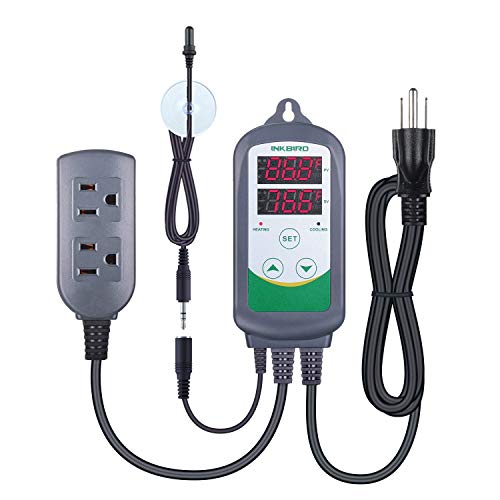
- Controls heating and cooling
- Fully submersible aquarium probe
- Dual display with temp alarms
Best For: Aquarists who want simple heater and cooling fan automation
Auto Top-Off Control

- Integrated controller-in-probe design
- AI adaptive refill timing
- Triple sensor overflow protection
Best For: Reef aquarists who want automated top-off with strong safety features
Temperature Control Pick
Meross Smart Wi-Fi Thermostat Outlet

- App, voice, and button control
- Heating and cooling support with schedules
- Water-safe stainless steel sensor
Best For: Simple smart temperature control for aquarium-related heating or cooling equipment
Advanced Environment Pick
AC Infinity Outlet AI+ 8-Plug Controller
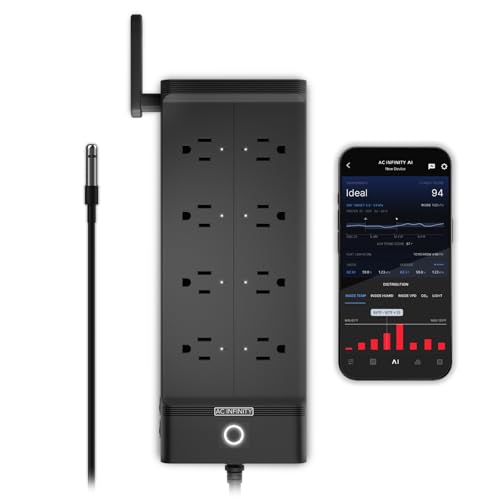
- Eight independent smart outlets
- AI targeting with dual-zone climate monitoring
- Supports heaters, lights, fans, and pumps
Best For: Advanced aquarium or terrarium setups that need multi-device climate automation
Compact Environment Pick
AC Infinity Outlet AI 4-Plug Controller

- Four independently controlled outlets
- AI targeting plus app alerts and charts
- Dual-zone temperature, humidity, and VPD tracking
Best For: Smaller aquarium or terrarium setups needing smart climate control without eight outlets
Precision Monitoring Pick – Neptune Systems A3 Apex Jr. Aquarium Controller
If you want a smart aquarium controller that focuses on the essentials, the Neptune Systems A3 Apex Jr. gives you temperature, pH, and leak monitoring in one compact setup. It also adds level sensor support and Wi-Fi access through Apex Fusion, making it a practical choice for keeping a close eye on tank conditions from anywhere.
Best For: Hobbyists who want reliable core monitoring with room to expand later.
Pros:
- Includes temperature and pH probes for real-time water monitoring.
- Leak detection sensor adds an extra layer of protection.
- Wi-Fi connectivity and Apex Fusion app support remote monitoring and alerts.
- Compact design with AquaBus ports for future expansion.
Cons:
- Expansion devices like an EB832 Power Bar are needed to control pumps and lights.
- Best suited to users who want monitoring first, not a full all-in-one control package.
This is a strong entry point if you want dependable aquarium oversight without overcomplicating setup. It covers the key stability risks—temperature, pH, and leaks—while leaving a clear path to grow the system later.
AI Climate Automation Pick – AC Infinity Controller AI+
The AC Infinity Controller AI+ is built for users who want a smart aquarium controller-style automation platform with advanced environmental control and app-based oversight. Its AI-driven adjustments, dual-zone temperature and humidity monitoring, and broad device compatibility make it a strong option when precision and automation matter more than simplicity.
Best For: Users who want AI-assisted automation and detailed environment control.
Pros:
- AI-powered controls can learn patterns and adjust device output dynamically.
- Wi-Fi app includes alerts, charts, guides, and AI chat support.
- Supports up to 32 devices across fans, lights, humidifiers, heaters, and more.
- Dual-zone temperature, humidity, and VPD monitoring adds flexibility.
Cons:
- Designed for environmental automation rather than aquarium-specific monitoring.
- Optional sensors for CO₂, hydro, or soil are sold separately.
This is the most automation-heavy option in the group, but it makes the most sense for controlled environments where responsive climate management is the priority. If you want deep data, remote access, and a wide device ecosystem, it offers a lot of capability.
Auto Top-Off Pick – Aquarium ATO 100
If your main concern is keeping water level stable, this aquarium controller-style ATO system is built for automatic top-off duties in freshwater or saltwater tanks. The optical sensor, anti-overfill protection, and compact pump setup make it a straightforward way to reduce daily maintenance and protect against low-water issues.
Best For: Aquarists who want automatic evaporation compensation with simple, compact hardware.
Pros:
- Optical sensor helps keep the tank refilled when water drops.
- Anti-overfill function adds protection against flooding.
- Compact pump design with up to 3 meters head and 70 GPH flow rate.
- Works for both freshwater and saltwater aquariums.
Cons:
- Focuses on top-off automation only, not broader tank monitoring.
- Less versatile than multi-sensor controllers for advanced setups.
This is a practical pick if you mainly want hands-off water level management. It won’t replace a full monitoring system, but it does one job well and adds a useful safeguard against overfilling.
Temperature Control Value Pick – Inkbird ITC-308 Thermostat Controller
The Inkbird ITC-308 is a straightforward smart aquarium controller option if you need dependable temperature switching for heating and cooling equipment. It uses dual relays, shows current and set temperature at the same time, and includes alarm functions and compressor delay to help protect connected gear.
Best For: Budget-minded users who need simple temperature control for heating and cooling.
Pros:
- Dual relay supports both heating and cooling equipment.
- Dual display window shows measured and set temperatures together.
- Buzzer alarm alerts for high/low temperatures or sensor issues.
- Compressor delay and 1100W maximum output add practical protection.
Cons:
- Focused on temperature control rather than broader aquarium monitoring.
- Wired, button-based design is less advanced than app-connected controllers.
For users who mostly need a reliable thermostat, this is the simplest pick in the roundup. It does not try to manage everything, but it handles temperature control with useful safety features and an easy-to-read display.
Smart Reef Automation – Red Sea ReefRun Dual Controller for ReefBeat
If you want a smart aquarium controller for a Red Sea setup, this dual controller keeps things focused on pump management rather than trying to do everything. It works with the ReefBeat app and is designed for ReefRun return and skimmer pumps, making it a practical pick when you want app-based control for a compatible reef system.
Best For: Red Sea reef tank owners who need app-controlled management for up to two ReefRun devices.
Pros:
- Integrates with the ReefBeat app for smart control.
- Supports up to 2 ReefRun devices.
- Lets you customize feed, maintenance, and emergency modes.
- Compact metal and stainless steel build.
Cons:
- Only works with compatible ReefRun return and skimmer pumps.
- Focused on pump control, not full-tank automation.
This is a strong choice if your priority is clean, app-connected control inside the Red Sea ecosystem. It is less versatile than a broad multi-function controller, but it matches well with its intended pumps and routines.
Temperature Guard – Inkbird ITC308S Aquarium Thermostat
If you need a smart aquarium controller for temperature stability, the Inkbird ITC308S is a simple all-in-one option for heating and cooling. It uses a fully submersible probe, dual display, and on/off control, so it suits hobbyists who want straightforward thermostat automation without a complex setup.
Best For: Aquarium owners who want easy temperature control with heater and fan outlets.
Pros:
- Controls both heating and cooling.
- Fully submersible probe is designed to work better in water than a standard probe.
- Dual display shows measured and set temperature at the same time.
- Includes temperature calibration plus over-temperature and sensor fault alarm.
Cons:
- Uses on/off control rather than more advanced regulation.
- Maximum output load is limited to 1200W at 110V.
This controller is a good fit when you want dependable temperature automation with minimal fuss. It is not a full tank management system, but it covers one of the most important aquarium jobs very well.
Auto Top-Off Control – NG11 Dual Optical ATO System
For reef keepers looking for a smart aquarium controller focused on water level stability, this NG11 auto top off system combines the controller into the probe to reduce parts and simplify setup. It adds dual sensing infrared probes, AI adaptive timing, and built-in safety features for refill control in a saltwater reef tank.
Best For: Reef aquarium owners who want integrated auto top off control with built-in safety protections.
Pros:
- Integrated controller-in-probe design means fewer parts and fewer connections.
- Seamless one-piece probe body is designed to reduce leak risk.
- AI adaptive algorithm adjusts refill timing based on evaporation.
- Triple sensor safety includes overflow protection and alarm shutdown.
Cons:
- Designed specifically for aquarium top-off use, not broader tank control.
- Best suited to reef setups rather than general freshwater needs.
This model stands out if your main goal is keeping salinity stable with less maintenance. It focuses on reliability and protection, which makes sense for a part of the system where small failures can become big problems.
Temperature Control Pick – Meross Smart Wi-Fi Thermostat Outlet
If you want a smart aquarium controller for heating and cooling gear, this Meross unit is a practical fit. It combines app control, voice support, scheduling, and a waterproof stainless steel sensor, so you can manage water temperature or nearby climate equipment without constant manual checking.
Best For: Hobbyists who want a straightforward Wi-Fi temperature controller for aquarium-adjacent heating or cooling equipment.
Pros:
- Works with the Meross app, Apple Home, Alexa, Google Home, and SmartThings
- Supports heating and cooling devices, plus timer, countdown, and cycle modes
- Includes compressor protection and power-off memory for safer operation
- Stainless steel temperature sensor can be placed in water
Cons:
- Single-sensor temperature control is less advanced than dual-zone systems
- Best suited to temperature management rather than full multi-device environmental automation
Overall, this is a solid choice if your priority is reliable temperature switching with smart-home convenience. It is less feature-rich than a full environment controller, but it covers the basics well for aquarium-related heating or cooling tasks.
Advanced Environment Pick – AC Infinity Outlet AI+ 8-Plug Controller
This smart aquarium controller is aimed at users who want more than basic on/off control. The AC Infinity Outlet AI+ combines dual-zone temperature, humidity, and VPD monitoring with independent smart outlets, making it well suited to coordinated aquarium support gear and other climate-sensitive equipment.
Best For: Users building a more advanced aquarium or terrarium environment with multiple devices and climate triggers.
Pros:
- Eight independently controlled outlets for separate devices
- AI climate targeting with schedules, timers, and alerts
- Dual-zone temperature, humidity, and VPD tracking
- Supports heaters, lights, fans, and water pumps with built-in surge protection
Cons:
- More capability than many small aquarium setups need
- Advanced sensors like CO₂, hydro, and soil are sold separately
For buyers who want a centralized, app-connected controller for a more complex setup, this model offers the broadest feature set in the group. It makes the most sense when you need multiple outlets and climate data working together, not just a single temperature switch.
Compact Environment Pick – AC Infinity Outlet AI 4-Plug Controller
If you want a smart aquarium controller with the same core climate features in a smaller package, this AC Infinity Outlet AI is the more compact option. It offers independent outlet control, app-based monitoring, and dual-zone temperature and humidity tracking, which is useful when you only need to manage a few critical devices.
Best For: Smaller aquarium, terrarium, or home climate setups that still benefit from AI-assisted monitoring and control.
Pros:
- Independent smart control for four outlets
- AI climate targeting with schedules, timers, and alerts
- Dual-zone temperature, humidity, and VPD monitoring
- Compatible with heaters, fans, lights, and water pumps
Cons:
- Fewer outlets than the 8-plug version
- Optional advanced sensors are not included
This is the better pick when you want AC Infinity’s environment tools but don’t need a full eight-outlet station. It keeps the same core monitoring and automation approach while staying more streamlined for smaller setups.
How We Picked the Best Smart Aquarium Controller
We focused on control systems and accessories that solve real tank-management problems: stable temperature, reliable top-off, leak awareness, and simple app or outlet control. Priority went to products with useful automation, clear monitoring functions, and broad compatibility for freshwater or saltwater use.
Quick Comparison
Some models are best for one job, such as heating and cooling control or automatic top-off. Others act like a more complete Smart Aquarium Controller, offering multiple sensors, outlet control, app access, and alert functions. Choose based on whether you want single-purpose protection or a wider automation hub.
Key Buying Factors for a Smart Aquarium Controller
Monitoring and Alerts
Look for the parameters that matter most to your system, such as temperature, pH, water level, humidity, or leak detection. Alerts are especially valuable if you travel, keep expensive livestock, or run a reef tank where small changes can become major problems fast.
Control Type
Decide whether you need a controller for heaters, fans, pumps, lighting, or top-off equipment. Some units manage only one function, while others provide multiple outlets or ecosystem-style control through an app.
Setup Complexity
Simple outlet thermostats and ATO systems are often the easiest route for beginners. More advanced systems may offer stronger monitoring and automation, but they also require more careful configuration and sensor placement.
Compatibility and Expansion
Make sure the controller matches your tank type, device wattage, and desired accessories. If you expect your setup to grow, choose a platform that can expand with additional probes, sensors, or smart outlets.
Who Should Buy Which Smart Aquarium Controller?
Beginners usually do best with straightforward temperature controllers or an ATO system that solves one problem well. Reef keepers and advanced hobbyists may benefit more from a full Smart Aquarium Controller with app monitoring, multiple sensors, and broader device management. If your main concern is convenience, choose automation for the task you manage most often. If your main concern is protection, prioritize alerts, redundancy, and reliability over features you may not use.