If you want to keep essentials running during an outage, a whole house battery backup inverter system can be a smarter, quieter alternative to a traditional generator. The best setups balance inverter output, battery capacity, and safe automatic transfer.
Below, we focus on systems that can support real home loads, critical circuits, or expandable backup plans—so you can choose the right option for your power needs and budget.
Best 10 Whole House Battery Backup Inverter System Picks for 2026
Whole-Home Solar Backup Kit
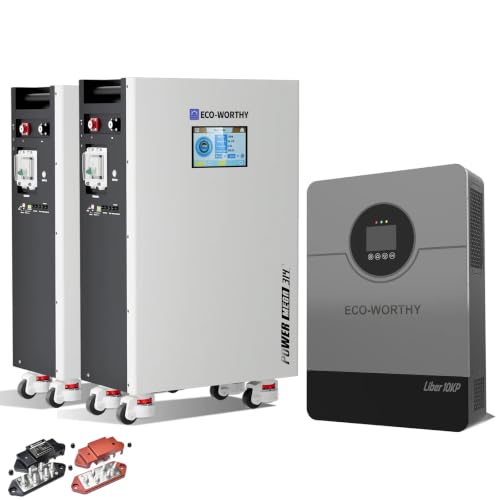
- 10kW hybrid inverter with split-phase support
- Dual 48V 314Ah LiFePO4 batteries for 30kWh+ storage
- WiFi, Bluetooth, and LCD monitoring built in
Best For: Larger homes needing high-capacity backup and solar storage
Compact UPS Power Station
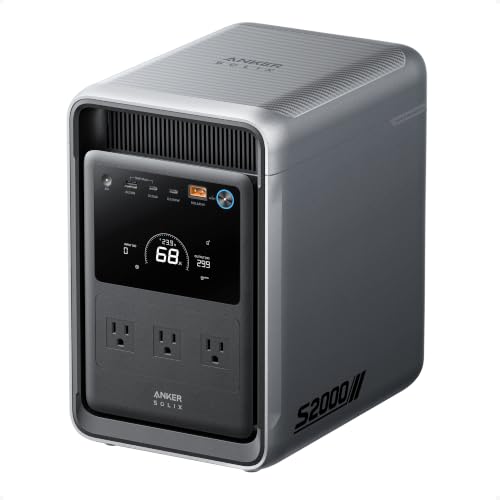
- 2,010Wh LFP battery with 1,500W continuous output
- <10 ms UPS switchover for home office protection
- Lightweight portable design with solar charging support
Best For: Portable backup for essentials, fridges, and home office gear
Complete Off-Grid Solar Kit

- All-in-one kit with panels, inverter, battery, and wiring
- 5KW split-phase inverter supports 120V/240V output
- Expandable LiFePO4 storage with CAN/RS485 communication
Best For: Off-grid or backup buyers wanting a bundled solar system
Fuel-Powered Home Backup Generator

- 11,000 starting watts and 9,000 running watts
- Wireless remote start from up to 80 feet away
- CO Shield shutoff and multiple outlet types
Best For: Portable gasoline backup with high output and remote starting
Expandable Battery Add-On
EcoFlow DELTA 2 Smart Extra Battery

- Expands DELTA 2 capacity to 2048Wh
- LiFePO4 battery rated for 3000+ cycles
- Charges by AC, car, solar, or Smart Generator
Best For: DELTA 2 owners needing more runtime for essential backup
Sump Pump Backup Specialist
2500W Pure Sine Wave Sump Pump Backup System

- Automatic transfer keeps sump pump power uninterrupted
- Built-in 25A charger with battery protection
- Battery not included; uses 12V deep-cycle batteries
Best For: Basement flood protection and emergency sump pump backup
Scalable Whole-Home Backup
EcoFlow DELTA Pro Ultra 6144Wh Power Station

- 7200W output with 120/240V support
- Expandable from 6kWh to 90kWh
- 0-ms transfer time for sensitive devices
Best For: Whole-home backup with major appliances and scalable capacity
Basement Backup Pick
VEVOR 2500W Sump Pump Battery Backup System

- 2500W pure sine wave output
- Supports dual-pump operation
- LCD monitoring with protection features
Best For: Basement flood protection and sump pump backup
Certified Backup Bundle
ECO-WORTHY 5120Wh Hybrid Inverter System

- UL1973 and UL1741 tested
- 5000W hybrid inverter with MPPT
- Bluetooth, WiFi, and CAN/RS485 support
Best For: Certified, communication-ready backup power with expansion
Whole-Home Solar Backup Kit – 30kWh Eco-Worthy Powermega
If you want a whole house battery backup inverter system built around serious storage, this ECO-WORTHY Powermega package is designed for high-capacity home backup, solar storage, and off-grid use. The included 10kW hybrid inverter, dual 48V 314Ah LiFePO4 batteries, and split-phase support make it a strong fit for larger loads and flexible residential setups.
Best For: Homeowners seeking a high-capacity solar-plus-storage backup system with app monitoring and split-phase output.
Pros:
- Over 30kWh of usable storage for extended whole-home backup.
- 10kW hybrid inverter supports 120V and split-phase 240V output.
- Built-in Bluetooth, WiFi, and LCD monitoring for system status and battery data.
- Multi-layer battery protection, including active balancing BMS and safety alerts.
Cons:
- Large battery modules are heavy and require pallet shipping.
- Installation and setup are better suited to users comfortable with higher-voltage systems.
- Truck delivery compatibility is required for shipping.
For buyers focused on capacity and integration, this system stands out more for storage depth and monitoring than for portability. The 9000+ cycle batteries and 99.9% MPPT tracking efficiency also make it appealing for long-term solar-backed backup power.
Compact UPS Power Station – Anker SOLIX S2000
For shoppers comparing a whole house battery backup inverter system to a smaller emergency power solution, the Anker SOLIX S2000 is a compact portable option that focuses on essentials rather than full-home coverage. Its 2,010Wh LFP battery, 1,500W output, and sub-10 ms UPS switchover make it practical for fridge backup, home office gear, and outages.
Best For: People who want a lightweight, portable backup battery for essential appliances and UPS-style protection.
Pros:
- Up to 35 hours of fridge backup under the stated conditions.
- 1,500W continuous output with 3,000W peak for many home essentials.
- <10 ms UPS switchover for sensitive electronics and home office use.
- Lightweight 35.7 lb build and multiple recharge options, including solar.
Cons:
- Not a full-house backup system, with far less capacity than integrated inverter+battery setups.
- No 12V DC port.
- Solar panel is optional and not included.
This is a smart fit if portability and quick backup matter more than running an entire home. It offers strong efficiency, a long battery lifespan, and flexible charging, but it belongs in the essentials-backup category rather than the whole-home one.
Complete Off-Grid Solar Kit – ECO-WORTHY 5KW Split-Phase
This ECO-WORTHY kit is a strong candidate for anyone building a whole house battery backup inverter system with solar input, storage, and an integrated inverter-charger. It combines 2,340W of panels, a 48V 5KW split-phase inverter, and a 51.2V 100Ah LiFePO4 server rack battery into a single off-grid package aimed at simpler setup and reliable backup power.
Best For: Off-grid homes or backup power buyers who want an all-in-one solar kit with expandable storage.
Pros:
- Complete kit includes panels, inverter, battery, and necessary wiring.
- 5KW split-phase inverter supports 120V and 240V output options.
- Server rack battery supports CAN/RS485 communication for compatibility.
- Battery meets UL 1973 and UL 9540A-related testing references in the notes.
Cons:
- Only one 5,120Wh battery is included, so capacity is more modest than larger backup systems.
- Professional installation is recommended.
- Output and expansion depend on the system configuration and parallel use of multiple inverters.
For buyers who want a cleaner all-in-one off-grid path, this bundle reduces guesswork by pairing the main components together. It is more compact than a premium whole-house setup, but it delivers a practical foundation for home backup and future expansion.
Fuel-Powered Home Backup Generator – Champion 11,000W Remote Start
When you need backup power fast, this Champion inverter generator offers a fuel-powered alternative to a whole house battery backup inverter system. It delivers 11,000 starting watts, 9,000 running watts, and up to 15 hours of runtime, making it suitable for residential backup during outages where gasoline operation is preferred.
Best For: Homeowners who want a portable gasoline backup generator with remote start and high output.
Pros:
- High 11,000W starting output and 9,000W running output.
- Wireless remote start works from up to 80 feet away.
- CO Shield auto shutoff adds a safety layer.
- Multiple outlet types support household and 120/240V connections.
Cons:
- Runs on gasoline rather than solar or battery storage.
- At 200 pounds, it is heavy for a portable unit.
- Noise level and fuel runtime may not suit every backup preference.
This generator is a solid fit for buyers who prioritize raw output, quick startup, and fuel-based backup convenience. It does not replace an integrated battery system, but it can be a dependable standby option when portability and wattage matter most.
Expandable Battery Add-On – EcoFlow DELTA 2 Smart Extra Battery
If you are building a whole house battery backup inverter system around an EcoFlow setup, this DELTA 2 Smart Extra Battery is a straightforward way to add more runtime. It expands a DELTA 2 system from 1024Wh to 2048Wh, making it a practical add-on for home backup basics, camping, or keeping essential devices running longer during an outage.
Best For: DELTA 2 owners who want simple, expandable backup capacity for essential home loads.
Pros:
- Adds 1024Wh of extra capacity to a compatible DELTA 2 system.
- LiFePO4 chemistry is rated for 3000+ cycles for long-term use.
- Supports multiple charging methods, including AC, car, solar, and Smart Generator input.
- With DELTA 2, the system can reach 1800W output and 15 outlets for many appliances.
Cons:
- Works as an expansion battery, so it is not a standalone backup solution.
- Most useful only if you already own, or plan to buy, a DELTA 2 unit.
This is a solid expansion choice if you want a flexible, long-life battery add-on rather than a full home battery package. It is best viewed as a capacity booster for a smaller backup system, not as a whole-home inverter on its own.
Sump Pump Backup Specialist – 2500W Pure Sine Wave Sump Pump Backup System
For a whole house battery backup inverter system focused on flood prevention, this 2500W sump pump backup unit is designed to keep a basement pump running when utility power fails. It automatically switches to battery power during outages and includes a built-in 25A charger, making it a practical emergency backup option for homeowners who need reliable sump pump protection.
Best For: Homeowners who need a dedicated backup inverter for sump pump protection during outages.
Pros:
- Automatic transfer to battery power helps maintain uninterrupted sump pump operation.
- Pure sine wave output is designed to run pumps and essential devices smoothly.
- Built-in 25A smart charger supports multi-stage charging and battery protection.
- Includes an LCD remote for monitoring battery voltage, load status, and operating mode.
Cons:
- Battery is not included, so you must supply a compatible 12V deep-cycle battery.
- It is focused on sump pump backup, not a broad whole-home power solution.
This is a strong pick if your main goal is basement flood protection rather than running an entire house. Its simple setup, automatic switching, and pure sine wave output make it a focused emergency backup system.
Scalable Whole-Home Backup – EcoFlow DELTA Pro Ultra 6144Wh Power Station
If you want a whole house battery backup inverter system with serious output, the DELTA Pro Ultra is built for heavy household loads and long backup runtimes. It combines an inverter and battery, delivers 120/240V with 7200W output, and can scale up to 90kWh, which makes it far more capable than a basic portable power station.
Best For: Homeowners who want expandable backup power for major appliances and longer outages.
Pros:
- 7200W AC output with 120/240V support handles demanding home appliances.
- Expandable from 6kWh up to 90kWh for much longer backup coverage.
- Online UPS with 0-ms transfer time helps protect sensitive electronics.
- Can be recharged in 2 hours from a 6kWh setup using multiple charging sources.
Cons:
- Large and heavy at 186.4 pounds, so it is not very portable.
- Higher-capacity system is likely overkill for users who only need small-device backup.
This is the most capable option here for serious home backup needs, especially if you want to support major appliances and expand over time. It is a premium, scalable system designed for real residential backup planning.
Basement Backup Pick – VEVOR 2500W Sump Pump Battery Backup System
If you need a whole house battery backup inverter system for a very specific emergency job, this VEVOR unit is built around sump-pump protection. It delivers 2500W of pure sine wave output, supports dual-pump operation, and adds an LCD readout so you can quickly check voltage, battery level, and operating status during an outage.
Best For: Homeowners who want a dedicated sump pump backup inverter for basement flood protection and emergency pumping.
Pros:
- 2500W pure sine wave output with support for a 1 HP main pump plus a 1/3 HP backup pump.
- 3-stage charging helps optimize compatible 12V lead-acid, AGM, Gel, and LiFePO4 batteries.
- LCD screen and LED indicators make it easy to monitor battery and system status.
- Built-in protections cover overcurrent, overvoltage, short circuit, reverse polarity, and high temperature.
Cons:
- Battery is not included, so you must source the battery separately.
- It is designed for sump pump backup rather than a full home power panel solution.
This is a practical fit if your main goal is reliable basement protection during outages, especially where quick plug-in setup and pump-focused safety matter more than whole-home flexibility.
Expandable Home Power Hub – ECO-WORTHY 5120Wh Battery + 5000W Inverter
This ECO-WORTHY system is a strong whole house battery backup inverter system style option for large-appliance support and scalable storage. It pairs a 5120Wh wall-mount LiFePO4 battery with a 5000W solar inverter charger, giving you a 120V backup setup with Bluetooth, WiFi, and multiple charging modes for more controlled home energy use.
Best For: Buyers who want a scalable home backup and solar-ready system with high output and smart monitoring.
Pros:
- 5000W output can run many heavy-duty household appliances.
- 5120Wh wall-mount LiFePO4 battery uses Grade-A cells and is rated for over 6,000 cycles at 80% capacity.
- Bluetooth, WiFi, and LCD support real-time system monitoring.
- Expandable design allows up to 6 inverters in parallel and up to 32 batteries for much larger capacity.
Cons:
- The battery conduit box is currently out of stock and ships separately later.
- Single-inverter output is 120V, so this is not a direct 240V solution by itself.
If you want a modular backup system that can grow with your needs, this kit offers a strong mix of storage, inverter power, and monitoring features. Its main advantage is scalability.
Certified Backup Bundle – ECO-WORTHY 5120Wh Hybrid Inverter System
For shoppers comparing a whole house battery backup inverter system with stronger certification and communication features, this ECO-WORTHY kit stands out. It combines a 5120Wh LiFePO4 battery with a 5000W hybrid inverter, along with Bluetooth, WiFi, CAN/RS485 communication, and fast charging support for a more integrated home backup setup.
Best For: Homeowners who want a certified, communication-ready backup power kit with expansion potential.
Pros:
- Battery and inverter passed UL1973 and UL1741 testing and meet California Energy Commission standards.
- Closed-loop CAN/RS485 communication supports smarter inverter operation.
- 5000W pure sine wave inverter includes MPPT solar charging and up to 100A battery charging.
- Expandable to 6 inverters and 32 batteries for higher output and storage.
Cons:
- Items ship separately, so the full kit may not arrive at the same time.
- Single-inverter output is 120V unless you expand with multiple units.
This bundle is the most certification-forward option in the group and is a good match for buyers who care about monitoring, safety testing, and future expansion. It is aimed at serious backup use rather than a simple plug-and-play battery.
How We Picked These Whole House Battery Backup Inverter System Options
We focused on systems that offer practical home backup performance, not just big numbers on a spec sheet. That means prioritizing inverter wattage, battery chemistry, expandability, transfer capability, charging speed, monitoring features, and overall fit for outage backup or off-grid use.
We also looked for cleaner output, safer lithium battery design, and systems that make sense for homeowners who want dependable backup power without constant manual intervention.
Quick Comparison: What Matters Most
For a Whole House Battery Backup Inverter System, the most important tradeoff is usually between capacity and output. Larger battery banks can run essentials longer, but the inverter must still be strong enough to start and carry heavy loads like pumps, refrigerators, routers, lights, and select appliances.
Portable power stations are easier to move and set up, while wall-mount and hybrid systems are better for more permanent, home-integrated backup. Generator-style options can be useful for longer runtime, but they may require more fuel, maintenance, and noise tolerance.
Key Buying Factors for a Whole House Battery Backup Inverter System
Battery Capacity and Runtime
Look at watt-hours or kilowatt-hours to estimate how long your essentials can run. A bigger battery is helpful, but real runtime depends on what you power and how many devices are on at once.
Inverter Output and Surge Handling
Continuous wattage matters for everyday loads, while surge capacity matters for motor-driven appliances. If you need to support pumps, refrigerators, or HVAC components, make sure the inverter can handle startup demand.
Battery Chemistry and Expandability
LiFePO4 batteries are popular because they last longer and handle frequent cycling well. Expandable systems are especially valuable if you may add solar panels, more batteries, or heavier home loads later.
Transfer, Charging, and Monitoring
Automatic transfer switching, fast recharge options, and app-based monitoring can make a big difference in convenience. These features help a backup system feel truly hands-off during an outage.
Who Should Buy Which Whole House Battery Backup Inverter System?
If you want portable emergency backup for essentials, a compact power station may be enough. If you need to support a sump pump, sump-pit drainage, or other critical circuits, choose a battery backup inverter with automatic transfer and strong surge output.
Homeowners planning a semi-permanent or whole-home style setup should lean toward wall-mount or hybrid inverter systems with higher capacity and expansion potential. If you want longer runtime and fewer limitations, prioritize systems that can scale with additional batteries and solar input.
In short, the best Whole House Battery Backup Inverter System is the one that matches your actual loads, not just your wish list. Start with what must stay on, then choose the right combination of capacity, output, and installation style.