If you’re looking to enhance your home’s energy efficiency, you’re in the right place. The latest whole house smart energy monitors can help you track consumption in real-time and make informed decisions. With features tailored to your needs, these devices can lead to significant savings. But how do you choose the right one? Let’s explore the top options of 2026 and find out what sets them apart.
Emporia Vue 3 Home Energy Monitor

If you’re looking for a reliable way to monitor your home’s energy usage, the Emporia Vue 3 Home Energy Monitor stands out as a top choice. This UL Listed device guarantees safety while providing real-time electricity monitoring. Installation is straightforward, fitting most homes with clamp-on sensors for various electrical systems. With the Emporia Energy App, you can manage energy usage 24/7, automate settings, and receive actionable savings notifications. You’ll appreciate the real-time data accuracy and the ability to monitor critical appliances. Plus, the design improvements help keep your circuit panel organized, making it user-friendly and effective for energy management.
Best For: Homeowners looking for an effective and user-friendly solution to monitor and manage their energy consumption in real-time.
Pros:
- UL Listed certification ensures safety and reliability, reducing risks of electrical hazards.
- User-friendly installation with clamp-on sensors compatible with various electrical systems.
- Emporia Energy App provides 24/7 monitoring, automation options, and actionable notifications for energy savings.
Cons:
- Requires a 2.4 GHz WiFi connection for real-time data access, which may limit usability in some homes.
- Additional 200A sensor for certain configurations is sold separately, potentially increasing overall costs.
- Limited data retention for 1-second and 1-minute intervals may not suffice for users needing extensive historical data analysis.
Smart Home Energy Monitor with Circuit Sensor and Real-Time Tracking

For homeowners seeking to enhance their energy consumption and reduce utility bills, the Refoss Smart Home Energy Monitor stands out with its circuit sensor technology and real-time tracking capabilities. This ETL Certified device supports multiple circuit sensors, making installation a breeze. With the Refoss app, you’ll monitor energy usage 24/7, potentially saving 10%-20% on bills. It even integrates with solar systems to maximize efficiency. Plus, personalized alerts for unusual spikes help you maintain peak appliance usage. With data stored securely and accessible for up to three years, you can easily track your energy habits and make informed decisions.
Best For: Homeowners looking to optimize energy usage, reduce utility bills, and integrate solar energy solutions.
Pros:
- Supports multiple circuit sensors for comprehensive monitoring of energy consumption.
- Offers real-time tracking and personalized alerts for unusual energy spikes.
- Compatible with solar systems, enhancing energy efficiency and maximizing savings.
Cons:
- API support is not available for advanced integrations.
- Requires firmware updates for seamless compatibility with Home Assistant.
- Data storage is local, which may limit remote access options.
Emporia Vue 3 Home Energy Monitor

The Emporia Vue 3 Home Energy Monitor stands out as an excellent choice for homeowners enthusiastic to take control of their energy consumption and save on utility bills. UL Listed for safety, it installs easily in most circuit panels with clamp-on sensors. You can monitor your energy use in real-time via the app, which offers live reporting and actionable notifications. It supports various systems, including solar and net metering. With accurate data collection and customizable settings for peak demand, you’ll identify savings opportunities effectively. Plus, it comes with a one-year warranty for peace of mind.
Best For: Homeowners looking to efficiently manage their energy consumption and reduce utility costs.
Pros:
- Easy installation in most circuit panels with clamp-on sensors.
- Real-time monitoring and actionable notifications through the app.
- Supports various systems, including solar and net metering for enhanced energy management.
Cons:
- Requires a 2.4 GHz Wi-Fi connection for functionality.
- Additional 200A sensor needed for compatibility with some systems (sold separately).
- Data retention limits may not meet the needs of all users, with minute data only available for 7 days.
Emporia Vue 3 Home Energy Monitor

Emporia Vue 3 Home Energy Monitor stands out as an ideal choice for homeowners seeking to optimize their energy consumption. With its UL Listed certification, you can trust its safety and reliability. Installing it is a breeze; it fits most circuit panels using clamp-on sensors. The Emporia Energy App gives you real-time insights into your spending and energy usage, helping you manage costs effectively. You can monitor appliances by adding branch sensors, ensuring precise tracking. Plus, it retains valuable data for up to seven days, so you can make informed decisions about your energy habits effortlessly.
Best For: Homeowners looking to optimize energy consumption and gain insights into their electricity usage.
Pros:
- UL Listed certification ensures safety and reliability, meeting strict electrical standards.
- Real-time data monitoring through the Emporia Energy App allows for effective management of energy costs.
- Ability to add up to sixteen branch sensors for precise monitoring of various appliances.
Cons:
- Requires a 2.4 GHz WiFi connection for full functionality, which may limit some users.
- Additional sensors for expanded monitoring are sold separately, increasing the initial investment.
- Data retention for detailed analysis is limited to seven days for minute data, which may not suffice for long-term tracking.
SIEMENS Inhab Smart Home Energy Monitor

If you’re seeking an extensive solution for energy management, the SIEMENS Inhab Smart Home Energy Monitor stands out with its ability to monitor energy usage at both the main panel and individual circuit levels. With its 16-50Amp circuit sensors and 2-200Amp main sensors, you can track your home’s energy consumption in real time. You’ll receive personalized notifications for energy-saving opportunities and alerts for unusual activity, like an oven left on. Plus, advanced features like Time of Use Management and load shedding for smart devices make optimizing your energy use a breeze. Safety is guaranteed, as it’s CE marked and UL Listed.
Best For: Homeowners looking to efficiently monitor and manage their energy consumption at both the main and circuit levels.
Pros:
- Real-time monitoring of energy usage at the main panel and individual circuits.
- Personalized notifications for energy savings and alerts for unusual activity.
- Advanced features for effective energy management, including Time of Use Management and load shedding.
Cons:
- Installation may require professional assistance, which could incur additional costs.
- The complexity of features may be overwhelming for some users.
- Limited compatibility with certain older smart devices or electrical systems.
Sense Energy Monitor – Track Electricity Usage in Real Time
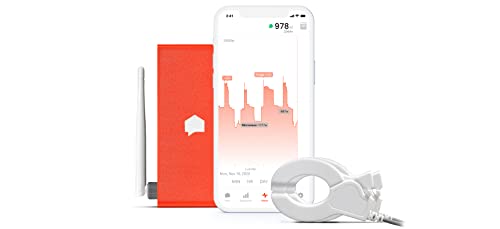
For homeowners keen to slash their energy bills and gain deeper insights into their electricity usage, the Sense Energy Monitor stands out as an essential tool. It tracks real-time electricity consumption, helping you identify patterns and optimize your energy use. With its ETL/Intertek safety certification, you can trust its installation in your electrical panel. Monitor your home’s energy use remotely via iOS, Android, or web apps, allowing you to keep tabs on devices anytime. Plus, custom notifications for critical appliances guarantee safety and prevent potential disasters. Engage with your energy habits, make informed decisions, and enhance efficiency effortlessly.
Best For: Homeowners looking to reduce energy costs and gain insights into their electricity usage.
Pros:
- Provides real-time monitoring of electricity consumption, helping users identify usage patterns.
- Offers remote access to energy data via iOS, Android, and web apps for convenience.
- Custom notifications for critical devices enhance safety and prevent potential issues.
Cons:
- Currently only available in the United States and Canada, limiting access for international users.
- Requires installation within electrical panels, which may necessitate professional help.
- Some users may find the initial setup and learning curve challenging.
Eyedro Home Energy Monitor – Real-Time Electricity Usage Monitor

The Eyedro Home Energy Monitor stands out as an excellent choice for energy-conscious homeowners who want to take control of their electricity usage. With real-time monitoring, it provides instant insights into your energy consumption and production, letting you track usage in dollars, watts, amps, and volts. The monitor connects via WiFi or Ethernet and includes two 200A sensors, ensuring accurate data 24/7. You can identify energy waste and lower utility bills, making smarter energy choices. Plus, Eyedro’s commitment to customer support means you’ll have assistance with setup whenever needed. Take charge of your energy efficiency today!
Best For: Energy-conscious homeowners, DIY enthusiasts, and those pursuing off-grid living who want to monitor and manage their electricity usage effectively.
Pros:
- Real-time monitoring provides instant insights into energy consumption and production.
- User-friendly setup with WiFi/Ethernet connectivity and included sensors for accurate data.
- Cost-saving potential by identifying energy waste and enabling smarter energy choices.
Cons:
- Requires two Eyedro units for separating grid energy usage from solar generation, which may increase initial costs.
- Compatibility limited to 2.4 GHz WiFi or wired Ethernet, excluding newer WiFi standards.
- Not suitable for simultaneous monitoring of solar and grid energy.
Smart Home Energy Monitor with 16 Circuit Level Sensors

Equipped with 16 circuit-level sensors, the Smart Home Energy Monitor is ideal for homeowners looking to gain detailed insights into their energy consumption. It supports single-phase, split-phase, and three-phase systems, making it versatile for various setups. Installation is a breeze with clamp-on sensors, allowing you to monitor everything from air conditioners to water heaters. With a 1% accuracy rate, you’ll receive real-time data accessible through your smartphone. Plus, it provides actionable notifications to help cut down on energy costs. Enjoy the peace of mind that comes with environmental responsibility and a 1-year warranty for added protection.
Best For: Homeowners seeking to monitor and optimize their energy consumption with detailed insights and real-time data.
Pros:
- Easy installation with clamp-on sensors, suitable for various electrical setups.
- Real-time monitoring with 1% accuracy accessible via smartphone apps.
- Provides actionable notifications to help reduce energy costs and promote environmental responsibility.
Cons:
- Requires Home Assistant with MQTT for operation, which may not be user-friendly for all customers.
- Limited to 16 circuit sensors, which may not cover larger homes or extensive electrical systems.
- Data export is limited to certain timeframes, which may not meet all users’ reporting needs.
Govee Smart Plug with Energy Monitoring (2 Pack)

If you’re looking to enhance your home’s energy efficiency without the need for a hub, the Govee Smart Plug with Energy Monitoring (2 Pack) is an excellent choice. These plugs offer real-time energy monitoring, allowing you to track power usage, current, and voltage directly through the Govee Home App. With stable WiFi and Bluetooth connectivity, you can control your appliances remotely and even use voice commands with Alexa or Google Assistant. Schedule your devices to turn on or off automatically, ensuring maximum energy savings. Plus, they’re FCC and ETL certified for safety, making them perfect for high-power appliances.
Best For: Individuals seeking to enhance their energy efficiency and control over home appliances without the need for a hub.
Pros:
- Real-time energy monitoring helps track and reduce energy consumption.
- Compatible with voice assistants like Alexa and Google Assistant for hands-free control.
- Scheduling feature allows automatic on/off controls, promoting energy savings.
Cons:
- Does not support 5G Wi-Fi, which may limit connectivity options for some users.
- Requires the Govee Home App for full functionality, which may not appeal to all users.
- Limited to 15A, which may not be suitable for very high-power appliances.
Emporia Energy Monitor with 16 Sensors & 4 Smart Plugs Super Bundle

For homeowners seeking extensive control over their electricity usage, the Emporia Energy Monitor with 16 Sensors & 4 Smart Plugs Super Bundle stands out as a top choice. This all-encompassing system allows you to track energy consumption in real-time, offering second-by-second insights into your home’s electrical use. With 16 sensors covering the main panel and individual circuits, you can easily manage your energy needs. The included smart plugs enable remote control and automation of devices, helping you reduce standby power waste. Plus, the free mobile app lets you view trends and set up custom automations for smarter energy management.
Best For: Homeowners looking for comprehensive control and monitoring of their electricity usage to enhance energy efficiency and reduce costs.
Pros:
- Provides real-time, second-by-second visibility into energy consumption across multiple circuits.
- Includes smart plugs for remote control and automation of devices, reducing standby power waste.
- User-friendly mobile app for tracking usage, viewing trends, and setting up custom automations.
Cons:
- Initial setup may be complex for users unfamiliar with home energy systems.
- Requires a stable Wi-Fi connection for optimal performance of smart plugs and app features.
- May not be compatible with all home electrical systems or devices.
Factors to Consider When Choosing a Whole House Smart Energy Monitor
When you’re choosing a whole house smart energy monitor, you want to focus on several key factors. Consider the monitoring accuracy, installation ease, and how well it integrates with your existing systems. Also, think about the energy management features, data access, and safety certifications to guarantee you make the best choice.
Monitoring Accuracy and Precision
Choosing a whole house smart energy monitor requires careful consideration of monitoring accuracy and precision, as these factors directly influence how effectively you can track your energy consumption. Look for devices that boast a monitoring accuracy of ±1% to ±2%, ensuring reliable readings. The sampling rate matters too; some monitors provide real-time updates every second, while others only report data every minute. Historical data retention is essential—devices that store minute data for seven days or hourly data indefinitely help you analyze patterns. Additionally, monitors that track multiple circuits with individual sensors enhance accuracy, allowing you to pinpoint energy hogs. This level of detail can lead to actionable insights, helping you identify trends and optimize energy use for cost savings.
Installation and Compatibility
Before diving into the world of whole house smart energy monitors, you’ll want to guarantee that the device you select is compatible with your home’s electrical system. Check if your setup is single-phase, split-phase, or three-phase, as this affects compatibility. Look for monitors that support clamp-on sensors, which should easily fit into your circuit panel without major modifications. Additionally, consider the maximum amperage the monitor can handle; some models support up to 200A for main circuits and 60A for branch circuits. Opt for devices with straightforward installation processes, ideally ones that don’t require professional help. Finally, verify the connectivity requirements, ensuring you have a stable Wi-Fi connection for reliable real-time monitoring and data access.
Energy Management Features
How can you guarantee your whole house smart energy monitor truly enhances your energy management? Look for monitors that offer real-time energy tracking, letting you continuously monitor your consumption and make informed decisions. Advanced features like Time of Use and Peak Demand Management help you optimize your energy use, cutting costs during peak rate times. If you have solar panels, choose a monitor that integrates with them, allowing you to manage excess energy and automate high-energy appliance use during peak solar production. Personalized alerts for unusual energy spikes or savings opportunities can keep you proactive. Finally, thorough reporting features with historical data and analytics provide insights into your consumption patterns, helping you identify areas for improvement in your energy efficiency.
Data Access and Reporting
To effectively enhance your energy management, the right whole house smart energy monitor should also prioritize data access and reporting features. Look for monitors that provide real-time data access so you can instantly view your energy consumption through mobile apps or web interfaces. Choose devices offering thorough reporting formats, such as hourly, daily, monthly, and yearly, to analyze your energy usage patterns effectively. It’s essential to evaluate models with data export options, allowing you to download usage statistics for external analysis or record-keeping. Guarantee the monitor retains data for significant periods, with some devices storing up to three years of detailed information. Finally, check for compatibility with smart home integrations to further enhance data management and reporting capabilities.
Safety and Certification Standards
When choosing a whole house smart energy monitor, it’s crucial to take into account safety and certification standards, as these factors guarantee the device operates reliably and securely. Look for monitors certified by recognized safety organizations like UL or ETL; these certifications confirm the product meets stringent safety criteria, reducing risks like overheating or fire hazards. If you’re an international user, consider devices with CE marking that comply with European standards. Additionally, make certain the installation aligns with local electrical codes to prevent safety issues. Finally, a solid warranty often indicates the manufacturer’s confidence in the product’s safety and reliability, giving you extra peace of mind as you enhance your home’s energy efficiency.