Cold weather can expose weak batteries fast. If you need reliable power in freezing conditions, the right battery chemistry, capacity, and low-temperature protection matter more than brand alone.
This roundup of the best deep cycle batteries for winter use focuses on practical choices for RVs, trolling motors, marine systems, and off-grid setups that need dependable performance when temperatures drop.
Best 10 Deep Cycle Batteries for Winter Use Picks for 2026
Winter-Ready AGM Deep Cycle
Weize 12V 100Ah Maintenance-Free Battery

- Sealed AGM construction
- 1-3% monthly self-discharge
- Charges down to 14°F
Best For: RV and off-grid users needing a simple cold-weather AGM battery
Cold-Weather Lithium Storage
SUPER EMPOWER 12V 100Ah LiFePO4 Group 24

- 100A BMS with temperature protection
- Low-temp charging cutoff below 32°F
- Lightweight 21.6 lb Group 24 fit
Best For: Cold-weather RV and marine users who want a lightweight lithium drop-in
Extreme-Temperature AGM Choice
Renogy 12V 100Ah Deep Cycle Battery

- Discharge range from -4°F to 140°F
- Sealed AGM with minimal troubleshooting
- Low self-discharge under 3% monthly
Best For: Cold-weather RV and cabin setups needing a stable AGM battery
High-Capacity Winter Lithium
12V 100Ah LiFePO4 Group 31 Battery

- Automatic low-temp charging cutoff
- Only 24 lbs, Group 31 fit
- Claims 15,000+ deep cycles
Best For: Users wanting a lightweight Group 31 lithium battery for winter-ready off-grid power
Heavy-Duty AGM Pick
12V 100Ah AGM Battery for RV, Marine & Off-Grid

- 100Ah AGM battery with 1150A max discharge current
- Low 1–3% monthly self-discharge for storage
- Leak-proof, vibration-resistant ABS casing
Best For: RV, cabin, and off-grid users needing a rugged AGM battery for seasonal storage
Dual-Purpose Marine Option
Group 27M AGM Starter & Deep Cycle

- Dual-purpose AGM for starting and deep cycling
- Quick-charging sealed marine/RV battery
- 20x more vibration resistance than flooded batteries
Best For: Boat and RV owners needing one battery for both starting and house power
Winter-Ready AGM Reliability
Renogy 12V 100Ah Deep Cycle AGM Battery
- Discharge range down to -4°F
- Under 3% monthly self-discharge
- Sealed, maintenance-free AGM design
Best For: RV and cabin use in cold weather with long storage gaps
Cold-Weather Lithium with Protection

- Low-temp charge cutoff below 32°F
- Discharge range down to -4°F
- 24 lb lightweight lithium build
Best For: Mobile and off-grid setups that need cold-weather charging protection
Dual-Purpose Marine Power
Mighty Max MM-G27M AGM Battery
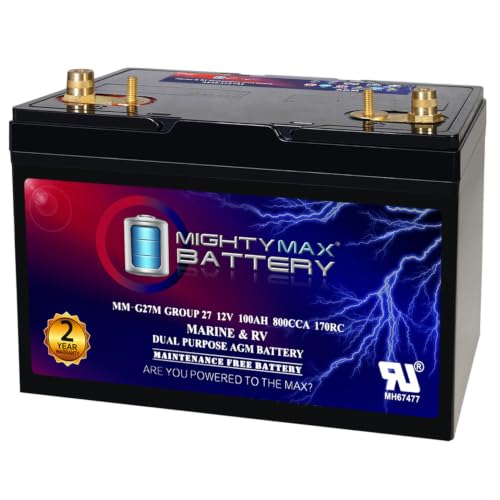
- Dual-purpose starting and deep-cycle use
- 800 CCA and 850 MCA starting output
- Spill-proof AGM with vibration resistance
Best For: Boats and all-season systems needing starting power plus accessory runtime
Winter-Ready AGM Deep Cycle – Weize 12V 100Ah Maintenance-Free Battery
If you want deep cycle batteries for winter use without stepping into lithium-specific charging rules, this Weize 12V 100Ah AGM is a straightforward option. It’s sealed, maintenance-free, and built for RV, solar, marine, and backup power setups where lower self-discharge and stable output matter during storage and cold-weather operation.
Best For: RV owners, off-grid users, and anyone wanting a sealed AGM battery for cold-weather storage and seasonal use.
Pros:
- AGM design is sealed and maintenance-free, which helps reduce acid leakage concerns.
- Low self-discharge of 1-3% per month supports longer storage between charges.
- Operating range includes charging down to 14°F and discharging down to 5°F.
- Rated for a 1100A max discharge current for short bursts of higher demand.
Cons:
- Weighs 57 pounds, so it is not the easiest battery to move or install.
- Winter charging is limited by the stated 14°F minimum charging temperature.
- Only a 1-year warranty is included.
For seasonal setups and cold-weather standby use, this battery offers a simple AGM path with familiar lead-acid compatibility. It is best viewed as a dependable utility battery rather than a lightweight upgrade.
Cold-Weather Lithium Storage – SUPER EMPOWER 12V 100Ah LiFePO4 Group 24
This SUPER EMPOWER LiFePO4 model is aimed at deep cycle batteries for winter use when you want lighter weight and built-in protection. It uses Grade A cells with a 100A BMS and includes low-temperature safeguards, making it a solid fit for RV, marine, solar, and off-grid energy storage where charging control matters.
Best For: Buyers who want a lightweight Group 24 lithium battery for cold-weather auxiliary and house power.
Pros:
- Built-in 100A BMS protects against overcharge, over-discharge, overcurrent, short circuit, and temperature extremes.
- Low-temperature charging cutoff pauses charging below 32°F to help prevent damage.
- Group 24 size and M8 terminals make it a drop-in replacement for many lead-acid setups.
- At 21.6 lbs, it is much lighter than typical lead-acid batteries.
Cons:
- It is not suitable for engine starting or cranking applications.
- Non-lithium chargers are not recommended.
- Charging is disabled below 0°C/32°F, so winter charging requires attention to temperature.
For cold-weather storage and mobile power, this battery’s low-temp protection and compact fit are the main selling points. It makes sense if you are already set up for lithium charging and want an efficient drop-in upgrade.
Extreme-Temperature AGM Choice – Renogy 12V 100Ah Deep Cycle Battery
When comparing deep cycle batteries for winter use, this Renogy AGM stands out for its stated extreme-temperature discharge performance and sealed, stable chemistry. It is designed for RVs, cabins, solar systems, and other applications where you want a maintenance-free battery that can keep working in cold conditions.
Best For: RV, cabin, and solar users who want a proven AGM battery for cold-weather discharge performance.
Pros:
- Supports extreme discharge temperatures from -4°F to 140°F.
- Sealed AGM construction adds safety and reduces troubleshooting.
- Low self-discharge is under 3% per month at 77°F.
- 1100A max discharge current can support many common appliances.
Cons:
- At 63.9 pounds, it is heavy for frequent handling.
- It is still a lead-acid AGM battery, so it lacks lithium-level weight savings.
- The 2-year prorated warranty is less generous than some longer lithium warranties.
This is a strong pick if you want a familiar AGM format with better cold-weather discharge tolerance than many standard batteries. It suits users who value safety, simplicity, and broad appliance support over light weight.
High-Capacity Winter Lithium – 12V 100Ah LiFePO4 Group 31 Battery
If your goal is deep cycle batteries for winter use with more efficiency and less weight, this Group 31 LiFePO4 is built for serious mobile power. It combines a smart BMS, low-temperature charging cutoff, and a compact drop-in form factor for RVs, boats, and off-grid systems.
Best For: RV, marine, and solar users who want a lightweight Group 31 lithium battery with strong low-temperature protection.
Pros:
- Automatic low-temperature cutoff helps prevent charging below 32°F.
- Weighs only 24 lbs, making it far easier to install and transport.
- Group 31 dimensions are designed as a drop-in replacement for many battery boxes.
- Claims long cycle life, with up to 15,000+ cycles at 60% DOD.
Cons:
- Like other LiFePO4 batteries, it needs compatible charging practices.
- Not built for engine starting applications.
- Winter charging still depends on staying above the low-temp cutoff.
This battery is a good fit if you want lithium advantages and a standard Group 31 size for easier upgrades. It is especially appealing for users who need dependable cold-weather discharge with minimal weight.
Heavy-Duty AGM Pick – 12V 100Ah AGM Battery for RV, Marine & Off-Grid
If you’re shopping for deep cycle batteries for winter use, this 12V 100Ah AGM model is a practical choice for RVs, cabins, solar storage, and marine backup where dependable standby power matters. Its low 1–3% monthly self-discharge and vibration-resistant AGM build make it a solid fit when equipment sits in storage or faces rough conditions.
Best For: RV, cabin, marine, and off-grid users who want a rugged maintenance-free AGM battery with low self-discharge for seasonal storage.
Pros:
- 12V 100Ah capacity with up to 1150A max discharge current
- AGM design with leak-proof, vibration-resistant ABS casing
- Only 1–3% monthly self-discharge for storage periods
- Works across RV, UPS backup, camping, and solar setups
Cons:
- Heavier and less modern than lithium options
- Only a 1-year warranty
Overall, this battery makes sense if you want a straightforward sealed AGM pack that can sit ready through colder months and still support multiple off-grid or backup applications.
Cold-Weather Lithium Upgrade – 12V 100Ah LiFePO4 Group 24 Battery
For buyers comparing deep cycle batteries for winter use, this 12V 100Ah LiFePO4 option stands out for built-in cold weather protection and a smart BMS. It is positioned as a lead-acid replacement in Group 24 size, with lighter weight, faster charging, and long cycling life for RV, marine, solar, and backup storage applications.
Best For: Users who want a lightweight Group 24 lithium upgrade with cold-weather protection and long service life.
Pros:
- Built-in smart BMS with cold weather protection and multiple safety safeguards
- 4000+ cycles at 100% DoD and up to 15000 cycles at 60% DoD
- 22.57 lb weight makes it much lighter than typical lead-acid batteries
- Group 24 size for broad compatibility with chargers and battery boxes
Cons:
- Not suitable for engine starting
- Requires lithium-friendly charging habits and voltage settings
This is a strong pick if your winter setup needs a lithium battery that can handle low-temperature protection without giving up capacity or convenience.
Dual-Purpose Marine Option – Group 27M AGM Starter & Deep Cycle
If you need deep cycle batteries for winter use in a marine or RV setup, this dual-purpose Group 27M AGM is built to cover both starting and cycling duties. It uses sealed AGM construction, quick-charging capability, and strong vibration resistance, which can be helpful in cold-weather storage and rough-use environments.
Best For: Boat and RV owners who want one sealed AGM battery that can both start and deep cycle.
Pros:
- Dual-purpose design combines starting power with deep cycling capability
- Quick-charging AGM construction can charge up to five times faster
- 20x more vibration resistance than flooded batteries
- Leak-proof, low-maintenance sealed build with 2-year warranty
Cons:
- Heavier at 59.5 lb
- Lower capacity than a dedicated 100Ah deep cycle battery
In practice, this is a flexible winter battery choice when you want one sealed unit that can handle mixed starting and house-power demands without much maintenance.
Winter-Ready AGM Reliability – Renogy 12V 100Ah Deep Cycle AGM Battery
If you’re comparing deep cycle batteries for winter use, this Renogy 12V 100Ah AGM is built around cold-weather stability and simple ownership. Its sealed AGM design, low monthly self-discharge, and discharge performance down to -4°F make it a practical option for RVs, cabins, and off-grid setups that may sit unused between trips.
Best For: RV and cabin owners who want a sealed, maintenance-free battery that handles cold temperatures and long storage well.
Pros:
- Works in discharge temperatures from -4 to 140°F (-20 to 60°C).
- Self-discharge is under 3% per month at 77°F, which helps during storage.
- Sealed AGM construction keeps maintenance simple and avoids acid refilling.
- Can power common appliances like a fridge, microwave, CPAP, and laptop.
Cons:
- At 63.9 lb, it is heavy to handle and install.
- Lead-acid AGM batteries are less lightweight than lithium alternatives.
For winter applications that value predictability over cutting-edge features, this Renogy battery is a straightforward deep-cycle choice. It offers strong cold-weather discharge capability and low self-discharge, which is useful if the battery may not be charged often during the season.
Cold-Weather Lithium with Protection – 12V 100Ah LiFePO4 Battery
For shoppers evaluating deep cycle batteries for winter use, this 12V 100Ah LiFePO4 model stands out for its low-temperature protection and lightweight design. It supports discharge from -4°F to 140°F and includes a smart BMS that cuts charging below 32°F to help protect the cells in cold conditions.
Best For: RV, marine, and off-grid users who want a lightweight lithium battery with built-in cold charging protection.
Pros:
- Smart BMS includes automatic low-temperature cut-off below 32°F.
- Discharge operating range runs from -4 to 140°F (-20 to 60°C).
- Lightweight at 24 lb, making installation easier than lead-acid options.
- Very long cycle life, with claims up to 15,000 deep cycles depending on depth of discharge.
Cons:
- Charging is blocked below freezing, so winter charging plans matter.
- May require lithium-ready equipment for best system compatibility.
This battery is a strong fit if you want lithium performance without ignoring winter safety. Its cold-weather charge protection and compact size make it especially appealing for mobile systems where weight and seasonal reliability both matter.
Dual-Purpose Marine Power – Mighty Max MM-G27M AGM Battery
If you want deep cycle batteries for winter use with marine-style durability, this Mighty Max MM-G27M is designed for both starting and deep discharge. It delivers 100Ah capacity, strong cranking output, and a spill-proof AGM build that is suited to harsh, vibration-prone conditions on the water or road.
Best For: Boaters and all-season users who need one battery for engine starting and accessory power.
Pros:
- Dual-purpose design combines starting power with deep-cycle capacity.
- 850 MCA and 800 CCA provide strong starting performance.
- AGM construction is maintenance-free and spill-proof.
- Built for vibration resistance and rough marine conditions year-round.
Cons:
- It is a heavy battery at about 61.7 lb.
- Cycle life is listed up to 700 cycles at 50% depth of discharge, which is more modest than lithium.
This is a practical choice when you need both engine-starting and house-power capability in one battery. The AGM design and rugged shell add confidence for cold, wet, and rough-use environments, especially on boats and similar setups.
How We Picked the Best Deep Cycle Batteries for Winter Use
We focused on batteries that make sense for winter reliability: strong amp-hour ratings, low self-discharge, sealed or maintenance-free construction, and lithium models with low-temp protection where available. We also looked at real-world use cases such as RV storage, marine cycling, and backup power.
Quick Comparison
For cold-weather use, AGM batteries are usually the safest all-around choice because they handle charging well, resist vibration, and are maintenance-free. LiFePO4 batteries can offer much better usable capacity and cycle life, but only if they include low-temperature charging protection or will be kept above freezing while charging. Dual-purpose batteries are better when you need starting power and house power in one unit.
Key Buying Factors for Deep Cycle Batteries for Winter Use
Cold-Weather Charging Protection
For lithium batteries, this is the most important winter feature. Charging below freezing can damage cells unless the battery has built-in protection or a heated setup. AGM batteries are more forgiving in cold conditions, though available capacity still drops as temperatures fall.
Capacity and Usable Power
Look beyond the label. A 100Ah lithium battery usually delivers more usable energy than a 100Ah AGM because lithium can be discharged deeper without shortening life as quickly. If you run heaters, inverters, or electronics, that difference matters in winter.
Self-Discharge and Storage
Winter storage favors batteries with low self-discharge. If your RV, boat, or cabin setup sits unused for weeks, choose a battery that can hold charge well and tolerate long idle periods without constant maintenance.
Construction and Durability
Sealed AGM and lithium batteries are easier to live with in cold, wet, or rough environments. For marine and travel use, vibration resistance and spill resistance are practical advantages.
Who Should Buy Which Deep Cycle Batteries for Winter Use?
Choose AGM if you want the easiest winter-ready option for RVs, cabins, and backup systems. Choose LiFePO4 if you want lighter weight, higher usable capacity, and long cycle life, and you can manage low-temperature charging safely. Choose a dual-purpose battery if you need one battery to handle both engine starting and deep cycling in a boat or RV.
For Deep Cycle Batteries for Winter Use, the best pick is usually the one that matches your charging conditions, storage habits, and expected load—not just the highest amp-hour number.