Starting seeds on a patio requires more than a compact container. The right tray should fit your available space, provide dependable drainage, and help you control moisture while seedlings develop.
We compared 10 seed-starting options with different cell counts, dome designs, materials, and accessories so you can choose a setup that matches your plants, patio conditions, and gardening routine.
Best 10 Seed Starting Trays for Patios Picks for 2026
Adjustable-Ventilation Pick

- 200 cells across five kits
- Vented clear domes with bases
- Reusable trays for seeds and cuttings
Best For: Larger patio seed-starting projects
Flexible Tray Pick

- Five reusable 17-by-10-inch trays
- Raised edges contain soil and water
- Works with domes, heat mats, and hydroponics
Best For: Flexible patio growing and potting tasks
Space-Saving Kit
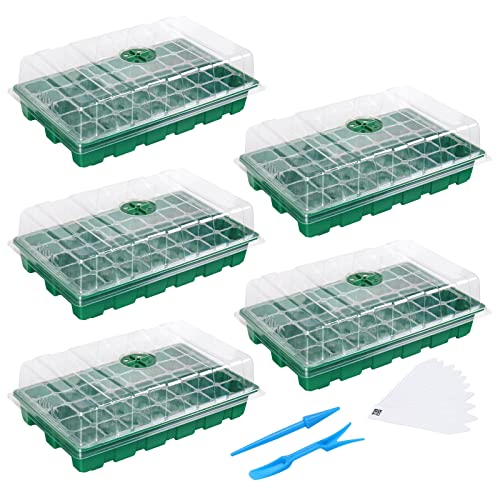
- Five covered trays provide 200 cells
- Adjustable vents manage humidity
- Bottom trays stack before germination
Best For: Small-seed propagation in organized patio setups
Organized Small-Batch Pick

- Ten separate trays provide 120 cells
- Each dome has four adjustable vents
- Bases, labels, and tools are included
Best For: Separating patio plantings by variety or schedule
Light-Assisted Pick

- Five 12-cell trays provide 60 planting spaces.
- Each tray includes a 12-LED full-spectrum grow light.
- Vented domes and clear cells support monitoring and moisture control.
Best For: Small-space gardeners needing supplemental seedling light
Humidity-Control Pick
Gardzen 10-Pack Seed Starting Trays

- Ten 12-cell trays offer 120 total planting cells.
- Adjustable vented domes help manage humidity and airflow.
- Clear covers and drainage holes simplify seedling care.
Best For: High-volume seed starting across flowers, herbs, and vegetables
Easy-Transplant Pick
Flexible Silicone Seed Starter Trays

- Flexible silicone bottoms help release seedlings gently.
- Five 12-cell trays provide 60 planting spaces.
- Reusable trays include drainage and matching catch bases.
Best For: Frequent transplanting into patio pots or larger containers
Best High-Volume Pick

- 144 cells across 24 trays
- Drainage slits and deep cells
- Includes five labeling stakes
Best For: Starting large batches of mixed seedlings
Best Large Flat

- Ten large reusable trays
- Supports soil or hydroponic growing
- No holes for drip-tray use
Best For: Microgreens, wheatgrass, and hydroponic setups
Best Mesh-Bottom Set

- Fourteen roomy plastic trays
- Mesh bottoms support drainage
- Sturdy for moving filled trays
Best For: Microgreens and seedlings needing easy drainage
Adjustable-Ventilation Pick – Gardzen 40-Cell 5-Pack
For gardeners comparing seed starting trays for patios, the Gardzen 5-pack offers a roomy setup for organizing many seedlings while keeping them visible. Each tray includes a 40-cell insert, base, clear humidity dome, drainage holes, and adjustable vents for managing moisture and airflow.
Best For: Patio gardeners who want a reusable, high-capacity kit for seeds, cuttings, and young plants.
Pros:
- Provides 200 cells across five 40-cell kits.
- Adjustable dome vents help regulate ventilation.
- Clear domes, drainage holes, and bases simplify monitoring and watering.
- Plastic construction is intended for repeated seed-starting use.
Cons:
- The five trays require more patio or storage space than smaller individual kits.
- The 40-cell format may be more capacity than needed for a few plants.
Its combination of substantial capacity and ventilation control makes this a practical choice for larger patio starts, especially when you want to propagate several varieties at once.
Flexible Tray Pick – Mr. Pen Open Growing Trays
If you need seed starting trays for patios that can also handle potting and soil-mixing tasks, these Mr. Pen trays provide a simple open design. The five lightweight plastic trays have raised edges to contain soil, fertilizer, and water, without built-in cells or domes.
Best For: Patio gardeners who prefer flexible trays for seedlings, sprouts, microgreens, potting, and general plant work.
Pros:
- Five reusable trays offer a straightforward, one-piece design.
- Raised edges help keep soil, fertilizer, and water contained.
- Lightweight plastic is easy to clean and use repeatedly.
- Compatible with heat mats, humidity domes, and hydroponic systems.
Cons:
- Cells, humidity domes, labels, and tools are not included.
- The open tray design does not provide individual plant separation.
These are best viewed as versatile utility trays rather than a complete propagation kit. They suit gardeners who already have inserts or domes and want a broad work surface for patio growing tasks.
Space-Saving Kit – MIXC 40-Cell Propagators
The MIXC kit is a useful option for seed starting trays for patios when you want covered cells and some storage flexibility. Its five transparent 40-cell propagators include adjustable dome vents, bottom trays, labels, and small garden tools, while the bottom trays can stack before germination.
Best For: Patio growers starting small seeds who value covered propagation and stackable storage.
Pros:
- Includes 200 cells across five propagator sets.
- Adjustable vents provide control over temperature and humidity.
- Transparent plastic makes it easy to observe seedlings.
- Includes plant labels and two garden tools.
Cons:
- The 1.5-by-1.5-by-2-inch cells are intended for small seeds.
- Each dome is only 2.75 inches high, limiting early vertical space.
- Its listed compact cell size may not suit larger seedlings.
With covered cells, labels, tools, and stackable bottom trays, MIXC offers an organized starter setup. Check the cell and dome dimensions carefully if you plan to grow seedlings that need more room.
Organized Small-Batch Pick – 10-Pack 12-Cell Trays
For seed starting trays for patios that keep varieties separated, this 10-pack uses individual 12-cell trays rather than one large unit. Each tray includes a clear humidity dome, base tray, drainage holes, and four vents, making it convenient to manage different vegetables, herbs, or flowers in separate groups.
Best For: Gardeners who want to stagger plantings or keep multiple seed varieties organized in small batches.
Pros:
- Ten separate trays provide 120 cells total.
- Four adjustable vents per dome help manage airflow and moisture.
- Drainage holes and base trays help contain excess water.
- Includes 20 labels and two gardening tools.
Cons:
- Each tray has only 12 cells, so larger projects require handling multiple units.
- The individual format offers less per-tray capacity than 40-cell kits.
This kit emphasizes organization and flexibility. Its separate mini-greenhouse units are particularly practical when patio space is limited or when different crops need different watering and ventilation schedules.
Light-Assisted Pick – 5-Pack LED Seed Starter Trays
For patios that do not always receive dependable sunlight, these seed starting trays for patios add supplemental full-spectrum lighting to each compact tray. The five 12-cell units include adjustable vented domes, drainage holes, clear inserts, and USB power, making them practical for starting herbs, vegetables, and flowers in small spaces.
Best For: Patio gardeners who want multiple compact trays with built-in LED grow lights for supplemental seedling lighting.
Pros:
- Five trays provide 60 total planting cells.
- Each tray has a 12-LED full-spectrum grow light.
- Vented domes help retain moisture while allowing airflow adjustments.
- Clear cells make moisture and early root development easier to observe.
Cons:
- USB power adapter is not included.
- The compact 12-cell format may be limiting for larger plants.
- Designed for indoor use, so patio placement may require a protected setup.
This is the most feature-rich option for gardeners who need supplemental light in addition to humidity control. Its compact footprint suits windowsills and small growing areas, while the included cable connects all five lights to a compatible power source.
Humidity-Control Pick – Gardzen 10-Pack Seed Starting Trays
These seed starting trays for patios offer a straightforward setup for sowing flowers, herbs, vegetables, and cuttings. The 10-pack includes 12-cell inserts, adjustable vented domes, drainage holes, and clear covers, giving patio gardeners plenty of planting capacity with simple moisture and airflow control.
Best For: Gardeners who want a high-capacity, traditional tray kit for starting a variety of plants.
Pros:
- Ten trays provide 120 total cells.
- Adjustable vents help manage humidity, temperature, and airflow.
- Drain holes help reduce excess water and overwatering risk.
- Clear domes allow seedlings to be viewed without removing the cover.
Cons:
- No grow lights are included.
- The larger 10-pack may be more than needed for a small patio setup.
- The listed mounting type is floor standing, which may require dedicated space.
Choose this set when planting volume matters more than integrated lighting. Its 120-cell capacity and adjustable humidity domes make it a flexible option for starting several plant types at once, provided seedlings have access to suitable light.
Easy-Transplant Pick – Flexible Silicone Seed Starter Trays
For seed starting trays for patios that prioritize transplanting, this five-pack uses flexible silicone cell bottoms to help release seedlings with less disturbance. Each tray has 12 cells, a matching catch base, drainage holes, and a heat-resistant design compatible with standard seedling heat mats.
Best For: Gardeners who regularly move seedlings into larger pots or patio containers and want reusable trays with flexible release.
Pros:
- Flexible silicone bottoms help release seedlings while keeping root systems intact.
- Five trays provide 60 total planting cells.
- Drainage holes and matching base trays help manage runoff.
- Reusable construction is designed for repeated planting and supports dishwasher cleaning.
Cons:
- No humidity domes or grow lights are included.
- Silicone and reinforced plastic construction may feel less rigid than standard trays.
- The 60-cell capacity is lower than the 10-pack Gardzen set.
This set stands out when smooth transplanting and repeat use are more important than a complete humidity-controlled kit. The flexible bases can be especially useful for seedlings headed into patio pots, while the included catch trays help keep surfaces cleaner.
Best High-Volume Pick – 144-Cell Seed Starter Trays
For gardeners comparing seed starting trays for patios, this 144-cell set offers a practical way to start many varieties in a compact, organized format. The 1.5-inch-square, 2.25-inch-deep cells include drainage slits, and the reusable plastic construction suits flowers, herbs, succulents, and vegetables.
Best For: Patio gardeners starting large batches of mixed seedlings.
Pros:
- Includes 24 trays with 144 total cells.
- Deep cells are designed to support root development.
- Drainage slits help reduce excess moisture.
- Includes five plant stakes for labeling.
Cons:
- Individual cells are relatively small at 1.5 inches square.
- There are no listed humidity domes or bottom trays.
This is a strong choice when quantity and organization matter most. Its reusable design and included labels make it especially convenient for patio gardeners managing several crops at once.
Best Large Flat – No-Hole Growing Trays
These large flats take a different approach to seed starting trays for patios: they provide open growing space rather than individual cells. The 20-by-10-inch bottom area and no-drain-hole design can work for microgreens, wheatgrass, hydroponic growing, or as a drip tray.
Best For: Growing microgreens, wheatgrass, or seedlings in soil or hydroponic setups.
Pros:
- Ten reusable plastic trays are included.
- Large format accommodates 20-by-10-inch growing pads.
- No-drain-hole design suits drip-tray and hydroponic applications.
- Useful for microgreens, wheatgrass, seedlings, and more.
Cons:
- No drainage holes require careful watering.
- They do not provide separate cells for individual seedlings.
- The supplied usage details identify indoor use.
Choose these trays when you want broad, uninterrupted growing surfaces rather than compartmentalized starts. Their lack of drainage is useful for certain systems but demands closer moisture management on a patio.
Best Mesh-Bottom Set – 14-Pack Germination Trays
For seed starting trays for patios that prioritize drainage and easy movement, this 14-pack uses sturdy plastic trays with mesh-style bottoms and molded ridges. Each tray measures approximately 14.65 by 11.81 by 2.75 inches, giving seedlings, microgreens, soil blocks, and similar projects a broad surface.
Best For: Patio growers raising microgreens or seedlings that need easy drainage and transport.
Pros:
- Includes 14 large polypropylene trays.
- Mesh bottoms and molded ridges promote drainage.
- Sturdy construction helps trays remain stable when filled.
- Suitable for seedlings, microgreens, soil blocks, wheatgrass, and hydroponic systems.
Cons:
- The open design does not separate plants into individual cells.
- Large trays may need more patio space than cell trays.
- No labels or humidity covers are listed.
This set is a practical match for gardeners who want roomy, drain-friendly trays that can be moved during hardening off. It is more flexible for microgreens and broad plantings than for neatly separated starts.
How We Picked the Best Seed Starting Trays for Patios
We focused on features that matter in small outdoor growing spaces: footprint, cell size, drainage, humidity control, durability, and ease of transplanting. We also considered whether each kit includes useful accessories such as base trays, vented domes, plant labels, or grow lights.
Because patios can experience rapid changes in sunlight, temperature, and wind, we favored trays that make moisture management easier without taking up unnecessary room. Options with multiple trays or cells may suit gardeners starting several varieties, while simpler designs can be better for a small seasonal planting.
Quick Comparison
| Best For | Look For | Recommended Type |
|---|---|---|
| Small patios | Compact footprint and stackable design | Multi-pack cell trays |
| Moisture-sensitive seedlings | Drainage holes and vented domes | Complete propagation kits |
| Easy transplanting | Flexible or removable cells | Silicone or segmented trays |
| Low-light patios | Integrated illumination | Tray with LED grow lights |
| Microgreens and shallow-rooted plants | Broad trays with mesh or shallow bases | Growing or microgreen trays |
Key Buying Factors for Seed Starting Trays for Patios
Size and Capacity
Measure your shelf, bench, or windowsill before buying. Large trays can offer more planting space, but compact sets are easier to protect from wind and move when weather changes. Cell count also affects watering frequency: smaller cells dry out faster, while larger cells hold more moisture and support bigger starts.
Drainage and Humidity Control
Drainage holes help prevent waterlogged roots, but they work best with a watertight base tray. A clear humidity dome can improve germination, especially for warm-season crops. Vents are important because they let you reduce humidity once seedlings emerge and help limit fungal problems.
Materials and Transplanting
Rigid plastic trays are lightweight and reusable when cleaned between crops. Flexible silicone cells can make root-ball removal easier and reduce transplant shock. If you plan to reuse trays for several seasons, look for sturdy walls, reliable cell separation, and materials that do not flex excessively when filled.
Accessories and Light
Plant labels, bases, and adjustable vents can make a kit more convenient. Integrated LED lights are useful where a patio receives limited direct sun, but check light height and coverage before relying on them for every crop.
Who Should Buy Which Seed Starting Trays for Patios?
Choose a compact multi-cell kit if you have limited patio space or want to start a few vegetables and flowers at once. A dome-and-base set is the most versatile choice for beginners because it simplifies humidity and watering control. Gardeners growing many varieties should consider higher-capacity packs, while those who prioritize clean transplanting may prefer flexible silicone trays.
For microgreens, shallow mesh-bottom or broad growing trays are generally more practical than deep seed cells. If your patio is shaded, a tray with built-in grow lights may be worthwhile; otherwise, prioritize drainage, a vented dome, and a size that fits your brightest protected location.