Starting seeds indoors gives you a head start on the growing season, but the right tray can make watering, spacing, and transplanting much easier. The best seed starting trays provide dependable drainage, useful humidity control, and enough room for strong roots.
We compared 10 options for different growing styles, from compact windowsill kits and reusable trays to large cell-count bundles and models with built-in lighting. Use the guide below to find the setup that fits your space, crop list, and cleanup preferences.
Best 10 Seed Starting Trays Picks for 2026
High-Capacity Pick
Gardzen 70-Cell Seed Starter Trays

- 350 total cells across five trays
- Includes bases and clear domes
- Works for seeds and cuttings
Best For: Large planting batches and multi-crop starts
Indoor Lighted Pick

- Five trays with 12-cell inserts
- Built-in 12-LED light per tray
- Vented domes and clear root viewing
Best For: Indoor growers needing supplemental seedling light
Reusable Design Pick

- Flexible cells ease transplanting
- Designed for drainage and aeration
- Top-rack dishwasher safe
Best For: Gentle transplanting and repeat seasonal use
Bulk Mini-Greenhouse Pick

- Ten 12-cell tray sets
- Adjustable-vent humidity domes
- Includes bases and plant labels
Best For: Organized batch starting across multiple varieties
Best High-Volume Value
216-Cell Seedling Starter Trays
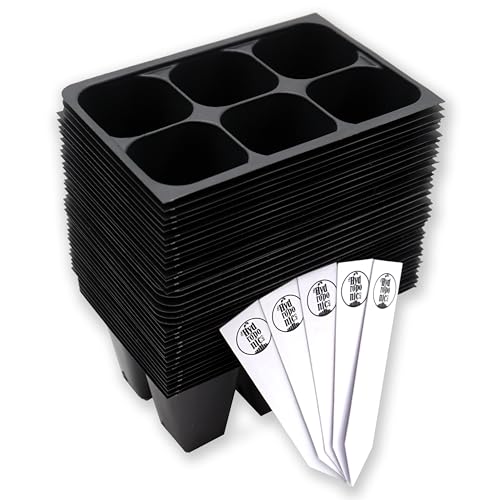
- 216 cells across 36 six-cell trays
- 2.25-inch-deep cells support root growth
- Includes drainage slits and five plant stakes
Best For: Large batches of flowers, herbs, succulents, or vegetables
Best Complete Propagation Kit
MIXC 200-Cell Mini Greenhouse Set
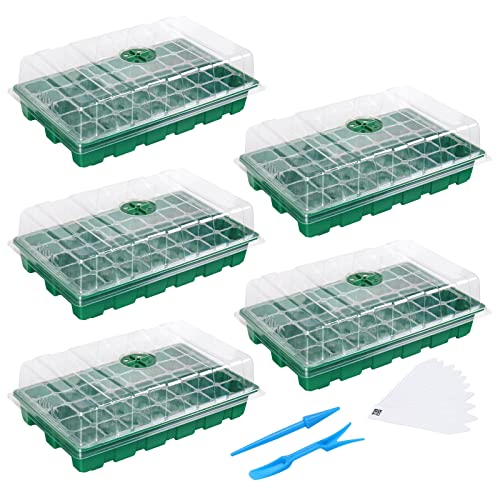
- Five trays with bottom trays and humidity domes
- Adjustable vents regulate humidity and temperature
- Includes tools and 10 plant labels
Best For: Covered propagation of small seeds
Best for Large Seeds
60-Cell Vented Starter Tray Set

- 1.5-inch-square cells suit larger seeds
- Includes bases, domes, vents, and labels
- Heat mat compatible for controlled germination
Best For: Tomatoes, peppers, potatoes, and eggplants
Best All-in-One Kit
Mr. Pen 400-Cell Seed Starter Trays

- Ten 40-cell trays with 400 total cells
- Vented humidity domes included
- Planting and transplanting tools included
Best For: Bulk seed starting at home, school, or in a greenhouse
Best for Large Growing Areas
20 x 10-Inch Seed Starting Trays

- Ten reusable plastic trays
- No-drain design suits hydroponics and drip collection
- Fits 20 x 10-inch grow pads
Best For: Microgreens, wheatgrass, hydroponic growing, and broad planting surfaces
Best for Windowsills

- Eight extra-large flexible silicone cells
- Watering channels help manage excess water
- Reusable and top-rack dishwasher safe
Best For: Small indoor batches of herbs, flowers, and vegetables
High-Capacity Pick – Gardzen 70-Cell Seed Starter Trays
For gardeners starting many vegetables, flowers, herbs, or cuttings at once, these seed starting trays provide 350 total cells across five reusable-style plastic tray sets. Each set combines a 70-cell insert, water-catching base, and clear vented dome for a straightforward mini-greenhouse setup.
Best For: Gardeners who need high capacity for indoor or outdoor seed starting.
Pros:
- Five trays provide 350 total planting spaces.
- Each insert has 70 drainage holes to help reduce overwatering.
- Included bases catch excess water, while clear domes make growth easy to monitor.
- Suitable for seeds, cuttings, and young plants.
Cons:
- The large number of cells may be more than needed for small batches.
- The supplied notes do not indicate that the domes include adjustable vents.
Choose this set when planting volume matters most. Its complete tray, base, and dome format keeps the setup simple, though smaller growers may prefer a lower-capacity option.
Indoor Lighted Pick – 12-LED Seed Starter Trays
These seed starting trays are designed for indoor growers who want supplemental illumination built into each tray. The five 12-cell inserts include clear bases, elevated domes, vented full-spectrum 12-LED lights, labels, and a shared USB cable.
Best For: Indoor seed starting where seedlings need supplemental light and visible root or moisture monitoring.
Pros:
- Each tray has a 12-LED full-spectrum grow light.
- Clear inserts help you observe moisture and root development.
- Vented covers allow humidity control as seedlings emerge.
- Includes five trays, bases, domes, lights, labels, and a 1-to-5 USB cable.
Cons:
- A power adapter is not included; the kit requires a 5V/2A adapter.
- No built-in timer is provided.
- With 60 total cells, it offers less capacity than some larger multi-tray kits.
This is a practical choice for a compact indoor setup, especially if you already have a compatible USB power adapter. Account for the lack of a timer when planning daily light management.
Reusable Design Pick – Burpee SuperSeed 36-Cell Tray
The Burpee SuperSeed is a reusable seed starting tray focused on controlled watering and easy transplanting. Its 36 flexible silicone cells pop out around established seedlings, while molded drainage slots, deep watering channels, and labeled rows help organize the process.
Best For: Indoor gardeners who prioritize gentle transplanting, reuse, and organized seedling care.
Pros:
- Flexible food-grade silicone cells are designed to pop seedlings out gently.
- Corner slots support drainage and soil aeration.
- Deep watering channels help draw excess water away and contain spills.
- Top-shelf dishwasher safe for easier cleaning and reuse.
Cons:
- One tray provides 36 cells, less capacity than the multi-pack options.
- The supplied notes do not list a humidity dome as included.
- Its reusable silicone construction may cost more than basic plastic trays.
Consider this tray if transplanting convenience is more important than maximum cell count. It is particularly useful for growers who want to clean and reuse their seed-starting equipment each season.
Bulk Mini-Greenhouse Pick – MIXC 120-Cell Starter Kit
For gardeners who want multiple covered trays, this MIXC seed starting tray kit includes 10 complete sets with 12-cell inserts, watertight bases, adjustable-vent humidity domes, and plant labels. The lightweight plastic design is suited to indoor or outdoor use and can be transported between growing areas.
Best For: Gardeners starting several small batches and wanting adjustable humidity across multiple trays.
Pros:
- Ten trays provide 120 total cells.
- Adjustable vents let you regulate humidity and temperature.
- Watertight bases and drainage holes support controlled watering.
- Includes 10 domes and 10 labels for a complete mini-greenhouse setup.
Cons:
- Each tray has only 12 cells, so individual planting capacity is limited.
- The kit does not include built-in grow lights.
- Managing 10 separate covered trays may require more storage space.
This kit suits gardeners who value flexibility and batch organization. Its adjustable vents are useful for managing humidity, while the 12-cell format makes it easy to separate varieties or planting dates.
Best High-Volume Value – 216-Cell Seedling Starter Trays
For gardeners who need a large number of seedlings, these seed starting trays provide 216 cells across 36 compact trays. The 1.5-inch-wide, 2.25-inch-deep cells support root development, while drainage slits help reduce excess moisture.
Best For: Starting flowers, herbs, succulents, and vegetables in larger quantities.
Pros:
- 216 total cells offer substantial planting capacity.
- Deep cells are designed to encourage healthy root development.
- Drainage slits help prevent overwatering.
- Includes five plant stakes for labeling, and the trays are reusable.
Cons:
- Does not include humidity domes or bottom trays.
- The individual six-cell trays may require more handling than a full-size insert.
This is a practical choice when quantity and reusable construction matter most. Its compact six-cell format also makes it easier to organize different varieties separately.
Best Complete Propagation Kit – MIXC 200-Cell Mini Greenhouse Set
This MIXC kit is a versatile option among seed starting trays because it combines cell trays, bottom trays, humidity domes, tools, and labels. Transparent plastic makes seedlings easy to monitor, while adjustable dome vents let you regulate humidity and temperature.
Best For: Gardeners who want a covered propagation setup for small seeds indoors or outdoors.
Pros:
- Includes five cell trays, five bottom trays, and five humidity domes.
- Adjustable vents provide control over the seedling environment.
- Transparent trays and domes make observation easy.
- Includes two garden tools and 10 plant labels.
Cons:
- The 1.5-by-1.5-by-2-inch cells are intended for small seeds.
- The kit takes up more space than uncovered individual trays once assembled.
With ventilation control and included accessories, this kit suits gardeners who want more than basic trays. Its stackable bottom trays can also help conserve storage space before germination.
Best for Large Seeds – 60-Cell Vented Starter Tray Set
These seed starting trays are designed for larger seeds, with 1.5-inch-square cells suited to crops such as tomatoes, peppers, potatoes, and eggplants. Each set includes a clear cell tray, base tray, humidity dome, adjustable vent, and plant labels for a controlled germination setup.
Best For: Starting larger vegetable seeds with humidity and temperature control.
Pros:
- Cell size provides room for larger seeds and developing seedlings.
- Clear trays and domes make monitoring easy without disturbing roots.
- Adjustable vents allow humidity and temperature regulation.
- Designed to work with a heat mat and includes 10 plant labels.
Cons:
- Offers fewer total cells than the higher-capacity options in this roundup.
- The enclosed dome setup may require more monitoring to manage humidity.
This set is a strong fit when seed size and environmental control are priorities. Its included bases and domes make it more ready to use than a tray-only option.
Best All-in-One Kit – Mr. Pen 400-Cell Seed Starter Trays
For gardeners who want a complete setup, this seed starting trays kit includes ten 40-cell trays, matching bases, vented humidity domes, and basic planting tools. The clear domes help retain warmth and humidity while letting you monitor seedlings as they develop.
Best For: Home gardens, classrooms, and greenhouse projects that need many covered cells and included tools.
Pros:
- Includes 10 trays with 400 total cells and matching bases.
- Vented clear domes support humidity control and visibility.
- Includes a dibber, widger, shovel, and scoop for sowing and transplanting.
Cons:
- The 40-cell layout may be more capacity than small planting projects require.
- Individual cells are smaller than the extra-large cells in some specialized trays.
This is a practical bulk option when you want covered propagation space and planting accessories in one package. Its multi-tray format is especially useful for starting a large variety of plants at once.
Best for Large Growing Areas – 20 x 10-Inch Seed Starting Trays
These seed starting trays provide a broad, open growing surface without drain holes, making them adaptable for seedlings, microgreens, wheatgrass, drip collection, and hydroponic setups. The ten-pack offers reusable trays for larger or repeated growing projects.
Best For: Microgreens, wheatgrass, hydroponic growing, and gardeners who need wide trays without built-in drainage.
Pros:
- Ten durable plastic trays support repeated use.
- No-drain-hole design works as a drip tray or hydroponic growing container.
- Accommodates 20 x 10-inch grow pads and mats.
Cons:
- No drainage holes means users must manage excess water carefully.
- These are open trays rather than divided cell trays, so separate cells are not provided.
- The larger footprint may require more shelf or floor space.
Choose this set when flexibility and surface area matter more than individual seed cells. Its no-hole construction is useful for controlled watering systems, but it requires a suitable growing medium or insert and attentive moisture management.
Best for Windowsills – Burpee SuperSeed 8-Cell Tray
Designed for compact indoor growing, the Burpee SuperSeed is one of the most convenient seed starting trays for a sunny windowsill. Its eight extra-large silicone cells flex for easier transplanting, while the watering tray channels excess water away from seedlings.
Best For: Indoor gardeners starting a small selection of herbs, flowers, or vegetables in a windowsill space.
Pros:
- Eight extra-large flexible cells help reduce root disturbance during transplanting.
- Corner drainage slots and watering channels support aeration and excess-water management.
- Reusable, top-rack dishwasher-safe construction simplifies cleanup.
- Alphanumeric rows and an included Plant-o-Gram help identify seedlings.
Cons:
- With eight cells, it offers less capacity than multi-tray seed-starting kits.
- Its narrow windowsill-oriented design is less suited to large propagation projects.
This tray is a strong choice for small indoor batches where easy transplanting and tidy watering are priorities. The extra-large cells give seedlings more room, while the compact format fits naturally into a windowsill setup.
How We Picked the Best Seed Starting Trays
We focused on the features that most affect successful indoor propagation: cell size, drainage, humidity control, durability, included accessories, and overall versatility. We also considered how well each tray suits its intended use, whether that means starting a large number of vegetables, raising a few larger seedlings, or growing plants on a windowsill.
Cell count was weighed alongside cell volume because more cells are not always better. Small cells maximize space but may require earlier transplanting, while larger cells support seedlings that need more time indoors. Reusable construction, washable materials, grow lights, plant labels, and vented domes also helped distinguish the options.
Quick Comparison
| Best For | Look For | Why It Matters |
|---|---|---|
| Large planting batches | High cell count | Starts more seeds in less shelf space |
| Longer indoor growing | Larger cells | Provides more room for developing roots |
| Humidity-sensitive germination | Clear vented dome | Helps retain moisture while allowing airflow |
| Small spaces | Compact footprint or windowsill design | Fits apartments, counters, and narrow shelves |
| Repeated use | Thick, washable construction | Reduces waste and replacement costs |
Key Buying Factors for Seed Starting Trays
Cell Size and Count
Choose small cells for herbs, flowers, and crops that will be transplanted quickly. Larger cells are better for tomatoes, peppers, cucumbers, and seedlings that need extra time before moving outdoors. If you grow many varieties, a mixed-size setup may be more practical than one tray style.
Drainage and Water Management
Drainage holes help prevent soggy roots, but they work best with a separate base tray to catch runoff. Trays without holes can be useful as waterproof reservoirs or for custom setups, but you must control watering carefully. Bottom watering is often easier and helps avoid disturbing delicate seedlings.
Humidity Domes and Ventilation
A clear dome can speed germination by holding warmth and moisture. Adjustable vents are particularly useful because seedlings need increasing airflow after sprouting. Remove or open the dome gradually once most seeds emerge to reduce the risk of damping off.
Lighting, Labels, and Reusability
Built-in LED lights are convenient when sunlight is limited, but check their height adjustment and coverage before relying on them for every crop. Plant stakes help prevent mix-ups, while sturdy reusable trays are worthwhile if you plan to start seeds each year. Clean trays between uses to reduce the spread of plant diseases.
Who Should Buy Which Seed Starting Trays?
Choose a high-cell-count bundle if you grow a large vegetable garden or want to start several varieties at once. A compact windowsill tray is better for apartment growers and anyone raising a small number of plants. Gardeners who keep seedlings indoors longer should prioritize larger cells, while beginners may prefer a kit that includes a dome, base, labels, or lighting.
For the best all-purpose setup, select a tray with drainage cells, a sturdy bottom reservoir, and a vented humidity cover. Whatever model you choose, pair it with a quality seed-starting mix, adequate light, consistent moisture, and gentle airflow for stronger, healthier transplants.